
Add ₹999 more to unlock FREE SHIPPING!
Your sacred cart is currently empty.
Shop Photo FramesThe Konkan region, blessed with exquisite natural beauty, is home to many sacred and spiritually vibrant abodes of Lord Ganesha. Among them, a famous temple is the Dashabhuja Lakshmi Ganesh Temple at Hedvi in Guhagar Taluka. This is considered to be the only temple in Konkan featuring an idol of Dashabhuja Lakshmi Ganesh—Lord Ganesha with ten arms. Nestled in the lap of nature on a small hill plateau, this sacred place has been renowned since the Peshwa era. Devotees believe that this Lord Ganesha, who bestows the blessings of Goddess Lakshmi alongside Riddhi-Siddhi, fulfills all the desires of his seekers.
It is said that during the Peshwa period, a devout devotee of Lord Ganesha named Kelkar Swami lived here. His daily routine involved worshipping at the temple in Hedvi and going on pilgrimages. Once in Pune, he met Peshwa Madhavrao I (Thorle Madhavrao Peshwa). Realizing the divine truth of the spiritual message given by the Swami, the Peshwa granted him one lakh rupees. With this money, the Swami built this Ganesh Temple at Hedvi; however, over time, the temple fell into ruin. Shivram Govind alias Kakasaheb Joglekar, a resident of the same village, used to visit the temple every day for darshan. Seeing the temple deteriorating day by day pained him deeply; however, owing to his weak financial condition, he felt helpless. But one day, he made a firm vow in his heart, “Until this temple is restored, I will not repair the roof of my own house,” and left Hedvi for Mumbai to earn money.
Upon reaching Mumbai, Kakasaheb worked tirelessly to establish his own business. Through perseverance, once he accumulated sufficient funds, he presented the idea of restoring the Ganpati Temple to his friend and industrialist Sambhu Hedavkar. Both contributed their own wealth toward the temple’s restoration, and many people from Mumbai also extended their support to this noble cause. After the restoration was completed in 1954–55, the Ganesh Janmotsav (celebration of Lord Ganesha’s birth) in the month of Magh was initiated from 1956 onwards. For this, renowned Kirtankars began to be invited every year. As the temple’s fame grew day by day, it became a cherished shrine of faith for numerous devotees in the region.
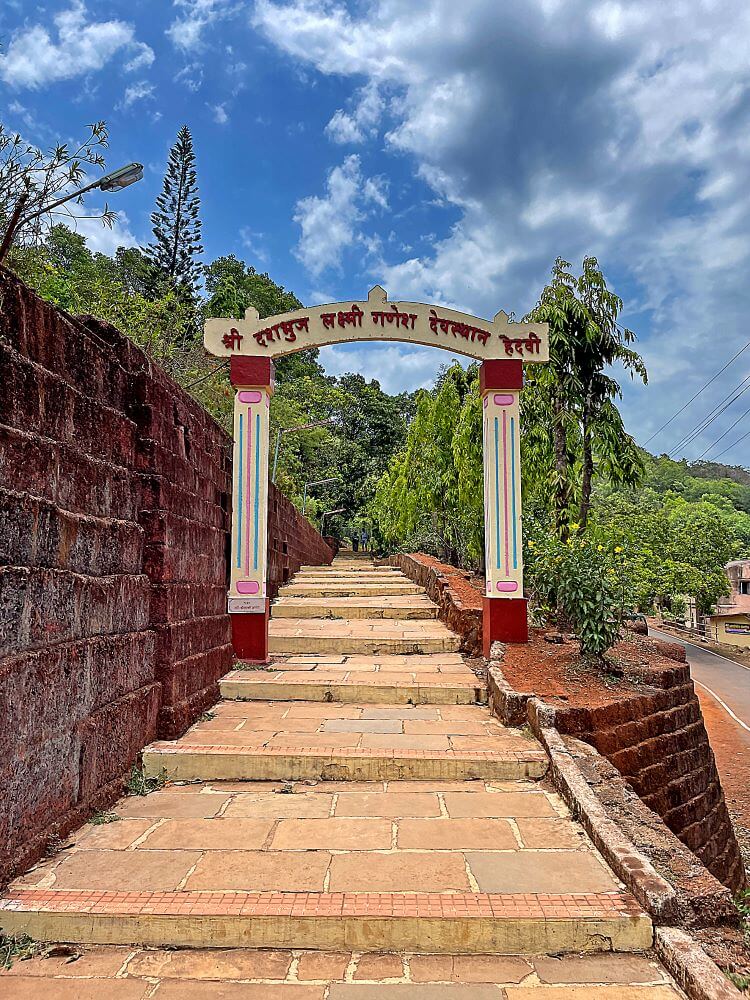
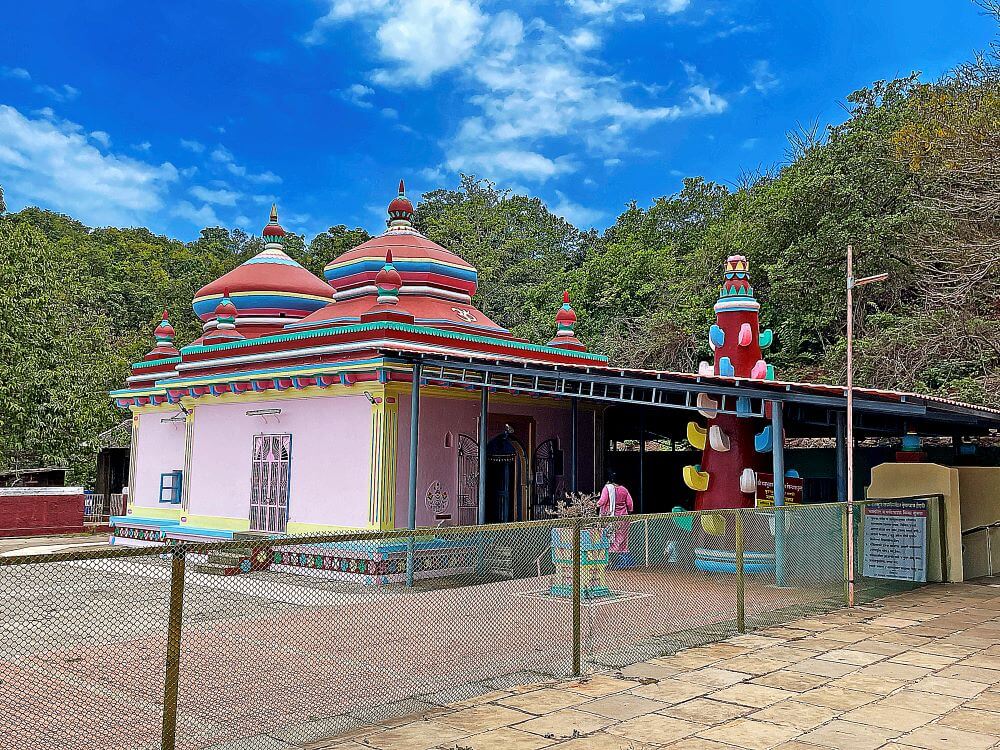
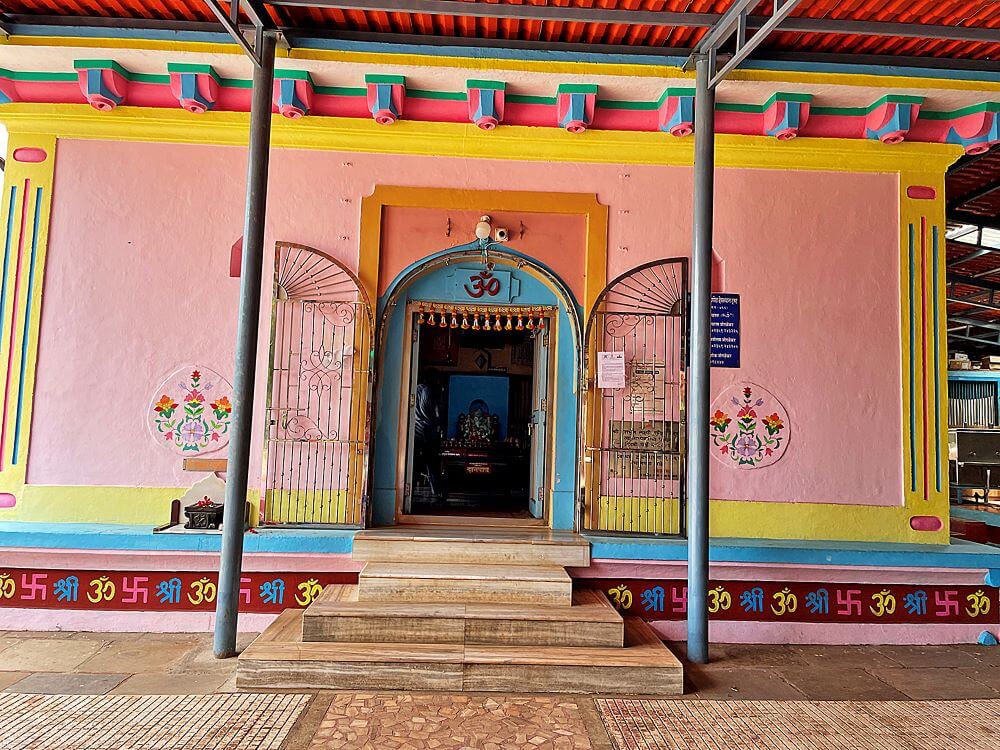
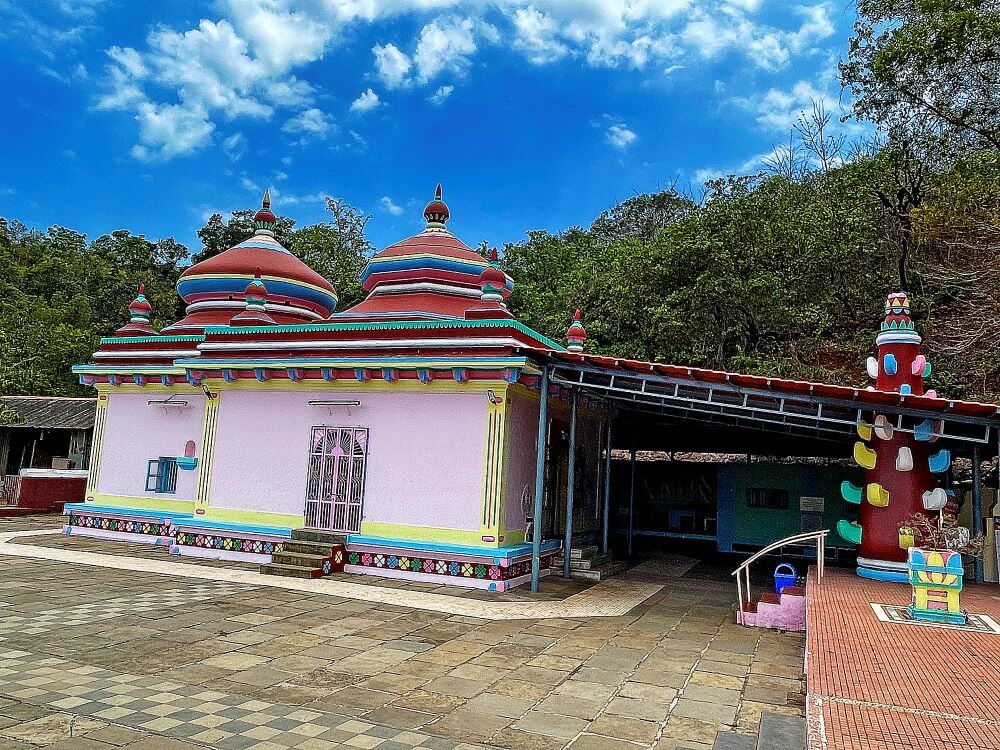
While coming from Guhagar toward Hedvi, the temple is located within a fort-like stone fortification on a hill plateau visible to the left. There is an old stone step path to climb up to the temple, and now a new asphalt road has also been constructed, allowing vehicles to go right up to the temple. In front of the temple stands a Peshwa-era Deepmal (lamp tower). The main temple structure consists of a Sabhamandap (assembly hall) and a Garbhagriha (sanctum sanctorum). In the open space between the Deepmal and the temple entrance, a tin shed has been erected by the temple committee for the convenience of devotees. In a niche on the right side near the Garbhagriha in the Sabhamandap, there is an idol of Lord Vishnu seated on Garuda. Goddess Lakshmi is seated on His left thigh, flanked by Jay and Vijay. The Puranas mention the lore of Sage Bhrigu kicking Lord Vishnu on the chest; the mark of those lotus feet is clearly visible on the chest of this idol as well.
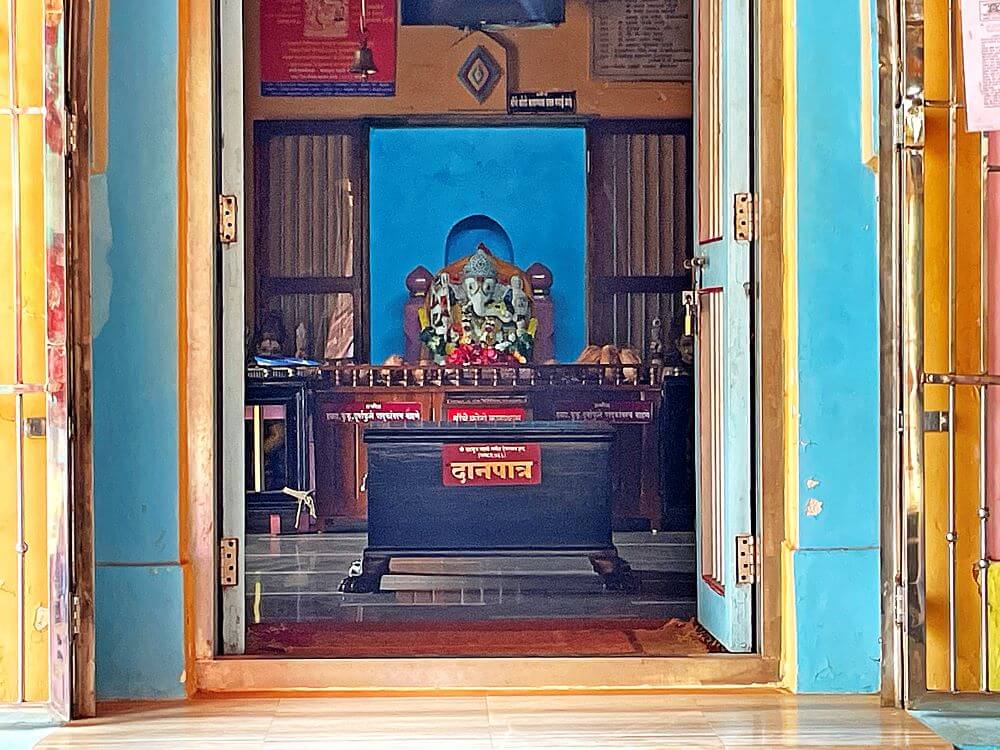
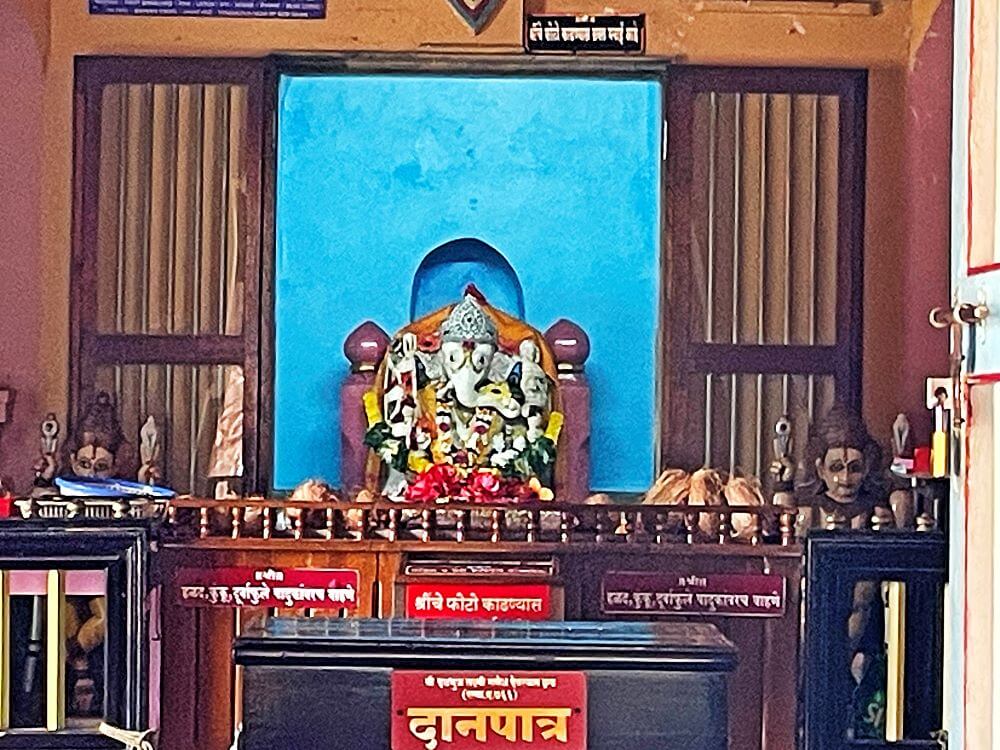
The unique feature of the temple is the ten-armed (Dashabhuja) Lakshmi Ganesh idol enshrined in the sanctum sanctorum. This extraordinary idol of Lord Ganesha, about one meter in height, is seated on a pedestal inside the sanctum sanctorum. It is said that this idol was sculpted in Kashmir. Lord Ganesha has ten arms: in the top right hand, He holds a Chakra (discus), in the second a Trishul (trident), in the third a Dhanush (bow), in the fourth a Gada (mace), and in the fifth, He holds a Mhavlung (a citron fruit signifying procreation) between two fingers while the rest of the hand is in a blessing posture. In the top left hand, He holds a Lotus, in the second a Pasha (noose), in the third a Neelkamal (blue lotus), in the fourth a Radan (tusk), and in the fifth a Stalk of Grain. A nectar pot (Amritkalash) is held in His trunk, and a sacred serpent thread (Naga Yajnopavita) is worn around His neck. Lord Ganesha’s left leg is folded at the knee and laid flat on the floor, and on that thigh sits Siddhalakshmi. His right leg is bent at the knee and rests on the ground, with Mooshakraj (the sacred mouse) near His right foot. The idol is daily adorned with fine attire and ornaments. In front of this original idol, there is a copper idol of Lord Ganesha, followed by sacred Padukas (footwear).
On Maghi Chaturthi at 12 noon, the Ganesh Janmotsav is celebrated. Following this, a procession of Lord Ganesha is taken out in a beautifully decorated chariot. This procession travels through the village until evening. The festival lasts for three days. Devotees gather in large numbers on every Sankashti Chaturthi, Vinayaki Chaturthi, and Angarki Chaturthi. During these occasions, the idol of Lord Ganesha is adorned with various precious ornaments. Devotees can have darshan of Lord Ganesha every day from 6:00 AM to 7:00 PM.
Apart from the Ganesh Temple, Hedvi village is also famous for its Baman Ghal (a natural rock gorge). Located about 3 km from the Hedvi Ganesh Temple, right on the seashore, is a small temple of Uma-Maheshwar. Near this temple, a miracle of nature can be witnessed in the seaside rocks during high tide. In the rock bed here, there is a natural gorge called Baman Ghal, which is ten meters wide and five meters deep. High tide water surges forcefully into this gorge, hits the rock face at the far end, and gushes high into the air, creating a water column 15 to 20 meters high. Tourists visit to witness this impressive water plume and to feel the cool spray as it cascades down. This water column forms only during full high tide, so visitors must check high tide timings before planning a visit. Legend has it that once at night, a Brahmin walking along the trail slipped into this gorge. Just then, a huge wave crashed in, and the force of the surge claimed his life. Since then, this gorge has been known as Baman Ghal.
This sacred temple stands as a testament to deep spiritual devotion, ancient architectural grandeur, and rich local cultural traditions.
The sanctum sanctorum houses the divine idol consecrated according to ancient Vedic traditions, surrounded by serene courtyards and traditional temple architecture.
Navratri, Maha Shivratri, Annual Temple Jatra & Deepotsav
Compare and book flights, secure top-rated local hotels near the temple, hire reliable guides, and rent cars instantly.
Extend your pilgrimage by visiting other highly sacred temples located nearby.


Add ₹999 more to unlock FREE SHIPPING!
Your sacred cart is currently empty.
Shop Photo FramesFill in your delivery details below to place your order.
Add comment