
Add ₹999 more to unlock FREE SHIPPING!
Your sacred cart is currently empty.
Shop Photo FramesKelshi is a small village situated at the northern tip of Ratnagiri district. The village of Kelshi is nestled on an island-like landform surrounded by water on three sides—a breathtakingly beautiful and pristine beach on one side and large estuaries on two sides—while being embraced by dense greenery on the remaining side. The temple of Shree Mahalakshmi in the village is a vibrant and self-manifested (Svayambhu) holy shrine. It is said that this sacred place dates back to the pre-Shivaji era. Devotees firmly believe that the Mahalakshmi of Kelshi, considered to be the sister of Kolhapur’s Mahalakshmi, fulfills the earnest prayers of her devotees.
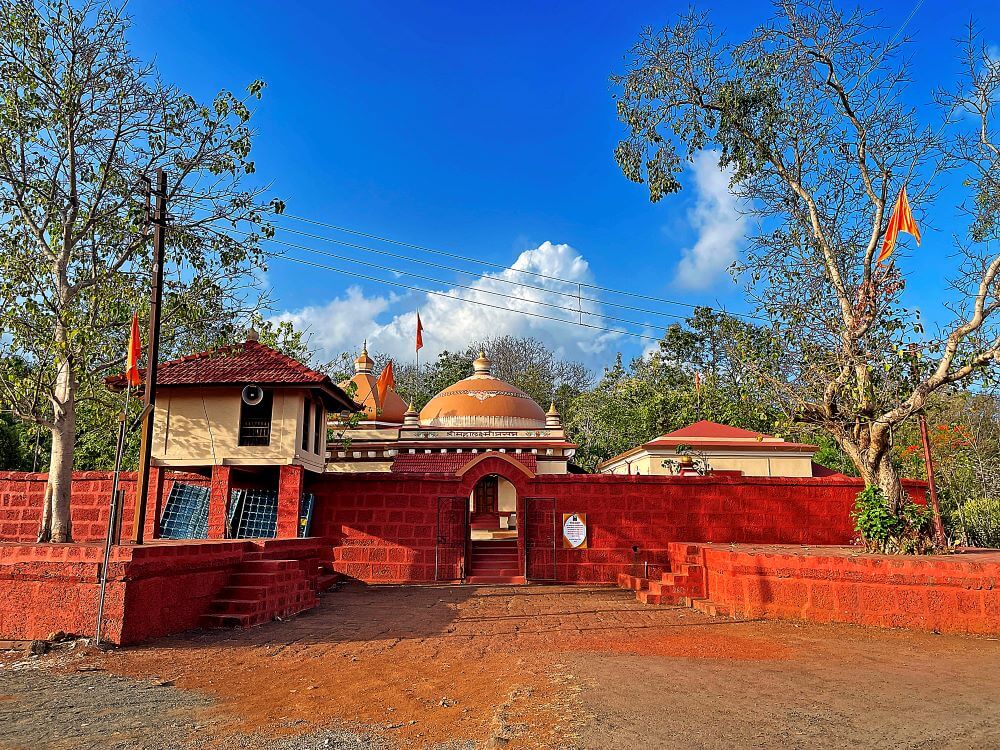
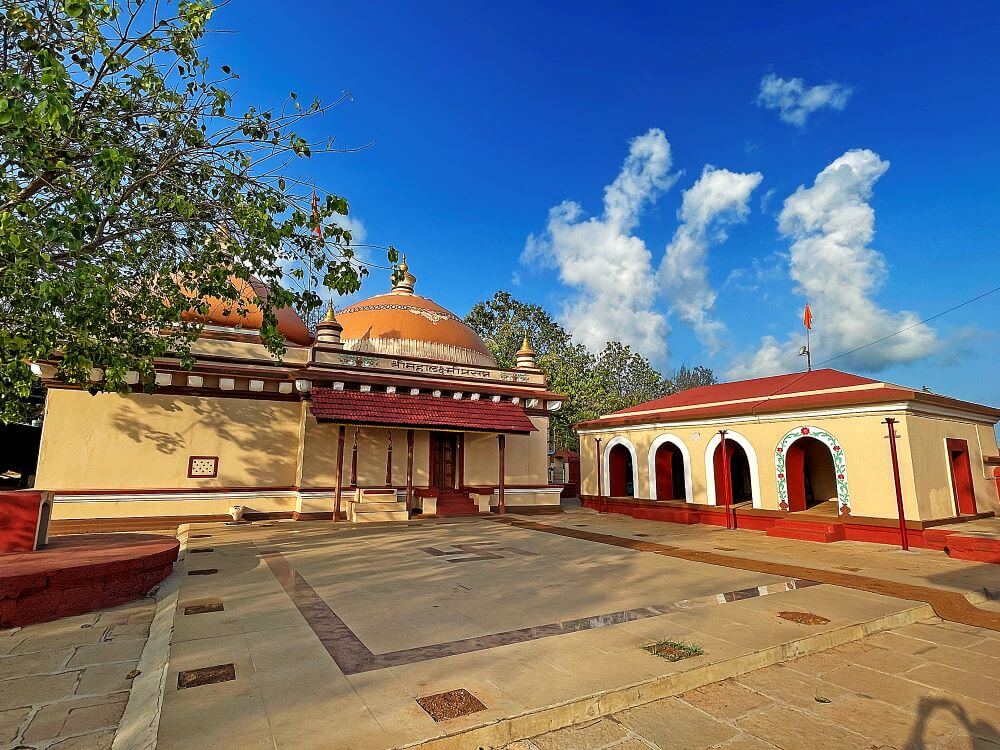
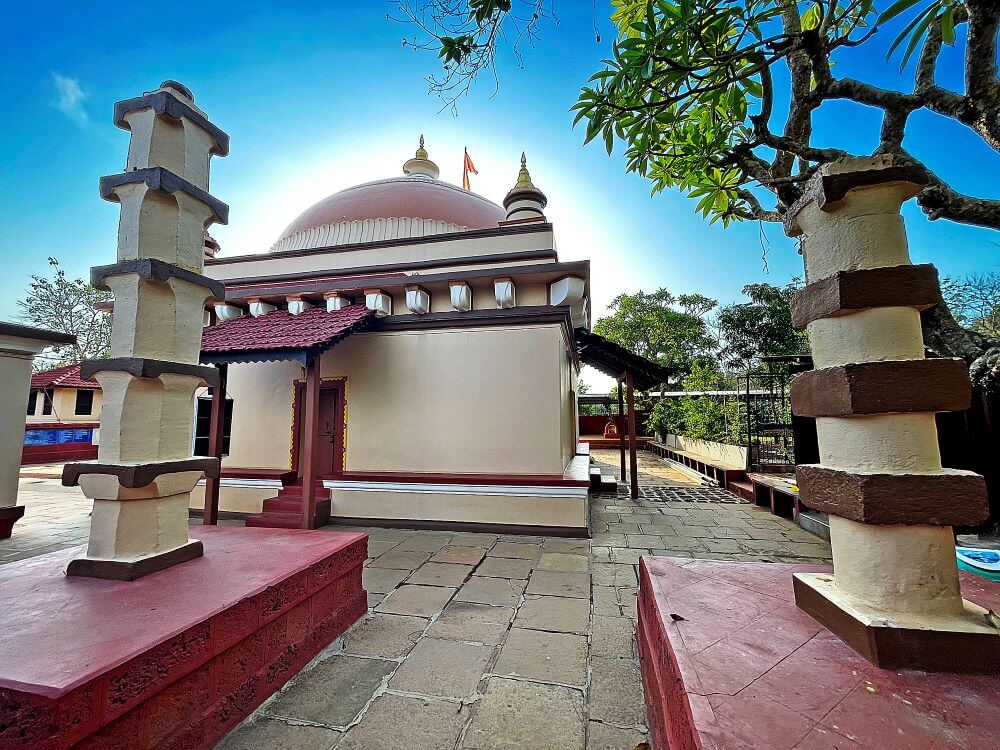
The Mahalakshmi Temple is situated at the foothills of Utambar village, which lies to the south of Kelshi village. Although this sacred site dates back thousands of years, the architecture of the current temple belongs to the Peshwa era. Around the temple, there is a stone fortification (tathbandi) about five feet high. This fortification has four gateways. It is said that there is a traditional drum-beat enclosure (chaughada) near the main entrance, where in the past, ceremonial drums were beaten every morning and evening. However, its place has now been taken by a recorded sanai. In front of the main temple, there are two deepmalas. To the right of the temple are the shrines of Lord Ganesha and Lord Hanuman. Next to the Ganesha temple, there is a dharmashala which also houses a Ganesha idol and a Shiva linga. Devotees firmly believe that this linga grows by the size of a sesame seed over time.
In the courtyard of the temple, there are ancient trees such as banyan and peepal, while on one side there is a pond with ghat-like steps built to descend into it. This ancient pond is still in good condition and has water throughout all twelve months. Hundreds of years ago, an arrangement was made to bring water from a live spring in the Utambar mountains into this pond. The place where that water emerges is called Jhari. This Jhari is considered an example that water management and piped water systems existed even in those ancient times. The well on the mountain from which this water is brought here is known as Dakshinmadi. it is called. Even today, this Dakshin Madi can be seen on the mountain here.
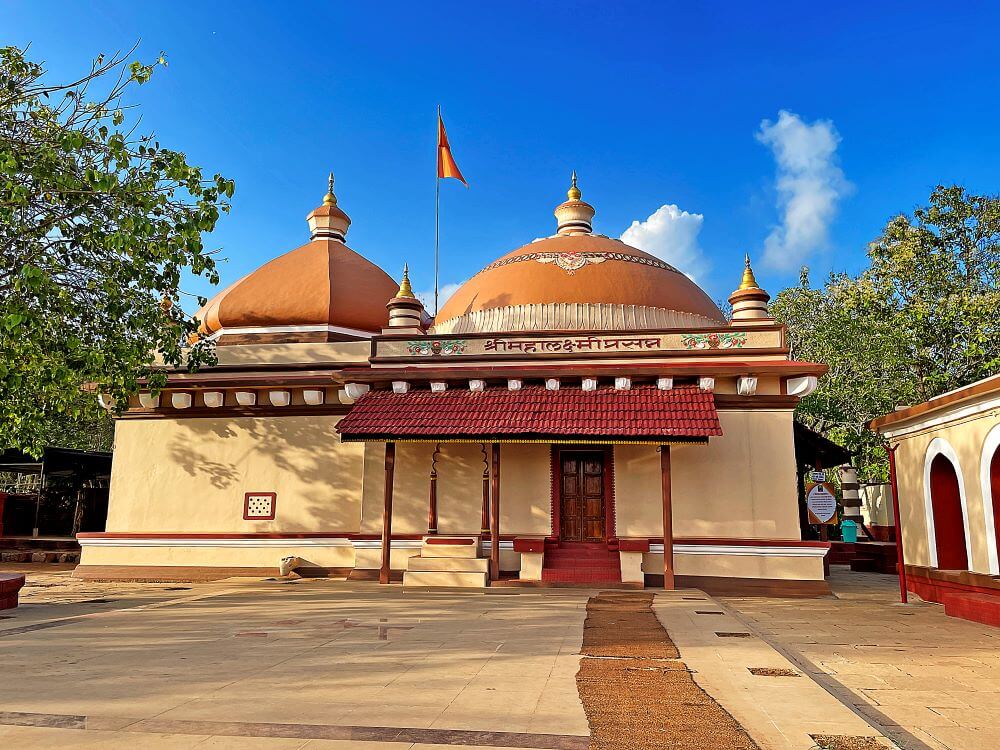
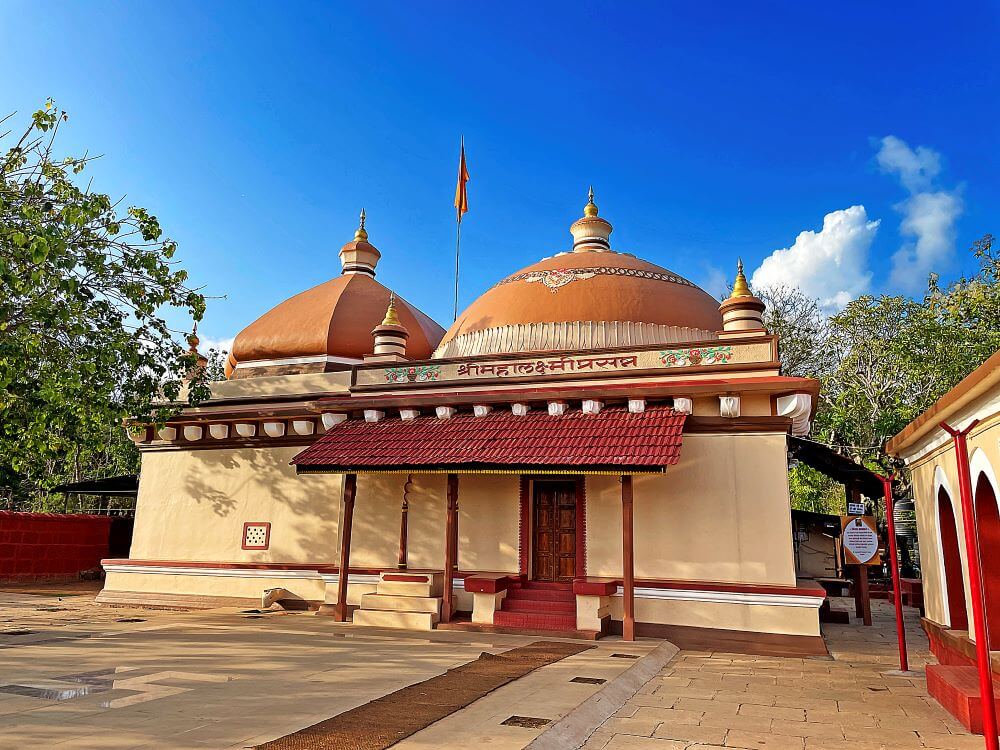
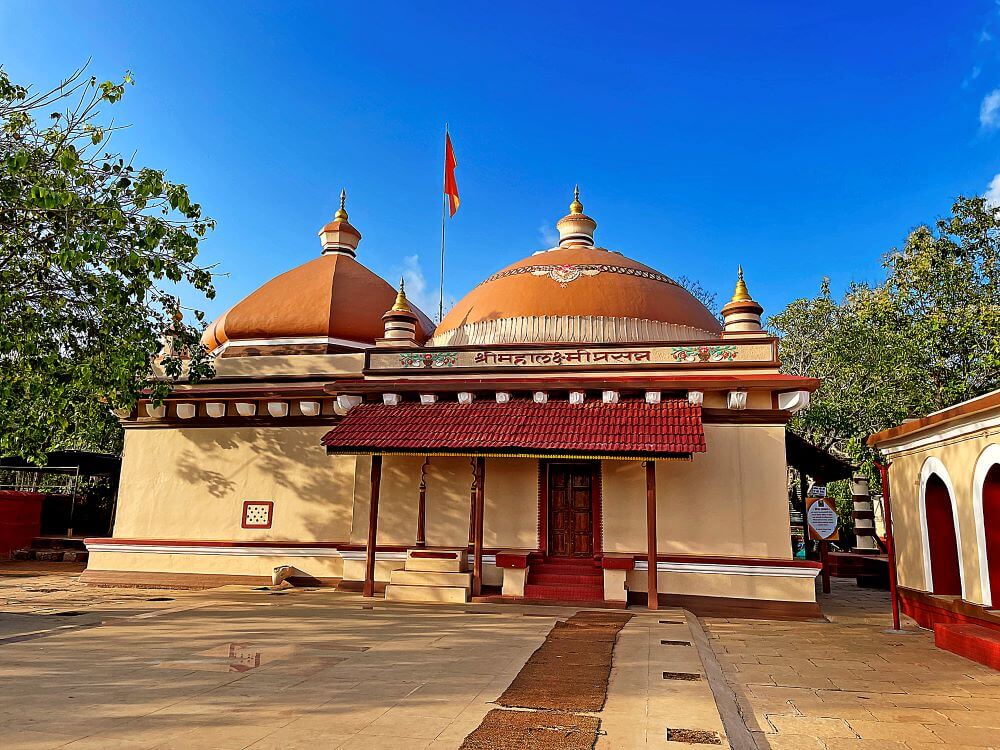
The temple architecture bears the imprint of Southern and Mughal styles. The temple has two domes; beneath one dome is the self-manifested (Swayambhu) abode of Mahalakshmi, while the other dome is situated over the assembly hall (Sabhamandapa). The temple layout consists of an assembly hall and the sanctum sanctorum (Garbhagriha). The assembly hall has four doors, of which three are for entering the assembly hall, while the fourth door offers a sacred view (Darshan) of Mahalakshmi in the sanctum. If anything is spoken in the assembly hall and the sanctum, an echo is heard due to the large domes above. Because these domes are quite high, no matter how hot it is outside, the air inside remains cool. In the sanctum sanctorum, upon a raised platform, is the self-manifested abode of Mahalakshmi, flanked by the idols of Kshetrapala and Someshwara. The temple is designed in a unique architectural manner such that on certain days of the year, the rays of the sunrise fall directly upon the idol of Mahalakshmi in the sanctum, and on some days, the rays of the sunset fall upon the feet of Mahalakshmi.
It is said that where the shrine of Mahalakshmi is situated now, one footprint of the Goddess is located there, while the other footprint is at a little distance ahead from the temple where a dome-shaped structure (Ghumti) has been built. Further ahead is the spot where the Goddess rested her toe, and at some further distance are the marks where the Goddess shook out her hair. Even today, these marks are shown here. It is believed that Mahalakshmi of Kolhapur and this Goddess are real sisters, and fulfilling a vow (Navas) made to Mahalakshmi of Kolhapur right here is also considered acceptable. According to some legends, the Goddess of Ambajogai is also originally from Kelshi itself. Mahalakshmi of Kelshi is the ancestral family deity (Kuldaivat) of many Kokanastha Brahmins.
The festival is celebrated here from Chaitra Shukla Ashtami to Paurnima. For this occasion, all the villagers perform ‘Bindagan’ on the streets (smearing the road in front of the house with cow dung and drawing rangolis on it). In many houses, rangolis are also created using fresh flowers. On the day of Ekadashi, a golden mask (Mukhavata) is adorned on the idol of Mahalakshmi. During this time, Kalbhairav, the presiding village deity of this place, also Mukhvas is offered. Apart from this, silver Mukhvas is adorned to Someshwar and Kshetrapal. A grand fair is held here on Chaitra Paurnima. This fair is conducted just like the ancient village traditions. Due respect is given to every community in this, and specific duties have been assigned to respective communities since ancient times. The chariot festival (Rathyatra) here is famous, and this Rathyatra begins at six o’clock in the morning on Chaitra Paurnima. Along with traditional musical instruments, bells are rung during the Rathyatra. Fireworks are displayed during the Rathyatra. After that, Aarti takes place in the temple and groundnuts are distributed to the devotees as Prasad. Thousands of devotees are present here to receive this Prasad of groundnuts.
Along with the Mahalakshmi Temple in Kelshi, the Dargah of Baba Yakub Saheb, situated on a small hill, is also very famous. This Dargah is considered a symbol of Hindu-Muslim unity. Baba Yakub was a great saint. Hailing from the Sindh province, Baba used to work as a porter in Kelshi. It is said that while he carried loads, his burden would remain suspended in the air just above his head. Chhatrapati Shivaji Maharaj considered Baba Yakub as his 11th Guru. There are historical records stating that Shivaji Maharaj donated 534 acres of land for the maintenance of this Dargah. This Muslim saint has numerous Hindu devotees as well. The Urs (annual festival) held here is inaugurated by the hands of a Hindu devotee. During this time, alongside Muslims, thousands of Hindus participate in the festival. Records show that this place was visited two to three times by Shivaji Maharaj, twice by Sambhaji Maharaj, and once by Thorle Bajirao Peshwa. Additionally, the village houses the temples of the village presiding deity Sri Kalbhairav, Sri Mahaganapati, Sri Lakshminarayana, and Sri Rama. Festivals dedicated to all these deities are celebrated here.
Just as the Mahalakshmi Temple and Baba Yakub Dargah of Kelshi are the proud adornments of the village, this village has also given birth to extraordinary gems such as Kakasaheb Dandekar, the founder of Camlin; Shri Deepak Ghaisas, who made his mark globally in the IT sector at a very young age; and renowned artists Dr. Shreeram Lagoo and Reema Lagoo. Furthermore, Lokmanya Tilak’s mother, as well as the grandfather and great-grandfather of Krantiveer Vasudeo Phadke, also hail from this very village. Kelshi is the ancestral homeland of Maratha-era Sardars such as Haripant Phadke, the Kelkars, Biwalkars, Lagoos, and Jogs.
Apart from this, one of the main attractions of Kelshi is the sand dune, which is the only one of its kind in the entire Konkan region. This dune is different from the other dunes along the shore. Layers of black and white sand are visible on this twenty-eight-meter-high dune. Conch shells and cowrie shells are found at the top of the hill. According to research conducted by experts, this dune is believed to have been formed due to a tsunami that occurred in the thirteenth century. Many tourists visit this place to enjoy the sliding sand while climbing this hill and to witness the beautiful sunset.
This sacred temple stands as a testament to deep spiritual devotion, ancient architectural grandeur, and rich local cultural traditions.
The sanctum sanctorum houses the divine idol consecrated according to ancient Vedic traditions, surrounded by serene courtyards and traditional temple architecture.
Navratri, Maha Shivratri, Annual Temple Jatra & Deepotsav
Compare and book flights, secure top-rated local hotels near the temple, hire reliable guides, and rent cars instantly.
Extend your pilgrimage by visiting other highly sacred temples located nearby.


Add ₹999 more to unlock FREE SHIPPING!
Your sacred cart is currently empty.
Shop Photo FramesFill in your delivery details below to place your order.
Add comment