
Add ₹999 more to unlock FREE SHIPPING!
Your sacred cart is currently empty.
Shop Photo FramesIn Maharashtra, almost every village features a temple dedicated to Lord Hanuman or an idol of the deity within temples of other gods. Lord Hanuman is revered by many names such as Hanuman, Maruti, Anjanisuta, Pawanputra, Mahabali, and Sankatmochan. However, located a short distance from the famous tourist spot ‘Sat Bahinincha Dongar’ (Seven Sisters Hill) in Nagbhid taluka, the Hanuman Temple at Balapur is renowned as ‘Gaimukh Hanuman’. This sacred place is considered a *Jaagrut Devasthan* (living shrine) and is revered as the *Gramdaivat* (presiding deity) of Nagbhid taluka. Devotees firmly believe that Gaimukh Hanuman fulfills all earnest prayers and vows.
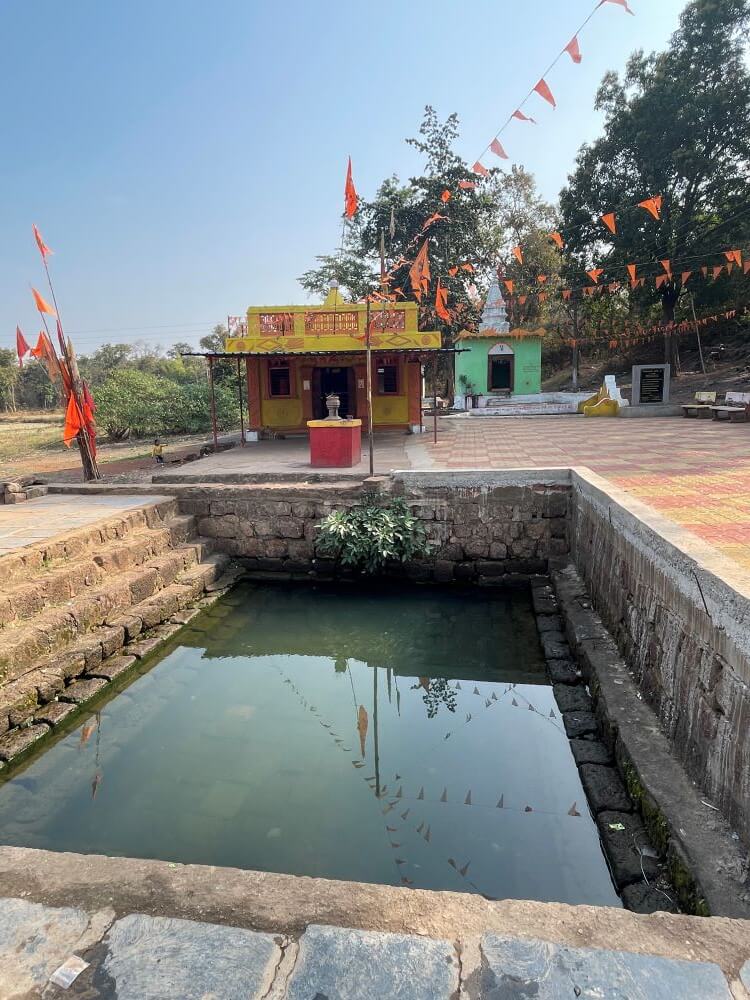
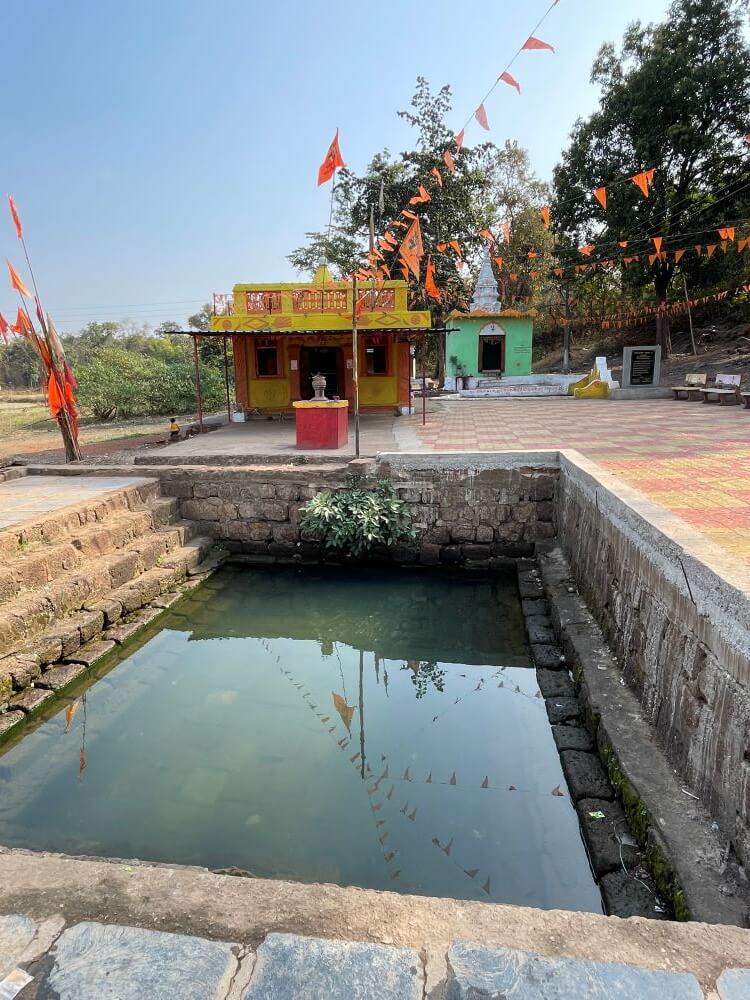
The reason behind this holy shrine being named Gaimukh Hanuman is that there is a *Kund* (water tank) here. Water flows continuously throughout all twelve months from a *Gaimukh* (cow’s mouth spout) located above this Kund. No matter how harsh the summer is, this natural spring flows endlessly. Being located near this Kund, the temple earned the name ‘Gaimukh Hanuman’. It is a revered place of faith for many devotees in Chandrapur, and owing to the growing number of visiting devotees and tourists, the Government of Maharashtra has granted it ‘C’ grade pilgrimage status, contributing to the development of this area.
The temple’s legend states that Madhavrao Mokhare from Nagpur was an ardent devotee of Lord Hanuman. Once, Lord Hanuman appeared in his dream and instructed him, “I reside beneath a Peepal tree in the forest of Balapur; build my temple there.” Following this divine vision, when Mokhare searched the area, he discovered a *Swayambhu* (self-manifested) idol (rock slab) of Lord Hanuman beneath a large Peepal tree in the dense forest. In accordance with the divine dream, he informed the villagers, removed the Peepal tree while keeping the idol in its original position, and constructed a temple around it. Records indicate that the present temple was renovated in 1965. Long before the temple was built, a natural Kund existed here. During the renovation of the temple in 1965, the Kund was properly shaped, and steps were constructed along its sides for descending into it. Apart from this, there are two other large Kunds in front of the Hanuman temple, one of which is used by men and the other by women for bathing.
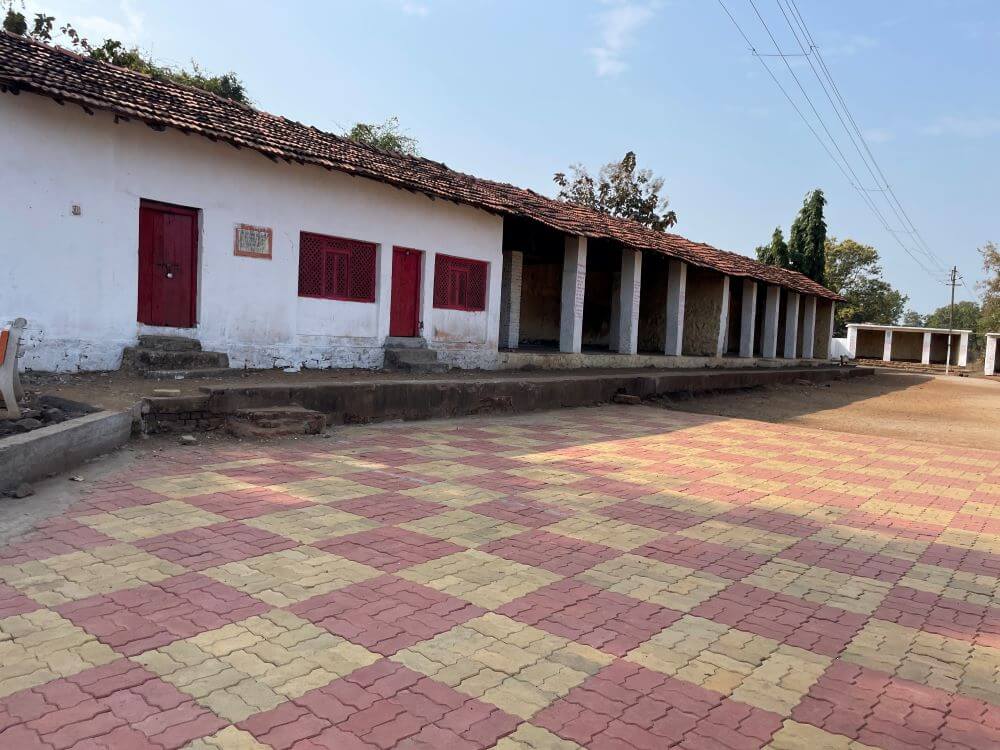
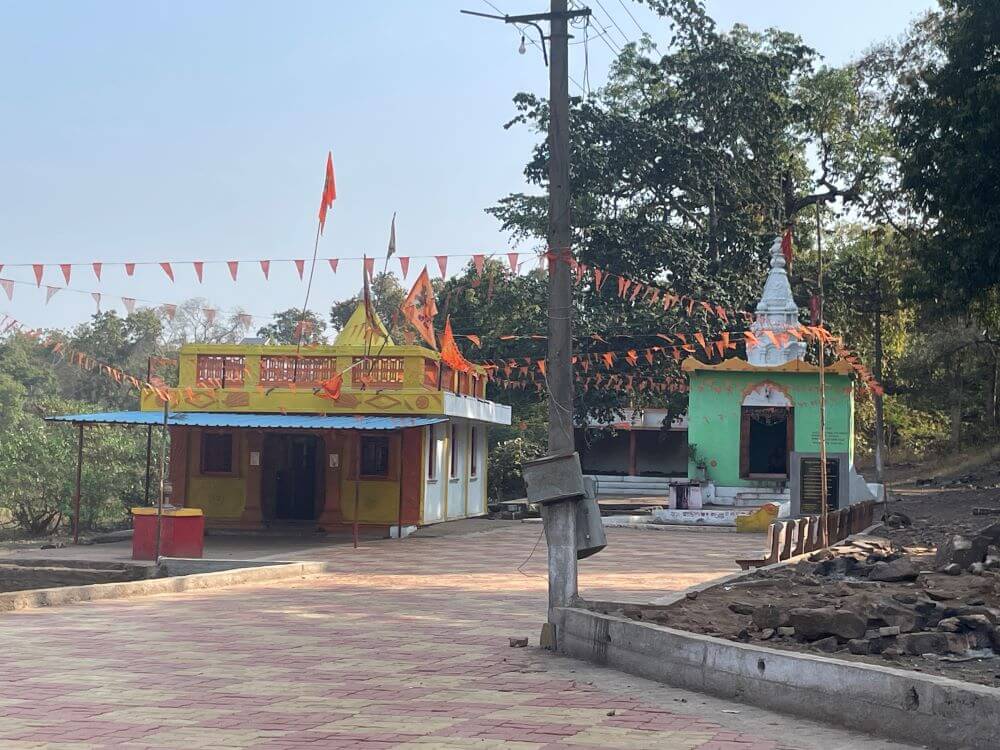
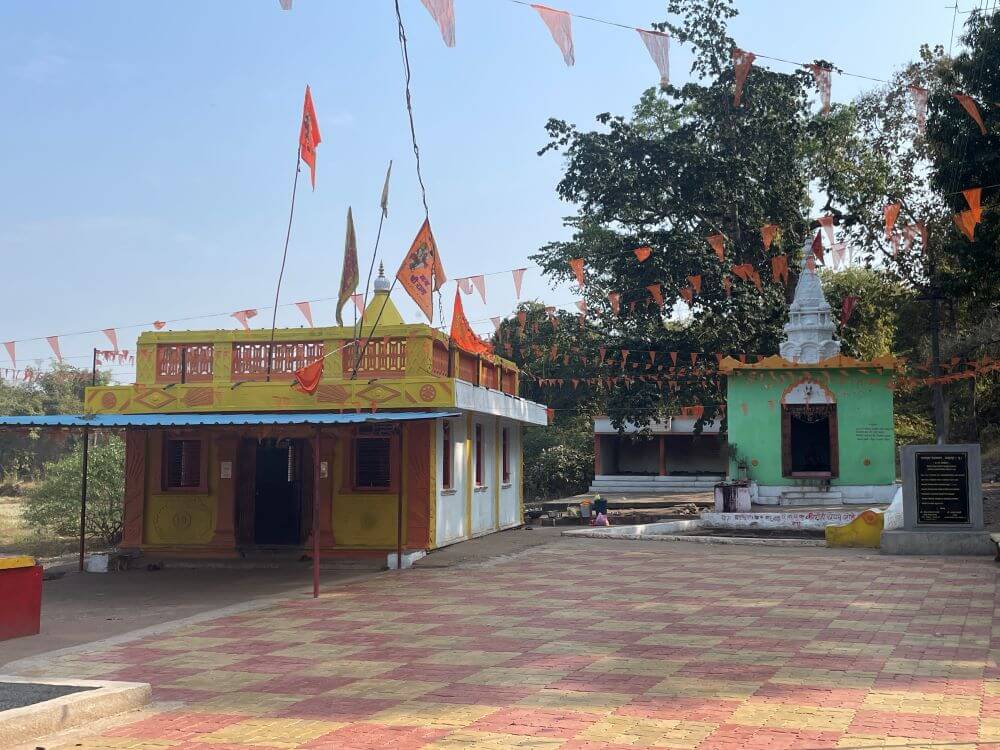
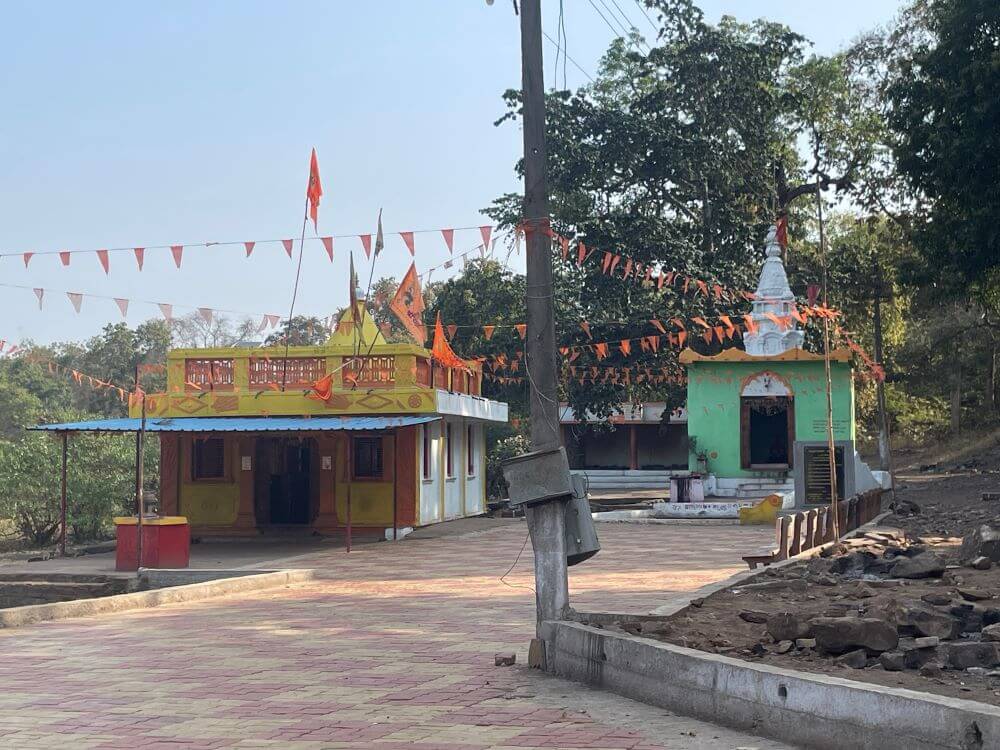
There is a route to reach Balapur from Talodhi village, located on the Nagbhid-Sindewahi road. The temple is situated at the foot of a hill on the border of Balapur village. Entry into the temple premises is through an archway. Near the arch, there are several shops selling puja materials. The temple premises are enclosed by a boundary wall. Although the temple itself is medium-sized, the surrounding complex is spacious. The entire area is paved, and arrangements have been made including a *Dharamshala* (rest house), several rooms for devotees to prepare food, separate Kunds for men and women to bathe, changing rooms, and numerous benches for visitors to sit . Set amidst nature’s beauty, this temple complex witnesses a steady influx of both devotees and tourists every day.
The Gaimukh Hanuman Temple consists of an assembly hall (*Sabhamandap*) and a sanctum sanctorum (*Garbhagriha*). The year of the temple’s renovation is inscribed on the main entrance. The assembly hall is open, and inside the sanctum sanctorum, instead of a traditional idol, there is a vermilion-anointed stone slab (*shila*) standing about 5 feet high. Whenever there is an auspicious event in a household, residents from the surrounding region offer the very first invitation to Gaimukh Hanuman. Be it sowing or harvesting in the fields, before starting any agricultural work, people come here, prepare *sheera* (sweet offering) using the holy water (*Teertha*) from the Gaimukh Kund, and offer it as *Naivedya* to the deity. Only then is the field work initiated. It is a tradition that after any major work or purchasing a new appliance or tool for the home, people come to this temple complex, cook food, and offer *Naivedya* to God. Consequently, families visit throughout the year to cook food and *Prasad* here. For this purpose, the temple trust provides numerous rooms for the convenience of devotees. Every year, a grand fair (*Yatra*) is held here on Makar Sankranti, drawing devotees from far and wide for *Darshan*.
According to the villagers, water flows continuously from the Gaimukh into the Kund at a high force. Yet, no matter how much water enters, the Kund never overflows. There is no visible stream or channel for the water to drain out. Around 50 years ago, deep excavations were carried out around the Kund to discover where the water goes, but no source or outlet could be found. It is speculated that the water might be seeping into an underground stream through a cavity at the bottom of the Kund. Visiting devotees and tourists use the water from this Kund for drinking.
This sacred temple stands as a testament to deep spiritual devotion, ancient architectural grandeur, and rich local cultural traditions.
The sanctum sanctorum houses the divine idol consecrated according to ancient Vedic traditions, surrounded by serene courtyards and traditional temple architecture.
Navratri, Maha Shivratri, Annual Temple Jatra & Deepotsav
Compare and book flights, secure top-rated local hotels near the temple, hire reliable guides, and rent cars instantly.
Extend your pilgrimage by visiting other highly sacred temples located nearby.


Add ₹999 more to unlock FREE SHIPPING!
Your sacred cart is currently empty.
Shop Photo FramesFill in your delivery details below to place your order.
Add comment