
Add ₹999 more to unlock FREE SHIPPING!
Your sacred cart is currently empty.
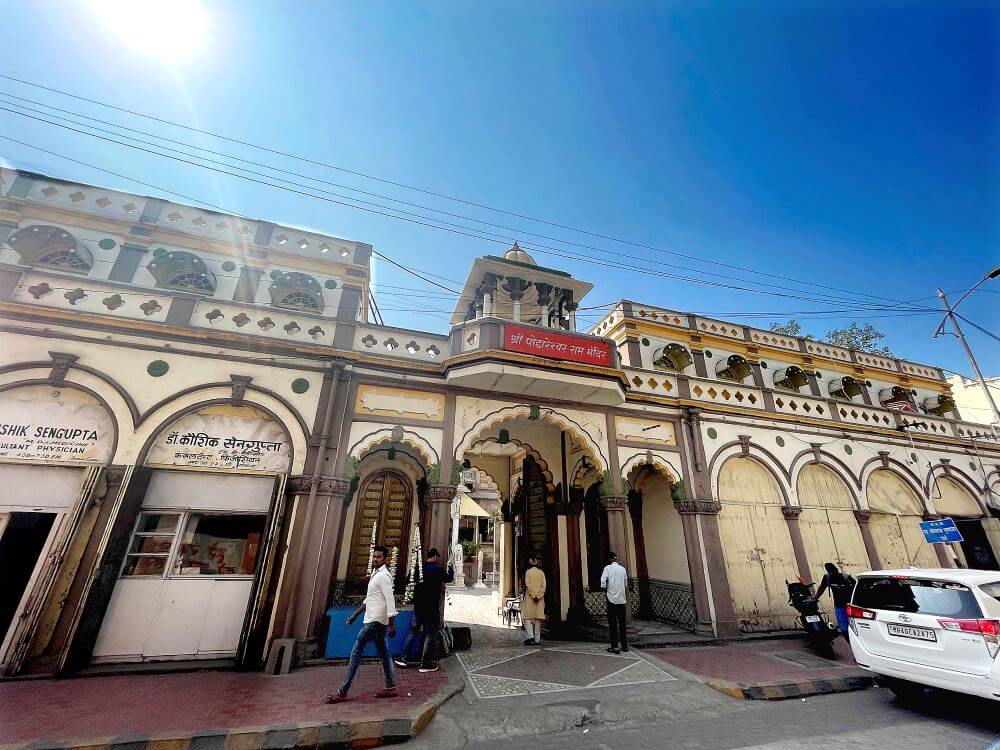
Shop Photo FramesThe magnificent structure of the Poddar-eshwar Ram Mandir is situated in the Shanichara area of Nagpur city. The idols of Shri Ram, Sita, and Lakshman were consecrated in this temple 100 years ago, on the day of Phalguna Shuddha Dwadashi in the year 1923. The ‘Shri Ram Navaratri Utsav’ is celebrated from Chaitra Shuddha Pratipada to Ram Navami. This festival, held on the occasion of the Shri Ram Janmotsav, and the grand procession (Shobhayatra) taken out from this temple are a major attraction for the entire Vidarbha region, including Nagpur, with lakhs of devotees participating in it.
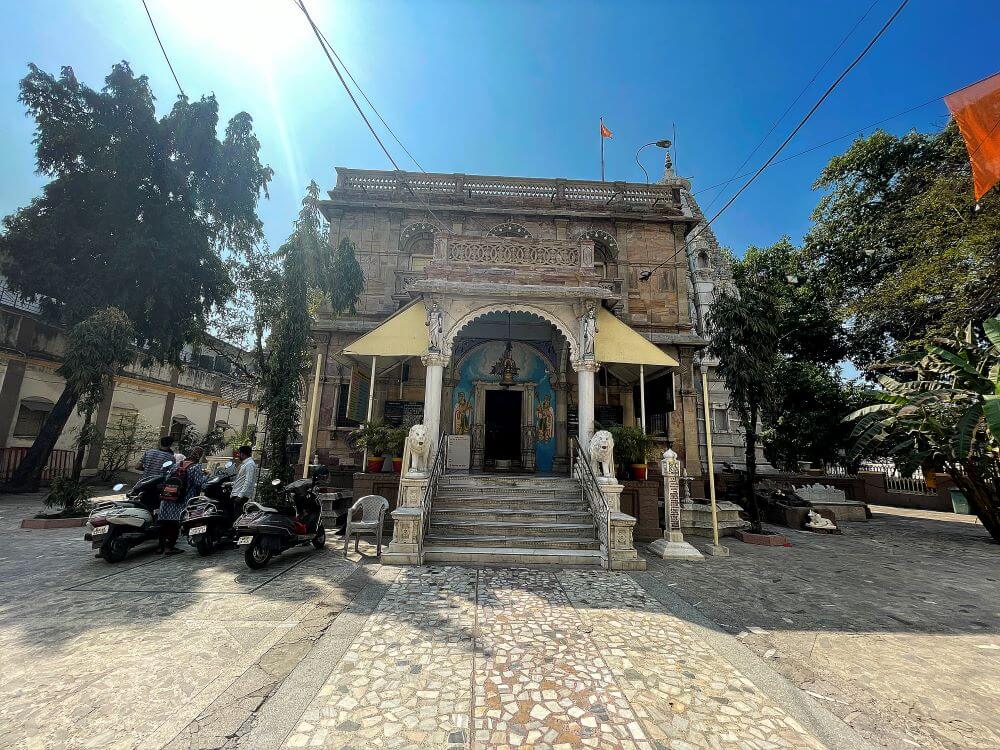
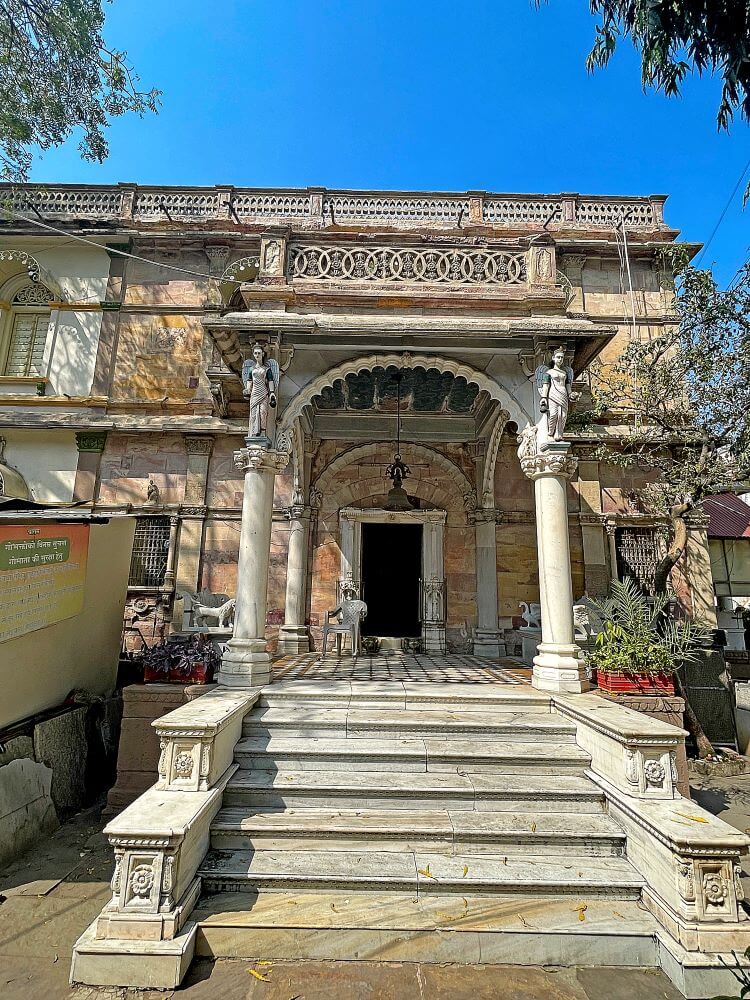
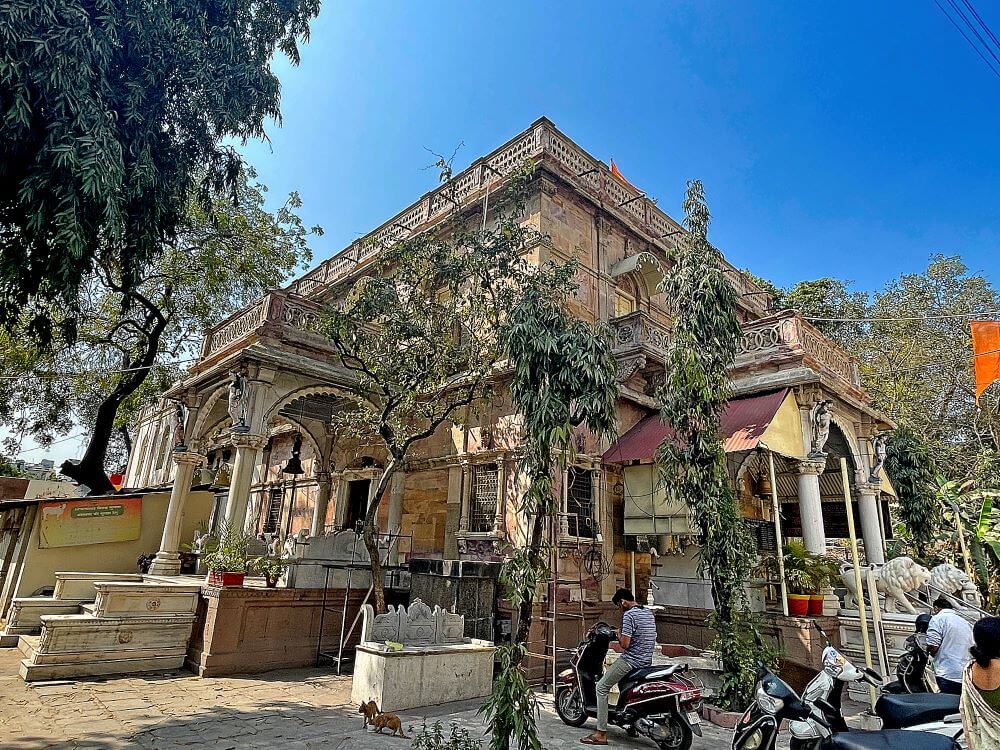
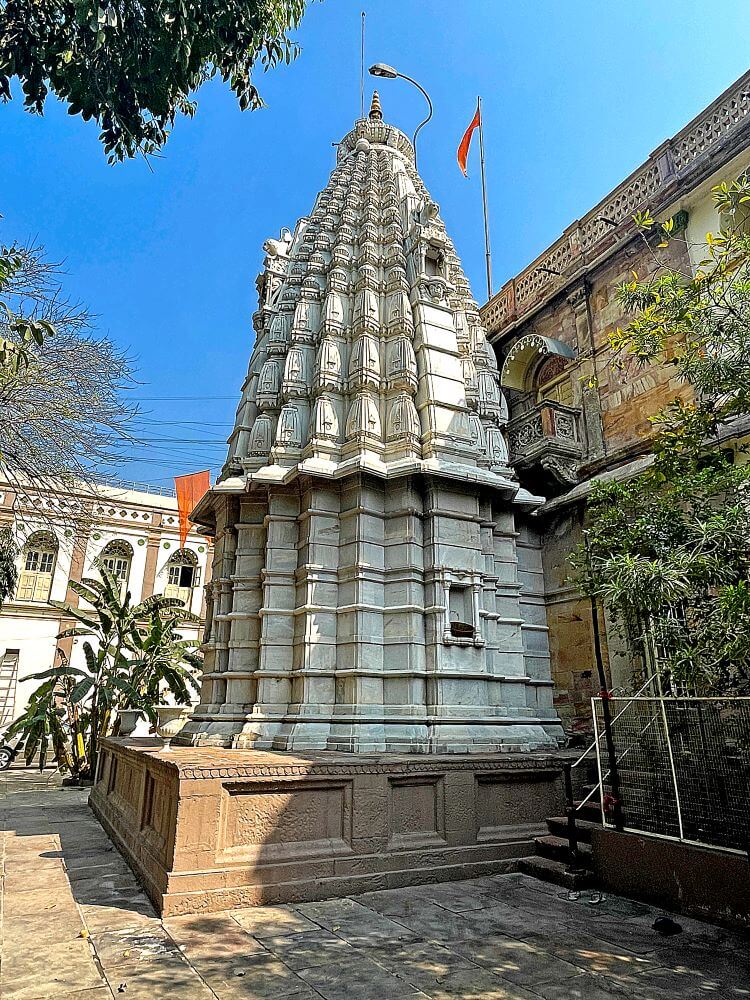
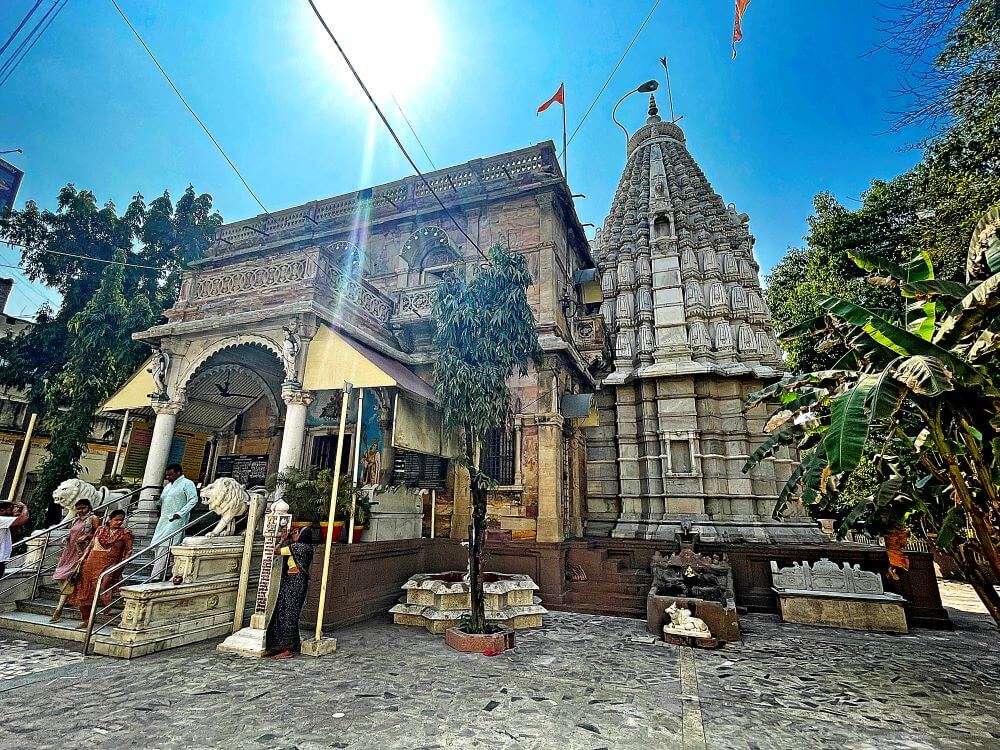
Located near Ram Jhula, adjacent to the railway station, the Poddar-eshwar Ram Mandir is an excellent example of architectural art. The temple was built 100 years ago at his own expense by the Ram devotee and social worker Jamnadhar Poddar. Records indicate that red and black stones brought from Koradi in Nagpur district were used for the construction of the temple. It is said that Pandit Prabhudatta from Kashi had come at that time to perform the priestly duties for the consecration of the idols. Since this temple of Ram was built by the Poddar family, it came to be known as the Poddar-eshwar Ram Mandir. This temple is counted among the important and ancient places of worship in Vidarbha.
Situated at a slight elevation from the ground, the temple’s design consists of a Mukhamandapa (entrance hall), Sabhamandapa (assembly hall), and a Gabhara (sanctum sanctorum). One enters the Mukhamandapa by climbing 6 to 7 steps. There are lion sculptures on both sides of the steps. After entering the Sabhamandapa through the arched Mukhamandapa, one can see the white marble, north-facing idols of Shri Ram, Lakshman, and Sita, consecrated in a silver throne within the sanctum. They look radiant, adorned with various ornaments and garments. In the east-facing Shiva temple to the right of the Sabhamandapa, there are idols of Kartikeya, Ganesha, Sheshnag, and Parvati, along with a Narmadeshwar Shivling. In the corner between the south and east, there is an idol of Maruti. In the six windows, there are idols of Vishnu-Lakshmi, Mahalakshmi, Hanuman, Garuda, Sugriva, and Ganga Mata.
The Shobhayatra taken out from this temple on Ram Navami is the grandest festival here. This procession began about 50 years ago and is famous among the major processions in Maharashtra. Preparations for the Ram Janmotsav begin 3 months in advance. More than 50 tableaux based on the idols of Shri Ram, Sita, and Lakshman, as well as various religious and mythological stories, participate in the Shobhayatra. These include depictions of Ram Shakti Darshan, Vitthal-Rukmini Darshan, Mahadeva consuming Halahala, Tirupati Balaji Darshan, Panchmukhi Gayatri Vedmala, Nrisimha Avatar, Sankatmochan Hanuman, and others. Many of these tableaux are sponsored by private establishments, traders, and organizations.
On the day of Ram Navami, after the Ram Janma puja, aarti, and distribution of prasad at 12:00 noon, the Shobhayatra commences around 3:00 PM. For this, the city streets are decorated with buntings, welcome banners, and lighting. Soft Ram-dhun plays on loudspeakers everywhere. At this time, the entire atmosphere becomes immersed in devotion to Ram. Generous devotees provide cold drinks, water, and prasad at various places along the route for the devotees in the procession. Although there is no restriction on specific attire for the procession, many devotees participate wearing reddish-saffron colored caps.
Mominpura, a Muslim locality, is situated a short distance from the temple. Many youths from there also participate in this Ram Navami Shobhayatra. During the procession, Muslims from the Mominpura area shower flowers on the Ram chariot and chant praises of Shri Ram. Due to the large number of tableaux, it is 1:00 or 2:00 AM by the time the procession returns to the temple. A day after the festival concludes, a Mahaprasad is organized at the temple. On that occasion, the volunteers who worked during Navaratri and the contributors of the tableaux are honored with awards. Apart from this, festivals are also celebrated here on Maha Shivaratri, Shri Krishna Janmashtami, Hanuman Jayanti, Janaki Jayanti, Tulsidas Jayanti, and Akshaya Tritiya.
Along with religious programs, educational, health-related, and social activities are also conducted at the temple. Every year on Kojagiri Purnima, medicine is provided here for asthma patients. Thousands of citizens benefit from this. Additionally, health camps and educational programs for the poor are also organized. Devotees can visit the temple for darshan daily from 6:30 AM to 11:30 AM and from 4:00 PM to 9:30 PM.
This sacred temple stands as a testament to deep spiritual devotion, ancient architectural grandeur, and rich local cultural traditions.
The sanctum sanctorum houses the divine idol consecrated according to ancient Vedic traditions, surrounded by serene courtyards and traditional temple architecture.
Navratri, Maha Shivratri, Annual Temple Jatra & Deepotsav
Compare and book flights, secure top-rated local hotels near the temple, hire reliable guides, and rent cars instantly.
Extend your pilgrimage by visiting other highly sacred temples located nearby.


Add ₹999 more to unlock FREE SHIPPING!
Your sacred cart is currently empty.
Shop Photo FramesFill in your delivery details below to place your order.
Add comment