
Add ₹999 more to unlock FREE SHIPPING!
Your sacred cart is currently empty.
Shop Photo FramesThe Bhalwani region, sanctified by the presence of Sages Parashara, Vibhandaka, and Bhrunga, is home to the temple of Lord Nageshwar Mahadeva. It is said that in ancient times, these three sages used to visit this sacred site to engage in spiritual discourses. The Shivalinga established here was consecrated by these sages. During the mythological era, many sages resided in this temple premises. Devotees have a firm faith that this ancient sixteenth-century temple, situated on the banks of the Kapari River here, is a powerful, awakened divine shrine (Jagrut Devasthan).
According to the legend regarding the village of Bhalwani and the temple, Sages Vibhandaka and Bhrunga were performing severe penance for Lord Mahadeva on a hill in Parner. This penance of theirs continued for hundreds of years. Lord Mahadeva, becoming pleased, could grant the sages a boon whereby they might even ask for His divine abode, and heaven would slip from his hands—fearing this, Indra, the king of the gods, grew anxious. He sent the celestial nymphs Urvashi and Menaka from heaven to this place to disrupt the sages’ penance. Accordingly, the nymphs danced and cast a spell of enchantment over the sages. The sages were mesmerized by their dance and graceful expressions, and their penance was broken. Ever since that time, this village came to be known as Bhalwani. Afterward, staying at this place, the sages established five Shivalingas in this region. Among them, the shrine of Nageshwar is considered the principal one.
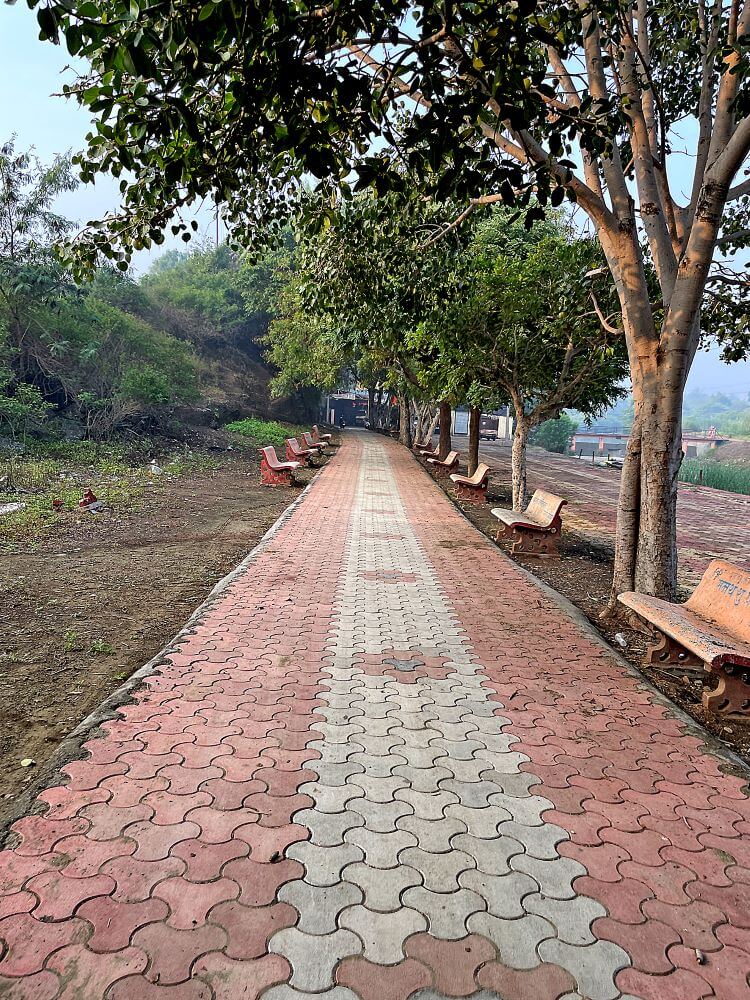
Situated to the south of Bhalwani village on a small hillock is the Hemadpanthi-style temple of Nageshwar. The Kapari River flows alongside it. In mythological times, this river was known as the ‘Jahnavi River’. Adjacent to the river, a beautiful garden has been developed by the temple trust, from which a pathway has been constructed leading to the temple. With ornamental trees planted on both sides of the path, this area appears serene and picturesque. The temple courtyard is paved, and a shed has been erected in front of the main temple by the Devasthan Trust for the convenience of devotees.
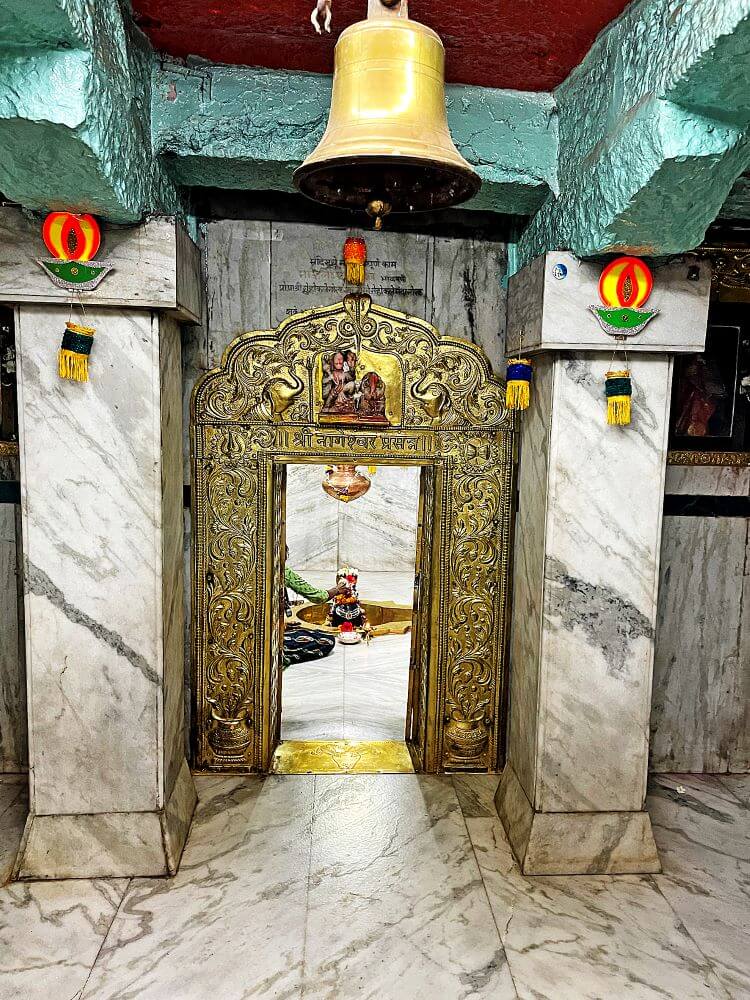
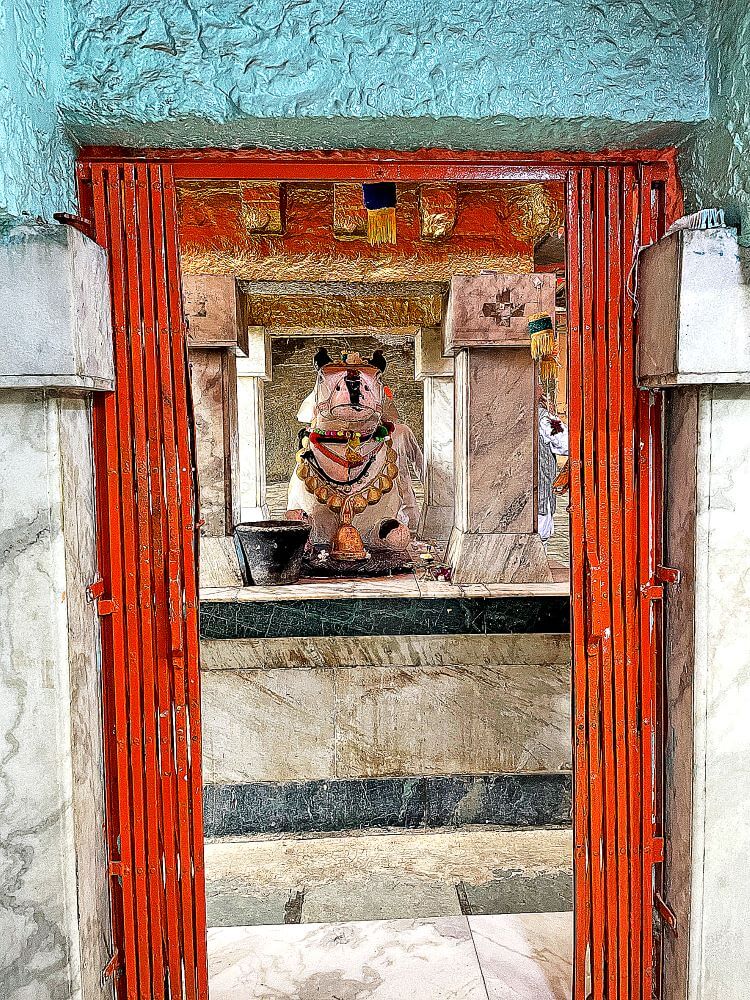
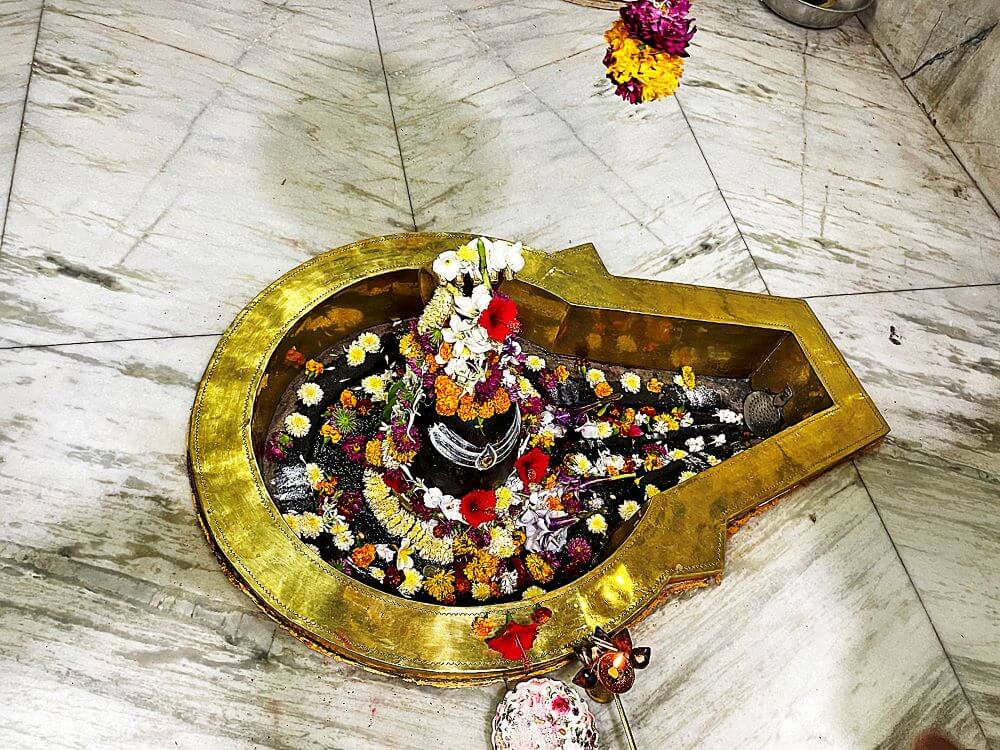
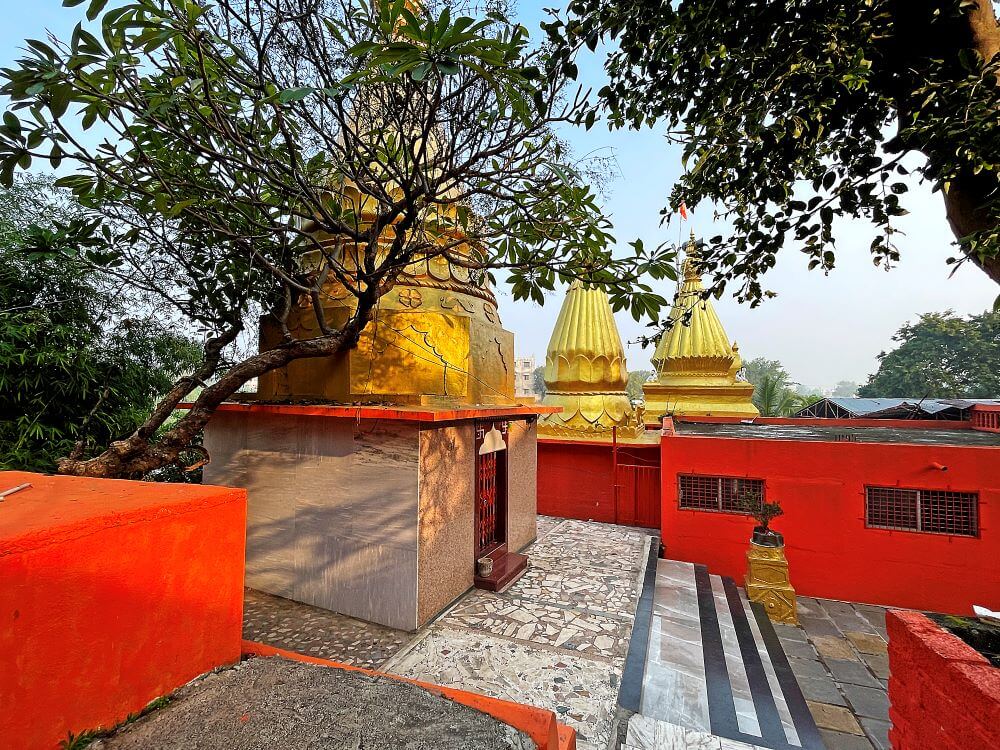
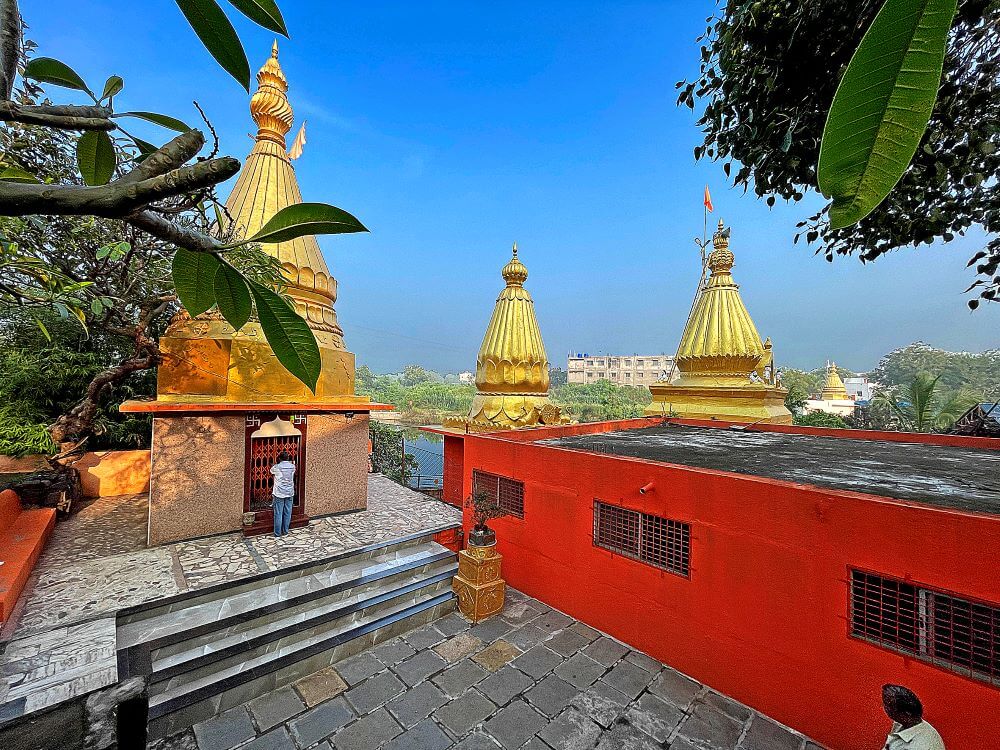
The architecture of the Nageshwar Temple consists of a Nandi Mandapa, a Sabha Mandapa (assembly hall), an Antarala (vestibule), and a Garbhagriha (sanctum sanctorum). In front of the entrance to the main temple lies the Nandi Mandapa, housing a magnificent and unique marble statue of Nandi. Along with this Nandi Mandapa, the spires (kalashas) of all the shrines in this complex are painted in a golden hue. Consequently, these temples catch the eye even from a distance. From in front of the Nandi Mandapa, one enters the Sabha Mandapa of the temple. The stone pillars of the Sabha Mandapa feature exquisite craftsmanship, and in the center rests a brass statue of a tortoise. Moving from the Antarala towards the Garbhagriha, the entrance of the sanctum is adorned with intricate carvings on brass plating on all sides, and upon the Lalatabimba (lintel centerpiece) are images of Lord Hanuman and Lord Ganesha. Generally, in ancient temples of Mahadeva, the Lalatabimba of the sanctum features an image of Mahadeva or Ganesha; however, here, both images are present together, and the inclusion of Lord Hanuman’s image is considered extremely rare. In the sunken portion of the sanctum lies the original stone Shivalinga, whose Shalunga (base) is covered with a brass casing. On Shravani Somwar (Mondays of the holy month of Shravana) and Maha Shivaratri, the Shivalinga is beautifully adorned with floral arrangements, while during festivals, a metal mask (mukhawata) is placed over the Shivalinga.
Adjacent to the temple are shrines dedicated to Sainath, Shri Datta, and Lord Ganesha. This place is renowned throughout Ahilyanagar district as an awakened divine shrine (Jagrut Devasthan). On every Monday in the month of Shravana, thousands of devotees gather for the darshan of Lord Nageshwar. The annual fair (Yatrotsava) on Maha Shivaratri is regarded as one of the major festivals in Parner. This celebration continues continuously for two days. On the first day, from early morning, Maha Puja and Abhishek are performed. On the occasion of the fair, cultural programs such as bhajans, kirtans, and the distribution of sherani (distribution of jaggery in fulfillment of vows) take place. In the evening, the Chhabina (procession with the palanquin) is taken out, in which a large number of devotees participate. On the second day of the fair, the traditional wrestling competitions (kushti spardha) held here are famous, drawing hundreds of wrestlers from all over the state. During the festival period, the temple trust distributes light refreshments to the devotees, while on Maha Shivaratri, Mahaprasad is distributed.
On the occasion of Ashadhi Ekadashi, a Dindi (procession) is taken out annually from the Nageshwar Temple to Pandharpur, with a large number of Warkaris participating in it. Aarti takes place daily at 7 in the morning. On Maha Shivaratri and Shravani Mondays, Maha Aarti is performed at 7 in the morning and 12 in the afternoon. Daily from 6 in the morning to 7 in the evening, devotees can visit the temple and have the darshan of Lord Nageshwar.
This sacred temple stands as a testament to deep spiritual devotion, ancient architectural grandeur, and rich local cultural traditions.
The sanctum sanctorum houses the divine idol consecrated according to ancient Vedic traditions, surrounded by serene courtyards and traditional temple architecture.
Navratri, Maha Shivratri, Annual Temple Jatra & Deepotsav
Compare and book flights, secure top-rated local hotels near the temple, hire reliable guides, and rent cars instantly.
Extend your pilgrimage by visiting other highly sacred temples located nearby.


Add ₹999 more to unlock FREE SHIPPING!
Your sacred cart is currently empty.
Shop Photo FramesFill in your delivery details below to place your order.
Add comment