
Add ₹999 more to unlock FREE SHIPPING!
Your sacred cart is currently empty.
Shop Photo FramesIn our country, there are two pilgrimage sites where, during festivals, the original idol from the sanctum sanctorum (Gabhara) is moved from its place and placed into a palanquin. One is Jagannath Puri, and the other is the idol of Goddess Tulja Bhavani in Tuljapur, Maharashtra. This idol of Tulja Bhavani is placed in an empty palanquin that arrives from Burhannagar (the maternal home of the Goddess) near Ahilyanagar, and a procession is taken out amidst the chanting of devotees in the presence of lakhs of people. This tradition, which has been ongoing for over 500 years, continues to this day, and one can still see the strong bond between the maternal home and the marital home.
According to historical records, King Shambhurav of the Shalivahana dynasty from Paithan brought the idol and the throne of the Goddess to Burhannagar. At that time, this place was known as Andheri Nagari, and a king named Telanga ruled here. The idol of the Goddess remained here for 300 to 400 years. This royal family came to be known first as Devkar and later as Bhagat. After King Telanga went to invade Karnataka, he took the idol with him. On the way, the idol was kept safely in Chinchpur (present-day Tuljapur), which was a hilly region. King Telanga died in battle, and as a result, the idol remained in Tuljapur for many years. Even today, the tomb of King Telanga is located on the hill to the left of the Tulja Bhavani Mata temple. Later, when the Bahmani rule began, the idol was brought back to Burhannagar.
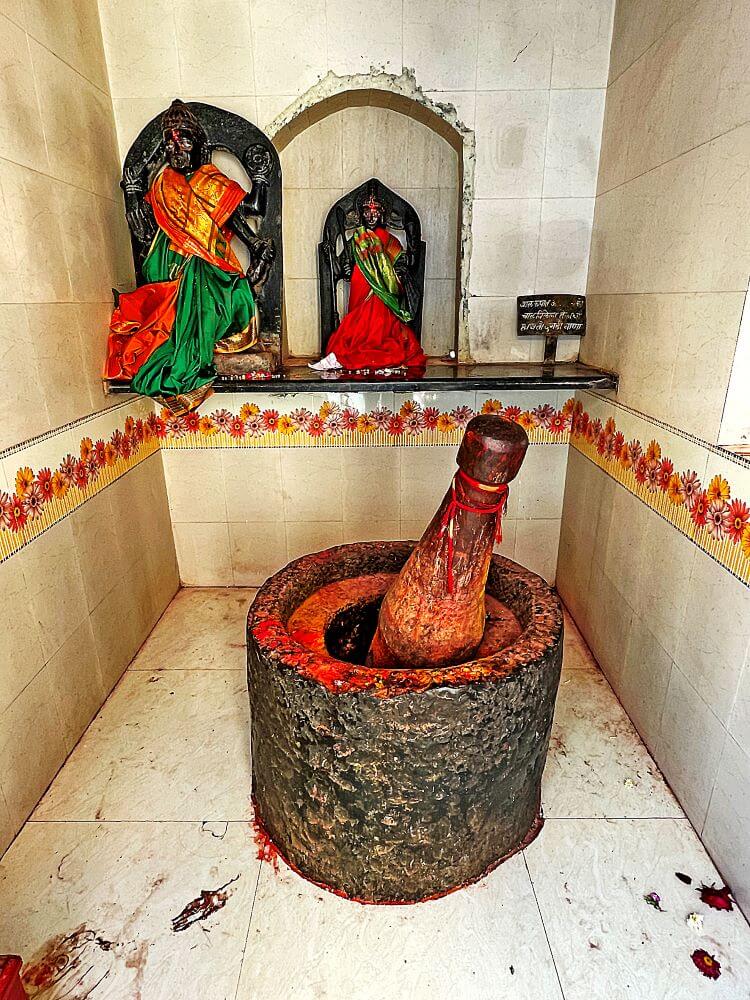
When the Nizam’s tyranny began in Ahilyanagar, the idol was taken back to Tuljapur. Jankoji Devkar Bhagat worked hard to protect the idol from the Nizam. After the Nizam’s rule ended, the idol was brought back to Burhannagar. Jankoji was a staunch devotee of Tulja Bhavani and had immense faith in the Goddess. The Goddess once appeared to him in the form of a young girl. He affectionately named her Ambika. This Ambika helped Jankoji in his oil business. (Even today, the oil mill operated by the Goddess can be seen next to the temple). Due to this business, Jankoji was freed from the moneylender’s debt. In a short time, he became wealthy and was known as a famous merchant in the surrounding area. This Ambika stayed with Jankoji for 12 years. During this time, the Badshah of Burhannagar set his eyes on Ambika. The Badshah sent soldiers to bring Ambika, but no one dared to touch her. At that time, Ambika cursed that Burhannagar would become desolate. Consequently, diseases spread in the village, many people died, and many left the village. However, those who were true devotees of the Goddess were not harmed. Later, the Goddess revealed her true form to Jankoji and disappeared.
Jankoji had immense faith in the Goddess. Unable to bear the separation from her, he went to Tuljapur to perform self-immolation, but just then, the Goddess Ambika appeared before him. At that moment, Jankoji said to the Goddess, “Just as I have served you, may my future generations also be blessed with this service.” To this, the Goddess replied, “I will cross the border in the palanquin sent by you (from Burhannagar) and sleep on the bed for five days.” Since then, this Palang Palkhi (Bed-Palanquin) festival has never been interrupted.
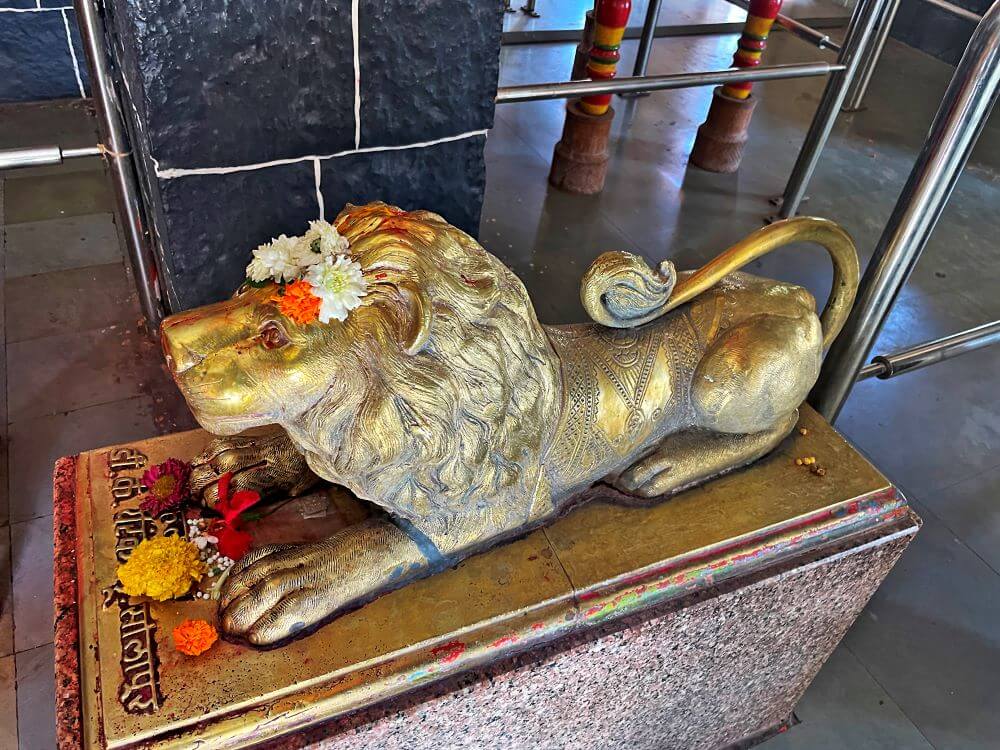
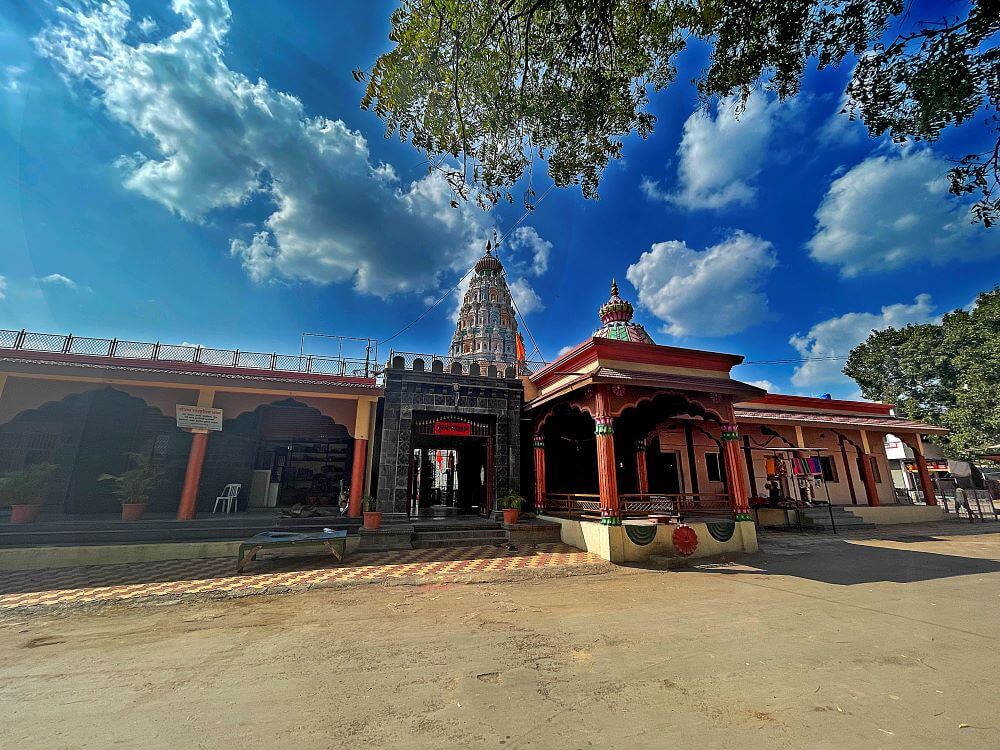
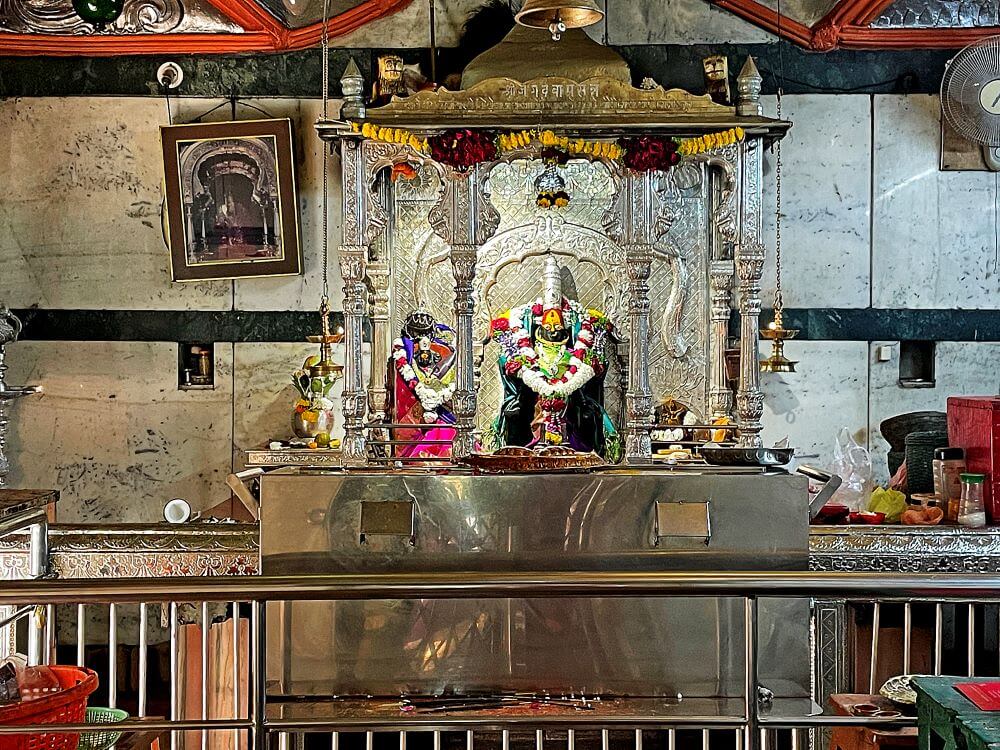
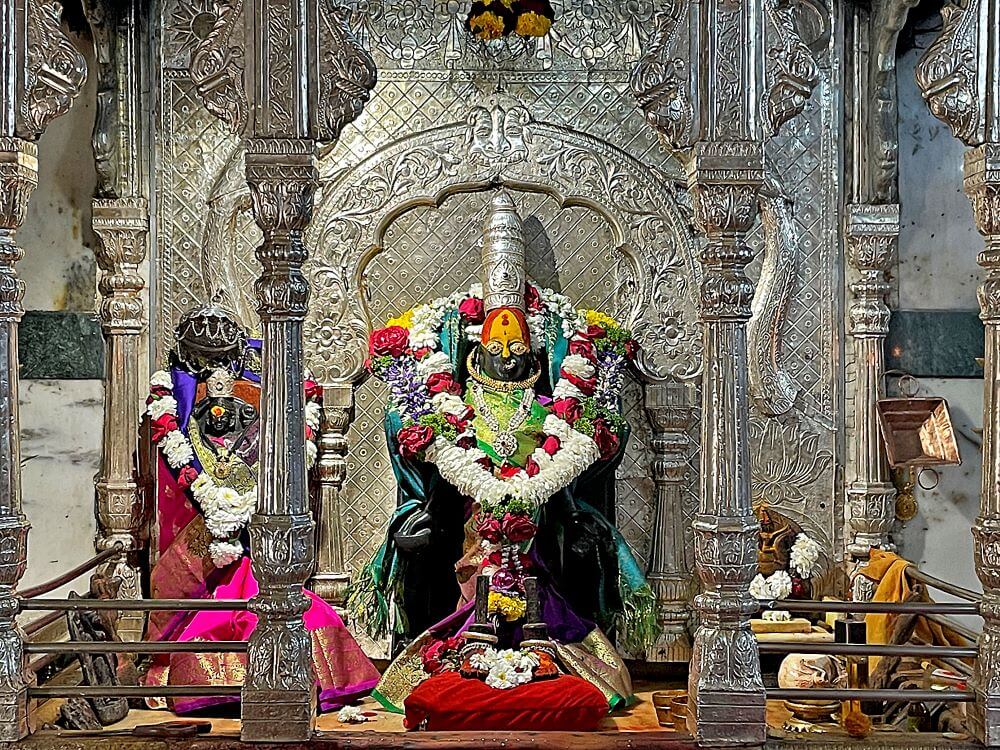
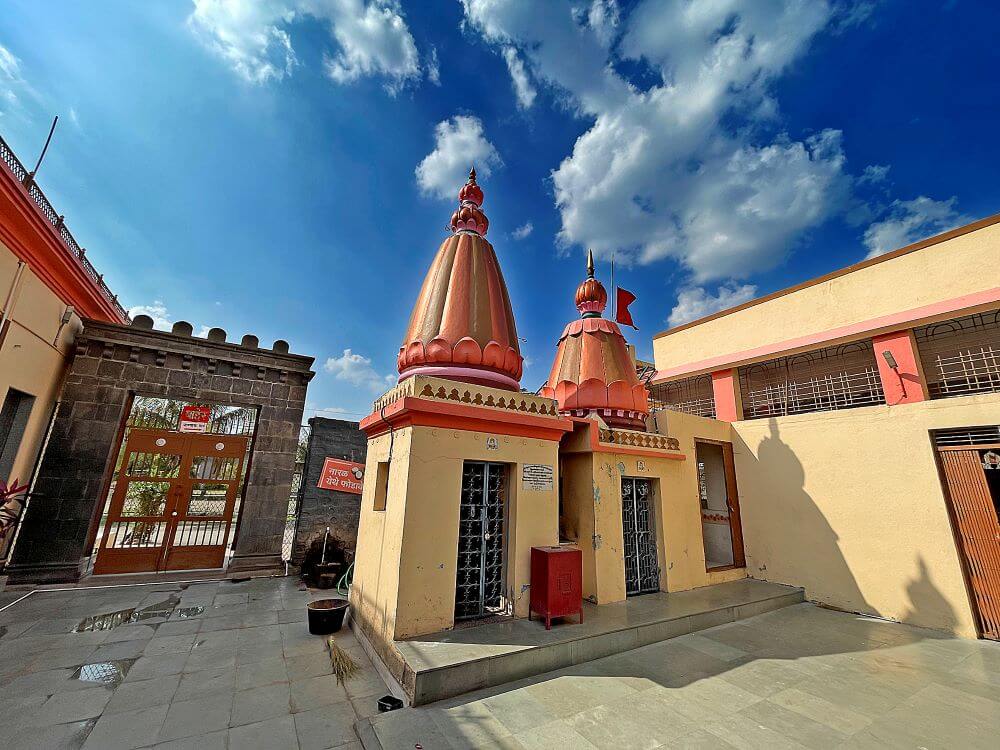
Burhannagar, located on the outskirts of Ahilyanagar city, is considered the maternal home of the Goddess, while Tuljapur is considered her marital home. The temple at Burhannagar is large and consists of a Mukhamandapa (entrance hall), Sabhamandapa (assembly hall), and Garbhagriha (sanctum sanctorum). After the renovation carried out in 1994-95, the temple attained its current form. There are many shops selling worship materials in the temple premises. There are two ancient lamp towers (Deepmala) in front of the temple. After entering through the Darshan Mandap, a queue system with steel railings has been arranged in the Sabhamandapa to manage the crowd of devotees. In the Sabhamandapa, there is a large brass idol of a lion, the vehicle of the Goddess, and the Goddess’s bed is also kept here. There are many Peshwa-era lanterns on the ceiling of the Sabhamandapa. The Goddess is situated in a silver arch (Makhar) in the sanctum. To the right of the sanctum, in smaller shrines, there is a temple of Mahadeva, and in another, the oil mill used by Ambika Devi is kept. It is said that during the excavation for the construction of the new temple, the oil mill, two stone lamps, and a Shiva Linga were found.
Every year, a new palanquin is made in Rahuri. The palanquin is completed by Ashtami of Ganeshotsav. On the day after Pitru Purnima, the palanquin leaves Rahuri. This palanquin travels through about 40 villages in Rahuri, Parner, and Ahilyanagar talukas and reaches Hingangaon on Ghatasthapana. Then, the next day, it arrives at Bhingar Camp in Ahilyanagar. The Burhannagar Yatra takes place on the third day of Navratri (Tritiya). On this day, from 12 noon to 5 pm, the palanquin is taken in procession around the temple. People from all walks of life touch the palanquin. The next day, the palanquin departs for Tuljapur. During the Vijayadashami festival in Tuljapur, the original idol of the Goddess is placed in the palanquin at dawn and taken in a procession around the temple, and then this idol is placed on the bed brought from Burhannagar for five days.
Millions of devotees come to Tuljapur to participate in this Palang Palkhi procession, which has a history of 500 years. This is a major festival for the people of Tuljapur. The daily Abhishek of the Goddess at Burhannagar takes place at 8 am. Devotees can have Darshan of the Goddess in the temple from 7 am to 1.30 pm and from 4 pm to 9.30 pm.
This sacred temple stands as a testament to deep spiritual devotion, ancient architectural grandeur, and rich local cultural traditions.
The sanctum sanctorum houses the divine idol consecrated according to ancient Vedic traditions, surrounded by serene courtyards and traditional temple architecture.
Navratri, Maha Shivratri, Annual Temple Jatra & Deepotsav
Compare and book flights, secure top-rated local hotels near the temple, hire reliable guides, and rent cars instantly.
Extend your pilgrimage by visiting other highly sacred temples located nearby.

Add ₹999 more to unlock FREE SHIPPING!
Your sacred cart is currently empty.
Shop Photo FramesFill in your delivery details below to place your order.
Add comment