
Add ₹999 more to unlock FREE SHIPPING!
Your sacred cart is currently empty.
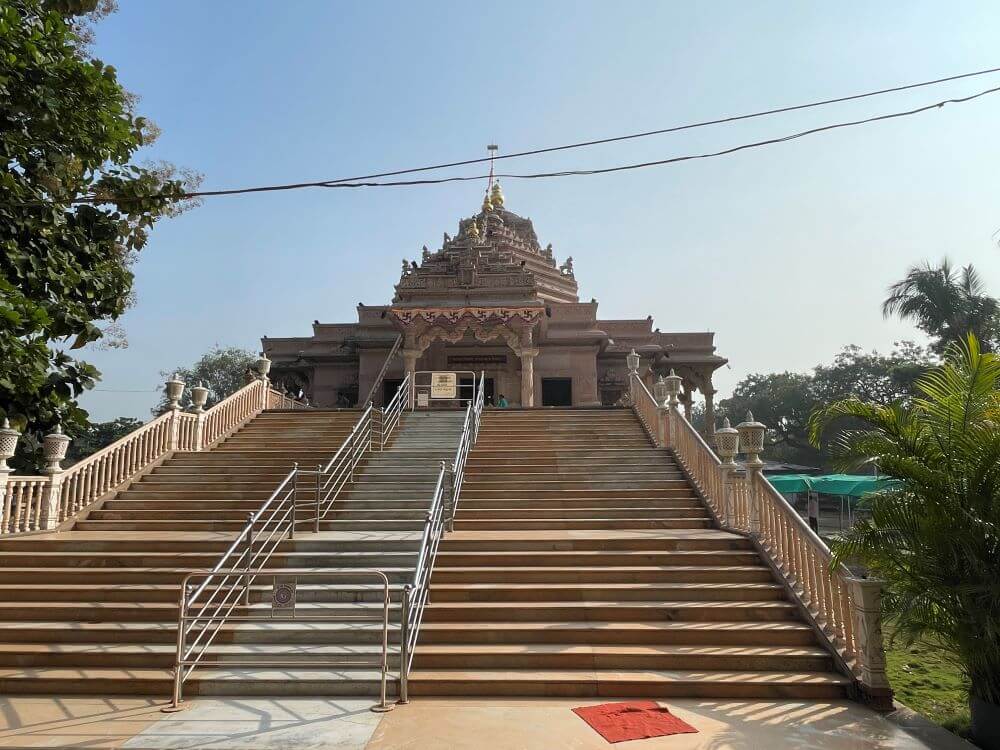
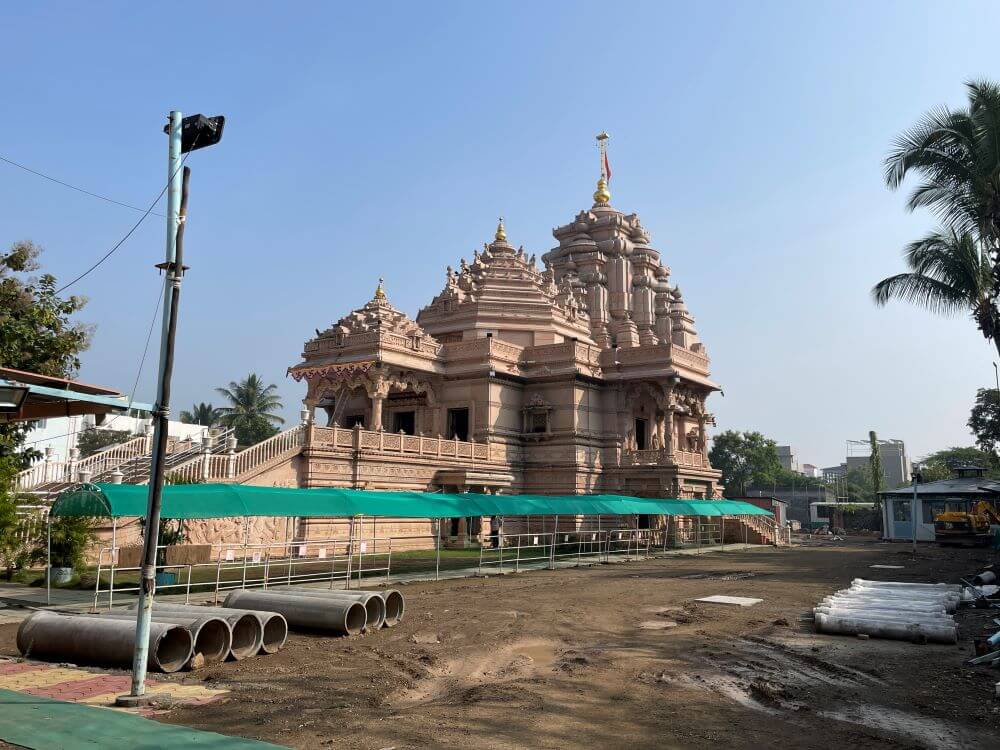
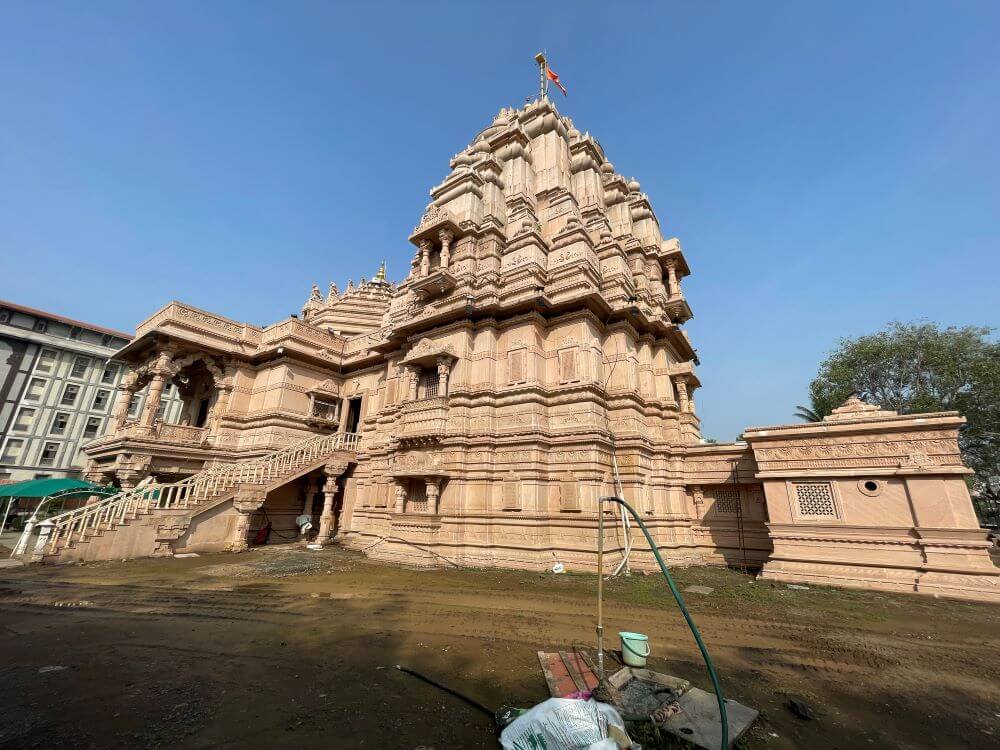
Shop Photo FramesAhilyanagar district holds a special place among the religiously significant districts of Maharashtra. Along with the district, Ahilyanagar city is home to several ancient and renowned temples, both big and small. Among them, the grand Datta Temple of modern architectural design in Savedi, known for its structural splendor, has become a revered shrine for millions of devotees. Located in the heart of the city, though this temple was constructed in recent times, its mesmerizing beauty leaves one spellbound. It is said to be the most magnificent among all the Datta temples in the state.
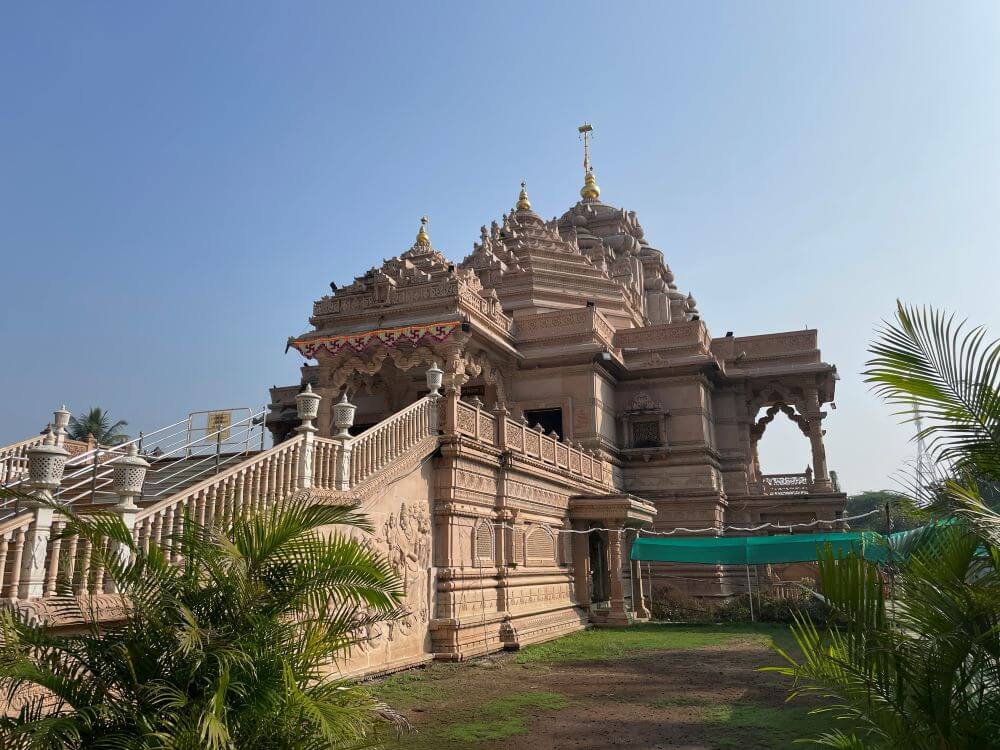
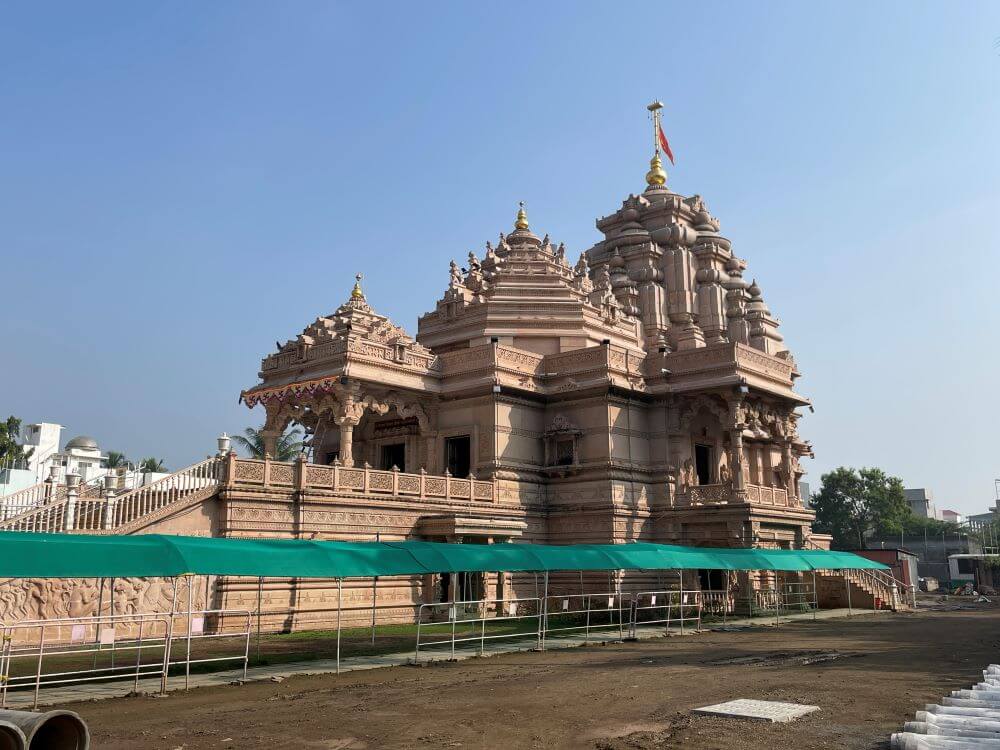
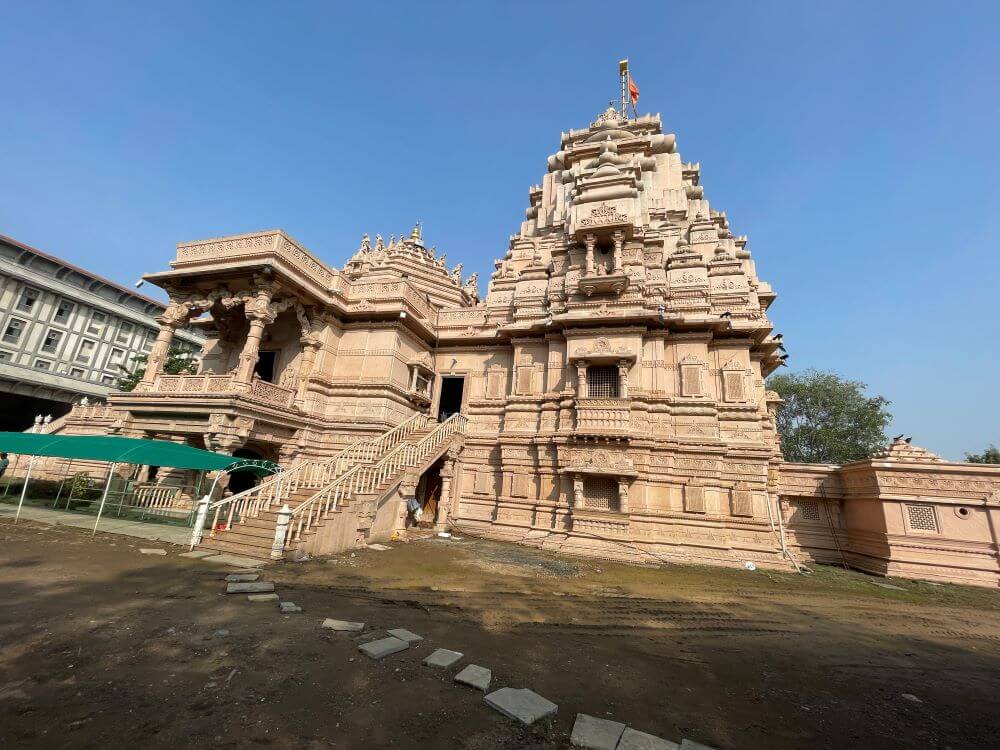
This Datta Temple in Savedi is included among the top 10 important tourist and religious destinations in Ahilyanagar. A special feature of this temple is that it has been constructed using pink sandstone from Bansi Paharpur in the Bharatpur district of Rajasthan. The unique characteristic of these stones is that their lifespan is believed to be over 1,000 years. Extremely expensive and increasingly rare, these stones are beautiful to look at, and they bloom in full glory whenever water or rain falls upon them. (Since ancient times, many historic buildings in our country have been constructed using stones from Bansi Paharpur. These include the Red Fort and Qutub Minar in Delhi. These stones have also been used in the construction of the newly built Ram Temple in Ayodhya, as well as the grand temple of Sant Tukaram Maharaj on the famous Bhandara Hill near Dehu in Pune district.)
The credit for this magnificent temple goes to Sadguru Ramkrishna Kshirsagar Maharaj. Devotees firmly believe that though he is no longer physically present in bodily form, he continues to reside here in his divine spiritual power. Ramkrishna Maharaj was born on 16th February 1934 in Rayatale village of Ahilyanagar district. From early childhood, he had a deep inclination towards devotion to God. According to sacred texts like ‘Guruvani’ and ‘Amrut Kalash’, at the tender age of 7, Lord Dattatreya blessed Ramkrishna Maharaj with a divine vision and summoned him to Ganagapur. There, Lord Dattatreya appeared in the form of Swami Narasimha Saraswati, conferred his divine grace (Anugraha) upon him, and instructed him to perform austerities (Tapasya) dedicated to Lord Datta. After 25 years of rigorous penance, Swami Narasimha Saraswati appeared before him again and entrusted him with the noble mission of imparting Vedic wisdom and the divine glory of Lord Datta to society.
Maharaj initiated the sacred task assigned to him by Shri Narasimha Saraswati. A river of divine wisdom flowed from his holy lips. Devotees began flocking to seek his Darshan and listen to his divine discourses. Maharaj established all his spiritual activities through alms (Bhiksha) collected by his disciples. He gained millions of devotees and formed hundreds of Satsang Mandals across Maharashtra. In 1974, he established the ‘Shri Datta Devasthan Trust’ in Ahilyanagar. Under this trust, he built the edifice named ‘Vedanta’ to impart scriptural Vedic education to children. Today, around 100 students continue to study the Vedas here following the traditional Gurukul system. On Shravan Vadya Chaturdashi, Shake 1921 (8th September 1999), Sadguru Ramkrishna Kshirsagar Maharaj merged into the five elements (attained Mahasamadhi).
Prior to taking Mahasamadhi, Maharaj had taken a sacred vow (Sankalpa) to build a grand Datta Temple here. His disciples fulfilled his divine resolve. It is said that all the funds required for this magnificent temple were collected by his disciples by seeking alms. The idol of Lord Datta here is sculpted from fine marble and looks exquisitely divine. The consecration (Prana Pratishtha) of this sacred idol was solemnly performed on 11th July 2007 at the hands of Jagadguru Shri Bharati Tirtha Mahaswami, the Peethadhipati of Sringeri Matha.
Upon entering through the arched gateway, devotees must wash their hands and feet to maintain the sanctity of the sacred complex before stepping into the temple courtyard. Leather belts and other leather items are strictly prohibited inside the temple premises and must be left outside before proceeding. The complex is spacious, with the majestic temple of Lord Datta standing gracefully at its center. As mentioned above, this grand temple has been constructed using pink sandstone. A unique feature of this architecture is that no iron has been used anywhere in the entire structure. Instead, the stones have been crafted with specific grooves and interlocked with one another. In this two-storied temple, the beautifully sculpted marble idol of Datta Guru is enshrined in the sanctum sanctorum on the upper floor, while the meditation hall (Dhyan Mandir) of Ramkrishna Kshirsagar Maharaj is located on the ground floor. Exquisite craftsmanship adorns every pillar and wall of the assembly hall (Sabhamandap). The intricate carvings from the foundation to the pinnacle of the spire (Shikhara) make it appear like a true temple of sculptural art from top to bottom.
Another special attraction here is the divine tree known as the ‘Devavruksha’ located in front of the temple. A single massive tree has formed here through the confluence of three holy trees: Banyan (Vad), Peepal, and Audumbar. They share a single trunk, though they separate into distinct trees higher up. Finding all three sacred trees growing together in one place is considered extremely rare. The Banyan, Peepal, and Audumbar trees symbolize Lord Brahma, Lord Vishnu, and Lord Mahesh (Shiva) respectively, and Lord Dattatreya Himself is the unified incarnation of these Trinity Gods. Hence, devotees visiting this holy land make it a point to offer worship to this divine tree.
According to the local spiritual significance (Sthan Mahatmya), the sacred ‘Chintamani Padukas’ of Shri Swami Narasimha Saraswati manifested here in 1985. These holy Padukas are placed for public viewing (Darshan) on auspicious occasions such as Guru Purnima, Datta Jayanti, Ramkrishna Jayanti, Gokulashtami, Ram Navami, and Shankaracharya Jayanti. The Samadhi shrine of Ramkrishna Maharaj is situated 3 km away from this temple at Tapovan.
Rituals such as Rudra, Pavamana, and Panchasukta Abhisheka are performed daily in the Datta Temple. Devotees also offer Milk Abhisheka, Sahasranama Padapuja, Shashvata Puja, and Laghurudra. Additionally, the Devasthan Trust periodically organizes major religious ceremonies (Anushthanas) like Navachandi, Shatachandi, Maharudra, and Ganesh Yagya. On the occasion of Datta Jayanti, the temple is grandly decorated with flowers and illuminated with electric lights. Devotees can take Darshan at the temple every day from 7:00 AM to 11:30 AM and from 3:00 PM to 9:00 PM.
This sacred temple stands as a testament to deep spiritual devotion, ancient architectural grandeur, and rich local cultural traditions.
The sanctum sanctorum houses the divine idol consecrated according to ancient Vedic traditions, surrounded by serene courtyards and traditional temple architecture.
Navratri, Maha Shivratri, Annual Temple Jatra & Deepotsav
Compare and book flights, secure top-rated local hotels near the temple, hire reliable guides, and rent cars instantly.
Extend your pilgrimage by visiting other highly sacred temples located nearby.


Add ₹999 more to unlock FREE SHIPPING!
Your sacred cart is currently empty.
Shop Photo FramesFill in your delivery details below to place your order.
Add comment