
Add ₹999 more to unlock FREE SHIPPING!
Your sacred cart is currently empty.
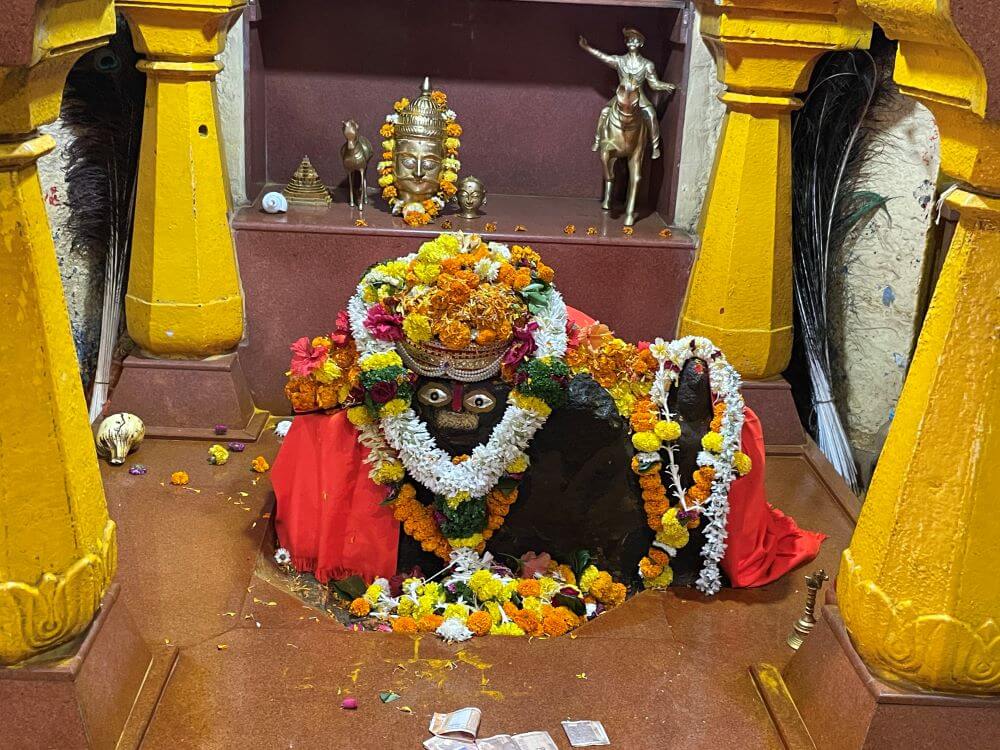
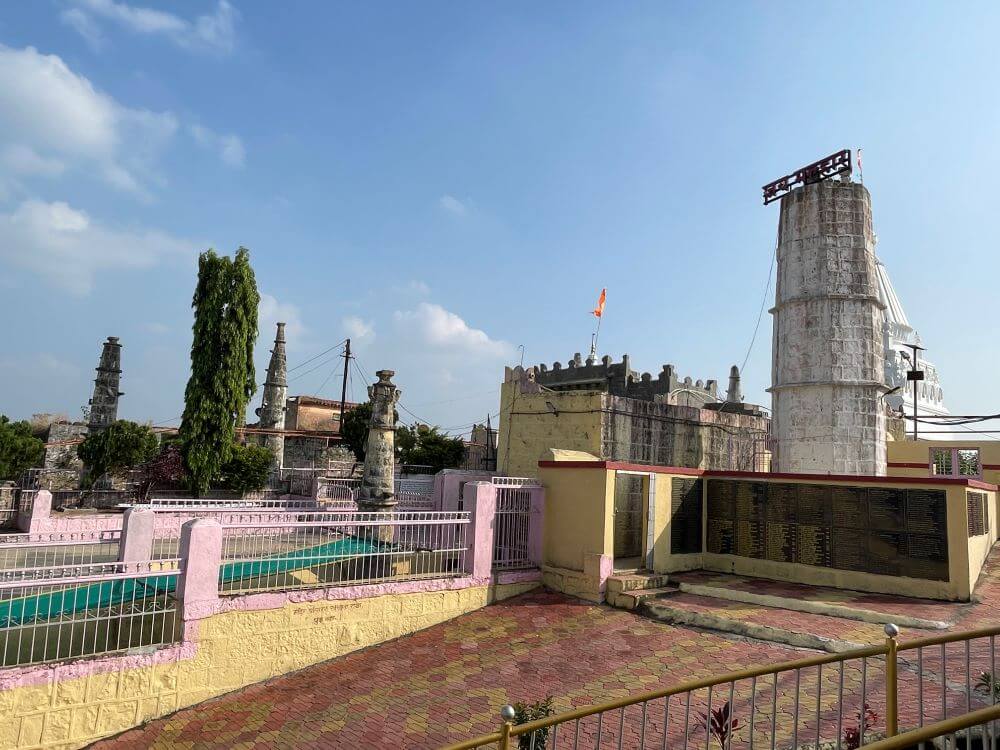
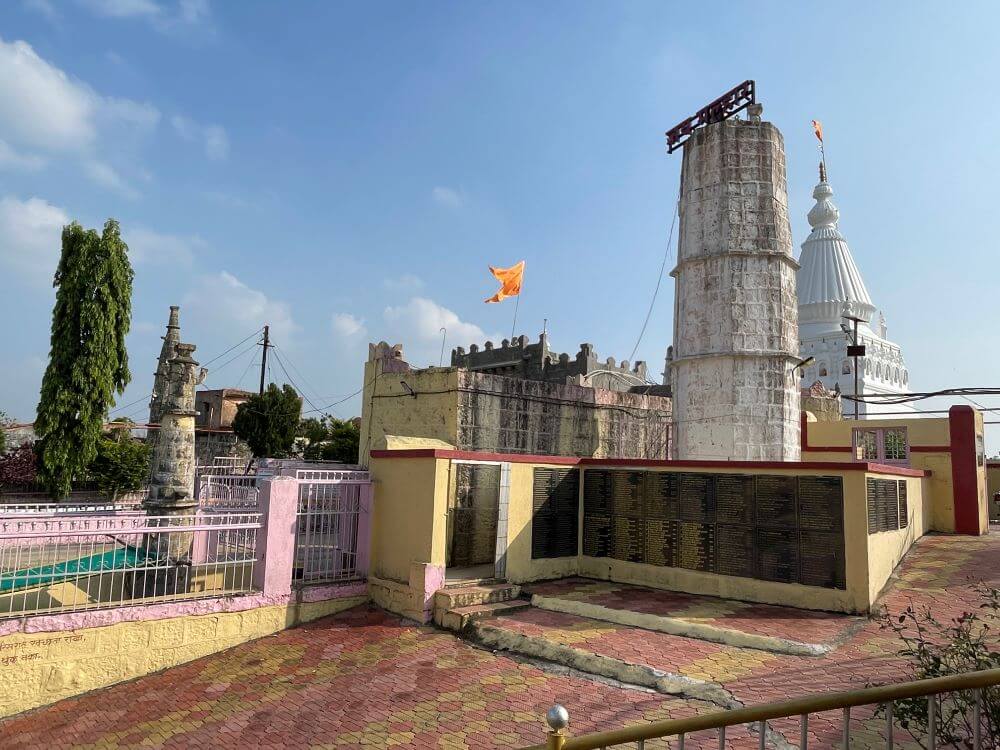
Shop Photo FramesThe ancient Khandoba Temple in the village of Pimpalgaon Rotha, situated on the border of Ahilyanagar and Pune districts, is a revered place of faith for devotees. A unique feature of this shrine is that there is no carved idol of Khandoba here. One gets to see a new form of the deity every day. Known as the ‘Bin Takyacha Dev’ (Deity without chisel marks), the place was formerly referred to as the deity’s ‘Kora Thana’ (a pristine or untouched place). Consequently, the name Korthan became popular for this location.
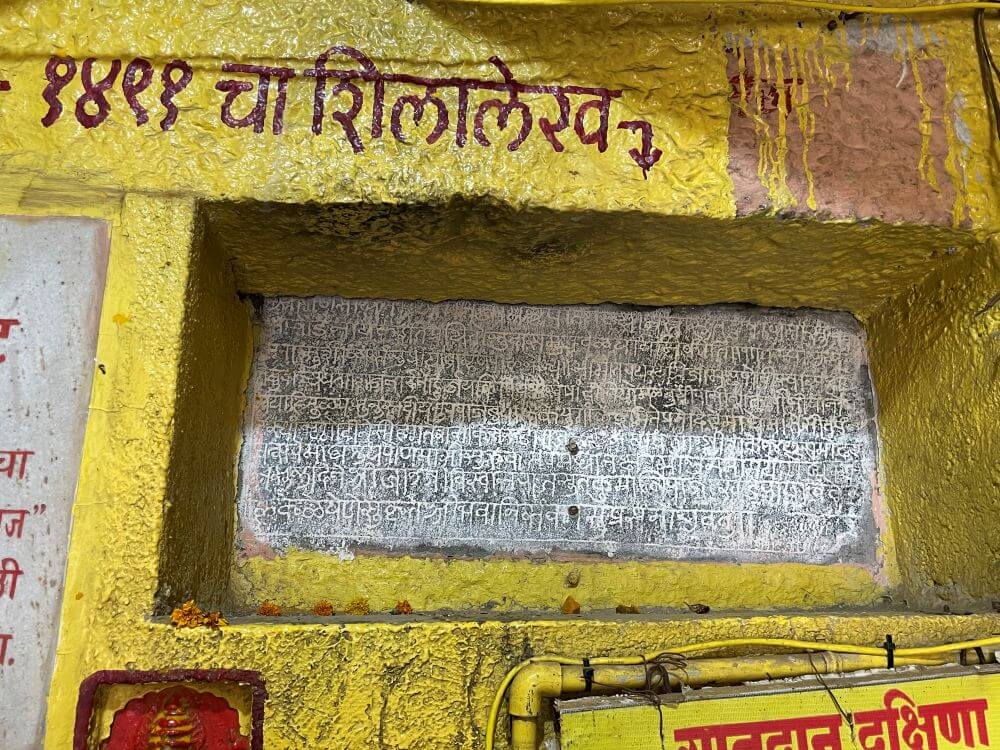
Shri Kshetra Korthan, one of the elevated shrines in the Ahilyanagar district, is a famous pilgrimage site. Pimpalgaon Rotha, nestled in the Parner taluka, is located at an altitude of 951 meters above sea level. According to the inscription on the entrance of the Korthan Khandoba Temple, the construction of this temple dates back to around 1491. Here, the Swayambhu (self-manifested) idols of Khandoba, Mhalasa, and Banai are present in the form of ‘Tandala’ (natural stones), and in front of them are 12 Swayambhu Lingas. Every day, after a ritual bath, the idols are anointed with sandalwood paste, adorned with silver eyes, and dressed in garments and ornaments. As a result, the idols appear in a new form every day. With turbans, shawls, and floral decorations, the idol of Khandoba looks distinctive.
The Khandoba Yatra held at Shri Kshetra Korthan on Paush Purnima is famous. Records indicate that more than 5 lakh devotees from across the state attend this three-day festival. On the first day, the Mangal Snan (auspicious bath) and puja rituals of Khandoba are performed. The second day features bullock cart races and Darshan. For this, hundreds of bullock pairs arrive at the temple premises from Pimpalgaon Rotha, Kanhur Pathar, Parner, Takali Dhokeshwar, Narayangaon, Manchar, Junnar, Pune, and Ahilyanagar districts, following tradition. A procession of the bulls is carried out by the owners. Participating in the bullock cart race during this Yatra is considered a blessing from Khandoba. Therefore, even without large cash prizes, 400 to 450 bullock carts participate in these races.
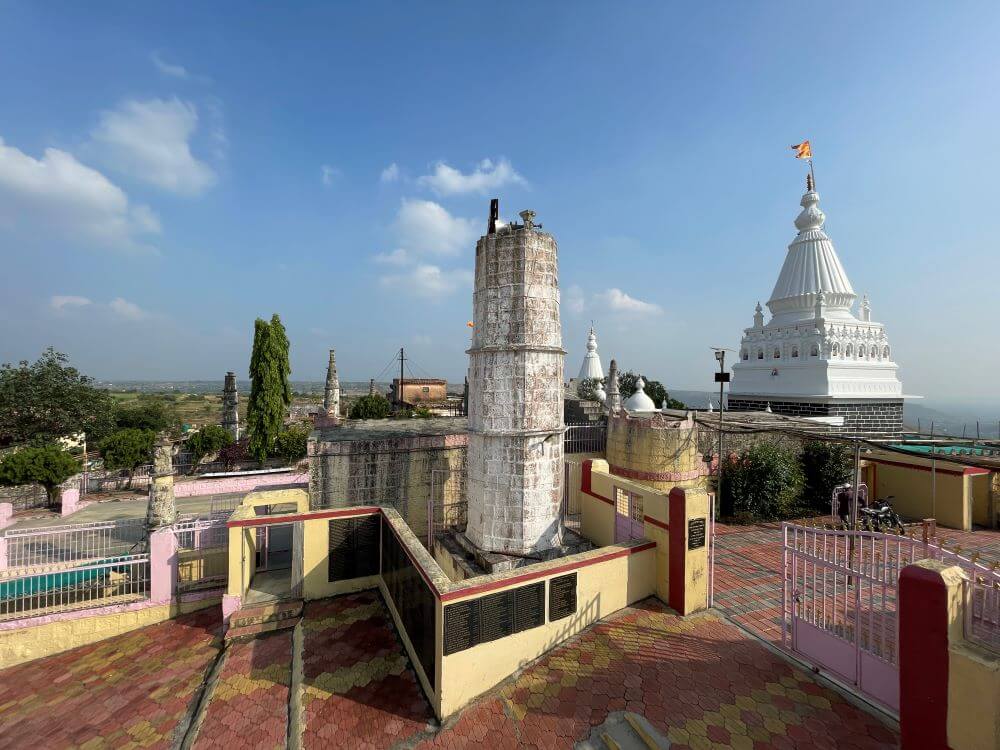
A special feature of this Yatra is the ‘Mana-chya Kathya’ (honorary poles) that are 100 to 150 feet tall (approximately the height of a 15-story building). On the third and final day of the Yatra, lakhs of devotees arrive and touch these honorary poles to the temple spire while showering Bhandara (turmeric powder) and dried coconut. The tall poles arriving in royal processions from Belha and Brahman-gaon hold a special place of honor and receive official government worship from officials like the Tehsildar and Police Inspector. Along with these honorary poles, Palkhis (palanquins) from surrounding villages like Alkuti, Belhe, Sakuri, Tandali Vadgaon, Malwadi, Rajapur, Savargaon Ghule, Kasare, and Kalas arrive with thousands of devotees, showering Bhandara along the way.
The renovation of this medieval temple and the installation of the golden spire took place on December 5, 1997, on the auspicious occasion of Champashasthi, at the hands of Swami Gagangiri Maharaj. Since then, this day is celebrated here as ‘Santmela Day’. Along with the annual Yatra festival, celebrations are held on Somvati Amavasya and every Purnima. On Somvati Amavasya, lamps are lit in the premises and on the Deepmalas (lamp towers).
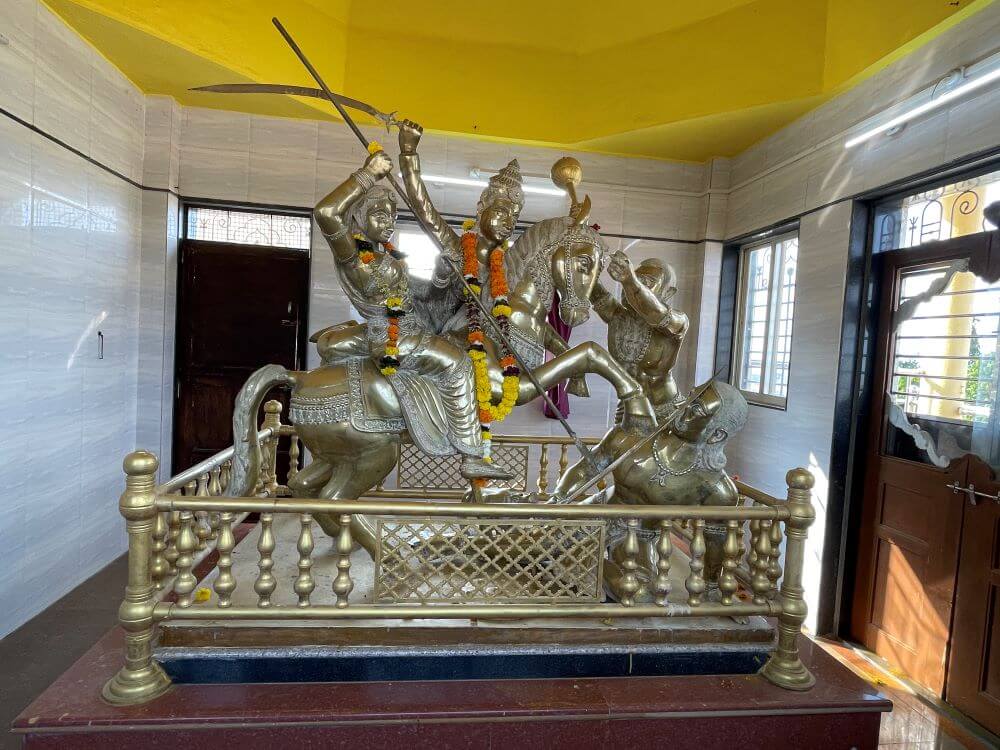
In the courtyard, there is a temple of Khandoba and Mhalasa on horseback, as well as a temple dedicated to Swami Gagangiri Maharaj. Additionally, the temple trust has constructed a grand hall for various ceremonies. Facilities such as a Dharmashala (pilgrim rest house), space for Jagar-Gondhal rituals, a hall for Mahaprasad, Bhakta Niwas (pilgrim accommodation), and a queue complex for Darshan have been provided by the temple trust. The state government has included the Korthan Khandoba shrine in the list of ‘B’ grade pilgrimage sites. Devotees can visit the temple for Khandoba’s Darshan from 6:00 AM to 7:30 PM. Aartis are performed at 7:00 AM, 12:00 PM, and 7:30 PM, while on every Sunday and Purnima, the Aarti is at 8:00 AM.
This sacred temple stands as a testament to deep spiritual devotion, ancient architectural grandeur, and rich local cultural traditions.
The sanctum sanctorum houses the divine idol consecrated according to ancient Vedic traditions, surrounded by serene courtyards and traditional temple architecture.
Navratri, Maha Shivratri, Annual Temple Jatra & Deepotsav
Compare and book flights, secure top-rated local hotels near the temple, hire reliable guides, and rent cars instantly.
Extend your pilgrimage by visiting other highly sacred temples located nearby.

Add ₹999 more to unlock FREE SHIPPING!
Your sacred cart is currently empty.
Shop Photo FramesFill in your delivery details below to place your order.
Add comment