
Add ₹999 more to unlock FREE SHIPPING!
Your sacred cart is currently empty.
Shop Photo FramesRahi and Rakhumabai, the queens of all,
Perform the aarti of the dark-complexioned King Vitthoba.
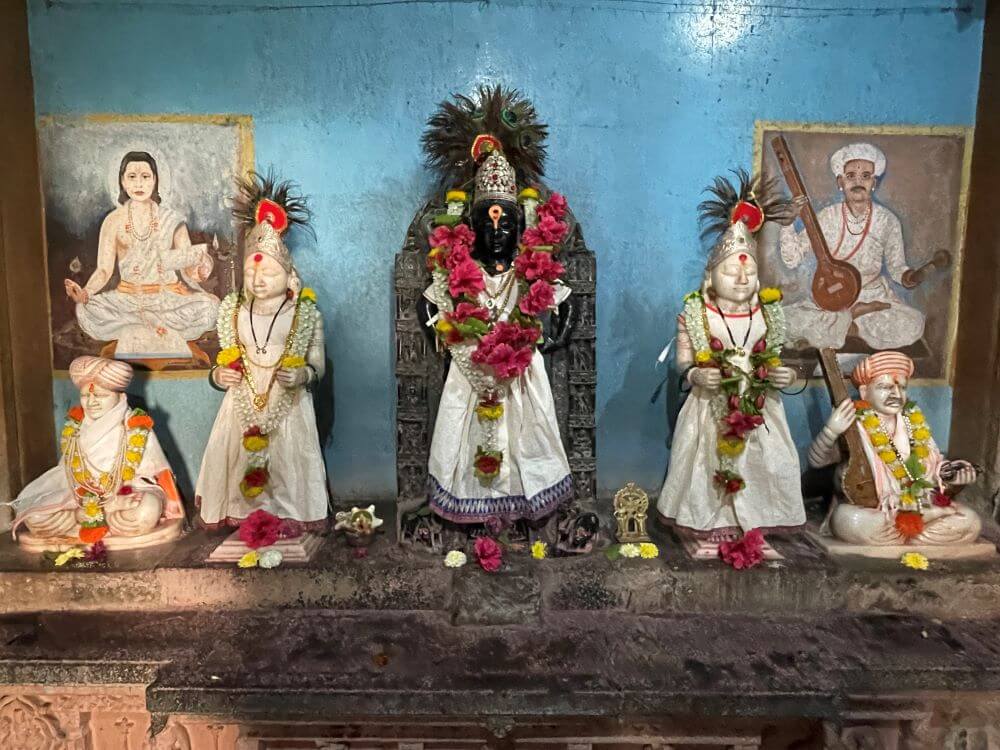
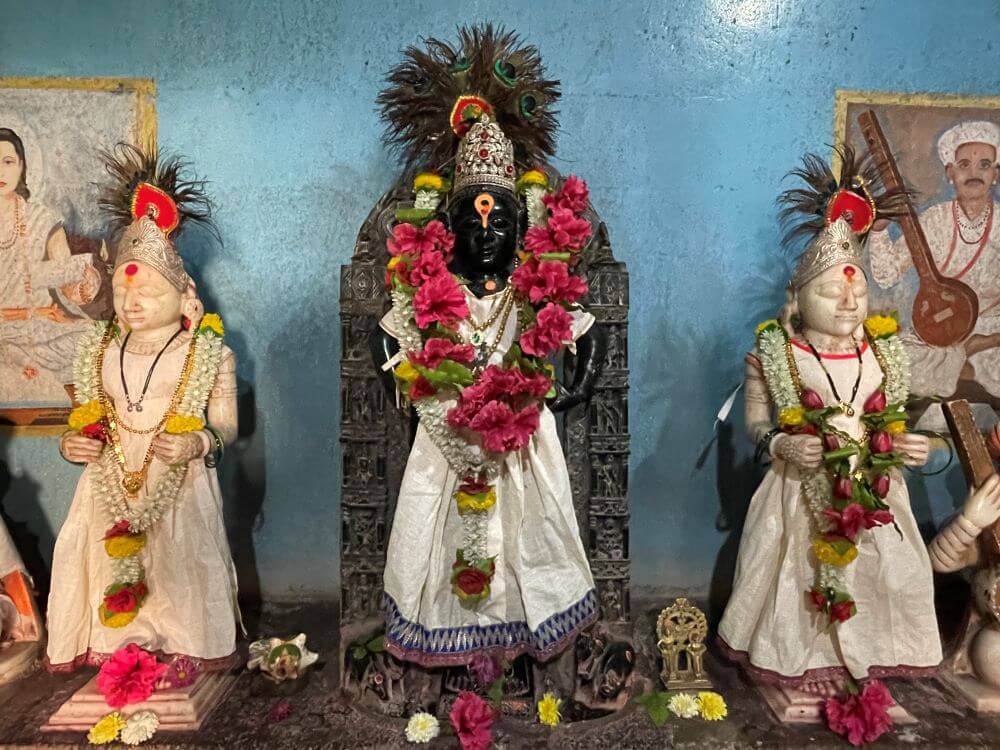
These lines from the aarti composed by Saint Namdev mention Rahi and Rukmini alongside Vitthal. Across Maharashtra, there are only a few temples where the idol of Vitthal is accompanied by both Rahi and Rukmini. Among them, the Vitthal Temple in Palshi, located in the Parner taluka, is famous. Due to this Rahi-Rakhumai Vitthal Temple, which is an excellent example of architecture, the village is renowned as ‘Prati Pandharpur’ (the second Pandharpur).
Ramaji Kamble-Palshikar, the Diwan of Ahilyabai Holkar, hailed from this very village of Palshi. It is said that Ahilyabai Holkar used to donate funds for the renovation and construction of temples across the country. At that time, Diwan Palshikar managed the financial planning for these projects. Consequently, he secured a large fund for his village, Palshi. The construction of this Vitthal Temple took place between approximately 1780 and 1790 using these funds. For this purpose, he appointed specialized artisans from North India.
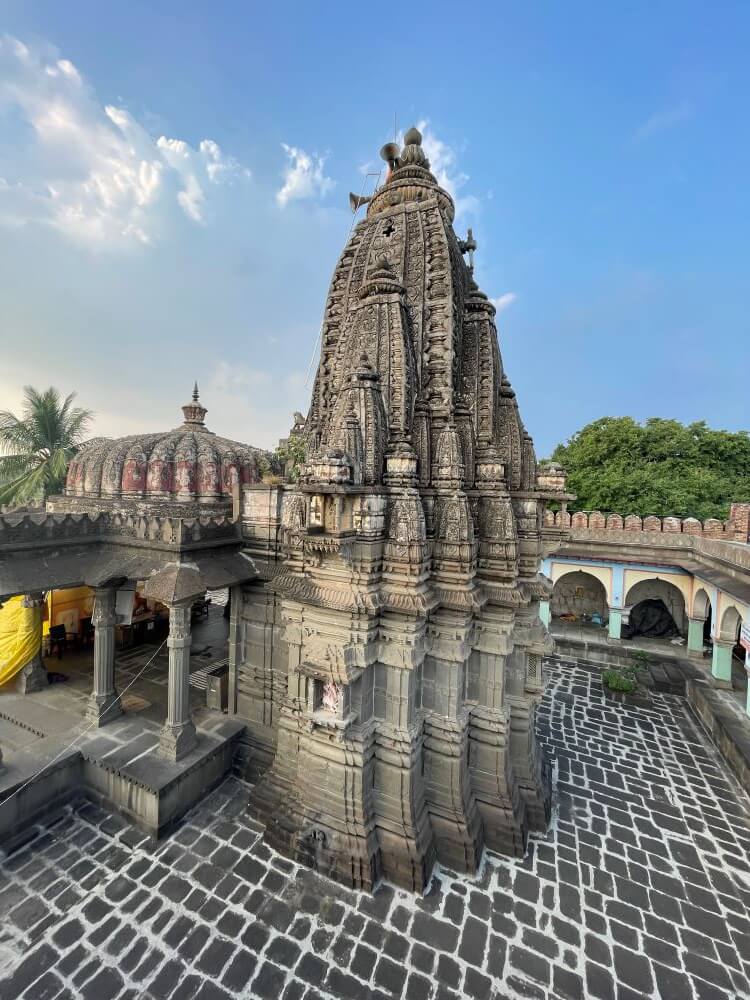
Near the eastern gate of the Palshi fort lies the riverbed of the Palshi River. Due to a dam built on the river, a reservoir was formed, with the Vitthal Temple on one side and the Rameshwar Temple on the other. Both temples look beautiful against the backdrop of the reservoir. Among them, this 18th-century Vitthal Temple is famous as a ‘Sculpture Temple’. The temple is adorned with unique sculptures from top to bottom, attracting sculpture scholars and devotees who constantly visit to admire them.
The Vitthal Temple is fortified with four bastions at its four corners. Near the entrance of the fortification, there is a stepped well (Pushkarani). In its niches, idols of the Ashtavinayakas are installed. It is said that there is an underground passage connecting the fortification and the stepped well. On the temple entrance, idols of Ganpati, Jai-Vijay, and others are carved. Above the door is a Nagarkhana (drum house), and the entire structure shows the influence of Islamic architecture.
There are 5 steps to enter through the gateway, which are considered symbols of the Panchamahabhutas (the five elements). Upon entering through the door, one is greeted by hundreds of unique sculptures covering the entire stone temple from the foundation to the pinnacle. Seeing these sculptures, it is hard to believe they were shaped only with a chisel and hammer. Inside the fortification, there are cloisters (ovaris) with carvings on their upper sections. There are 2 paths from the cloisters to reach the top of the fortification. From there, one can closely observe the craftsmanship on the temple spire.
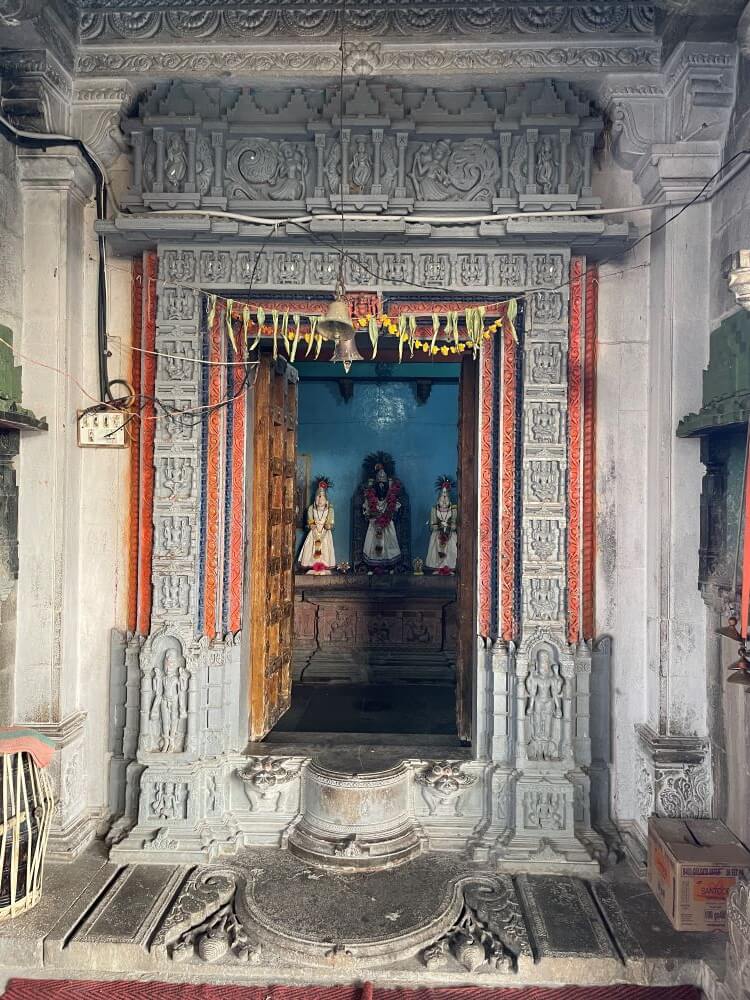
The temple is structured with an open assembly hall (Sabhamandap) and a sanctum sanctorum (Garbhagriha). There are 3 paths to enter the assembly hall, each having 9 steps. These 9 steps are considered symbols of the nine forms of devotion (Navavidha Bhakti), and the 18 pillars, each 9 feet tall, in the octagonal assembly hall are considered symbols of the 18 Puranas. These pillars are intricately carved with scenes from mythological stories. In the center of the assembly hall, there is a large stone tortoise (Kachhap). The ceiling features carvings of Lord Krishna and the Gopis performing the Raas Leela. On the right side, there is an idol of Ganpati, and on the left, an idol of Lord Krishna. On the doorframe of the sanctum, there is Ganpati with Riddhi-Siddhi on both sides, 64 Yoginis with Bhairava idols, and 2 Kirtimukhas on the threshold.
Inside the sanctum, there is an idol of Vitthal made of black stone. The halo (Prabhaval) behind this idol features carvings of the Dashavatara. Additionally, near the feet of Vitthal are idols of Narada, Tumburu, Gandharvas, Yakshas, and Kinnaras. On both sides of the Vitthal idol are white marble idols of Rahi and Rukmini. It seems these idols were installed at a later period. Idols of Saint Dnyaneshwar and Saint Tukaram Maharaj are also present here. On the outer wall of the temple, where water from the sanctum drains out, a Makarmukh (crocodile-faced spout) is installed. Furthermore, carvings of peacocks, elephant heads, fighting elephants, and an army marching to war can be seen. There are 3 niches on 3 sides containing idols of Krishna-Balaram, Suryadev (the Sun God), and Mahishasuramardini. The idol of Suryadev here is considered very rare. There are also temples dedicated to Kartik Swami, Garuddev, and Hanuman.
The spire has 4 niches containing idols of Lord Vishnu. The main spire appears to be constructed by interlocking smaller spires. From the fortification of this temple, the famous Palshi Bhuikot Fort comes into view.
A fair is held here every year on Ashadhi Ekadashi. On that day, a grand worship program including bathing, anointing (Abhishek), and aarti takes place from early morning. Dindis (processions of pilgrims) from many parts of the region arrive here on this day. On this same day, a Dindi departs from here to Dehu.
Following this, during the period of the next Ekadashi, a 9-day Saptah (religious week) is observed. Since 2001, continuous Veena playing has been ongoing in the temple. Every day at 3:30 AM, the Kakad Aarti is performed in the temple. At 6:00 PM, Haripath and Aarti are held. Devotees can visit the temple for the darshan of Vitthal from 3:30 AM to 8:00 PM.
This sacred temple stands as a testament to deep spiritual devotion, ancient architectural grandeur, and rich local cultural traditions.
The sanctum sanctorum houses the divine idol consecrated according to ancient Vedic traditions, surrounded by serene courtyards and traditional temple architecture.


Navratri, Maha Shivratri, Annual Temple Jatra & Deepotsav
Compare and book flights, secure top-rated local hotels near the temple, hire reliable guides, and rent cars instantly.
Extend your pilgrimage by visiting other highly sacred temples located nearby.

Add ₹999 more to unlock FREE SHIPPING!
Your sacred cart is currently empty.
Shop Photo FramesFill in your delivery details below to place your order.
Add comment