
Add ₹999 more to unlock FREE SHIPPING!
Your sacred cart is currently empty.
Shop Photo FramesThe Shri Tukai Devi Temple at Kondhanpur, which boasts an ancient history dating back to the Pandava era, is mentioned in the seven-hundred-year-old Gatha of Saint Namdev as ‘Kaundanyapuri Ambikabhuvan’. This site of the Goddess, who is considered the elder sister of Tulja Bhavani, is regarded as a highly awakened Shakti Peetha. Nestled in the scenic mountain ranges of Haveli Taluka in Pune district, this pilgrimage site has been honored by the Government of Maharashtra with a ‘B’ grade status for pilgrimage centers. Millions of devotees from the states of Maharashtra and Karnataka visit Kondhanpur for the grand month-long fair held from Margashirsha Purnima to Pausha Purnima.
The Tukai Devi Temple of Kondhanpur possesses an ancient historical heritage. According to local traditions, the original construction of this temple was carried out by the Pandavas during their period of exile. Evidence of this tradition, which has continued since mythological times, is clearly visible in the saint literature from seven hundred years ago. In the section titled ‘Shri Sopandevanchi Samadhi’ in Saint Namdev’s Abhang Gatha, a reference is found stating, ‘Indranil Parvat Puratan… Kaundanyapuri Ambikabhuvan…’. This is considered a significant reference regarding the history of Tukai Devi at Kondhanpur. The words ‘Kaundanyapuri’ and ‘Ambikabhuvan’ in these lines are linked to the Goddess site of Kondhanpur. Since the word ‘Ambika’ is used for the Goddess, some scholars and local traditions believe this reference pertains to Kondhanpur. It is believed that Kondhanpur is the ancient ‘Kaundanyapuri’ and the Goddess site here is the ‘Ambikabhuvan’. This reference confirms the antiquity and historical importance of this place.
In the medieval period, especially during the Shivshahi era, this temple attained significant political and military importance. The temple is located very close to Sinhagad Fort, which was a major focal point of Swarajya. Whenever Chhatrapati Shivaji Maharaj stayed in the vicinity of Khed-Shivapur or Sinhagad for the work of Swarajya, he would regularly visit this temple for darshan. A magnificent equestrian statue of the Maharaj standing outside the temple entrance bears witness to this historical connection. During the Yadava period, many religious structures were built in this area, and this Tukai Devi temple is considered a fine example of the architecture of that era. The temple also received patronage from the royal court during the Maratha Empire and the subsequent Peshwa period. In many historical records, this area is frequently mentioned in the context of military movements.
Regarding the Tukai Devi temple, a mythological legend states that once, while Lord Shankar was chanting the name of Shri Rama on Mount Kailash, Mother Parvati asked him about the greatness of Shri Rama. To test Shri Rama, Parvati assumed the form of Sita and went to sit in a remote area currently known as ‘Ramkada’, located to the north of Sinhagad. When Shri Rama reached this place while searching for Sita, he immediately recognized Parvati in the form of Sita and asked her with respect, ‘Tu ka Mata?’ (Are you Mother?). It was because of these words spoken by Shri Rama that the Goddess received the name ‘Tukai’, and at the request of Shri Rama, Mother Parvati remained permanently in this area. According to a reference in the Bharatiya Sanskriti Kosh Volume 4, the word ‘Tukai’ is derived from the Dravidian word ‘Tukk’, which means ‘Venus’. Since Friday is the main day for the worship of the Goddess, she is also famous as the ‘Goddess of Friday’.
Another legend associated with the temple relates to a devout woman named Hirubai Konde Deshmukh. Hirubai used to go to the cave on Ramkada every day for the darshan of the Goddess. However, due to old age, it became impossible for her to climb the fort. Pleased by her devotion, the Goddess decided to descend from the mountain herself. According to the condition set by the Goddess, Hirubai was walking ahead and the Goddess was following her. But at the site of the current temple, Hirubai looked back, causing the Goddess to vanish right there, and a self-manifested (Swayambhu) idol appeared at this spot. Local traditions also mention that Saint Dnyaneshwar Mauli visited this place.
Surrounded by the nature-rich sub-ranges of the Sahyadri, this area of Kondhanpur is extremely peaceful. The village is situated at the foothills of Sinhagad Fort. The main path leading to the temple is made of stone masonry. Outside the main temple complex, there is an ancient tank, and one has to descend some steps to reach it. A stream of water flows 24 hours a day from a Gomukh (cow-mouth spout) in this tank. It is believed that this water comes directly from the original site of the Goddess, i.e., Ramkada. Devotees believe that the water in this holy tank has medicinal properties and that bathing in it cures many physical ailments and skin diseases.
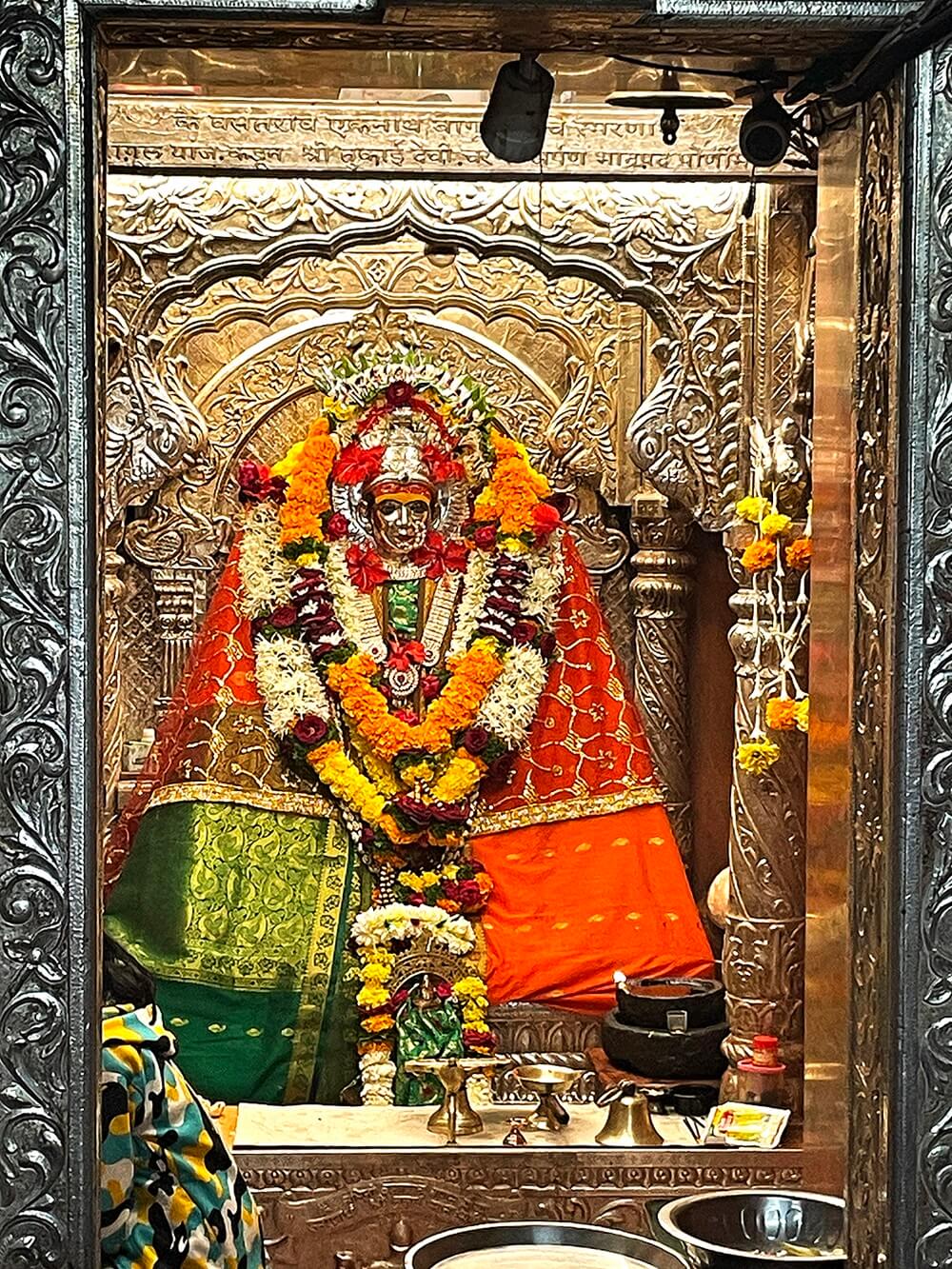
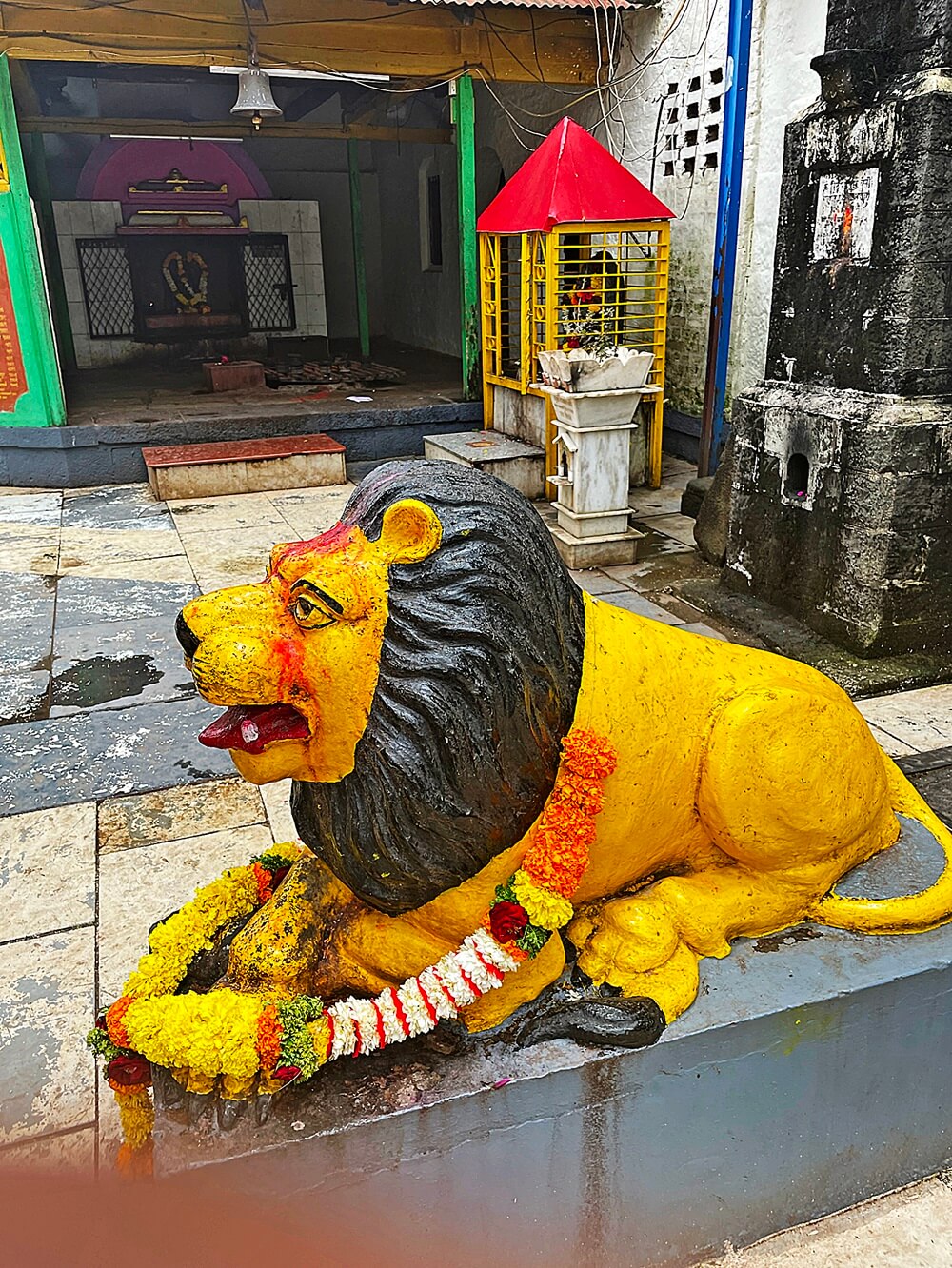
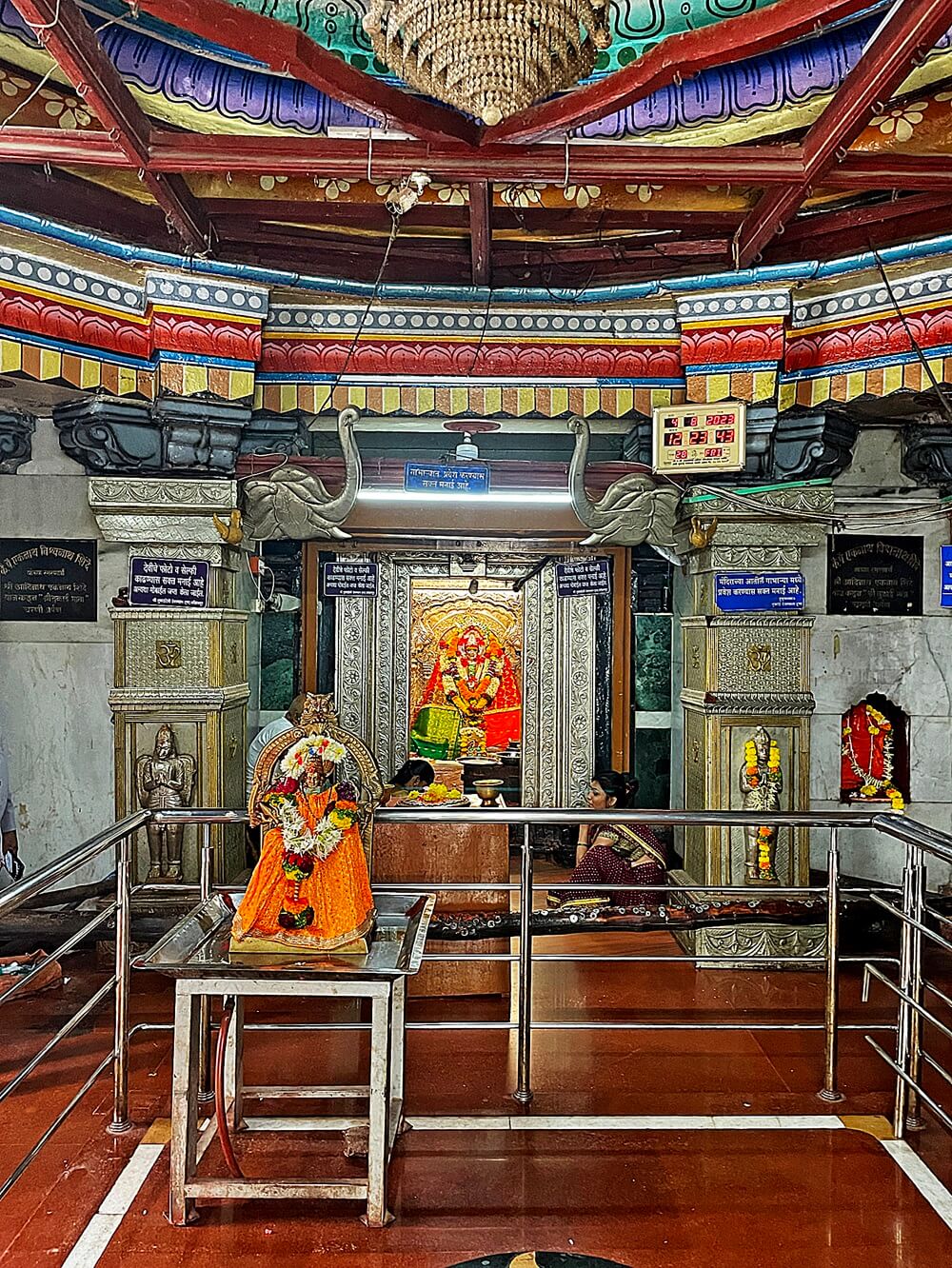
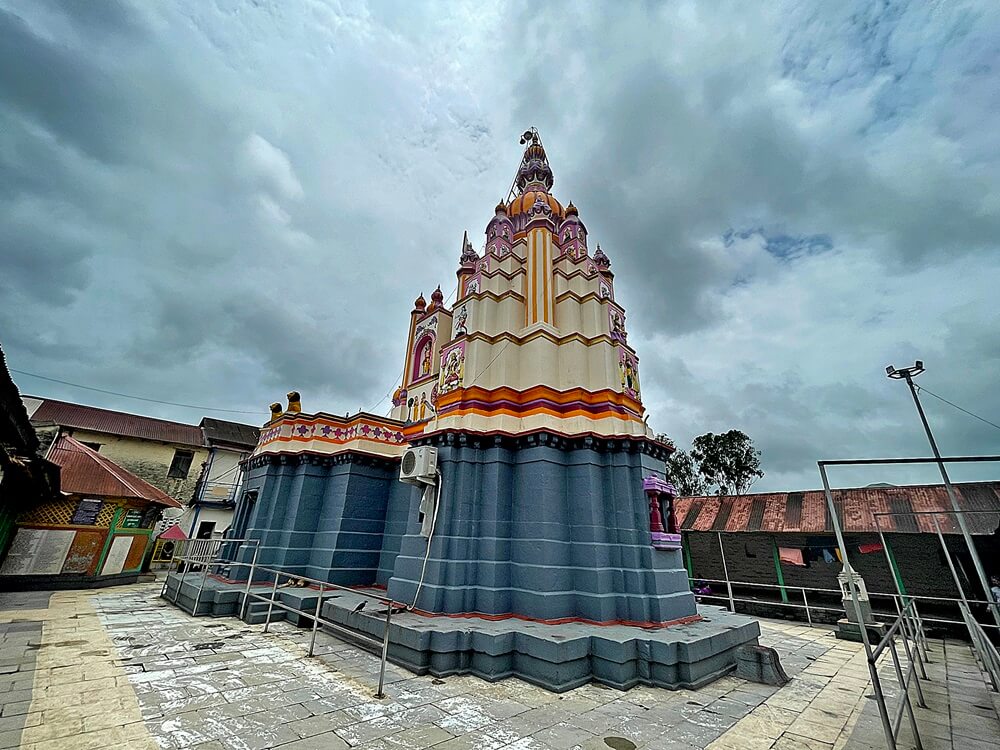
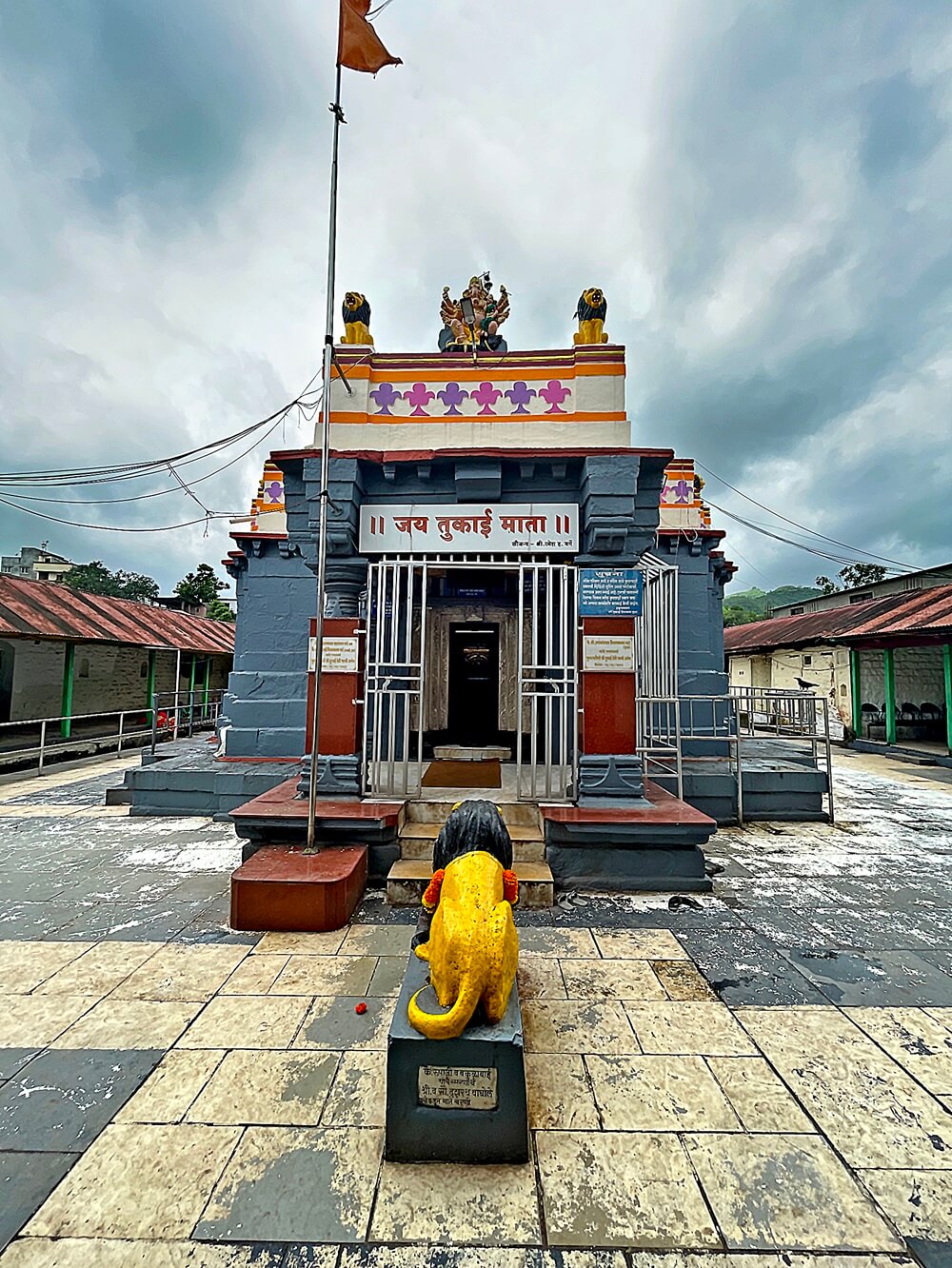
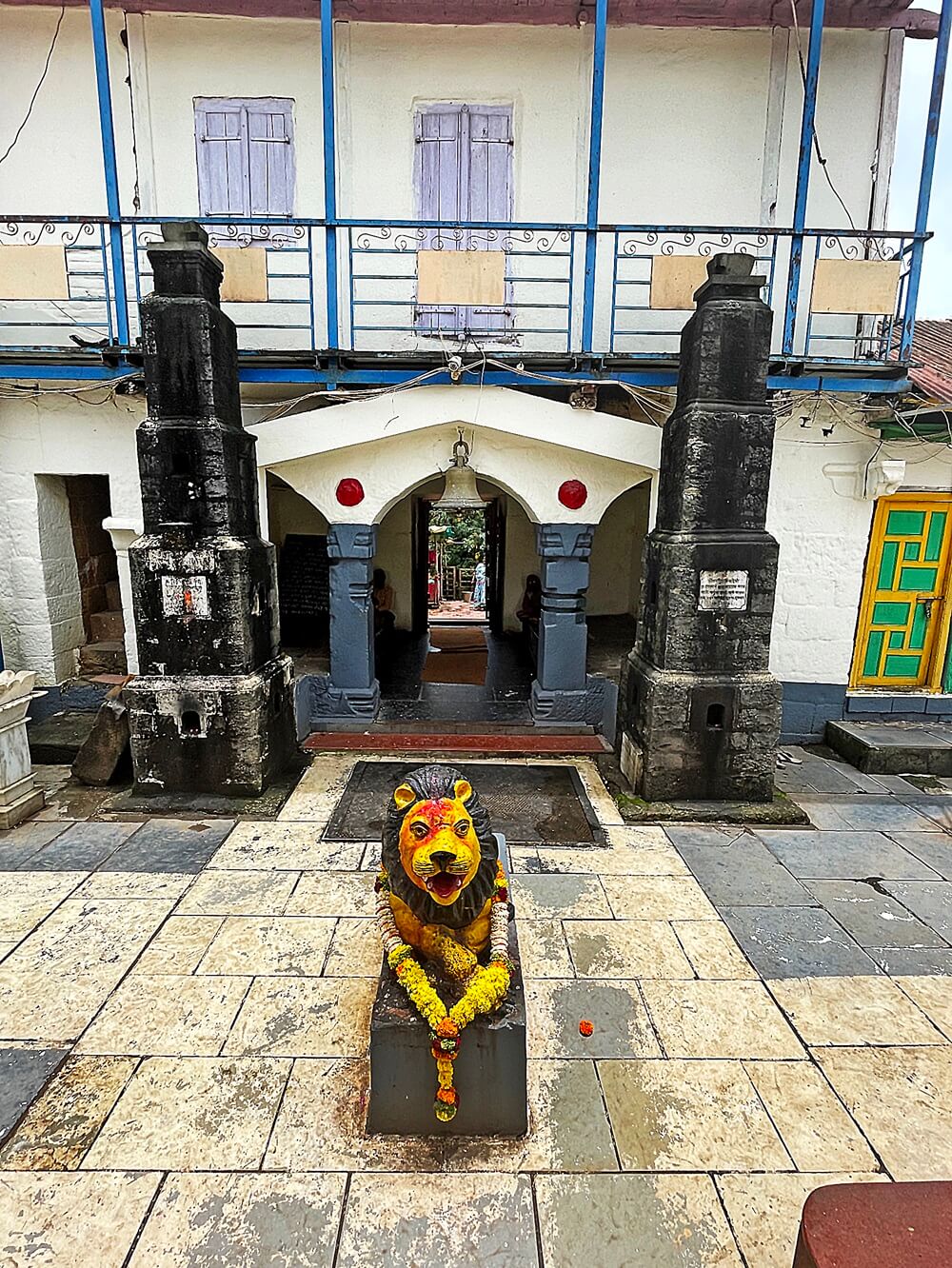
This temple, built in the Hemadpanti architectural style, is constructed of black stone. There is a Nagarkhana (drum house) at the main entrance of the temple. Upon entering through this gate, there are stone lamp pillars (Deepstambhas) in front. From here, one enters the Sabha Mandap (assembly hall) of the temple. Resembling the structure of the Ambabai temple in Kolhapur, this temple is supported by stone pillars, and each pillar is carved with sculptures of elephants, peacocks, vines, and mythological stories. In the center of the Sabha Mandap is a large stone idol of a lion, which is the vehicle of the Goddess. On the lintel of the sanctum sanctorum (Garbhagriha), there is an idol of Ganpati, and the door frames feature intricate carvings. Inside the sanctum, the idol of Tukai Devi is placed in a beautiful throne (Makhar). Decorated with various flowers and jewelry, this idol looks magnificent. The outer walls of the temple also feature various types of craftsmanship. Above the sanctum is a tall spire that is a blend of Dravidian and Nagara styles. It is carved with idols of various deities. The temple has a special rest house for Tukai Mata, where the ancient footwear (Padukas), shield, sword, and other artifacts of the Goddess are preserved.
Various festivals are celebrated in the temple throughout the year. Among them, the fair held in the month of Pausha is the most important festival. Millions of devotees from Pune district as well as from the states of Maharashtra and Karnataka come for this fair, which lasts for the entire month. During this festival, which runs from Margashirsha Purnima to Pausha Purnima, various religious rituals, Abhishek, and Palkhi processions are organized. For the convenience of the devotees, special bus services are operated by the Pune and Pimpri Chinchwad Municipal Corporations during this period.
The Navaratri festival, which falls in the month of Ashwina, is the second major festival celebrated here. During these nine days, the Goddess is adorned daily with different ornaments and garments. During the period of Navaratri, Ghatasthapana is performed in the temple, and programs of religious discourses, devotional songs, and Kirtans are organized here for nine days. Since Friday is the day dedicated to the Goddess, there is a large crowd of devotees every week on this day. Many women come here to offer the traditional ‘Oti’ to the Goddess. On the festivals of Dussehra and Diwali, the temple is decorated with attractive electric lighting. Devotees can have Darshan here daily from seven in the morning to seven in the evening.
This sacred temple stands as a testament to deep spiritual devotion, ancient architectural grandeur, and rich local cultural traditions.
The sanctum sanctorum houses the divine idol consecrated according to ancient Vedic traditions, surrounded by serene courtyards and traditional temple architecture.
Navratri, Maha Shivratri, Annual Temple Jatra & Deepotsav
Compare and book flights, secure top-rated local hotels near the temple, hire reliable guides, and rent cars instantly.
Extend your pilgrimage by visiting other highly sacred temples located nearby.

Add ₹999 more to unlock FREE SHIPPING!
Your sacred cart is currently empty.
Shop Photo FramesFill in your delivery details below to place your order.
Add comment