
Add ₹999 more to unlock FREE SHIPPING!
Your sacred cart is currently empty.
Shop Photo FramesThe beautiful Ranzheshwar Temple is located in the village of Ranje, near Khed Shivapur, close to Pune. This temple, which is an excellent example of both architectural art and water management engineering, is said to date back to the pre-Shivaji era. It was in this very temple complex that Chhatrapati Shivaji Maharaj punished Babaji alias Bhikar Gujar Patil of Ranje village by amputating his hands and feet for misbehaving with a woman.
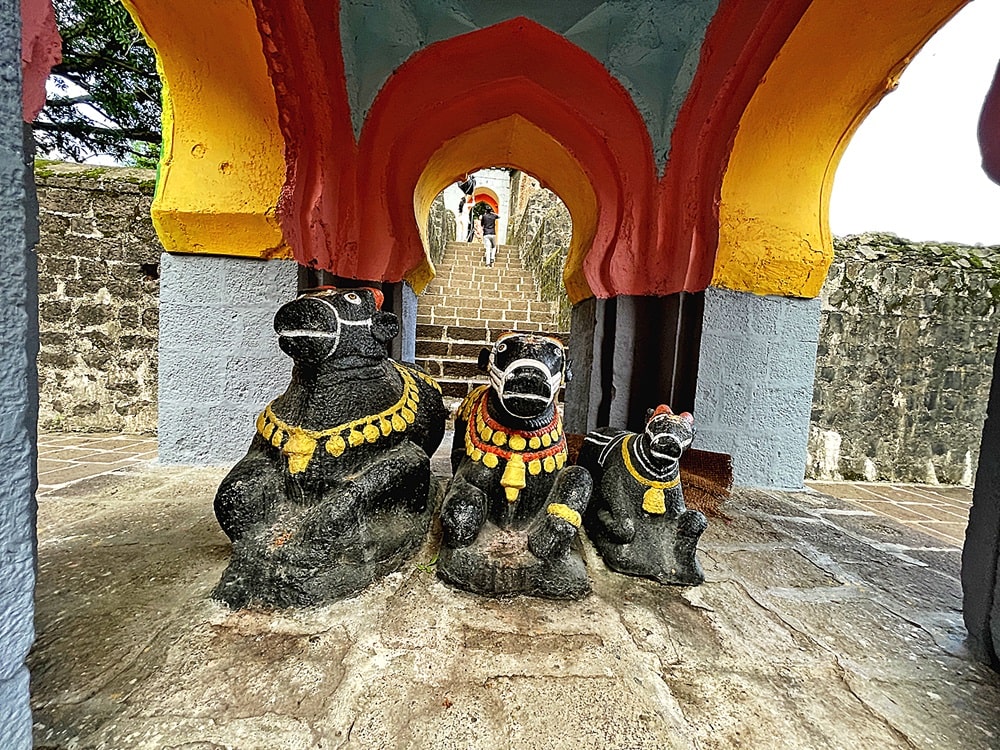
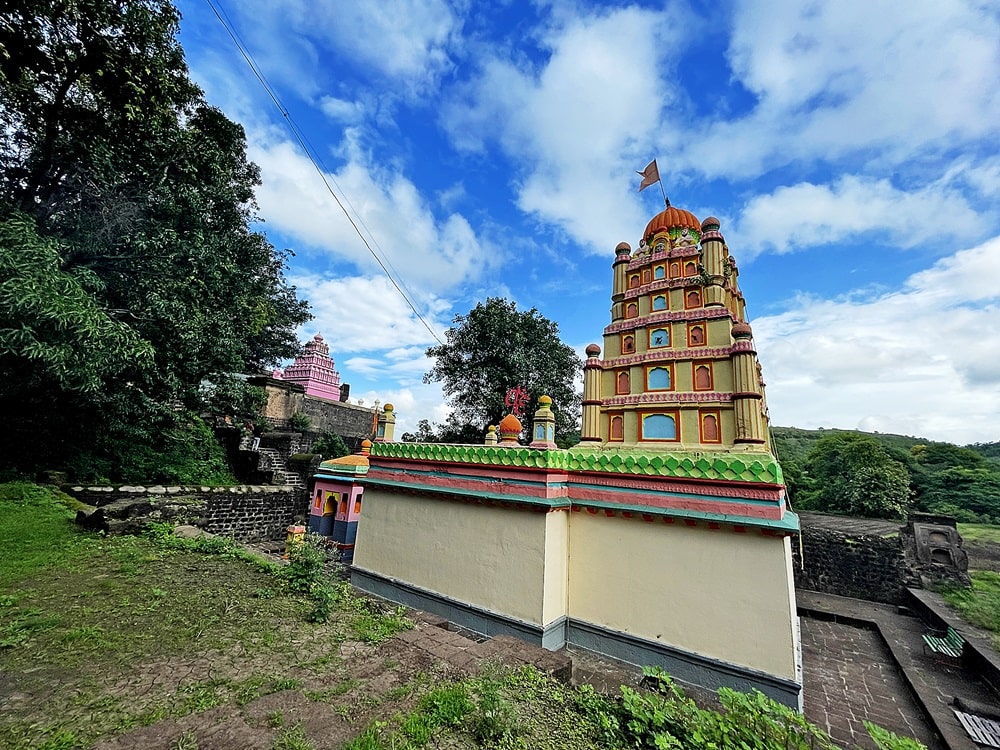
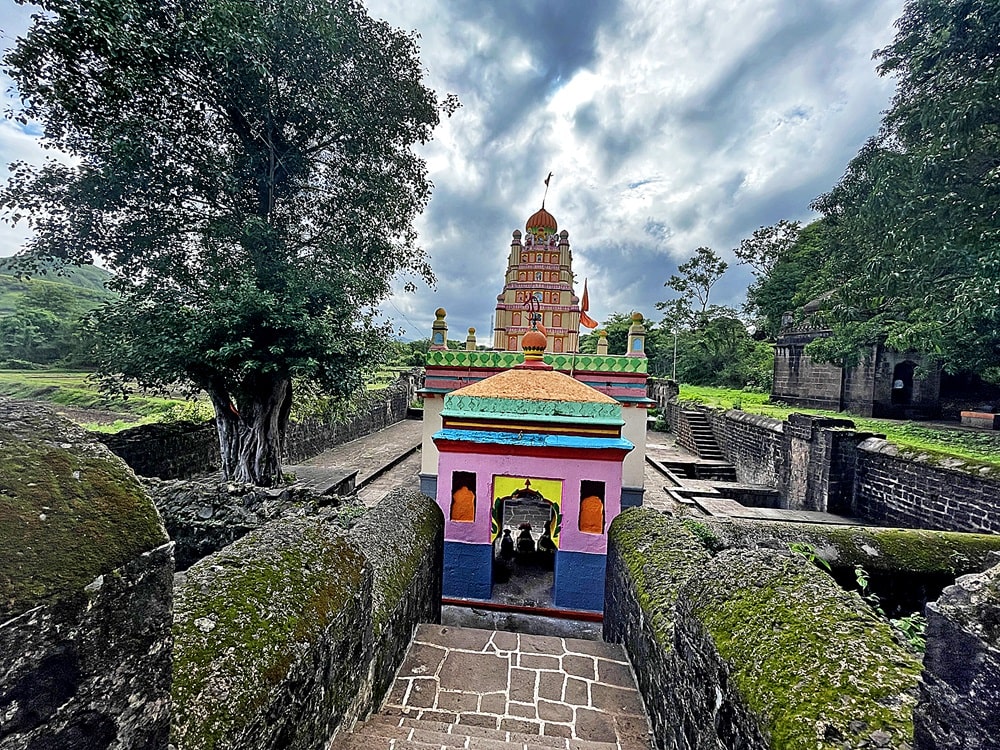
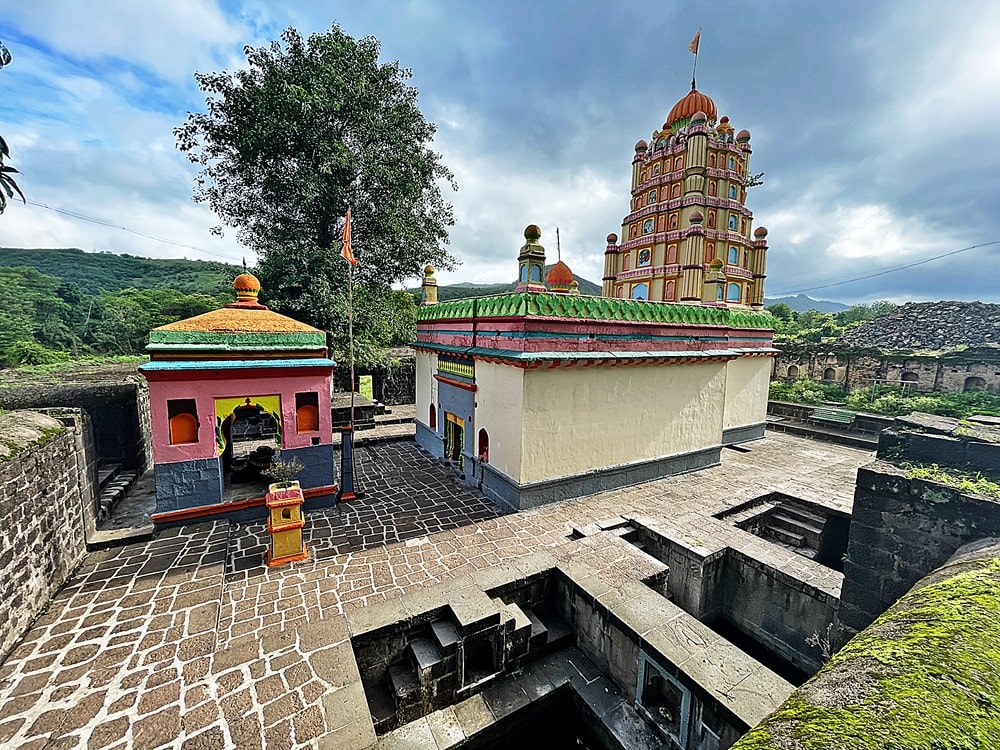
This ancient temple is situated three kilometers away from Khed Shivapur. Blessed with nature’s abundance and a historical setting, this temple in Ranje village is dedicated to Lord Shiva. There is a grand stone arch at the entrance of the east-facing temple. One has to descend a few steps from there to enter the temple. Located in a somewhat sunken area, the temple is constructed of dressed stone, while the spire appears to have been built using bricks and lime. Furthermore, the entire temple complex is enclosed by a stone fortification. The structure of the temple consists of a Nandi Mandapa, a main hall, and the sanctum sanctorum. There are three Nandi idols seated in this stone-built Nandi Mandapa, which stands slightly separate from the main temple.
The circular main hall of the temple is supported by stone pillars. As one enters the sanctum from here, beautiful carved idols of Lord Ganesha and Lord Hanuman can be seen on both sides of the doorway. There is a natural spring of living water beneath the Swayambhu Shiva Linga in the sanctum. It is said that the water from this spring flows into the tanks located next to the temple. The pinnacle of this temple and its shape are unique. Beautiful sculptures of deities such as Vitthal-Rukmini, Ganesha, and Hanuman are carved onto the pinnacle. There are small turrets on the four corners of the pinnacle.
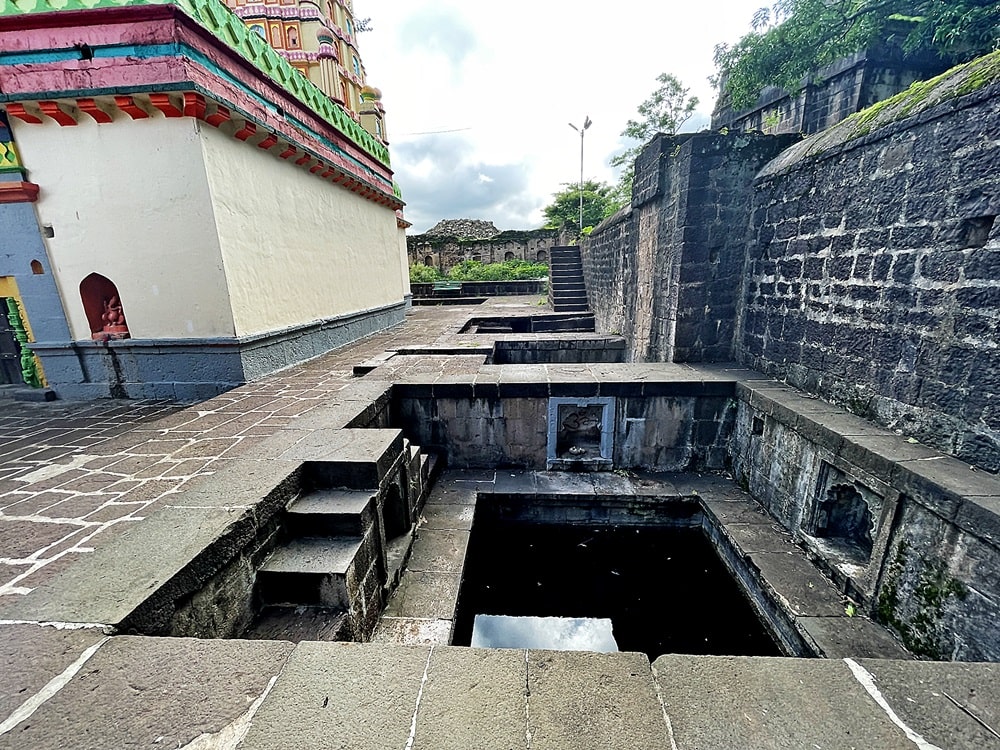
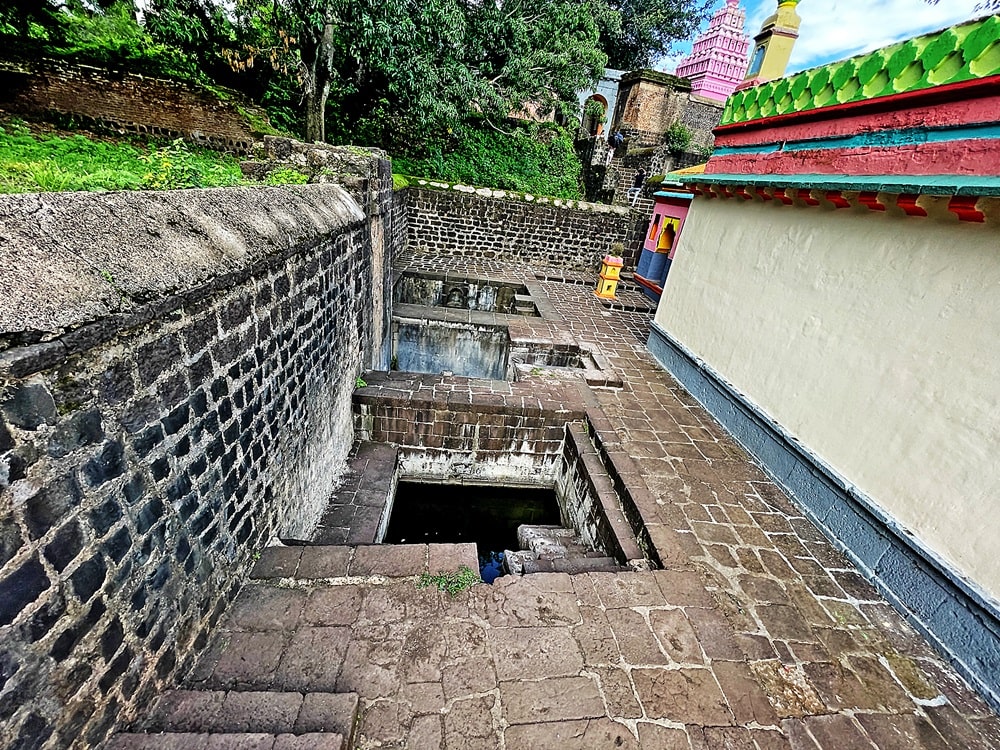
A unique feature of this temple is its three interconnected water tanks. The first is the Devkund. The water from this tank was used for deity worship and drinking. One has to descend further via additional steps to reach these tanks, for which there are two stairways. There are three small shrines within this tank, and it is said that there used to be idols in them in the past. The second tank is the Suryakund. The water from this tank was used for bathing. When the Devkund fills up, the excess water flows through a Gomukh into the Suryakund. There are small openings for the water from the Suryakund to flow into the third adjacent tank. The water in the third tank was used for washing and other chores. The excess water from all three tanks eventually flows into the Shivganga River. These three hundred to three hundred and fifty-year-old tanks are a perfect example of how water management can be achieved.
Adjacent to this temple is a large mansion (Wada). It is said that Jijabai used to reside there. There is also a space for tethering horses. Historical records indicate that this village was gifted by Lakhujiraje Jadhav to Rajmata Jijabai for her expenses. During the Peshwa era, this same mansion was under the control of Naro Ganesh. On one side of this mansion is the Lakshmi-Narayan Temple. Thousands of devotees from the surrounding five-village radius come here for darshan on Shravan Mondays and Mahashivratri. Additionally, many films and television serials are also filmed here.
This sacred temple stands as a testament to deep spiritual devotion, ancient architectural grandeur, and rich local cultural traditions.
The sanctum sanctorum houses the divine idol consecrated according to ancient Vedic traditions, surrounded by serene courtyards and traditional temple architecture.
Navratri, Maha Shivratri, Annual Temple Jatra & Deepotsav
Compare and book flights, secure top-rated local hotels near the temple, hire reliable guides, and rent cars instantly.
Extend your pilgrimage by visiting other highly sacred temples located nearby.


Add ₹999 more to unlock FREE SHIPPING!
Your sacred cart is currently empty.
Shop Photo FramesFill in your delivery details below to place your order.
Add comment