
Add ₹999 more to unlock FREE SHIPPING!
Your sacred cart is currently empty.
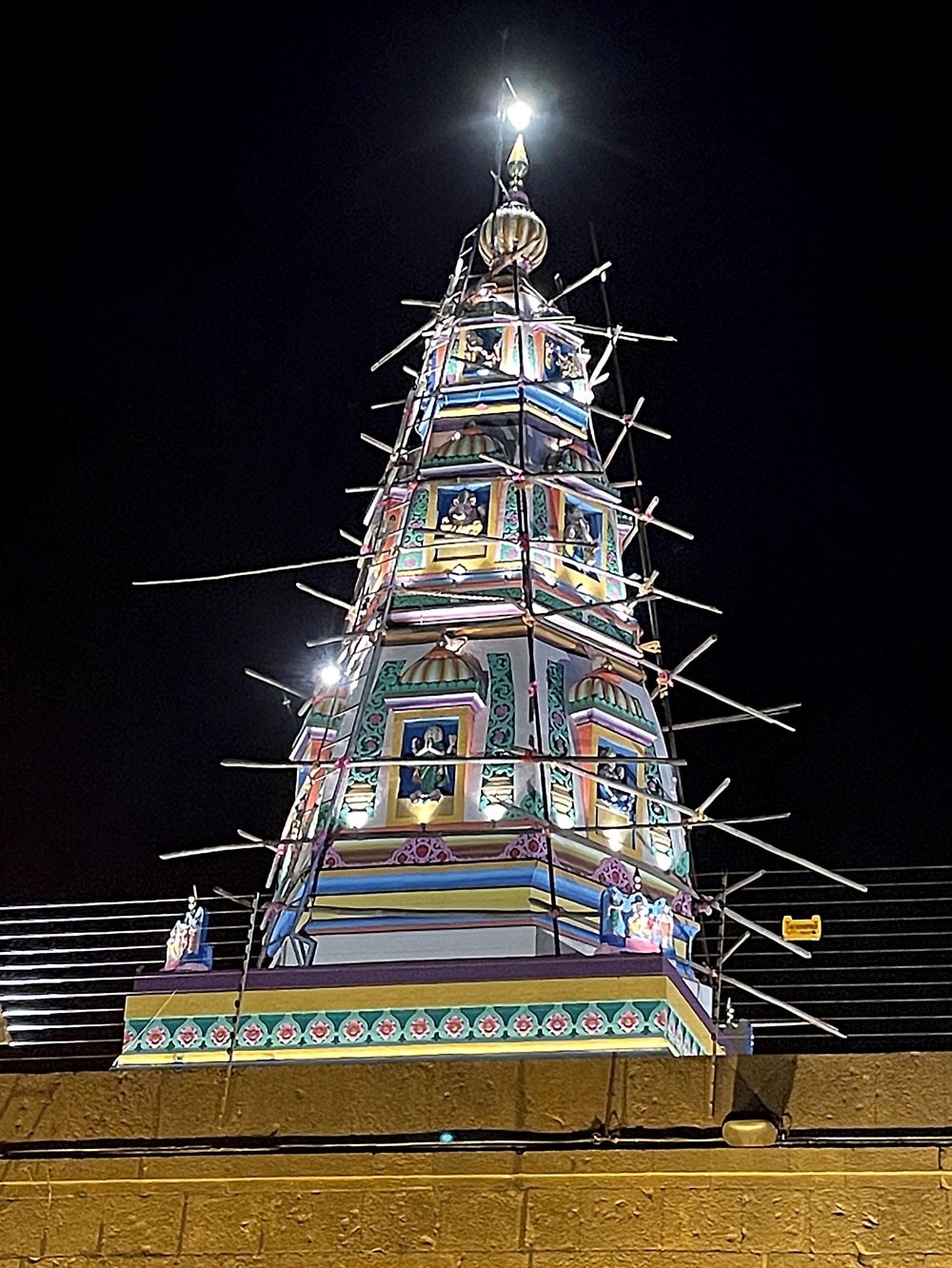
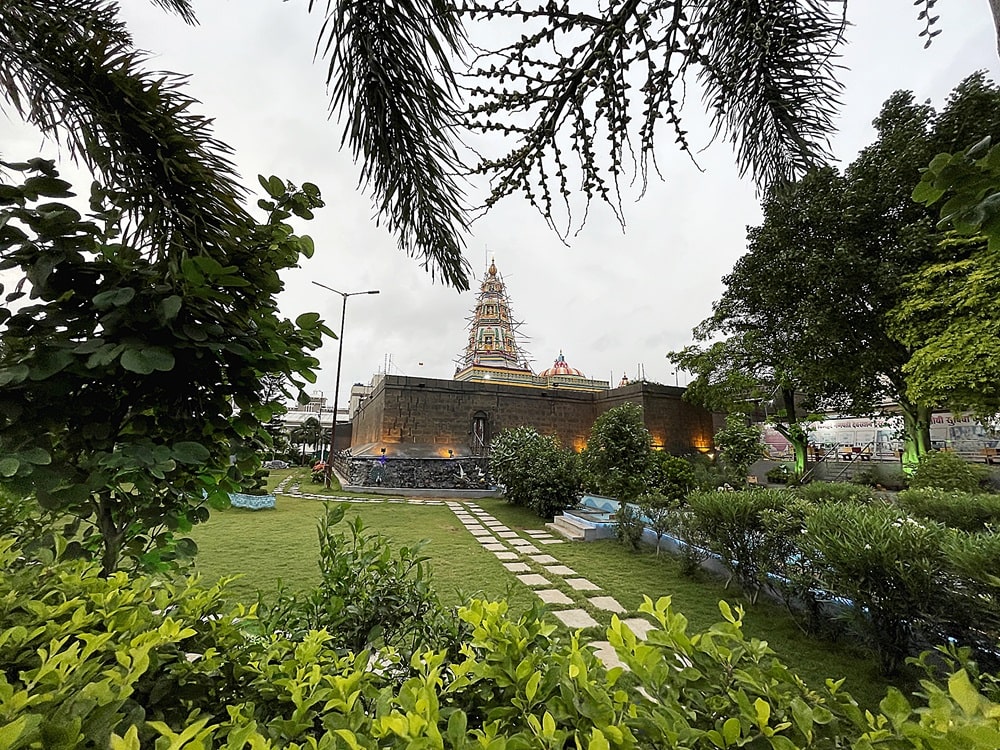
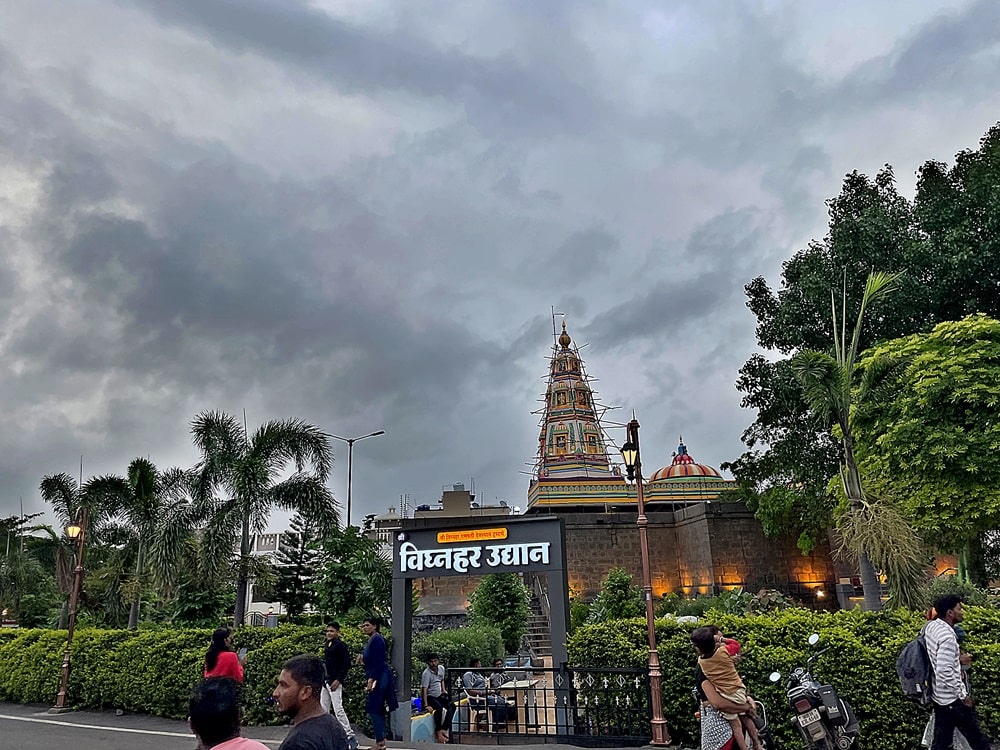
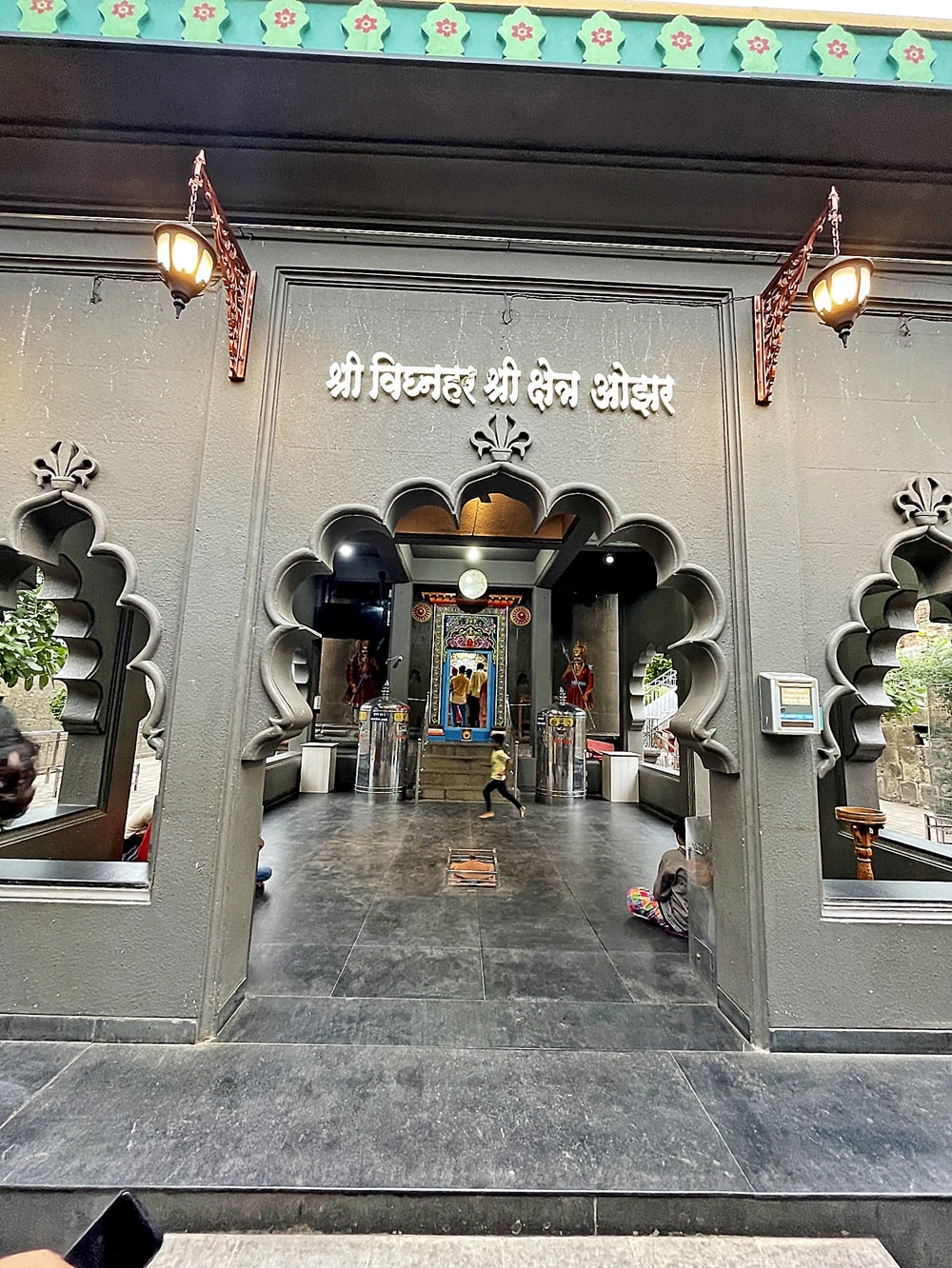
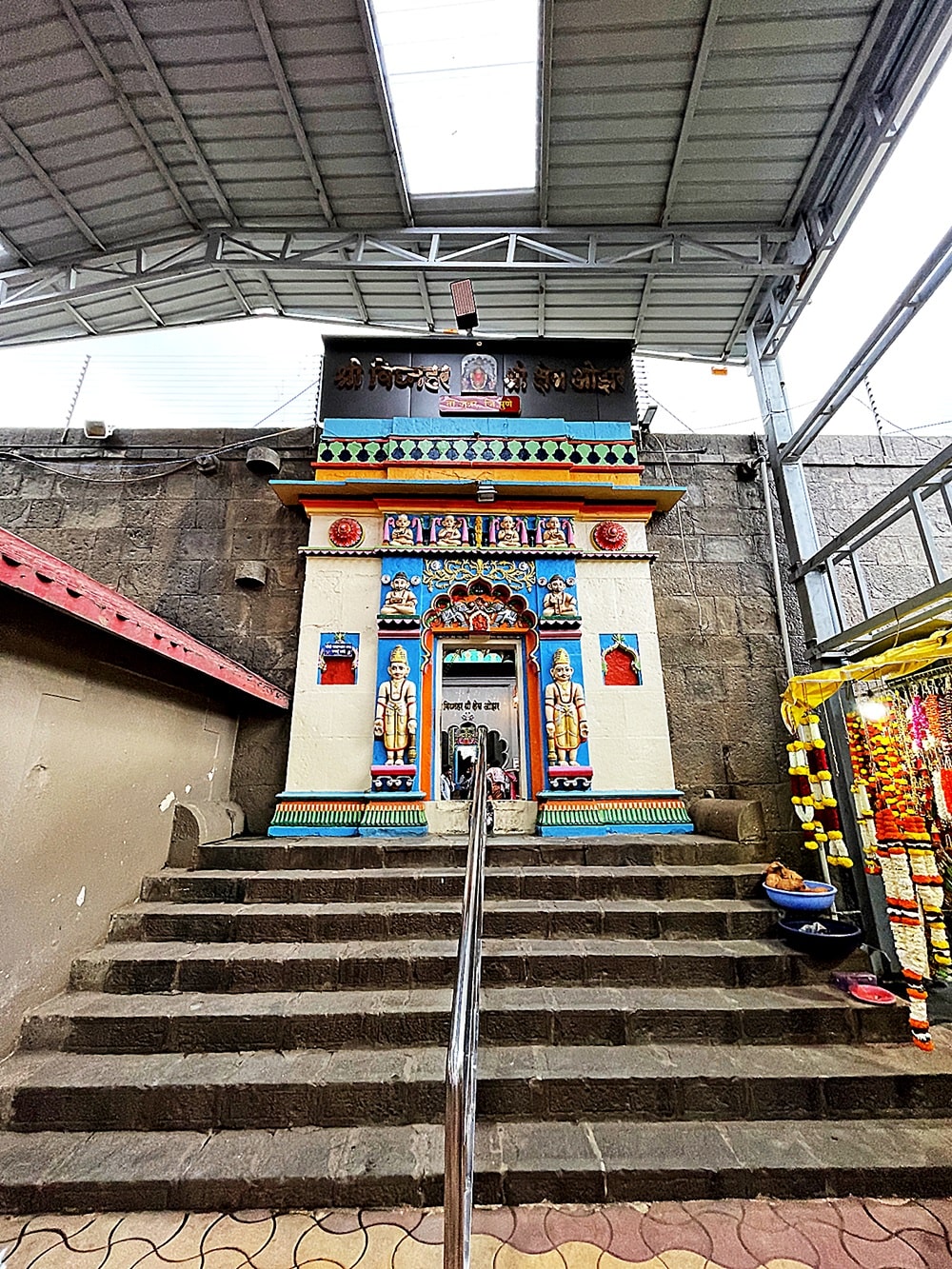
Shop Photo FramesThe seventh among the Ashtavinayakas, the second in the Junnar taluka, and the most affluent of all, is Shri Vighnahar of Ozar! The magnificent temple of Vighnahar is situated along the picturesque banks of the Kukadi River. From afar, the temple’s tall, elegant spire captures the attention of devotees. This temple faces the east and is enclosed by a high stone fortification, which is wide enough to walk upon with ease. The temple features a grand entrance. As one ascends the stone steps to enter, the figures of the guards and attendants carved on both sides immediately draw one’s gaze. Above them are sculptures of two sages—one in deep meditation and the other engrossed in reading—while the door frame is adorned with an image of Gajanan and two elephants, the symbols of prosperity.
As one crosses the high threshold of the entrance and steps inside, two corridors come into view. Directly in front of them, on the stone-paved floor, stand two magnificent lamp towers. They are also constructed of stone. On festive occasions, they shine brightly, illuminated by hundreds of lamps. The temple, sparkling in that light, looks truly resplendent. The assembly hall of the temple is adorned with paintings of the Ashtavinayaka and religious depictions in traditional artistic styles.
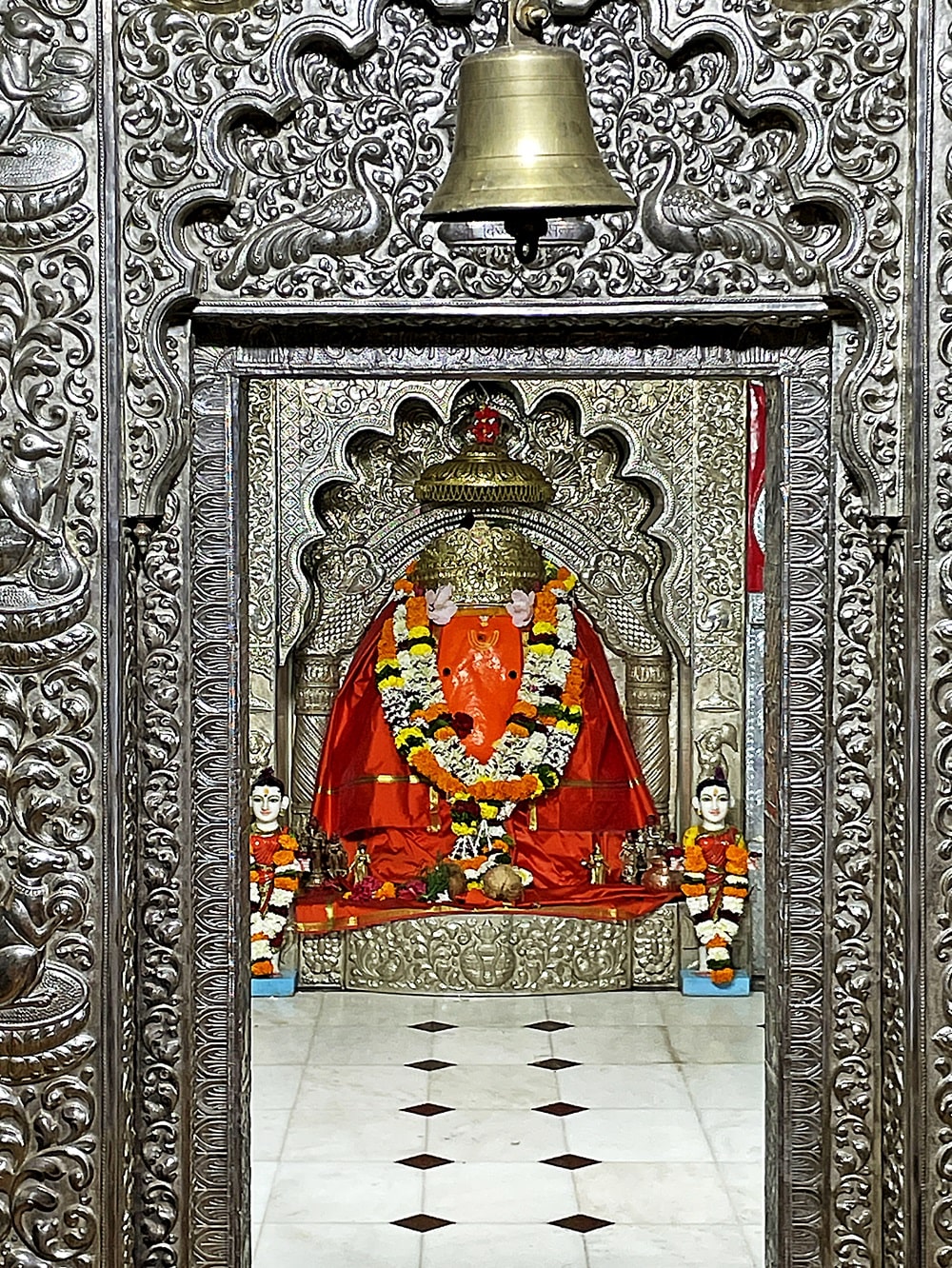
In the sanctum sanctorum, the self-manifested idol of Vighnahara, adorned with vermilion, is enshrined within a silver arched gateway. This idol has its trunk turned to the left, with rubies set as eyes and a diamond adorning its forehead. Small idols of Riddhi and Siddhi are placed on both sides of the Ganesha idol. As devotees are not permitted to enter the sanctum for darshan, a replica of this Ganesha has been placed in front for them to worship. After having darshan, one can complete the pilgrimage by performing a circumambulation around the temple. The temple premises are beautifully enhanced by trees such as Parijat, Shami, and Kanher.
Devotees believe that this Ganpati removes all obstacles. According to the legend, King Abhinandan began a yajna to become the lord of the three worlds, which caused Lord Indra’s throne to tremble. To disrupt this yajna, Indra created Vighnasur. This demon began creating obstacles in all the yajnas performed on Earth and caused great suffering to mankind. Consequently, the sages, led by Sage Parashar, began praying to Gajanan. Pleased with their prayers, Gajanan was requested to resolve the crisis caused by Vighnasur. Following this, a fierce battle took place between Vighnasur and Ganpati at this very site. Vighnasur was defeated and surrendered to Ganpati. Ganpati spared him on the condition that he would never enter a place where Ganesha is worshipped. At that time, Vighnasur requested Ganpati that devotees should utter his name before taking Ganpati’s name and that Ganpati should reside at this very place. Accordingly, Ganpati assumed the name Vighneshwar or Vighnahar and took up residence at the Ozar pilgrimage site. This is the very temple of Vighnahar.
Just as in mythology, this temple is also connected to history. The Peshwas of Pune were devotees of Gajanan. It is said that in 1785, Chimaji Appa, the brother of Thorle Bajirao Peshwa, constructed the sanctum sanctorum of this temple and installed a golden pinnacle upon it.
The administration of this temple is managed by the Shri Vighnahar Ganpati Devasthan Trust. A grand festival is celebrated here on Bhadrapad and Magh Chaturthi. There is a constant influx of devotees here. For them, a magnificent Bhakta Niwas (pilgrim accommodation) has been constructed, and arrangements for food, lodging, and religious rituals are provided at nominal rates. Various social welfare activities are also carried out by the Ozar Devasthan Trust. The Trust organizes mass wedding ceremonies at a very low cost. Every day, after the worship of Ganesha at 5 o’clock in the morning, devotees can have the darshan of Gajanan until 11 o’clock at night. On the day of Angarki Chaturthi, these timings are from 4 o’clock in the morning to 11 o’clock at night. The Maha Aarti takes place at 7:30 in the morning, the Madhyanha Aarti at 12 o’clock in the afternoon, and the Shej Aarti at 10 o’clock at night. The timings for the Mahaprasad provided to the devotees by the temple committee are from 10 o’clock in the morning to 1 o’clock in the afternoon and from 7:30 in the evening to 10:30 at night.
This sacred temple stands as a testament to deep spiritual devotion, ancient architectural grandeur, and rich local cultural traditions.
The sanctum sanctorum houses the divine idol consecrated according to ancient Vedic traditions, surrounded by serene courtyards and traditional temple architecture.
Navratri, Maha Shivratri, Annual Temple Jatra & Deepotsav
Compare and book flights, secure top-rated local hotels near the temple, hire reliable guides, and rent cars instantly.
Extend your pilgrimage by visiting other highly sacred temples located nearby.

Add ₹999 more to unlock FREE SHIPPING!
Your sacred cart is currently empty.
Shop Photo FramesFill in your delivery details below to place your order.
Add comment