
Add ₹999 more to unlock FREE SHIPPING!
Your sacred cart is currently empty.
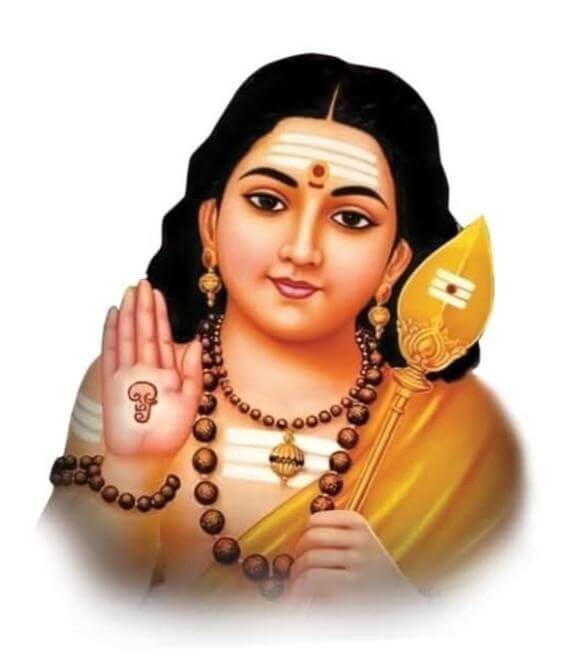
Shop Photo FramesChengamanad Sree Munikkal Guhalaya Temple is a well-known pilgrimage centre situated on top of a massive rock in Chengamanad village, near Aluva in Ernakulam district. The main deity of the temple is Lord Subrahmanya (Murugan). Surrounded by natural caves and rocky rock formations, the temple is also known as the “Southern Palani” because of its similarities in worship and traditions with the Palani Murugan Temple. With its unique natural setting, the temple is regarded as one of the notable Murugan temples in Kerala.
Until the late nineteenth century, the site of Chengamanad Sree Munikkal Guhalaya Temple was a massive rocky hill with natural caves. Ancient stone idols were found inside these caves and local people worshipped there long before the site developed into a formal temple. In 1898, Sree Chattampi Swamikal re-consecrated the idol of Bala Subrahmanya at the site. Historical records indicate that this re-consecration played an important role in providing greater opportunities for worship to non-Brahmins and other socially disadvantaged communities during that period. Even after the re-consecration, the temple remained a small forest shrine for several decades. Later, a local committee was formed to manage the temple and it was subsequently taken over by the Kerala Kshethra Samrakshana Samithi. The construction of the flagstaff, Chuttambalam and the steps leading to the hill transformed the temple into the well-known pilgrimage centre seen today.
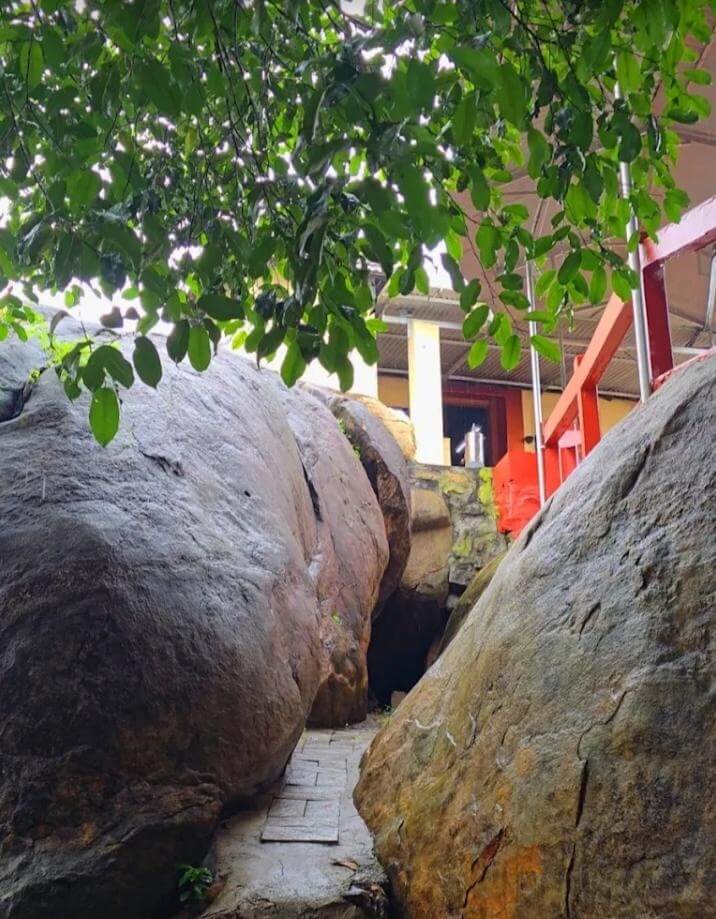
According to the main legend associated with the temple, around 2,000 years ago a sage named Jangaman performed deep penance in a natural cave on top of this hill. It is believed that the place was originally known as “Jangamanad” after the sage and later became “Chengamanad” through changes in language over time. The legend also says that when a herd of wild elephants tried to disturb the sage’s meditation, he cursed them and turned them into rocks. This is believed to be the origin of the large rock formations on the hill, which are locally known as “Aanapparakal” (Elephant Rocks). Another belief is that Lord Subrahmanya came to reside in this cave. The name “Guhalaya” is believed to have been formed from “Guhan”, one of the names of Lord Subrahmanya and “Alayam”, meaning abode. Devotees also believe that the idols of Bala Subrahmanya and Ganesha in the cave are Swayambhu (self-manifested). The natural cave and the elephant-shaped rock formations can still be seen within the temple premises today.
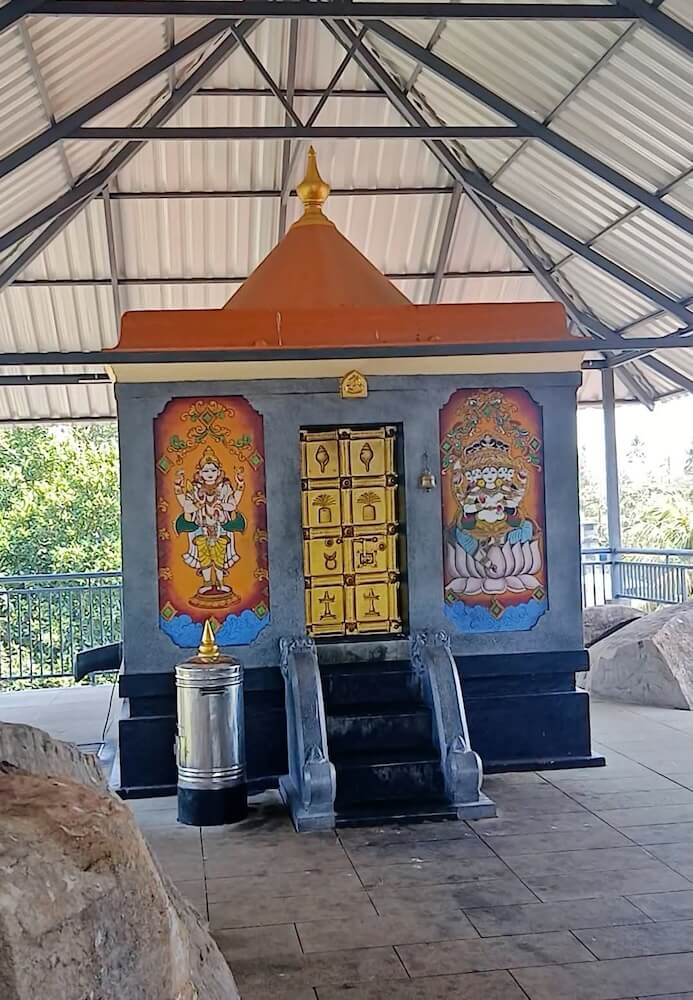
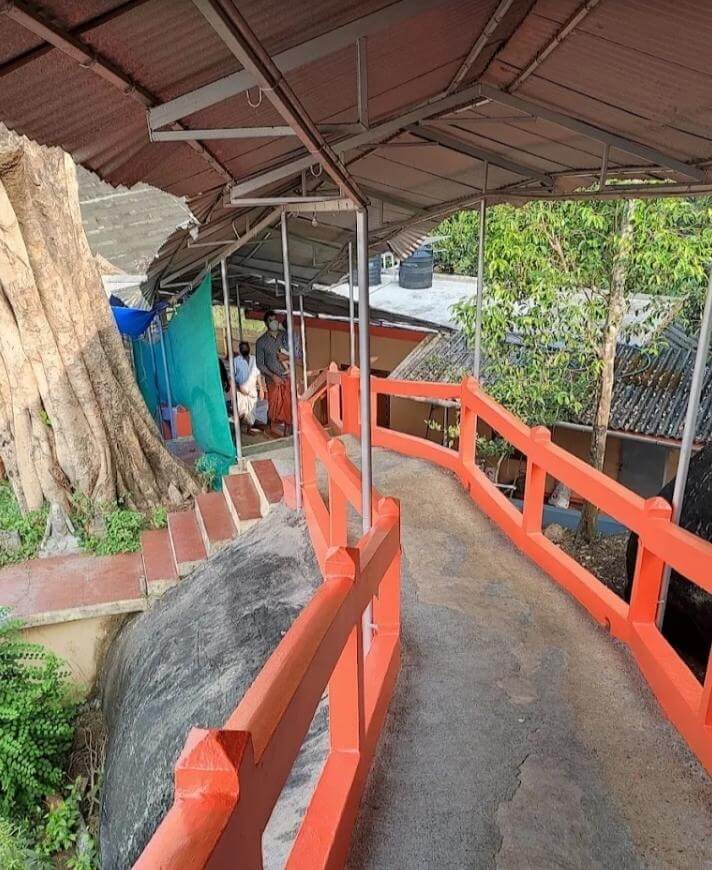
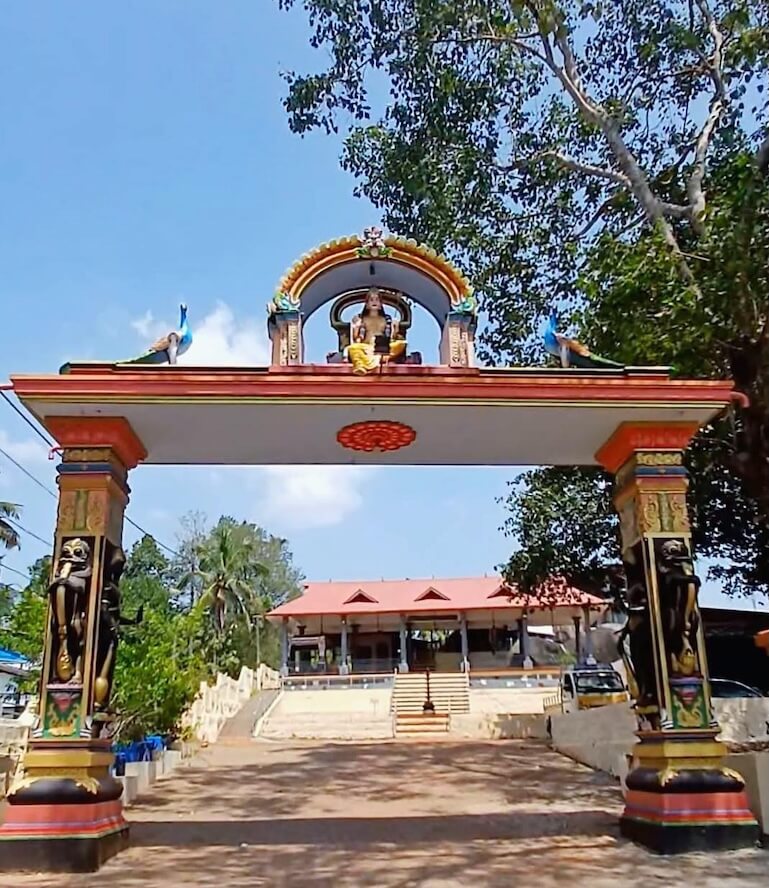
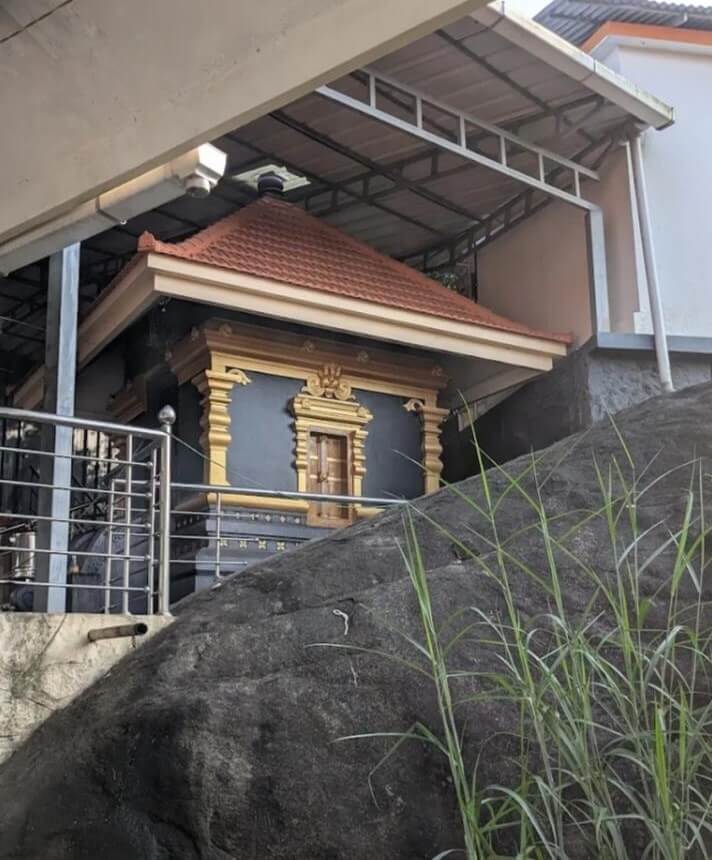
Unlike most temples, this temple has a unique design that combines nature with traditional Kerala temple architecture. It is situated on top of a hill covered with massive rock formations that resemble reclining elephants. From the entrance arch beside the road, a flight of concrete steps leads to the top of the hill, where a spacious hall welcomes devotees. From there, visitors enter a narrow natural cave formed between two huge rocks. Inside this cave, believed to be the place where Sage Jangaman performed penance, is the sanctum of Bala Subrahmanya, the main deity. The cave also contains the forms of Bala Subrahmanya and Ganesha, which are believed to be Swayambhu (self-manifested). Shrines dedicated to Lord Ayyappa, Nagaraja and Nagayakshi are also located around the main cave shrine.
The most important annual festival of the temple is the seven-day Kavadi Festival, celebrated on the Thaipooyam star in the Malayalam month of Makaram (January–February). During the festival, devotees from different parts of Kerala climb the hill carrying Bhasma Kavadis and Poo Kavadis as offerings. The Bhasmabhishekam performed on the night of Thaipooyam is one of the main rituals of the festival. The Prathishta Dinam Festival is celebrated on the Uthram star in the Malayalam month of Medam (April–May) to commemorate the re-consecration of the temple by Sree Chattampi Swamikal in 1898. Special poojas and abhishekams are also conducted on Shashti and Vishakham star days every Malayalam month. During the Mandala season, observed from Vrischikam 1 to Dhanu 11, the temple holds special poojas and rituals with the participation of large numbers of devotees.
The temple offers several important rituals, including Panchamrithabhishekam, Bhasmabhishekam, Palabhishekam and Naranga Vilakku. Devotees perform Panchamrithabhishekam to seek the fulfilment of wishes, good health and prosperity. Bhasmabhishekam is offered for mental well-being and overall welfare, while Palabhishekam is performed to seek relief from hardships and receive divine blessings. Naranga Vilakku is offered by devotees to overcome obstacles and negative influences. During the Thaipooyam festival, devotees fulfil their vows by offering Bhasma Kavadi, Pal Kavadi and Poo Kavadi. Special poojas and offerings are also made on Shashti days. Among the other shrines, Appam Moodal and Ganapathi Homam are offered to Lord Ganesha to remove obstacles, Neerajanam is offered to Lord Ayyappa for relief from the effects of Saturn (Shani Dosha) and Naranga Vilakku, milk and fruits are offered to Nagaraja and Nagayakshi for relief from Sarpa Dosha.
The temple opens daily at 05:30 AM with Nirmalya Darshan. This is followed by Usha Pooja at 06:00 AM and Ucha Pooja at 08:30 AM. The temple closes at 10:00 AM and reopens at 05:30 PM. Deeparadhana is performed at 06:30 PM, followed by Athazha Pooja at 07:15 PM. The temple closes for the day at 07:30 PM. On special occasions such as Shashti, Thaipooyam and Vishakham star days, the closing time in the morning may be extended due to special poojas and abhishekams. Major offerings such as Palabhishekam and Panchamrithabhishekam are usually performed during the morning poojas.
This sacred temple stands as a testament to deep spiritual devotion, ancient architectural grandeur, and rich local cultural traditions.
The sanctum sanctorum houses the divine idol consecrated according to ancient Vedic traditions, surrounded by serene courtyards and traditional temple architecture.
Navratri, Maha Shivratri, Annual Temple Jatra & Deepotsav
Compare and book flights, secure top-rated local hotels near the temple, hire reliable guides, and rent cars instantly.
Extend your pilgrimage by visiting other highly sacred temples located nearby.


Add ₹999 more to unlock FREE SHIPPING!
Your sacred cart is currently empty.
Shop Photo FramesFill in your delivery details below to place your order.
Add comment