
Add ₹999 more to unlock FREE SHIPPING!
Your sacred cart is currently empty.
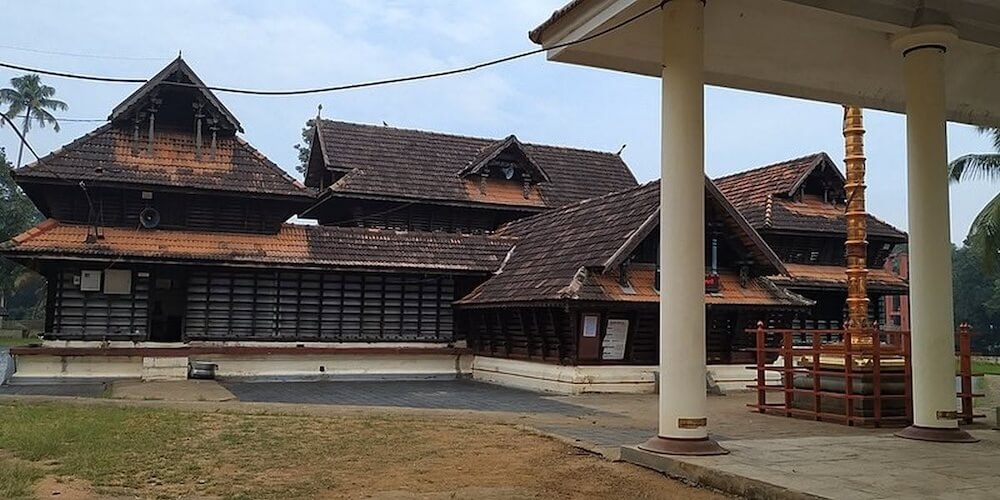
Shop Photo FramesPazhoor Perumthrikkovil Temple is an ancient Shiva temple situated on the banks of the Muvattupuzha River in Pazhoor village, near Piravom in Ernakulam district, Kerala. The temple was built in the style of the Vaikom Mahadeva Temple and is therefore also known as a Perumthrikkovil. It is believed to be one of the 108 Shiva temples established by Parashurama. One of the temple’s most remarkable features is the Muvattupuzha River, which normally flows westwards but turns east for a short distance after flowing around the temple. Because of this unique feature, Pazhoor is also known by the name ‘Dakshina Kashi’.
According to available historical and archaeological evidence, Pazhoor Perumthrikkovil Temple was built in the 12th century AD. It is one of the finest examples of medieval Kerala temple architecture. In recognition of its architectural beauty and rare mural paintings, the Kerala State Department of Archaeology declared the temple a protected monument in 1994. Historical records show that the riverside region, including Piravom and Pazhoor, was once a well-known centre of Vedic learning. It was also one of the main centres of the Ashtagrahams, the eight prominent Brahmin families of Kerala.
Several popular legends are associated with Pazhoor Perumthrikkovil Temple. The most well-known explains the origin of the name Pazhoor. According to tradition, a group of Brahmin boys who lived in the area prayed for their teacher, who had no children, to be blessed with a child. They made a Shiva Linga from river sand and water weed and worshipped Lord Shiva with deep devotion. Pleased with their sincere prayers, Lord Shiva blessed the teacher with a child. It is believed that the place where the Linga made of weed was installed came to be known as Payaloor, which later became Pazhoor. Even today, the main idol is believed to be made of sand and weed and therefore only a conch is used to perform the abhishekam. Another well-known legend tells of a Namboothiri whose predicted death was prevented through his unwavering devotion to Lord Shiva. It is believed that after he protected the deity from the rain by holding an umbrella over the sanctum, Lord Shiva was pleased with his devotion and blessed him with a longer life.
Another popular legend is connected with the unique jackfruit tree in the temple courtyard. According to tradition, the temple priest reached the underworld while searching for the Lord’s lost golden vessel in the river. He is believed to have brought back a jackfruit seed from there and planted it in the temple grounds. It is said that the jackfruits from this tree have a taste unlike those found anywhere else. Another local legend says that the Muvattupuzha River, which normally flows westwards, turns east when it reaches the temple to pay homage to Lord Shiva. Devotees also believe that this change in the river’s course has protected the temple from floods over the centuries.
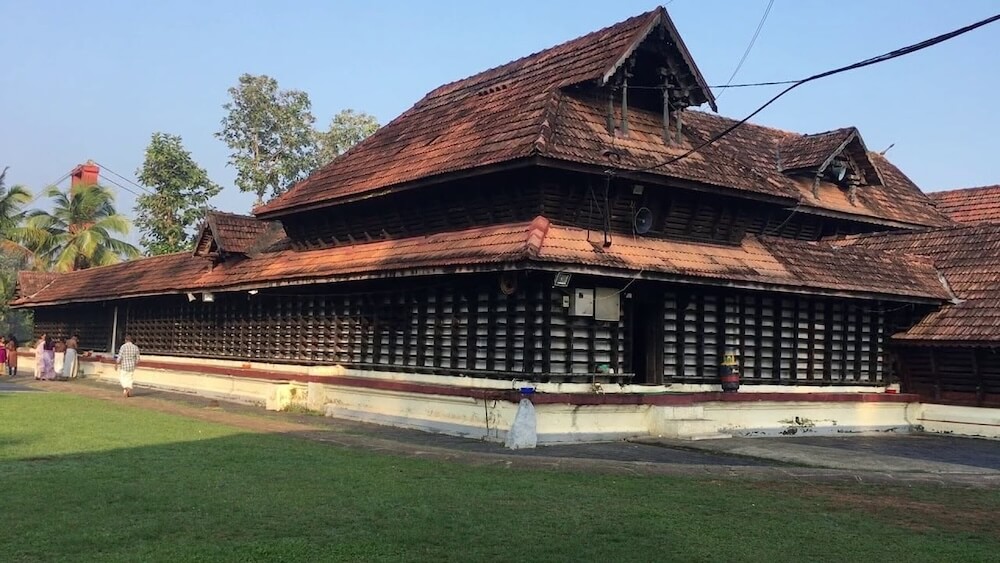
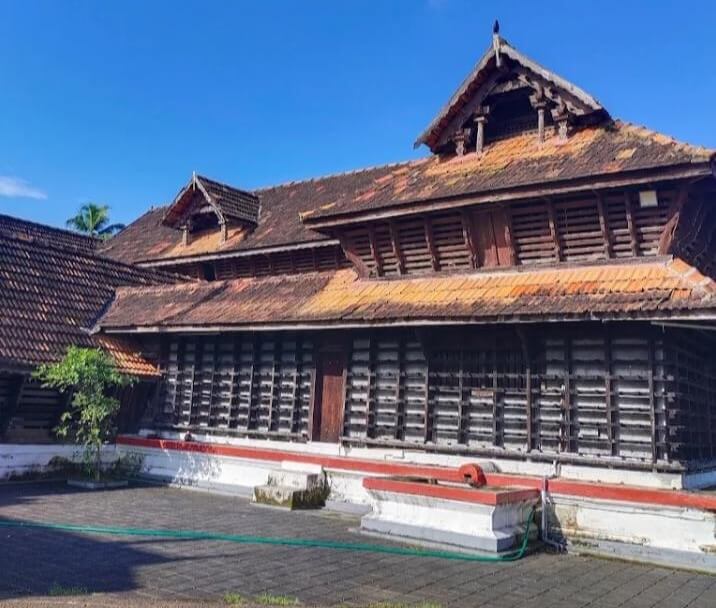
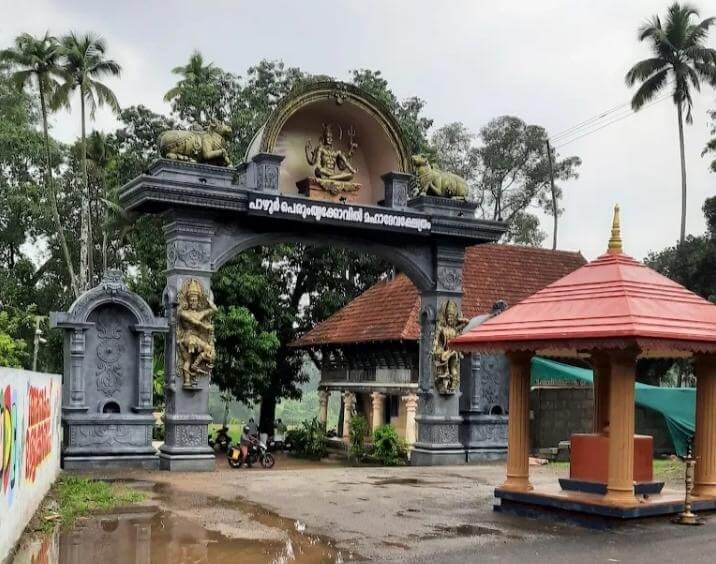
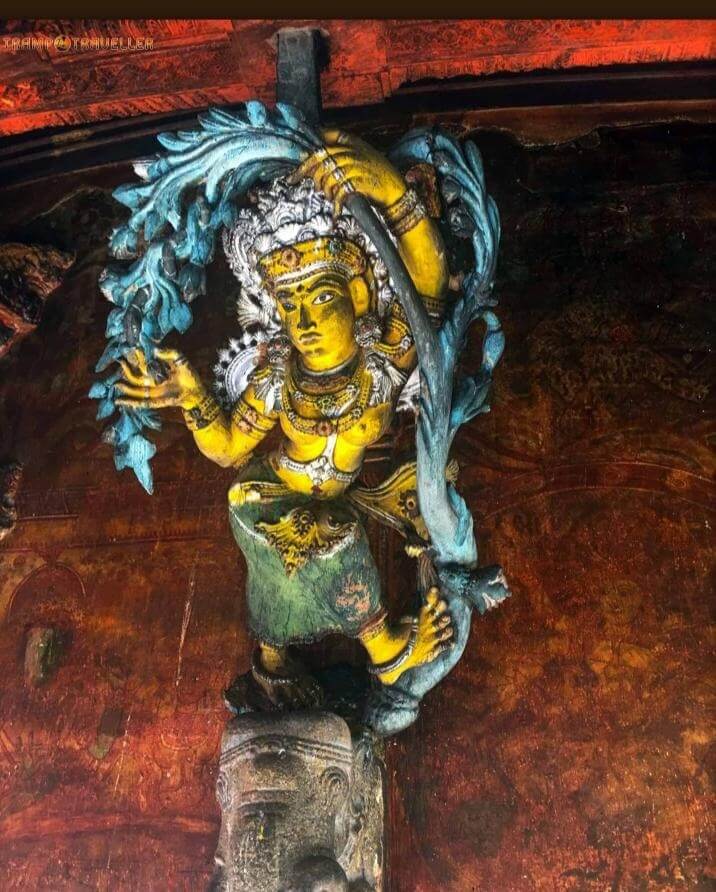
The temple is a fine example of traditional Kerala temple architecture. Devotees enter through a traditional Padippura (gateway), followed by a spacious stone-built elephant shelter. The Muvattupuzha River flowing eastwards beside the temple and the massive outer wall, built in the style of ancient Kerala fortifications, add to its distinctive character. The Nalambalam features a wooden lamp gallery along its outer walls, while the Balikkalpura near the main entrance is decorated with beautiful wooden carvings. At the centre of the large stone-paved courtyard stands the Sreekovil. In front of it is the square Namaskara Mandapam, whose roof is adorned with magnificent 12th-century wooden carvings depicting scenes from the Ramayana and the Mahabharata, reflecting the temple’s rich artistic and architectural heritage.
The main deity, Lord Shiva, is enshrined in a circular Sreekovil built of granite, which is one of the finest examples of traditional Kerala temple architecture. The Dwarapalaka (guardian) sculptures on either side of the entrance, the rare granite Pranala (water spout) through which the sacred water flows and the Yakshi sculpture supporting it highlight the temple’s exceptional craftsmanship. The outer walls of the Sreekovil are decorated with beautiful mural paintings created during the 16th and 17th centuries using natural colours. The main deity is worshipped in the form of Panchamukha Sadashiva (the five-faced form of Shiva). Lord Ganesha is enshrined to the south-west of the Sreekovil, facing east, while Lord Dakshinamurthy is worshipped facing south near the southern entrance. Within the temple walls, Lord Sastha has a shrine in the south-east corner and outside the walls, a sacred naga grove houses the shrines of Naga Raja and Naga Yakshi. Devotees also worship the presence of Goddess Parvati near the Pranala on the northern side of the Sreekovil and the Yakshi sculpture supporting the Pranala is revered as ‘Yakshi Amma’.
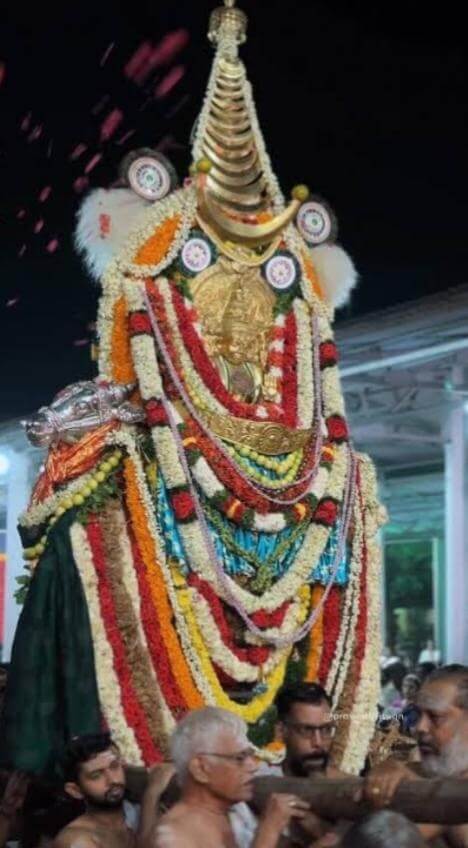
The temple’s main annual festival is an eight-day celebration held during the Malayalam month of Kumbham (February–March). The festival begins with the flag hoisting on the Pooyam star and concludes with the sacred Arattu ceremony on the Ayilyam star. On the final day, the ceremonial bath of the deity is held at Marikadavu on the banks of the Muvattupuzha River near the temple. Maha Shivaratri, observed during Kumbham, is one of the temple’s most important festivals. Special poojas, Lakshadeepam and Yama Poojas are conducted and on the following morning, large numbers of devotees gather at the temple ghat to perform Bali Tharpanam for their ancestors. During the Mandala–Makaravilakku season, from the Malayalam months of Vrischikam to Dhanu (November–December), special poojas and Chuttuvilakku are offered to Lord Sastha. Thiruvathira, celebrated in the month of Dhanu (December–January), is marked with special poojas dedicated to Lord Shiva and many women observe traditional vows on this day. On Karkidaka Vavu (July–August), the temple ghat attracts large numbers of devotees who perform Pithru Tharpanam, as offering ancestral rites in the eastward-flowing Muvattupuzha River is considered especially sacred.
Among the temple’s offerings, Shathakalashabhishekam is considered the most important. During this ritual, the deity is bathed with sacred water from 101 consecrated pots and devotees offer it for relief from illness and the fulfilment of their prayers. Dhara and Shankabhishekam are also significant offerings. As the main idol is believed to be made of sand and water weed, the priests perform the abhishekam only with a conch. Devotees light the Pinvilakku behind the Sreekovil to pray for a happy married life and family prosperity, while Koovalam Mala and Uma Maheshwara Pooja are offered for the well-being of the family. Other important offerings include Ganapathi Homam for the removal of obstacles, Neerajanam to Lord Sastha for relief from the effects of Saturn (Shani Dosha) and Ayilya Pooja, Navaka Pooja and Sarpa Bali for the naga deities on every Ayilyam star day of the Malayalam month, seeking relief from Naga Dosha.
The temple opens daily at 05:00 AM with the Palliyunarthal (awakening of the deity) and Nirmalya Darshan. This is followed by Abhishekam, Vakacharthu and Shankabhishekam at 05:30 AM, Usha Pooja at 06:30 AM, Ethirettu Pooja at 07:15 AM, Pantheeradi Pooja at 08:15 AM and Ucha Pooja at 10:30 AM, after which the temple closes at 11:00 AM. The temple reopens at 05:00 PM. Deeparadhana is performed at sunset (approximately 06:15 PM–06:30 PM), followed by Athazha Pooja at 07:30 PM. The temple closes for the day at 08:00 PM. Pooja timings may vary on special occasions such as Maha Shivaratri, the annual festival and the Mandala season.
This sacred temple stands as a testament to deep spiritual devotion, ancient architectural grandeur, and rich local cultural traditions.
The sanctum sanctorum houses the divine idol consecrated according to ancient Vedic traditions, surrounded by serene courtyards and traditional temple architecture.
Navratri, Maha Shivratri, Annual Temple Jatra & Deepotsav
Compare and book flights, secure top-rated local hotels near the temple, hire reliable guides, and rent cars instantly.
Extend your pilgrimage by visiting other highly sacred temples located nearby.


Add ₹999 more to unlock FREE SHIPPING!
Your sacred cart is currently empty.
Shop Photo FramesFill in your delivery details below to place your order.
Add comment