
Add ₹999 more to unlock FREE SHIPPING!
Your sacred cart is currently empty.
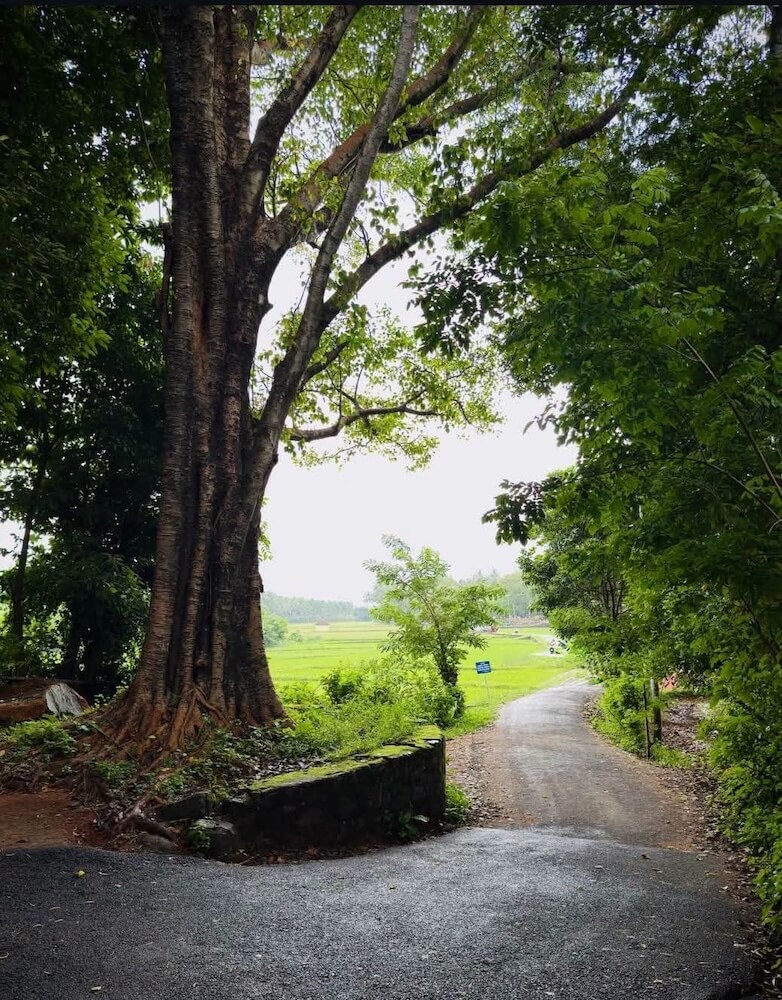
Shop Photo FramesVazhalikkavu Bhagavathi Temple is an ancient temple located at Painkulam village in Panjal Grama Panchayat of Thrissur district, on the picturesque banks of the Bharathapuzha (Nila) River, one of Kerala’s cultural landmarks. Surrounded by lush green paddy fields, the gently flowing river and beautiful natural surroundings, the temple offers a peaceful and scenic setting. Because of its natural beauty and charming village landscape, the area has been used as a filming location for several Malayalam films. Combining spiritual significance with the beauty of nature, the temple provides a memorable experience for both devotees and visitors.
According to historical records and the studies of local historians, Vazhalikkavu Bhagavathi Temple is around 400 years old. Based on its traditional architectural features and style of construction, historians believe that the temple was built during the 17th century (1600s). It is situated along the banks of the Bharathapuzha River, which once marked the border between the former kingdoms of Valluvanad and Kochi, where conflicts frequently took place. During the rule of the Zamorin kings, this region held great strategic importance. The temple is believed to have been established as part of the tradition of constructing sacred groves and boundary shrines by local chieftains and rulers to safeguard the border and pray for the prosperity of the land.
The temple also shares a deep connection with the rich cultural heritage of Valluvanad. One of its most important historical features is the ancient Koothumadam (traditional performance hall), which still stands within the temple premises. Tholpavakoothu, the traditional shadow puppet theatre that developed as part of the region’s agricultural culture, has been performed here for centuries. The ancient Koothumadam remains a lasting symbol of this rich artistic tradition. In earlier times, the temple also served as a gathering place for local farming communities after the harvest season. It is believed that the present-day Vela festival originated from these traditional gatherings.
At present, Vazhalikkavu Bhagavathi Temple is administered and maintained by the Thrissur Group of the Cochin Devaswom Board. Along with the Devaswom Board, the local Temple Advisory Committee, comprising devotees from the Painkulam and Panjal areas, plays an active role in the day-to-day administration of the temple and in the smooth organisation of major festivals and cultural events, including Tholpavakoothu and the annual Vela festival.
According to local legend, after slaying Darika, Goddess Bhadrakali wandered across the earth in a fierce form and eventually reached this place on the banks of the Bharathapuzha River, where she rested beside a banana plant and a banyan tree. It is believed that the temple derived the name “Vazhalikkavu” from this sacred grove, which was filled with banana plants (“vazha”) and banyan trees (“aal”). The roofless sanctum of the main deity, Vazhalikkavilamma, is also linked to this legend. It is believed that the sanctum was intentionally left open so that sunlight, rain and wind could fall directly upon the deity, helping to calm her fierce energy after the slaying of Darika. Local tradition also holds that every attempt to build a roof over the sanctum was unsuccessful.
According to local tradition, the temple has two principal deities, Vazhalikkavilamma and Kurumbakkavilamma, with two separate flagstaffs dedicated to them. It is believed that the divine presence of Kodungallur Bhagavathi resides here as Kurumbakkavilamma. Legend says that, pleased by the prayers of a devotee from the region, Kodungallur Amma accompanied him to this temple and was consecrated beside Vazhalikkavilamma, facing west. As a result, both deities are worshipped with equal importance. Another local legend says that, as Goddess Bhadrakali was engaged in the slaying of Darika, she was unable to witness the defeat of Ravana in the Ramayana. To recount the events of the Lanka war before the Goddess, the tradition of performing Tholpavakoothu was established. In keeping with this belief, Tholpavakoothu based on the Kamba Ramayanam is performed every year in the temple’s Koothumadam.
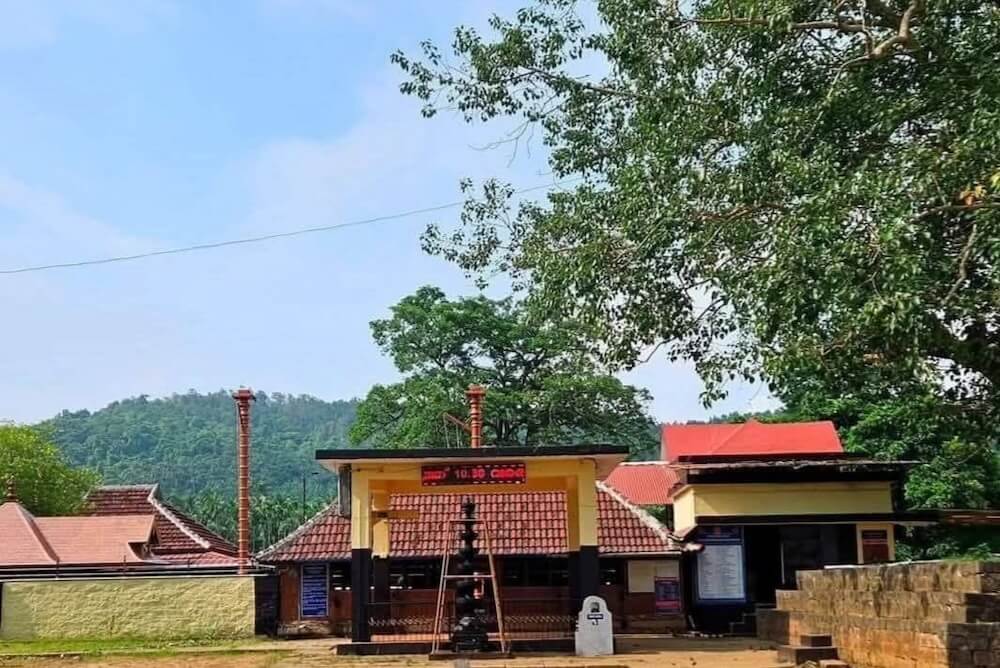
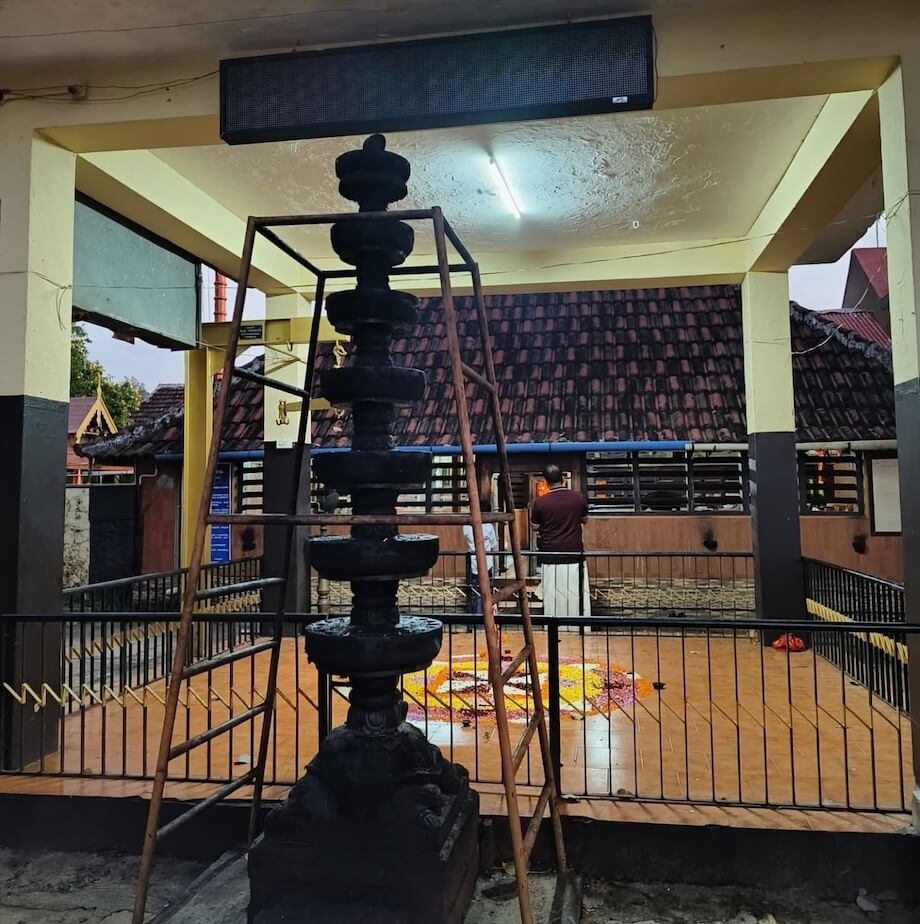
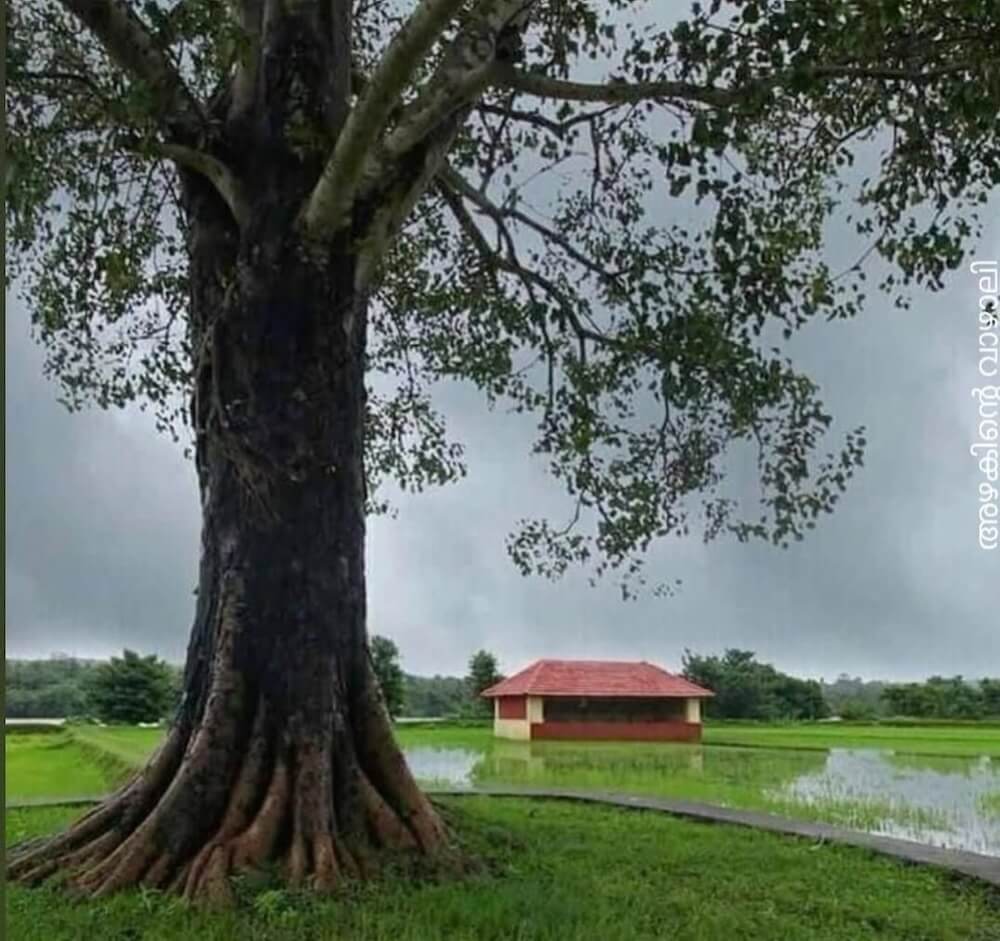
One of the first things visitors notice on arriving at the temple is its peaceful setting, surrounded by lush greenery and the gently flowing Bharathapuzha River. The temple stands within a large sacred grove, adding to its natural charm. A distinctive feature of the temple is the two gold- or copper-clad flagstaffs standing side by side in front of the entrance, dedicated to the two principal deities. Outside the temple wall is a spacious traditional Koothumadam, built of granite and timber, where Tholpavakoothu performances are held. A majestic banyan tree and the steps leading down to the Bharathapuzha further enhance the beauty of the temple surroundings. Passing through the elephant shelter and entering the Chuttambalam, visitors first see the square granite sanctum of Vazhalikkavilamma, which is uniquely built without a roof and faces north. This open sanctum is one of the temple’s most remarkable architectural features. Nearby is the second sanctum, built in the traditional Kerala style and dedicated to Nava Kurumbakkavilamma, who faces west. The wooden Chuttambalam and the traditional lamp gallery surrounding the sanctums further add to the temple’s architectural beauty.
The principal deity of the temple, Vazhalikkavilamma, is represented by an approximately four-foot-tall granite idol in the Chaturbahu (four-armed) form. Although the deity is depicted in the fierce form associated with the slaying of Darika, her expression also reflects divine grace and compassion towards devotees. The four hands hold a spear, a sword, Darika’s severed head and a vessel. The idol is consecrated facing north. One of the temple’s most distinctive features is its roofless sanctum, allowing sunlight, rain and wind to fall directly upon the idol. As the idol is carved from granite, regular ablutions and natural weather conditions do not cause any damage. The nearby shrine of Nava Kurumbakkavilamma is also given equal importance in the temple’s worship and rituals.
In addition to the principal deities, the temple complex has several other shrines. The shrine of Lord Ganapathi is located at the south-west corner (Kannimoola) within the main Nalambalam. A separate shrine dedicated to Dharma Sastha (Lord Ayyappa) stands at the south-east corner (Agnimoola), outside the Nalambalam. The shrine of the Naga deities, including Nagaraja and Nagayakshi, is situated beside the sacred grove at the north-west corner of the temple complex. Outside the temple wall, at the north-east corner (Eshanakona), is the shrine of Brahmarakshas. The temple grounds also include small sacred shrines dedicated to the memory of the ancient devotees and ancestors associated with this region.
The most important annual festival of the temple is the Vazhalikkavu Vela, celebrated every year on the Ashwathi star in the Malayalam month of Kumbham (February–March). The festival is best known for its grand elephant procession, which begins from Mullakkal Kavu and passes through the lush green paddy fields, accompanied by traditional percussion ensembles such as Chenda Melam, Panchari Melam, Panchavadyam and Kurumkuzhal. A spectacular fireworks display held at night is another major attraction. As part of the Vela celebrations, Tholpavakoothu based on the Kamba Ramayanam is performed for seven consecutive nights in the temple’s Koothumadam. Other important observances include the consecration anniversary festival on the Revathi star in the Malayalam month of Meenam (March–April) and the Mandala season, observed from the 1st of Vrischikam to the 11th of Dhanu. The temple is also known for the daily performance of Darikavadham Pattu and Thottam Pattu, while special ceremonies for the Naga deities are held on Ayilyam days during the Malayalam months of Kanni and Thulam.
The main offerings made to Goddess Bhadrakali at the temple include Kalamezhuthu and Pattu, Guruthi Tharpanam (Valiya Guruthi), Raktha Pushpanjali, Chathushatham, Neyvilakku (ghee lamp), Koottu Payasam and Kadumadhura Payasam. Various offerings are also made at the shrines of the other deities. The principal offerings to Lord Ganapathi include Ganapathi Homam and Appam Moodal. Devotees offer Shani Pooja, Ellu Vilakku (sesame oil lamp) and Neeranjanam to Dharma Sastha, while Ayilyam Pooja, Noorum Palum and Sarppam Pattu are the main offerings made to the Naga deities.
The temple opens daily at 05:00 AM with Nirmalya Darshan and Abhishekam. Usha Pooja is performed at 08:30 AM, followed by Ucha Pooja at 09:30 AM, after which the temple closes at 10:00 AM. The temple reopens at 05:30 PM, with Deeparadhana at 06:45 PM and Athazha Pooja at 07:30 PM. After the Athazha Pooja, the famous Darikavadham Pattu, associated with the divine presence of the Goddess, is performed. The temple closes for the day at 07:45 PM. The best time to visit is between 07:00 AM and 08:30 AM or after 05:30 PM, when visitors can enjoy the temple’s peaceful and scenic atmosphere. Timings may vary on special occasions such as the Mandala season, the days of the Tholpavakoothu performances and the Vazhalikkavu Vela festival in the Malayalam month of Kumbham.
This sacred temple stands as a testament to deep spiritual devotion, ancient architectural grandeur, and rich local cultural traditions.
The sanctum sanctorum houses the divine idol consecrated according to ancient Vedic traditions, surrounded by serene courtyards and traditional temple architecture.


Navratri, Maha Shivratri, Annual Temple Jatra & Deepotsav
Compare and book flights, secure top-rated local hotels near the temple, hire reliable guides, and rent cars instantly.
Extend your pilgrimage by visiting other highly sacred temples located nearby.


Add ₹999 more to unlock FREE SHIPPING!
Your sacred cart is currently empty.
Shop Photo FramesFill in your delivery details below to place your order.
Add comment