
Add ₹999 more to unlock FREE SHIPPING!
Your sacred cart is currently empty.
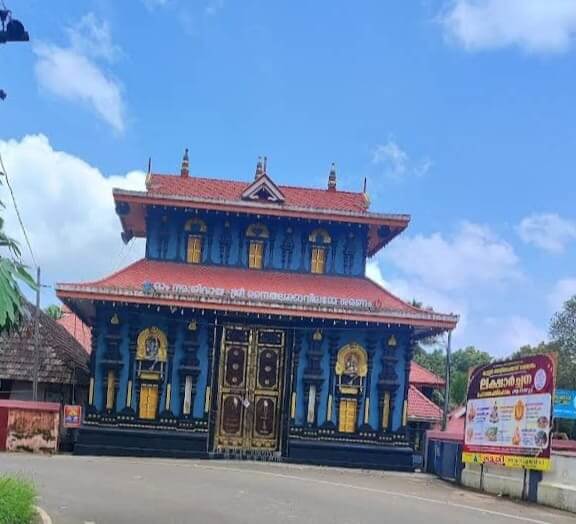
Shop Photo FramesNaithalakavu Bhagavathy Temple is a famous Hindu temple located at Kuttur, northwest of Thrissur city in Kerala. The temple is world-renowned as the venue where the official proclamation of the Thrissur Pooram, known as Pooram Vilambaram, is performed. The main deities of the temple are Goddess Bhadrakali, worshipped as Adi Parashakti and Lord Mahadeva (Shiva).
During the 18th century, under the rule of the Kings of Cochin, Naithalakavu Bhagavathy Temple held great political and social importance. Historical records also connect the temple with Queen Nangeliamma, who was married from Kuttur into the Cochin royal family at the Tripunithura Palace. Later, during the reign of Sakthan Thampuran, who ruled from Thrissur, Naithalakavilamma was given a special status and honour in the royal court. In AD 1797, when Sakthan Thampuran reorganised the Thrissur Pooram, he granted Naithalakavilamma the exclusive right to perform the Pooram Vilambaram, the official proclamation marking the beginning of the festival, following the exclusion of several temples from the Arattupuzha Pooram. ( It is assumed that The Deity makes the proclamation of the pooram ) This historic privilege continues to make Naithalakavu Bhagavathy Temple the official venue for the Pooram Vilambaram of Thrissur Pooram. The temple was once under the direct administration of the King of Cochin and after the end of royal rule, came under the administration of the Cochin Devaswom Board.
According to legend, between the 14th and 16th centuries AD, Kundil Nambidi, a prominent local chieftain from Arimpur, west of Thrissur, set out on a pilgrimage with Bhagavathy, his family deity. During the journey, he reached the nearby Pallippuram Shiva Temple at Kuttur and rested after placing his palm-leaf umbrella on the ground. When he tried to lift it again, he was unable to do so. A Prasna Chintha (traditional astrological enquiry) revealed that the Goddess wished to remain in the presence of Lord Shiva. As a result, she was consecrated at the very spot where the umbrella had rested. Legend also says that the consecration was performed by placing sesame seeds and a lamp on a plate filled with ghee. It is believed that the name Naithalakavu was formed from the words ney (ghee), thila (sesame) and kavu (sacred grove). Since the Goddess is worshipped in the form of Vanadurga, she is believed to prefer an open natural setting. Local tradition therefore says that every attempt to build a roof over the sanctum failed, as it collapsed due to the Goddess’s fierce power. For this reason, the sanctum has remained open to the sky ever since.
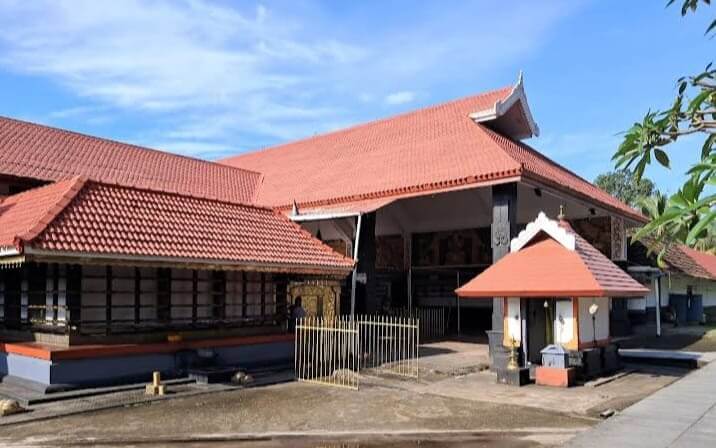
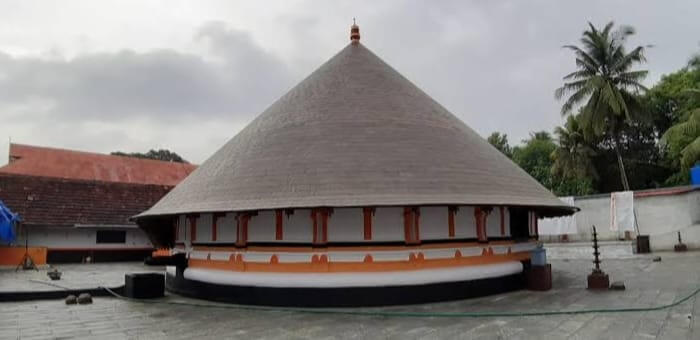
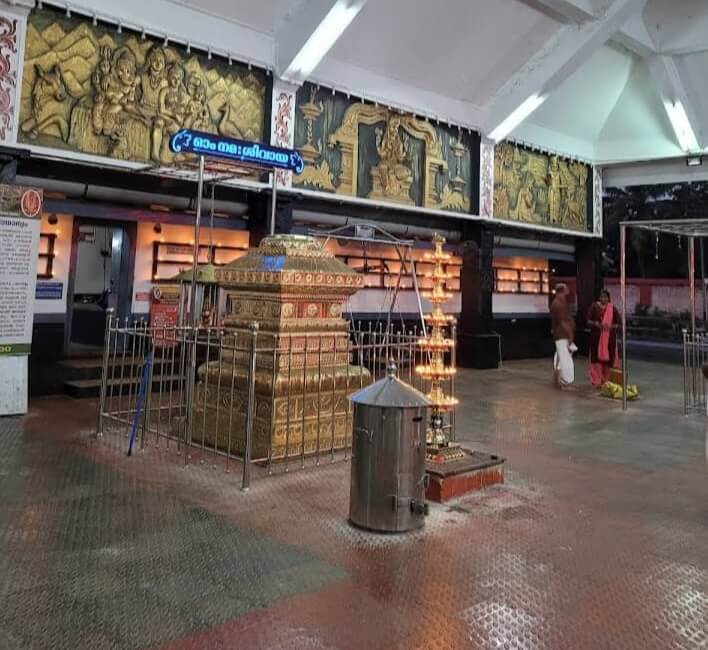
Naithalakavu Bhagavathy Temple is a fine example of traditional Kerala temple architecture and medieval craftsmanship. The temple is enclosed by a large outer wall built with granite and burnt bricks. Entering through the main western gateway, visitors pass a covered entrance hall, followed by a spacious Aanappanthal (elephant pavilion) used during festivals and processions, with the flagstaff standing directly in front of the Goddess’s western entrance. An old Oottupura (traditional dining hall) is also located within the temple grounds. Inside the Nalambalam, the two main shrines stand opposite each other in the same complex. On the left is the west-facing wooden idol of Naithalakavilamma (Bhadrakali), over six feet tall and adorned with a golden armour, ornaments and a large crown. Directly behind it, facing east, is the large Shiva Linga of Lord Mahadeva. As the Goddess’s sanctum has no roof, devotees can see the open sky from within the Nalambalam. A wide granite-paved circumambulatory path surrounds both shrines. Along this path are the shrines of Lord Ganesha in the south-west corner, Lord Ayyappa nearby and Goddess Durga on the northern side. Outside the temple, in the south-west corner, are the sacred Naga grove (Nagathara) and the shrines of Anthimahakalan and Brahmarakshass.
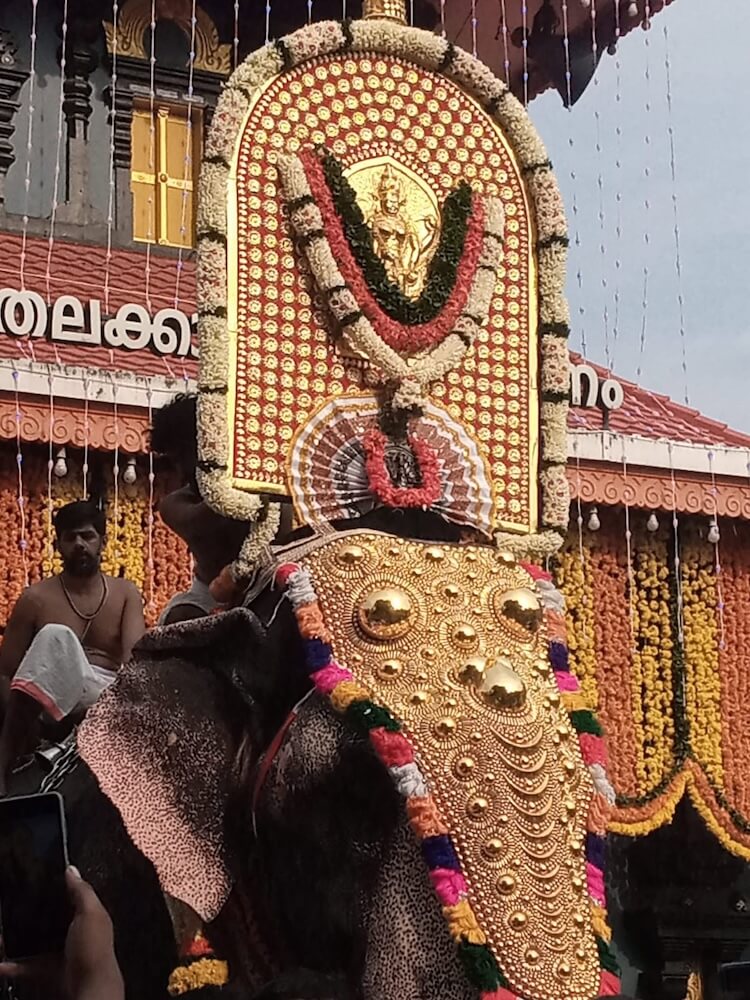
The biggest festival of the temple is the Thrissur Pooram, celebrated during the Malayalam month of Medam (April–May). The festival officially begins with the Pooram Vilambaram ceremony, in which Naithalakavilamma ceremonially opens the southern Gopuram gate of the Vadakkunnathan Temple on the eve of the Pooram. On the day of the festival, the Goddess joins the Pooram as a Ghataka Pooram and is taken in a grand procession to the Vadakkunnathan Temple, accompanied by decorated elephants and traditional temple ceremonies.
Another important annual celebration is the Prathishta Dinam (consecration day), observed on the Avittam star in the Malayalam month of Thulam (October–November), when the special Niramala floral decoration and other rituals are performed. During the 41-day Mandala season, beginning on the first day of Vrischikam (November–December), the traditional Kalamezhuthu and Pattu (Bhagavathy Pattu) ritual is performed every night in honour of Goddess Bhadrakali. Other major festivals include Maha Shivaratri in Kumbham (February–March), with special poojas, Laksharchana and lamp offerings for Lord Mahadeva; Navaratri in Kanni (September–October), featuring special rituals on Durga Ashtami, Mahanavami and Vijayadashami, including Vidyarambham; and Thrikarthika in Vrischikam, when thousands of lamps are lit throughout the temple and along the outer walls.
The temple offers many special rituals dedicated to Goddess Bhadrakali and Lord Mahadeva. One of the most important offerings is Raktha Pushpanjali, performed to Goddess Bhadrakali for protection from enemies and the fulfilment of wishes. Kadum Payasam (also known as Panam Payasam), prepared with black rice and jaggery, is a favourite offering to the Goddess. Another popular offering is Muttarukkal (breaking coconuts), performed by devotees for the removal of obstacles, enemy troubles and illness. During the Mandala season, the traditional Kalamezhuthu and Pattu ritual, in which the image of Goddess Bhadrakali is drawn on the floor and the story of the slaying of Darika is sung, is one of the temple’s most distinctive offerings. Devotees also offer a red silk cloth (Pattu Charthal) to the Goddess, believing it brings a happy married life and family prosperity. At the shrine of Lord Mahadeva, devotees perform Jaladhara (water offering), Ksheeradhara (milk offering) and Shankhabhishekam (ritual bathing with water poured through a conch) to seek good health, peace of mind and long life. Offering a Koovalam (bael leaves) garland to Lord Shiva and lighting the Pinvilakku (lamp behind the Shiva Linga) are also important temple offerings.
In addition, Niramala and Chuttuvilakku are important offerings at the temple. On special occasions, devotees offer Niramala, in which the temple is decorated with flowers and Chuttuvilakku, during which lamps are lit around the temple courtyard. A daily Ganapathi Homam is also performed at the shrine of Lord Ganesha for the removal of obstacles.
The temple is open to devotees every day from 5:30 AM to 10:00 AM and from 5:30 PM to 7:30 PM. The temple opens at 5:30 AM with the Palli Unarthal (awakening ritual), followed by Nirmalya Darshan and Abhishekam. This is followed by Ganapathi Homam at 6:00 AM, Usha Pooja at 7:30 AM and Ucha Pooja at 9:30 AM, after which the temple closes at around 10:00 AM. The temple reopens at 5:30 PM and Deeparadhana is performed at sunset. Athazha Pooja is held at 7:15 PM, followed by Thrippuka (offering of sacred incense) inside the sanctum before the temple closes at around 7:30 PM. During major festivals such as Thrissur Pooram, Navaratri and the Mandala season, the temple timings and pooja schedule may change. On the day of Thrissur Pooram, the temple usually remains open for longer hours due to the special processions and ceremonies held from early morning.
This sacred temple stands as a testament to deep spiritual devotion, ancient architectural grandeur, and rich local cultural traditions.
The sanctum sanctorum houses the divine idol consecrated according to ancient Vedic traditions, surrounded by serene courtyards and traditional temple architecture.

Navratri, Maha Shivratri, Annual Temple Jatra & Deepotsav
Compare and book flights, secure top-rated local hotels near the temple, hire reliable guides, and rent cars instantly.
Extend your pilgrimage by visiting other highly sacred temples located nearby.


Add ₹999 more to unlock FREE SHIPPING!
Your sacred cart is currently empty.
Shop Photo FramesFill in your delivery details below to place your order.
Add comment