
Add ₹999 more to unlock FREE SHIPPING!
Your sacred cart is currently empty.
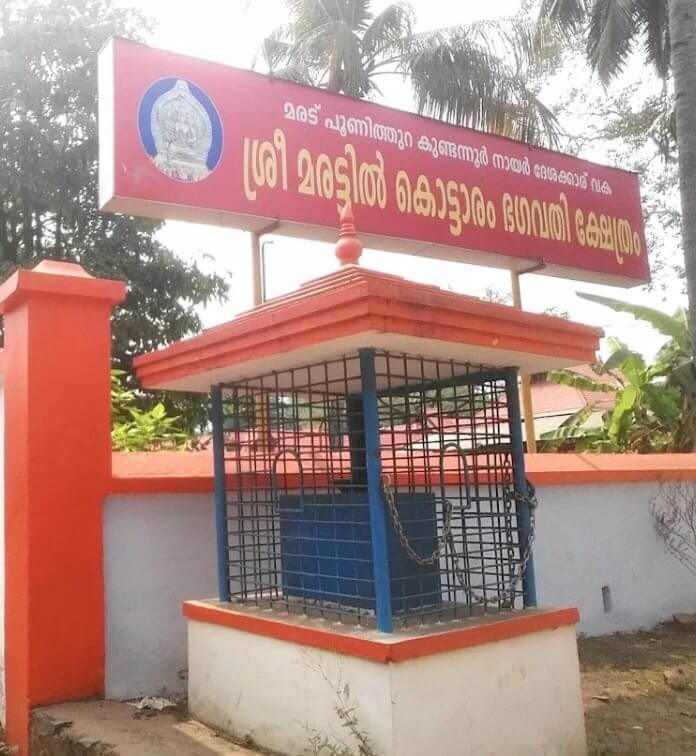
Shop Photo FramesMarattil Kottaram Bhagavathy Temple is a famous Devi temple located in the Maradu region of Ernakulam district, Kerala. Rich in ancient tradition and spiritual significance, this temple is known as a great centre of devotion for devotees. The main deity here is Goddess Bhagavathy. Devotees worship the Goddess as the embodiment of divine power, compassion and protection. The calm and devotional atmosphere of the temple offers peace of mind and a deep spiritual experience. With its special poojas, festivals and offerings, the temple holds an important place in the cultural life of the region. The temple is situated at the place which was once believed to be the summer residence of the Kochi kings.
The history of Maradu Kottaram Bhagavathy Temple is very ancient and closely connected with royal heritage. It is believed that the present-day Maradu area was once a dense forest where sages performed penance and meditation. Later, this region came under the rule of the Paravur royal family, who built a palace here for residence and administration. That is why the place came to be known as “Kottaram” (Palace).
Later, when the Paravur Thampurans shifted their headquarters, the Goddess Bhagavathy who was worshipped in the palace was consecrated in a temple built at the same place. The management of the temple was entrusted to Mangalappilly Achan, who was the Pattolamenon of that time. During the reign of the Kochi king, the temple and its related properties were given to Mangalappilly Achan and later in Kollam Era 1053 (AD 1877), the temple administration was handed over to the Nair chiefs of Maradu, Kundannoor and Poothotta.
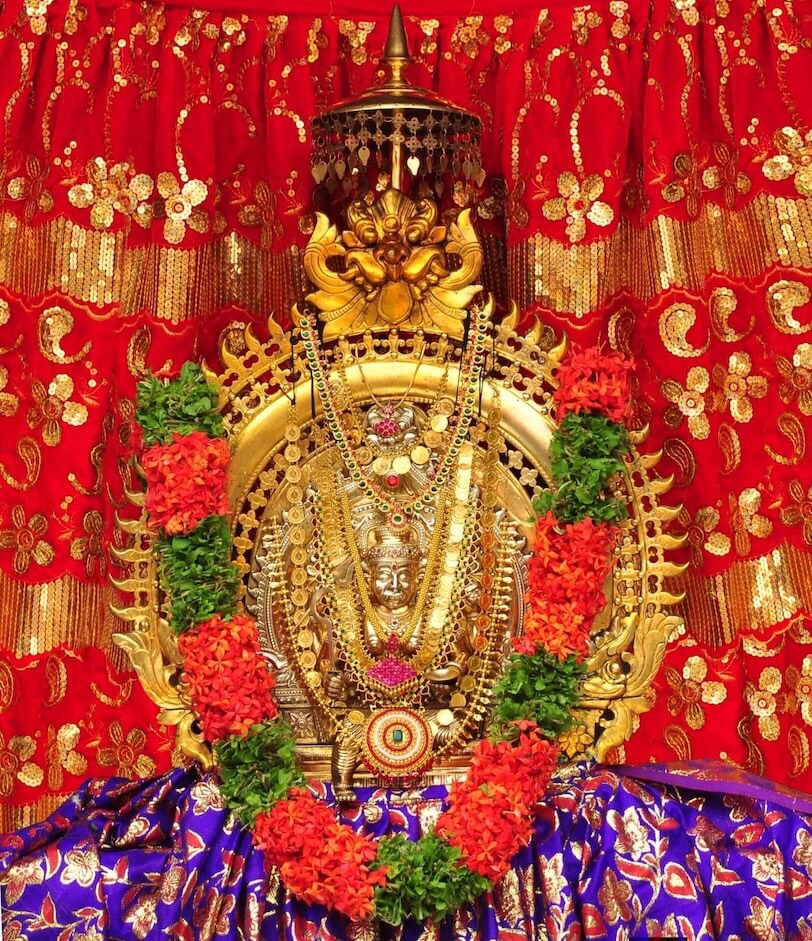
The main deity here is Bhadrakali seated in a peaceful form after the slaying of Darika. Holding a trident, sword, Darika’s severed head and shield in her hands, the Goddess is worshipped as Sarvamangala Karini, the divine mother who grants knowledge, marriage blessings, health and prosperity to devotees. Therefore, Maradu Kottaram Bhagavathy Temple is not just an ordinary temple, but a sacred place where royal history and Devi worship come together.
The legend associated with Maradu Kottaram Bhagavathy Temple revolves around the divine power of Bhadrakali and her peaceful form after the destruction of the Asura Darika. It is believed that after slaying the Asura Darika, the Goddess, who was in a fierce form, assumed a calm and peaceful form for the welfare of the world and chose this sacred land as her abode. That is why Goddess Bhagavathy here is worshipped as Bhadrakali in her peaceful form after Darika Nigraham.
According to local legends, Maradu was once a sacred land where sages performed intense penance. It is believed that the Goddess established her divine presence here because of the spiritual power and blessings of those sages. Later, when the place became associated with royal heritage and a palace area, the name “Kottaram Bhagavathy” became famous.
Even today, devotees consider the Goddess as the guardian deity of the village and the protector of families. It is believed that prayers offered to the Goddess for removal of obstacles, healing from illness, blessings for children and prosperity are answered with her compassionate grace. Thus, this temple is not only a centre of devotion but also a sacred place of faith and spiritual power.
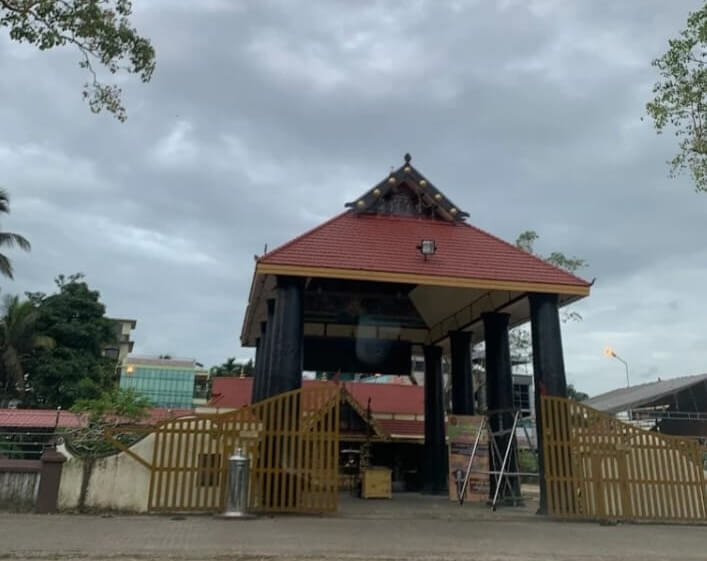
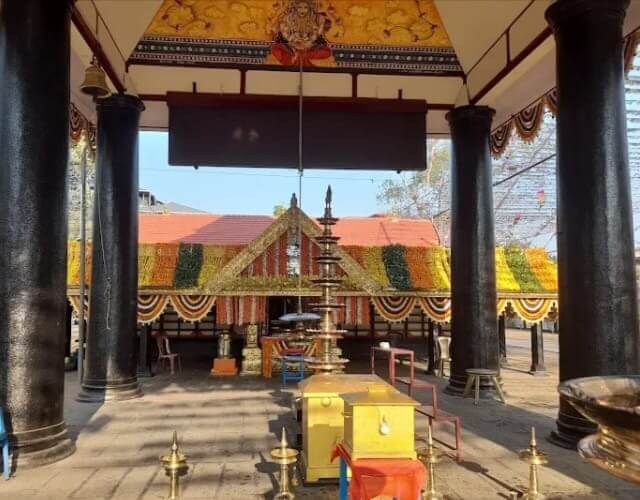
As one enters through the temple entrance, the first sight is the spacious and well-maintained temple courtyard. At the centre stands the tall Deepasthambham (lamp pillar), which is one of the prominent features of the temple courtyard. Near the lamp pillar is the Balikkal (sacrificial stone), where devotees respectfully offer prayers and circumambulate before proceeding further. A little ahead, the Namaskara Mandapam becomes visible. The old trees and natural shade around the temple are notable features of the temple surroundings.
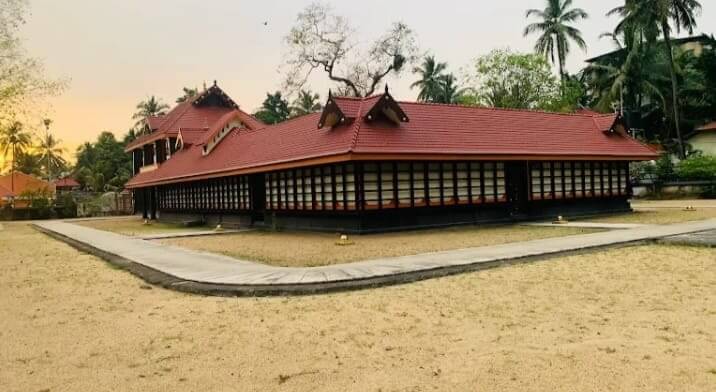
The path leading to the Sreekovil (sanctum sanctorum) is filled with the glow of lamps, the fragrance of sandalwood and flowers and the sound of sacred chants. The Sreekovil is built in the traditional Kerala temple architectural style and is filled with dignity and divinity. Located within the Nalambalam, the sanctum immediately captures the attention of devotees. The beauty of wooden craftsmanship, copper roofing and ancient artistic elegance is clearly visible here.
The main idol of Goddess Bhagavathy is installed in the seated form of Bhadrakali. The idol is approximately five feet tall and is consecrated facing the east. With four hands holding a trident, sword, Darika’s severed head and shield, the Goddess is depicted in a divine form that symbolises both fierceness and compassion.
Around the sanctum, the sub-deities are arranged in special positions. Devotees usually first visit the Ganapathy shrine before proceeding to the main sanctum. Lord Sastha (Ayyappa) is generally positioned on one side of the main sanctum, usually on the southern side. Ghantakarna is installed in the outer temple area as a guardian deity. Brahmarakshas are placed in a peaceful section where special poojas are performed.
Nagaraja, Nagayakshi and Karinagayakshi are consecrated in the northeastern side surrounded by trees, as such places are considered sacred for Naga worship. In this way, all the sub-deities stand around Goddess Bhagavathy, offering protection and blessings to devotees.
One of the main festivals of Maradu Kottaram Bhagavathy Temple is the Bharani Mahotsavam celebrated in the Malayalam month of Meenam. Since this is a Bhagavathy temple, Bharani day is observed with great devotion. Special poojas, Kalashabhishekam, lamp decorations, processions and devotional music fill the temple with a festive atmosphere. A large number of devotees gather to seek the blessings of the Goddess.
Another famous celebration is the Thalappoli Mahotsavam held in the month of Kumbham, widely known as the “Maradu Vedikettu” (Maradu Fireworks Festival). This grand festival lasts for several days and includes Thalappoli, Chenda Melam, decorated elephants and temple processions. The greatest attraction is the magnificent fireworks display. Organised by the Vadakke Cheruvaram and Thekke Cheruvaram groups, this spectacular fireworks event lights up the night sky with sound and colour as an offering to the Goddess. Even today, Maradu Vedikettu remains a unique and celebrated tradition closely associated with the temple.
Navaratri is another important festival here, during which Saraswathi Pooja, Pooja Veppu and Vidyarambham are conducted with great devotion. Many families visit the temple during this time for the children’s writing initiation ceremony. The Pongala festival is another major celebration especially important for women devotees. Offering Pongala to the Goddess for family well-being and prosperity is considered highly sacred. The temple premises and nearby streets become filled with devotees during this occasion. In addition, Vishu, Onam, Mandala season poojas, Ashtami and special Friday Devi poojas are also important celebrations of the temple. Each festival beautifully blends devotion with local tradition.
The main offerings (Vazhipadu) of the temple are filled with devotion and faith in Goddess Bhagavathy. Devotees offer prayers for removal of obstacles, healing from illness, family well-being, blessings for children and prosperity. Important offerings include Pushpanjali, Bhagavathy Seva, Ney Vilakku (ghee lamp offering), Choroonu (first rice feeding ceremony), Vidyarambham, Archana, Kalashabhishekam, Pongala, Thalappoli, Palpayasam offering and Thiruvilakku (lamp offering). Women devotees especially offer Thiruvilakku and Pongala for family happiness and prosperity with great faith. Each offering is made with the belief that the Goddess will bless and protect them.
Many poojas are performed daily at Maradu Kottaram Bhagavathy Temple with deep devotion. The rituals begin at 5:15 AM with Palliyunarthal (waking the deity), followed by Nirmalyam at 5:30 AM, Ethirthu Pooja at 7:30 AM and Ucha Pooja at 9:30 AM, after which the temple closes at 10:30 AM. In the evening, Seeveli is conducted from 4:30 PM to 5:00 PM, followed by Deeparadhana from 6:00 PM to 6:45 PM. Athazha Pooja Nivedyam is offered from 7:30 PM to 7:45 PM, followed by Athazha Pooja from 7:45 PM to 8:15 PM. The sanctum closes at 9:15 PM. Usually, the temple remains open for darshan from 5:00 AM to 10:30 AM and from 5:00 PM to 8:00 PM. Timings may vary slightly during festival days.
This sacred temple stands as a testament to deep spiritual devotion, ancient architectural grandeur, and rich local cultural traditions.
The sanctum sanctorum houses the divine idol consecrated according to ancient Vedic traditions, surrounded by serene courtyards and traditional temple architecture.
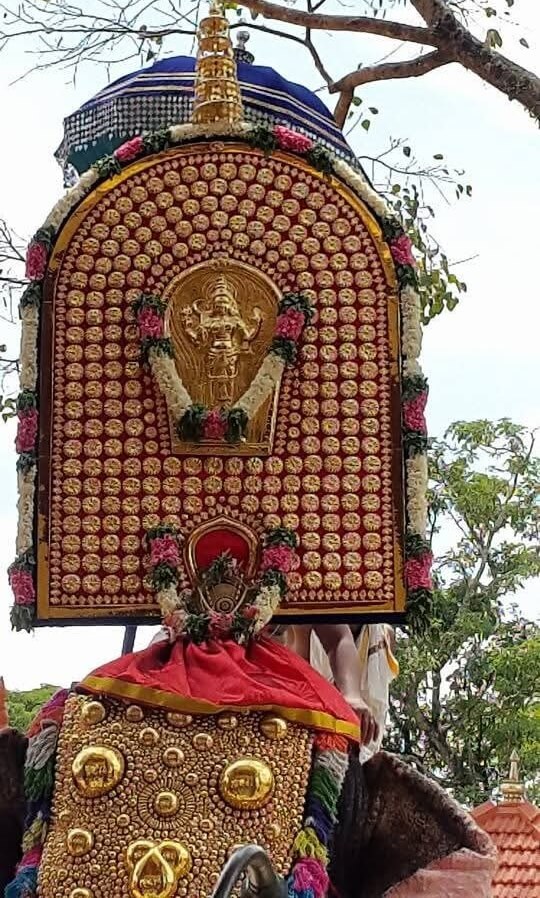
Navratri, Maha Shivratri, Annual Temple Jatra & Deepotsav
Compare and book flights, secure top-rated local hotels near the temple, hire reliable guides, and rent cars instantly.
Extend your pilgrimage by visiting other highly sacred temples located nearby.


Add ₹999 more to unlock FREE SHIPPING!
Your sacred cart is currently empty.
Shop Photo FramesFill in your delivery details below to place your order.
Add comment