
Add ₹999 more to unlock FREE SHIPPING!
Your sacred cart is currently empty.
Shop Photo FramesThe Harsiddhi Mata Temple stands in the Dahyapur area of Santarampur Taluka in Gujarat’s Mahisagar district. Nestled at the foothills of the Aravalli Range and on the banks of the Suki River, Santarampur was known in ancient times as ‘Brahmapuri’. Formerly a part of Panchmahal district, the town was incorporated into the newly created Mahisagar district in 2013. Renowned for its medieval architecture, its historic watchtower in the western quarter of the town, and its traditional weekly market, Santarampur is also home to the Harsiddhi Mata Temple, the foremost place of worship for devotees across the region.
According to the ‘Gujarat State Gazetteers – Panchmahals District’ (1972), Santarampur was once the capital of the former Sant State. Its rulers belonged to the Panwar or Parmar Rajput clan. They claimed descent from the celebrated Mahipavat branch of the Malwa dynasty, which included the legendary Vikram of Ujjain, traditionally placed in the first century BCE, and the illustrious King Bhoja of Dhar in the eleventh century CE. In 1247 CE, Jalamsingh, the ruler of Jhalod, was defeated and killed in a Muslim invasion. His son Sant and his brother Limdev were compelled to abandon Jhalod and seek refuge in the surrounding hills. A few years later, Sant settled in the Bhil village of Brahmapuri and, in 1255 CE, renamed it ‘Sant’. Harsiddhi Mata is the tutelary deity of this ruling family. It is traditionally believed that the Harsiddhi Mata Temple at Dahyapur was constructed under the patronage of these rulers.
The original abode of Goddess Harsiddhi is believed to be on Koyla Hill near Miani, close to Porbandar in Gujarat. According to legend, Lord Krishna performed penance to Goddess Amba on Koyla Hill before his battles against Jarasandha and other demons. Blessed by the Goddess, the Yadavas emerged victorious. In gratitude, Krishna installed the Goddess’s idol on the hill and built a temple in her honour. Since her blessings brought joy and triumph, she came to be known as ‘Harshada’, meaning ‘the Goddess who bestows happiness’. Over time, this name evolved into Harsiddhi.
Another legend recounts that King Prabhatsen Chavda of Miani incurred the Goddess’s wrath through a sinful act and was cursed to immolate himself daily in a sacrificial fire. When Emperor Vikramaditya, his cousin, learned of the curse, he assumed Prabhatsen’s identity and leapt into the sacred fire himself in an act of supreme devotion and self-sacrifice. Deeply moved, Harsiddhi Mata granted him two boons. By the first, she released Prabhatsen from the curse. By the second, she agreed to reside permanently in Vikramaditya’s capital at Ujjain. Thus, Ujjain came to be recognised as the Goddess’s second principal seat.
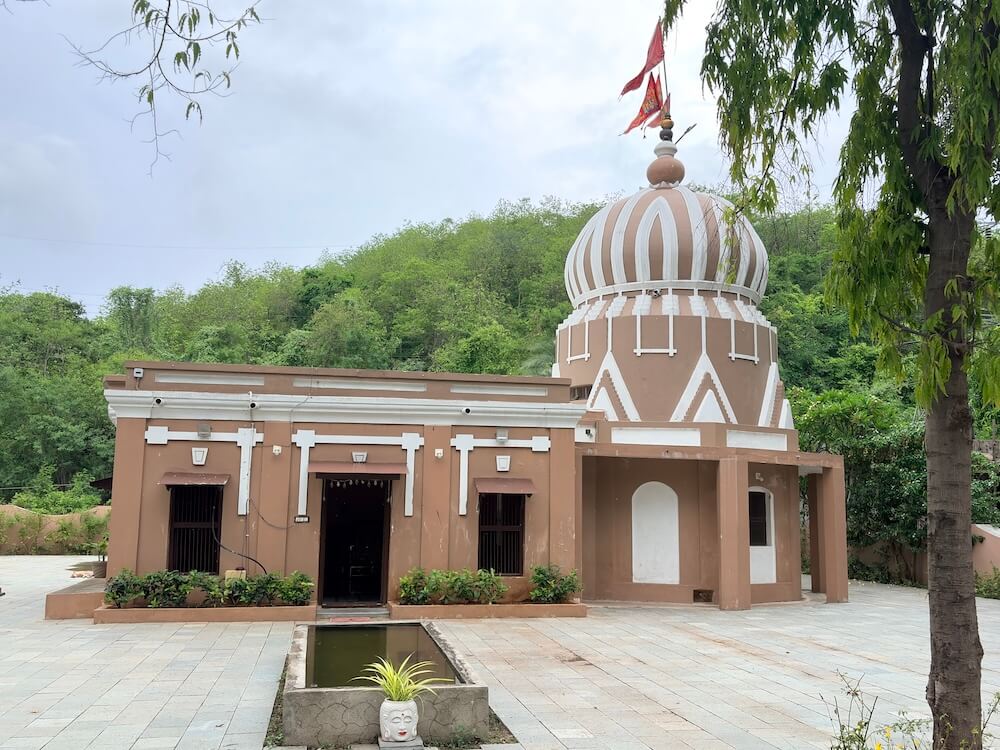
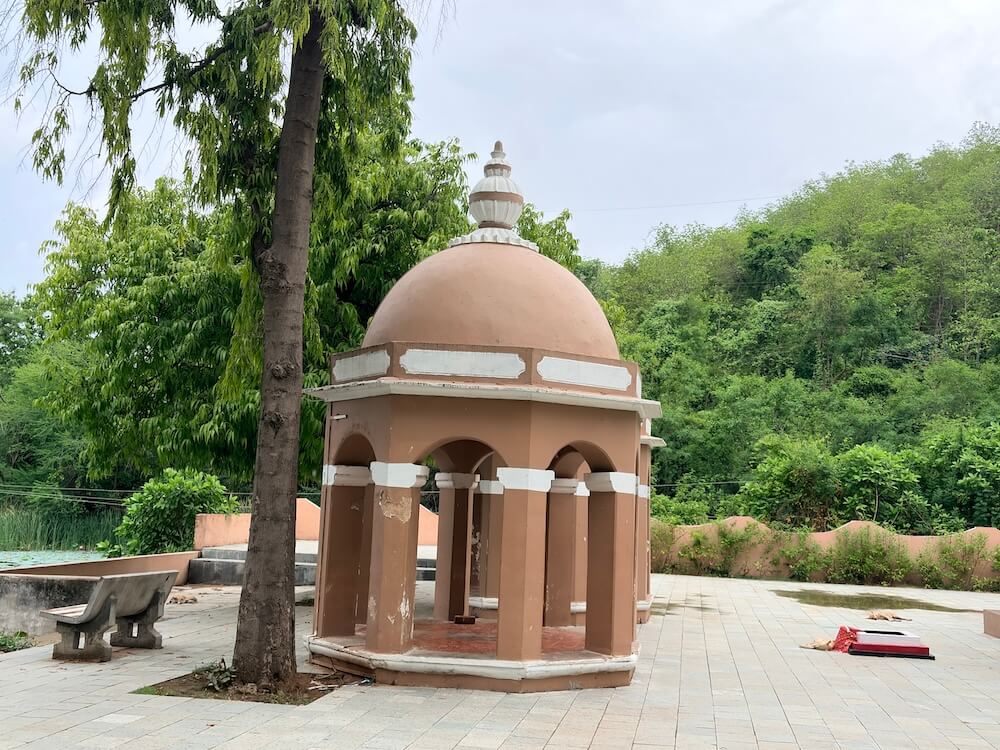
The temple stands beside the Santarampur–Lunawada Road amidst a grove of trees. An entrance gateway in the enclosing compound wall leads into the temple precincts. Square pillars flank the gateway. Each pillar supports an ancient-style perforated lamp tower. These miniature lamp towers are crowned with domes and finials. Within the paved courtyard are a variety of trees along the perimeter, while a water tank and fountain occupy the centre. Seating has been provided for devotees. A sacrificial fire altar has also been constructed, where yajnas are performed during festivals. The courtyard contains elegant architectural pavilions known as ‘chhatris’. Each stands on a hexagonal platform and consists of six pillars connected by semicircular arches. Beams support a domed roof above, crowned by an amalaka and a finial.
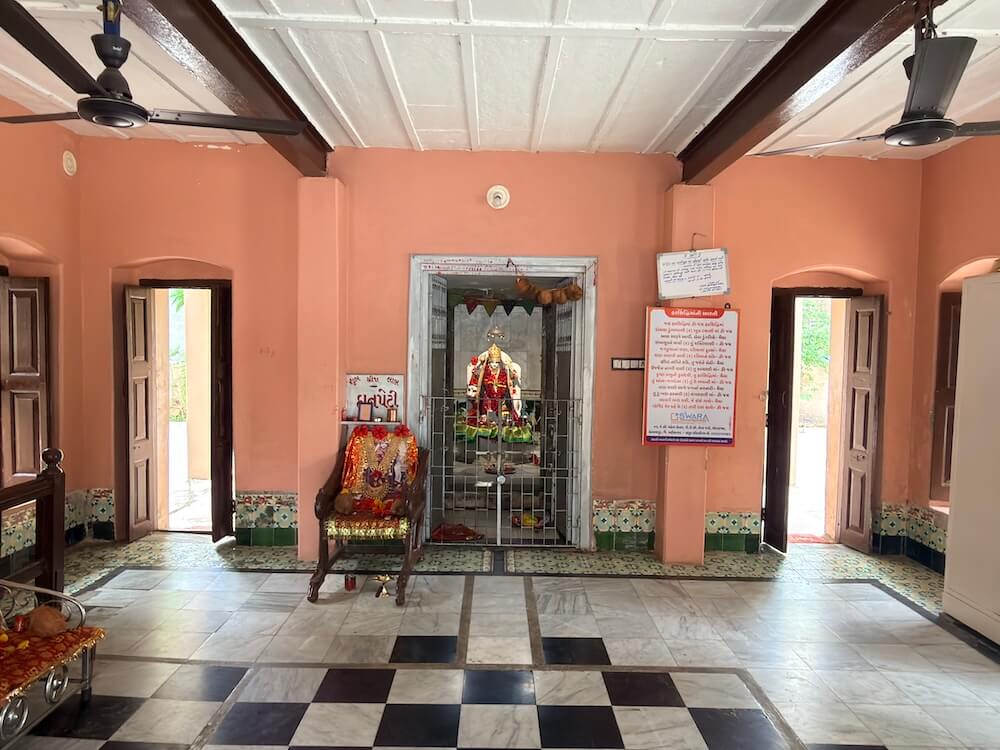
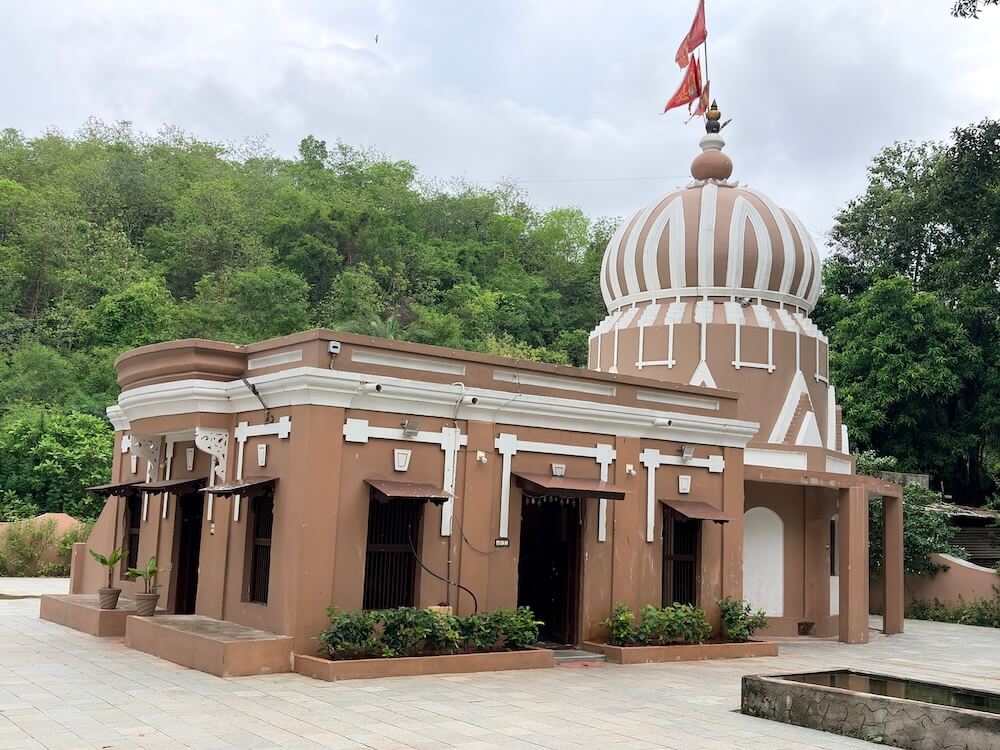
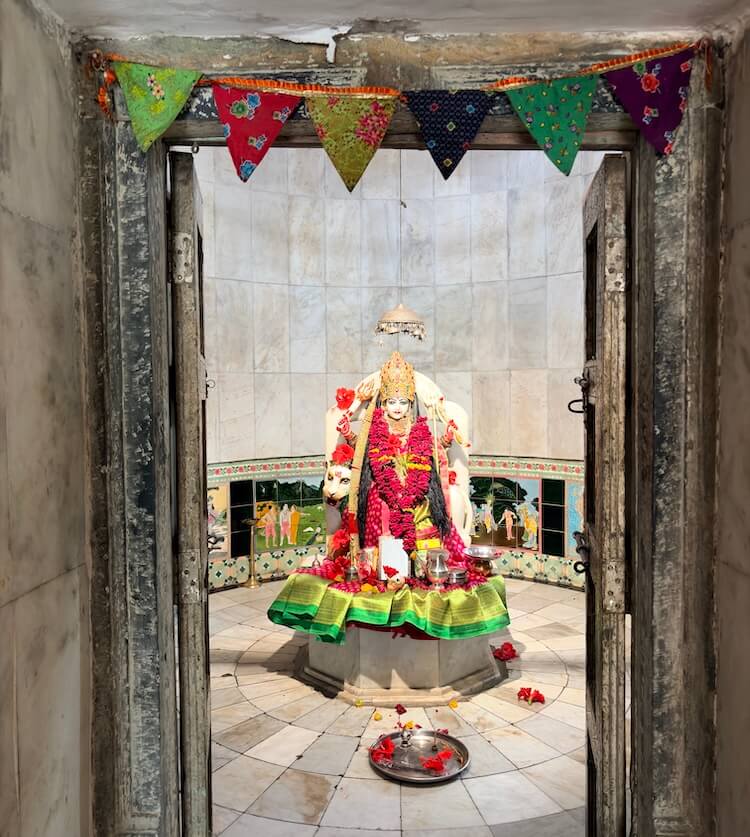
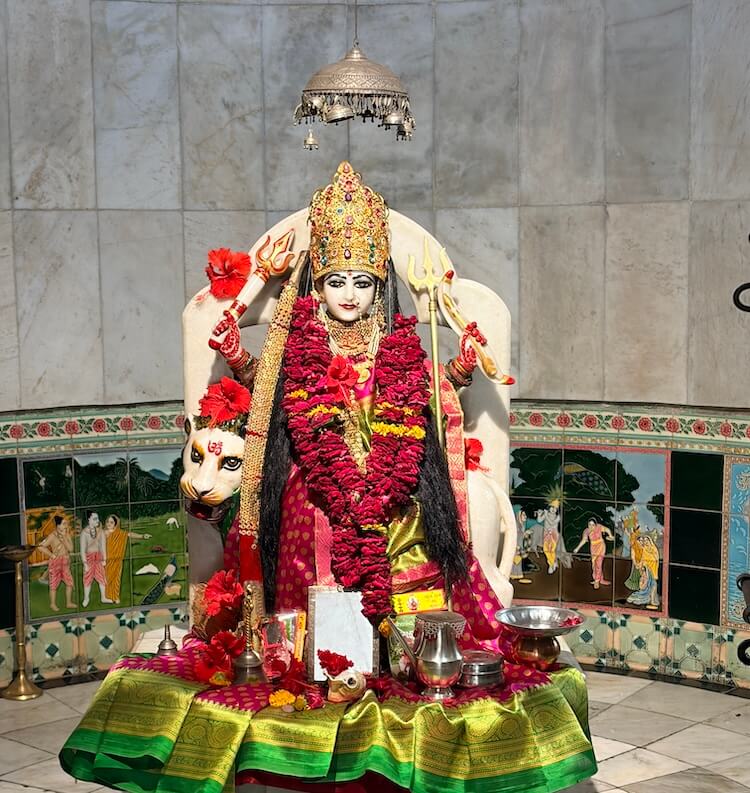
The temple consists of an assembly hall and a sanctum. Stone benches flank both sides of the entrance to the assembly hall. The enclosed hall has windows that provide light and ventilation. It contains five doorways in all: the main entrance, one each on the right and left sides of the hall, and two flanking either side of the sanctum. Stone seating platforms have been built inside for devotees. Beyond the hall lies the entrance to the sanctum. The doorframe is ornamented with vertical decorative bands, while the lintel bears an auspicious sculptural motif. Within the sanctum, upon a pedestal, is a four-armed marble image of the Goddess seated upon a lion. She holds a trident and a sword, while one hand is raised in the gesture of blessing. Adorned with garments and ornaments, she wears a crown upon her head, and a ceremonial canopy is suspended above the image. A few steps descending from the assembly hall lead to a subsidiary shrine, where another sacred seat of the Goddess is enshrined. Above the sanctum rises a domed superstructure decorated with triangular and square geometric motifs, along with vertical ornamental bands.
It is said that the Goddess’s original shrine stands in an ancient temple on the nearby hill. In front of the temple lies the Santaram Talav reservoir. During the month of Shravan and the intercalary month (Adhik Maas), devotees gather here for ritual bathing. The reservoir is home to mahseer fish, which are regarded as sacred. They are therefore never hunted, and local belief holds that anyone who deliberately catches them incurs the displeasure of the Goddess.
Chaitra Navratra and Sharadiya Navratra are the temple’s principal annual festivals. Throughout the nine sacred days, the temple hosts religious ceremonies, Maha Aarti, devotional singing, kirtans, jagran vigils, musical performances, the Shata Chandi Yajna, and the distribution of Mahaprasad. Folk music and folk dance performances by local tribal cultural groups are also organised on these occasions. Devotees from Gujarat and Rajasthan visit the temple both for the Goddess’s darshan and to fulfil their vows. The annual gathering of the Rabari community of the Santarampur region is likewise held here. Besides Navratra, the temple celebrates Mahashivratra, the month of Shravan, Shri Krishna Janmotsav, Nag Panchami, Dussehra, and Diwali. Devotees may have darshan of Harsiddhi Mata every day from 6:00 a.m. to 6:00 p.m.
Navratri, Maha Shivratri, Annual Temple Jatra & Deepotsav
Compare and book flights, secure top-rated local hotels near the temple, hire reliable guides, and rent cars instantly.
Extend your pilgrimage by visiting other highly sacred temples located nearby.


Add ₹999 more to unlock FREE SHIPPING!
Your sacred cart is currently empty.
Shop Photo FramesFill in your delivery details below to place your order.
Add comment