
Add ₹999 more to unlock FREE SHIPPING!
Your sacred cart is currently empty.
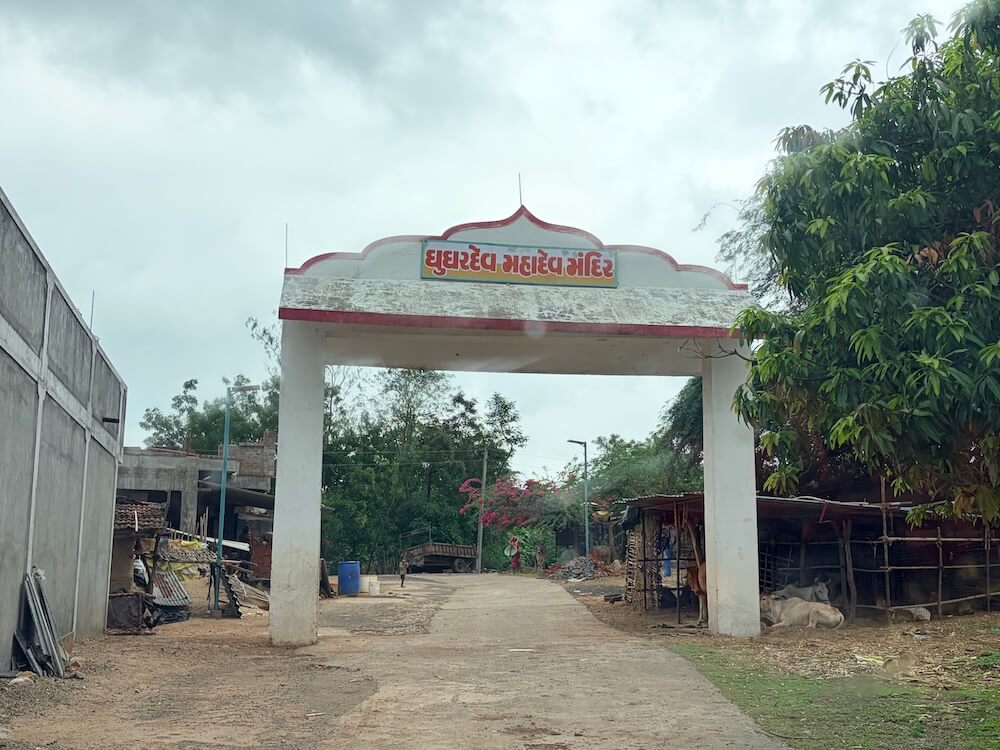
Shop Photo FramesSituated near the villages of Chakaliya and Old Chakaliya in Jhalod Taluka of Dahod district stands the Ghughardev Mahadev Temple. Nestled within a natural cave amid the forested hills of the Vindhya mountain range, this shrine is revered as the village deity. Since Hindu religious tradition places great importance on solitary meditation, the practice of consecrating Shivalingas in secluded caves has existed since ancient times. The uniqueness of this sacred place lies in the fact that, alongside its religious significance, it is also associated with a geological history stretching back millions of years.
According to entries preserved in local records, this sacred site at Chakaliya is believed to be around 5,000 years old. According to local tradition, this region once formed part of the legendary Hidimba Forest. It is believed that after losing the game of dice, the Pandavas spent some time in this cave during their twelve-year exile described in the Mahabharata. During their stay, they are said to have established a Shivalinga here for daily worship. However, studies of history and temple architecture suggest that many such cave shrines housing Shivalingas were established during the spread of the Nath tradition in the 12th century. On this basis, the Shivalinga at Chakaliya is estimated to be around 800 years old. During the medieval period, this region was ruled by the Solanki and Paramara dynasties. Local references state that the regional rulers granted lands for the protection and maintenance of this sacred site.
As part of the Gujarat Temple Documentation Project (2025–26), undertaken in collaboration with the Gujarat Pavitra Yatradham Vikas Board, the cave within the temple premises was documented by a heritage survey team. According to information available from local authorities, large fossil-like footprints were observed on the cave floor during the survey. These have reportedly been identified in preliminary assessments as possible dinosaur footprints and are believed to date to the Mesozoic Era (about 25.2 crore to 6.6 crore years ago). However, the findings await confirmation through detailed scientific investigation, verification and publication. If verified, they would add considerable geological significance to this already important religious site.
Local tradition holds that this cave once served as a place of meditation for ancient sages and ascetics. The Shivalinga enshrined in this cave is believed by devotees to be Swayambhu, or self-manifested. In the local dialect, the word ‘Ghughar’ is associated with the sound of tinkling anklets or resonant bells. The name is traditionally linked with the divine vibrations produced during Lord Shiva’s cosmic Tandava dance. Devotees especially offer vows here while praying for the blessing of children.
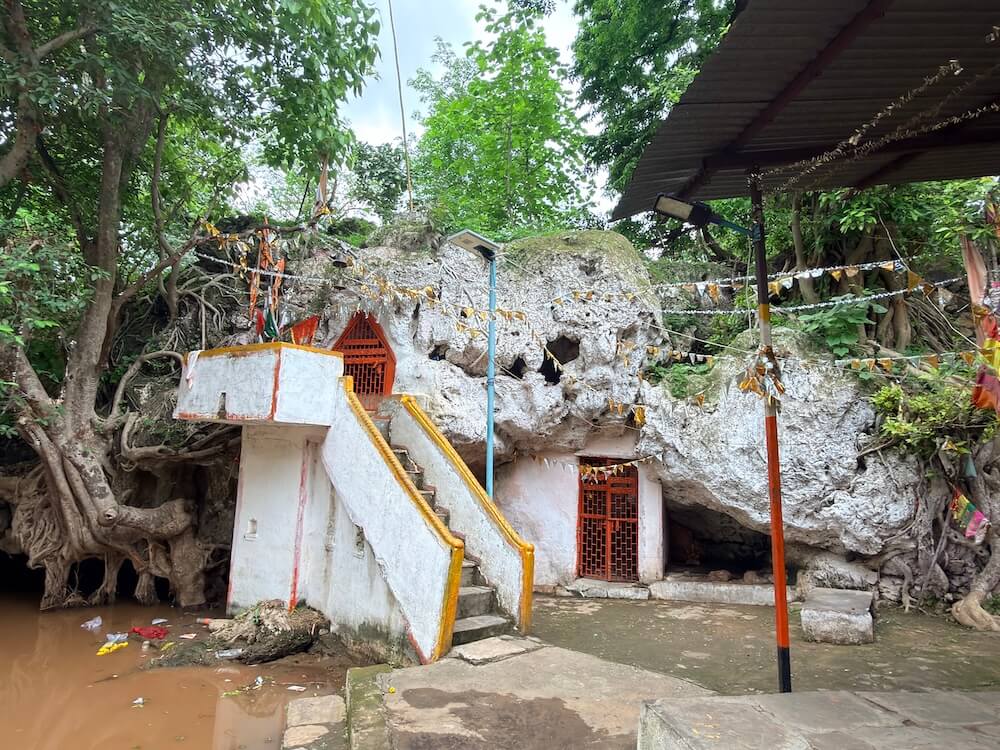
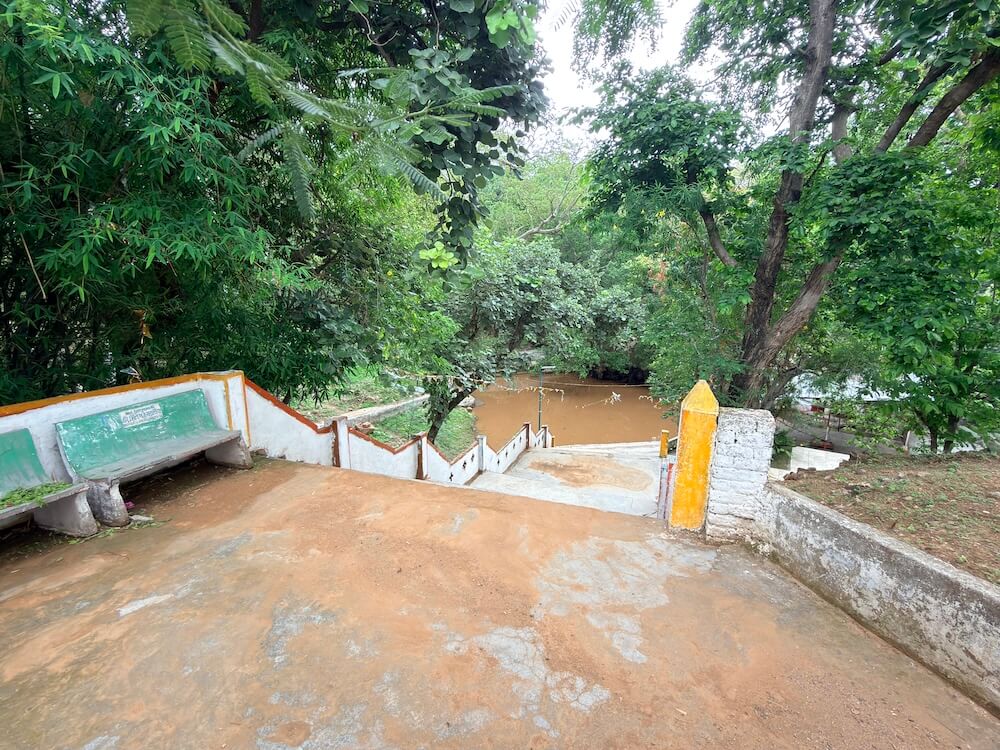
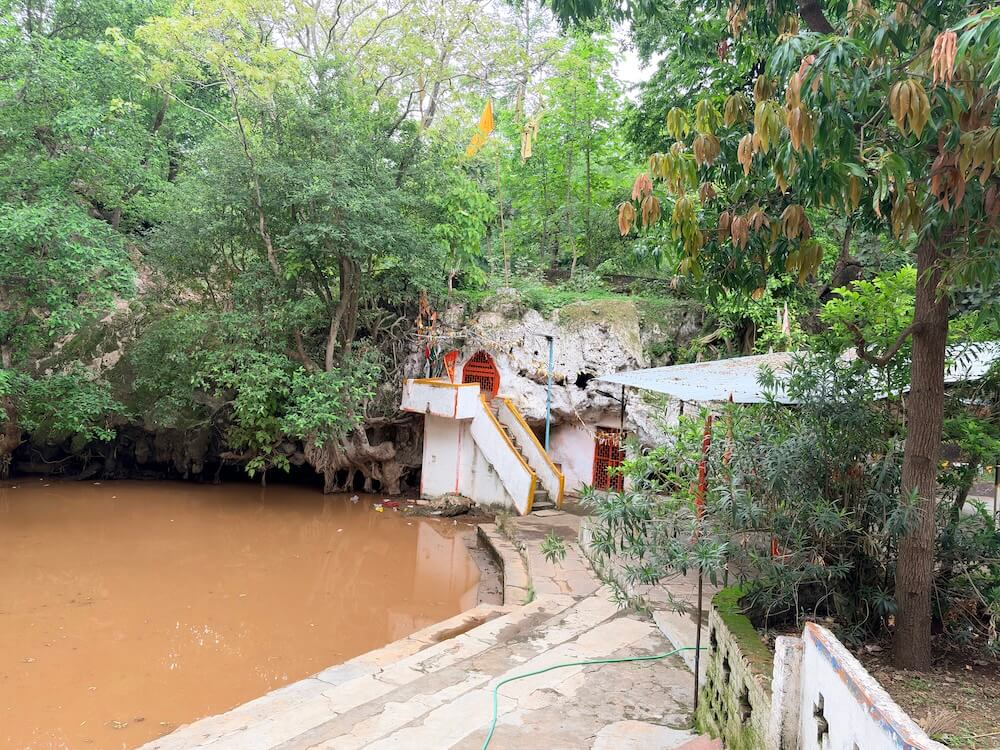
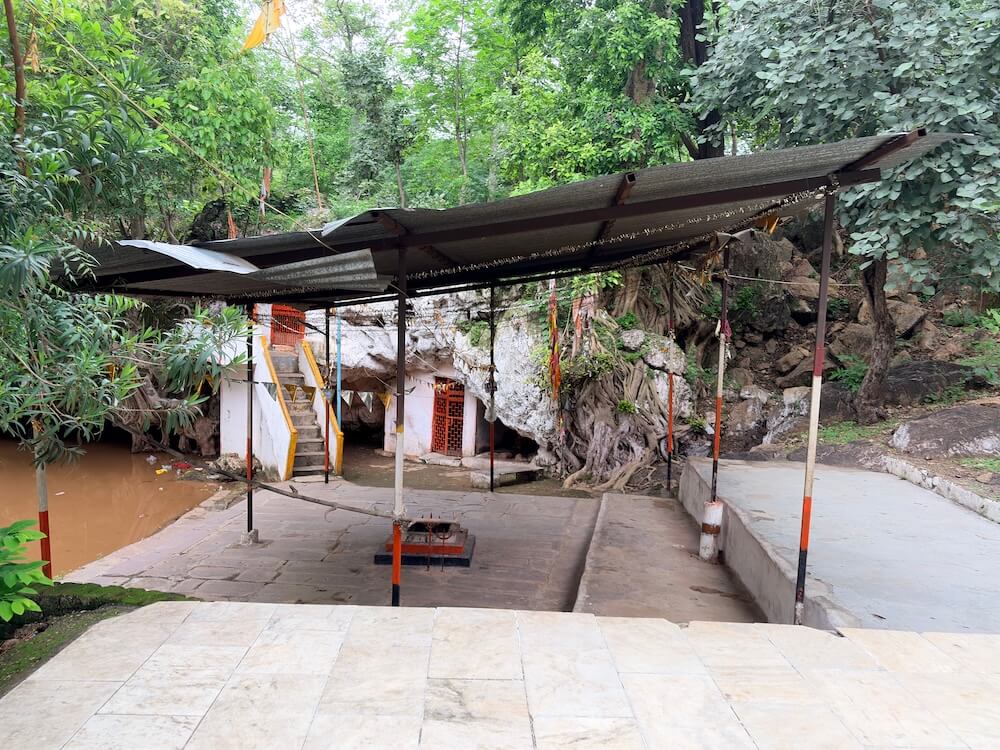
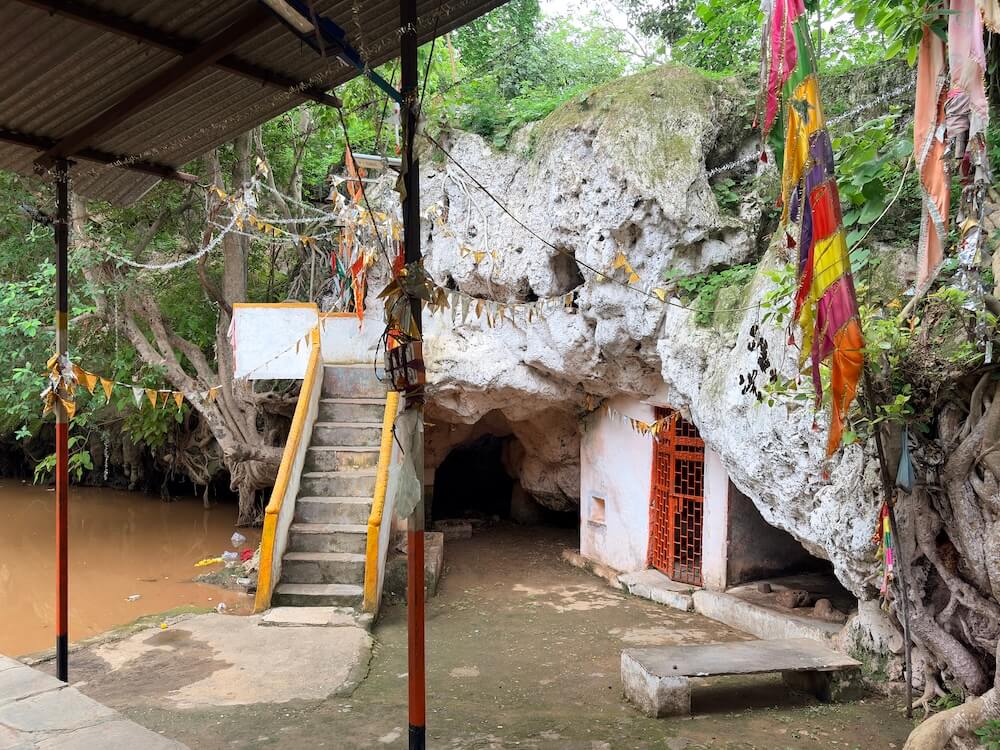
The temple is housed entirely within a natural cave in the hillside. A motorable road leads to the foot of the hill. The natural courtyard of the temple lies at a lower level than the road and a flight of steps descends to it. Within the courtyard is a large rock-cut stepped water tank. According to local tradition, the Pandavas, especially Bhima, created this tank to obtain water for the Jalabhisheka of the Shivalinga. On the opposite side of the tank, a perennial stream descends from the rocky cliff into the reservoir.
The courtyard contains a pavilion roofed with corrugated sheets supported by iron pillars. A Yajna Kunda has been constructed within the pavilion, where sacrificial rituals are performed during festivals. Seating has also been provided for devotees. Beyond the pavilion, the principal shrine stands within a cave approximately fifteen feet above the courtyard. A stepped pathway fitted with safety railings on both sides leads to the cave entrance. Inside the cave is the sacred Shivalinga. Images of Brahma, Vishnu and other deities have also been installed beside it. Another doorway on the opposite side of the cave serves as the exit and leads down by a separate flight of steps. Since this is a natural cave temple, it has neither a Shikhara nor a temple finial.
Farmers from Chakaliya and neighbouring villages traditionally offer the first sheaf of grain from a new harvest at the feet of Lord Ghughardev. Before the commencement of the agricultural season, they also pray here for timely rainfall and the protection of their crops. Family ceremonies, community meetings and important Gram Panchayat decisions are frequently held within the temple courtyard. During times of hardship and natural calamities, the villagers gather here to offer collective prayers.
A variety of religious festivals are celebrated throughout the year. Maha Shivaratra and every Monday during the holy month of Shravan, particularly the third Monday, are the principal occasions of celebration. On Maha Shivaratra, uninterrupted worship continues for twenty-four hours, accompanied by the four traditional Prahar Aartis. During the Mondays of Shravan, the temple conducts Laghu Rudra, Maha Abhisheka, Shiva Yajna, chanting of the Mahamrityunjaya Mantra, recitation of sacred scriptures and the distribution of Mahaprasad.
A large fair is held during these festivities. Numerous stalls offer clothes, blankets, household articles, agricultural implements, traditional weapons, food grains, seeds, medicinal herbs and forest honey. Members of tribal communities from Gujarat, Rajasthan and Madhya Pradesh participate in large numbers. Dressed in their traditional attire, they perform folk dances to the rhythmic beats of drums and kettledrums. Devotees also fulfil their vows by offering miniature cradles and other votive objects to the deity.
The temple also celebrates Nag Panchami, Shri Krishna Janmotsav, Shravani Purnima, Chaitra Navratra, Sharad Navratra, Dussehra, Diwali, Dev Diwali and several distinctive tribal festivals. Large numbers of devotees visit on Mondays, Pradosha, Purnima and Amavasya. The temple remains open for darshan every day from 6.00 a.m. to 8.00 p.m.
This sacred temple stands as a testament to deep spiritual devotion, ancient architectural grandeur, and rich local cultural traditions.
The sanctum sanctorum houses the divine idol consecrated according to ancient Vedic traditions, surrounded by serene courtyards and traditional temple architecture.
Navratri, Maha Shivratri, Annual Temple Jatra & Deepotsav
Compare and book flights, secure top-rated local hotels near the temple, hire reliable guides, and rent cars instantly.
Extend your pilgrimage by visiting other highly sacred temples located nearby.


Add ₹999 more to unlock FREE SHIPPING!
Your sacred cart is currently empty.
Shop Photo FramesFill in your delivery details below to place your order.
Add comment