
Add ₹999 more to unlock FREE SHIPPING!
Your sacred cart is currently empty.
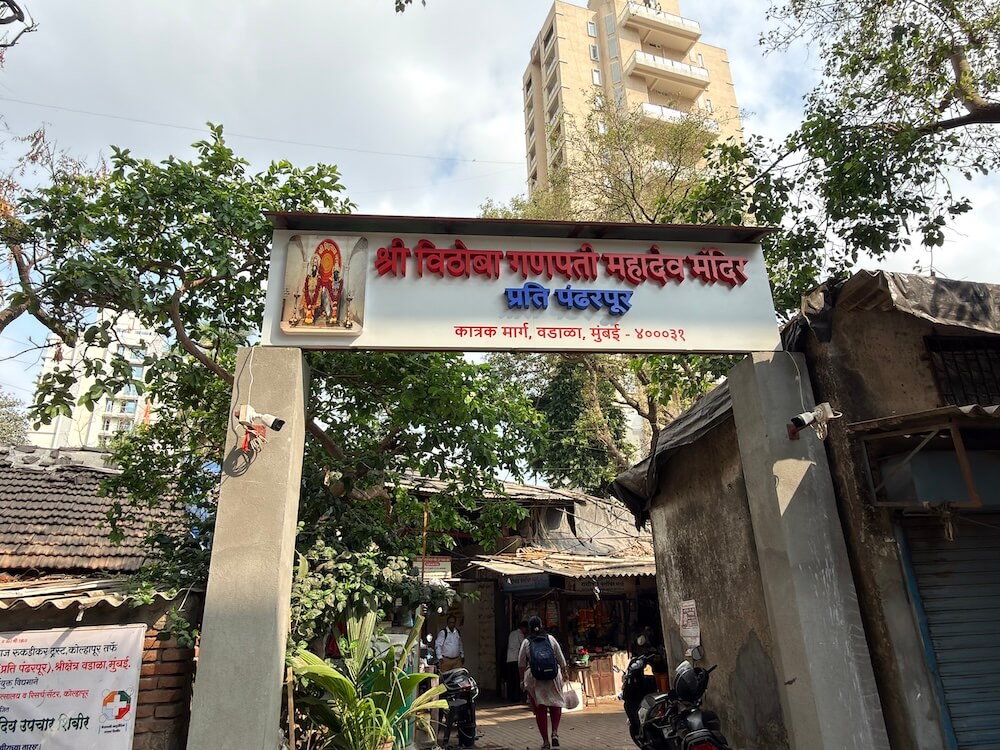
Shop Photo FramesThe Vitthal Ganpati Mahadev Temple (Prati Pandharpur), situated on Katrak Road in Wadala, Mumbai, is a significant religious landmark of this suburb. Known as ‘Prati Pandharpur’ (the Pandharpur of Mumbai), this shrine is a major center of faith for the Warkari community in the city of Mumbai. The temple has a history spanning approximately two hundred years. Established by the Koli and Agri communities of Wadala, a fair is held here on Ashadhi Ekadashi. This fair is one of the oldest in Mumbai, attracting a gathering of about three to four lakh Vaishnavas every year.
In ancient times, Wadala was a small village of the Agri-Koli people. In the year ๑๑๓๘, King Pratap Bimb established his capital on an island previously known as Baradbet. He named that capital after his former capital, Mahim (Kelwe-Mahim/Mahikavati). This is the same Mahim that exists in Mumbai today. The region from Walkeshwar to Vasai was part of his kingdom. A century later, another King Bimb ruled here. His name was Bimbdev Yadav. He was the fourth son of Emperor Ramdevray Yadav of Devgiri. In Muslim chronicles, he is referred to as Bhimdev. He established his capital here in ๑๒๙๕. According to the ‘Greater Bombay Gazetteer, Volume ๑’, his court was located in the area between Wadala and Parel. Hence, it was called Nyayagram (Village of Justice). This is the present-day Naigaon. Until the twentieth century, a site here was pointed out as ‘Bhimrajachi Wadi’. Gazetteer authors state that a palace of King Bhim existed there. Near this Nyayagram was the village of ‘Varela’ or Wadala. Legend has it that the name Wadala is derived from the Banyan (Wad) trees that were present here.
The Vitthal temple here has a history of about two hundred years. The legend regarding this is mentioned in the Great Bombay District Gazetteer. It states that during that period (๑๘๒๐ to ๑๘३०), a saintly person from the Warkari sect lived here. Every Ashadhi Ekadashi, he would perform the Palkhi pilgrimage to Pandharpur on foot along with other Warkaris. Due to old age, he told one of his followers that he would no longer be able to perform the pilgrimage. The follower replied that since he was a supreme devotee of Vitthal, he should now invite Vitthal to Mumbai himself. To this, the saint replied, ‘Who am I to invite Him? Everything is in the hands of that Vitthal.’ However, the following year, the saint went to Pandharpur with the Dindi (procession). While bathing in the Chandrabhaga river there, one of his followers found an idol of Vitthal in the river. Everyone was overjoyed to see this. They brought the idol to Wadala and installed it in the saint’s hut on the auspicious day of Chaitra Shuddha Trayodashi. Since then, the tradition of taking the Palkhi of Vithoba from Wadala to Pandharpur began. Initially, this temple of Vithoba was small in size. It was renovated around the year ๑๙६६.
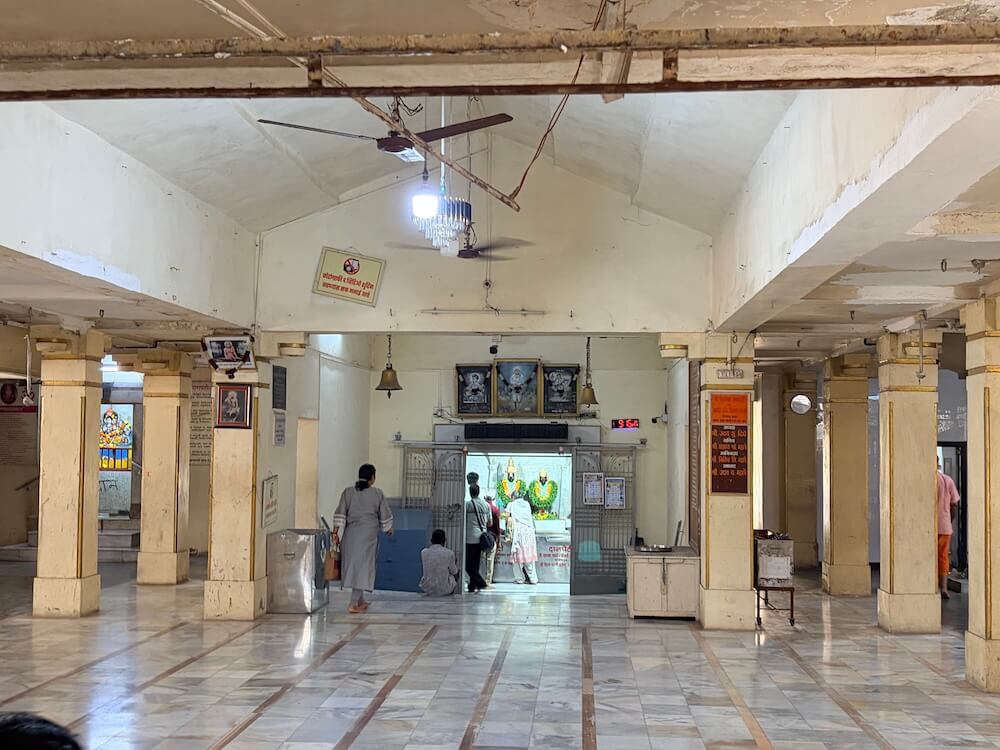
Located in the chawl area of Katrak Road in Wadala, this historic temple, befitting the Bhagavata sect and devoid of any ostentation, is situated on a large plot of land. The temple structure consists of a Sabhamandap (assembly hall), Antaral (vestibule), and Garbhagriha (sanctum sanctorum). The Sabhamandap is spacious and has marble flooring. Upon entering the Sabhamandap, there is a small shrine of Hanuman at the very beginning. There, a carved stone idol of Veer Hanuman stands on a square marble pedestal. Near this shrine is a Garuda pillar made of black stone. Descending three steps from the Sabhamandap, one enters the open Antaral. In the upper part of the door frame of the Garbhagriha, images of Saint Dnyaneshwar Maharaj, who laid the foundation of the Bhagavata sect temple, and Saint Tukaram Maharaj and Saint Namdev Maharaj, who placed the pinnacle on that temple, are installed.
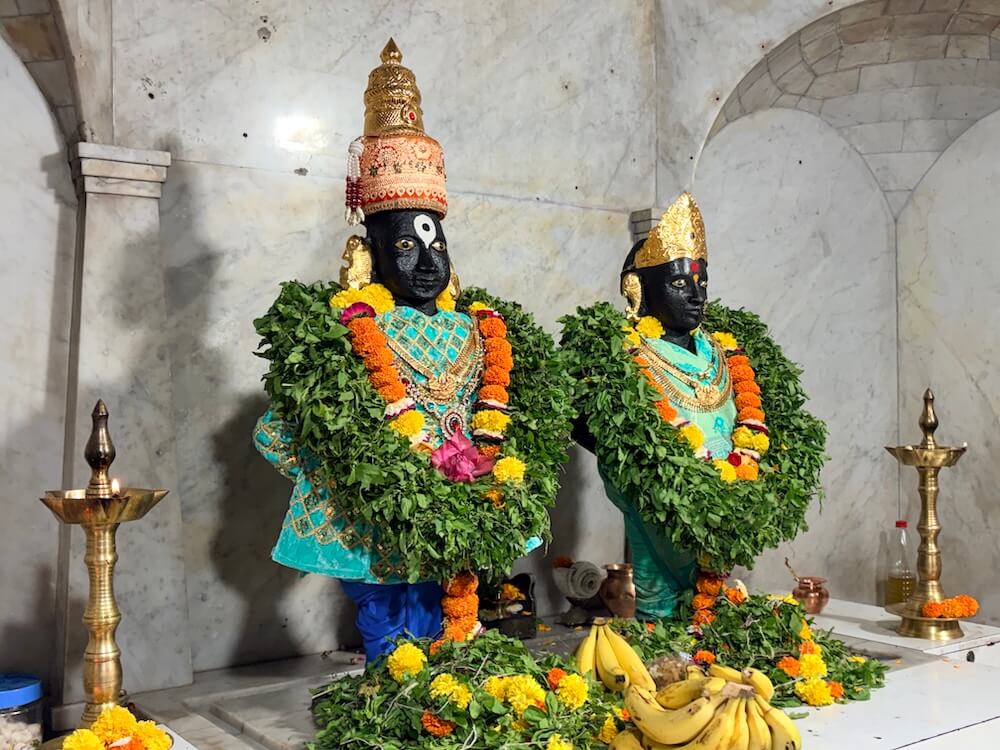
Upon entering through this spacious door, one sees the idols of Vitthal and Rukmini, the presiding deities of Maharashtra, on a high marble pedestal. Carved from black stone, these idols are adorned with garments and ornaments. There is a golden crown on the head of the idol. Garlands of Tulsi leaves and flowers are around the neck.
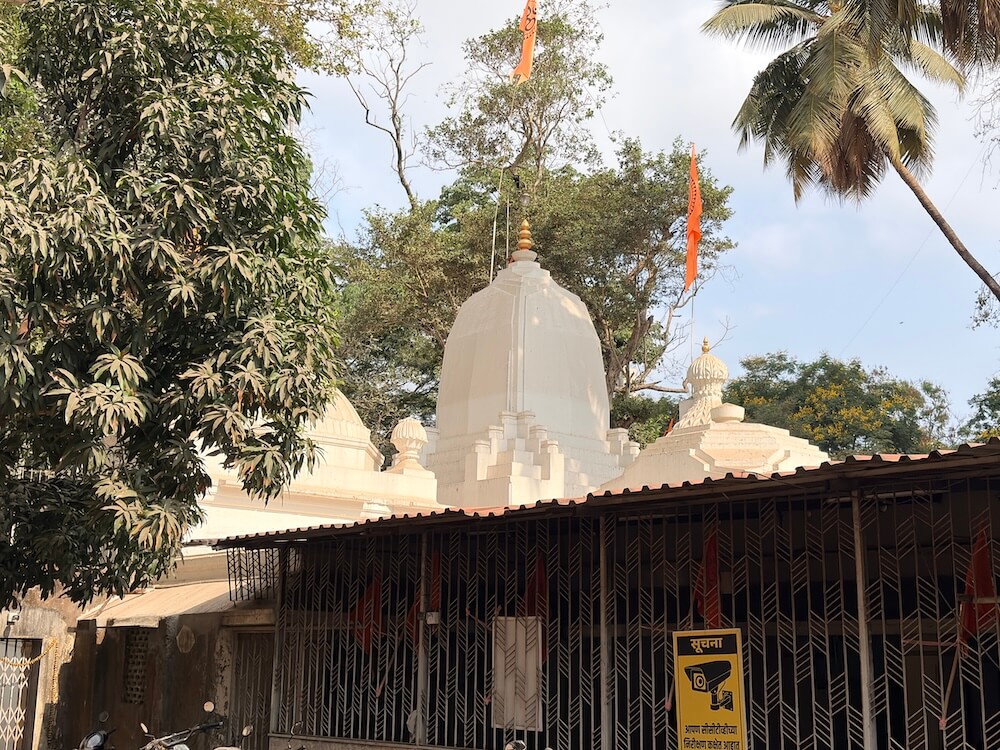
The Sabhamandap of this temple has a low pyramid-shaped Shikhara (spire). The Garbhagriha has a wide Shikhara that tapers slightly towards the top on all four sides. It has a small Amalaka on top, upon which a three-tiered Kalash is mounted.
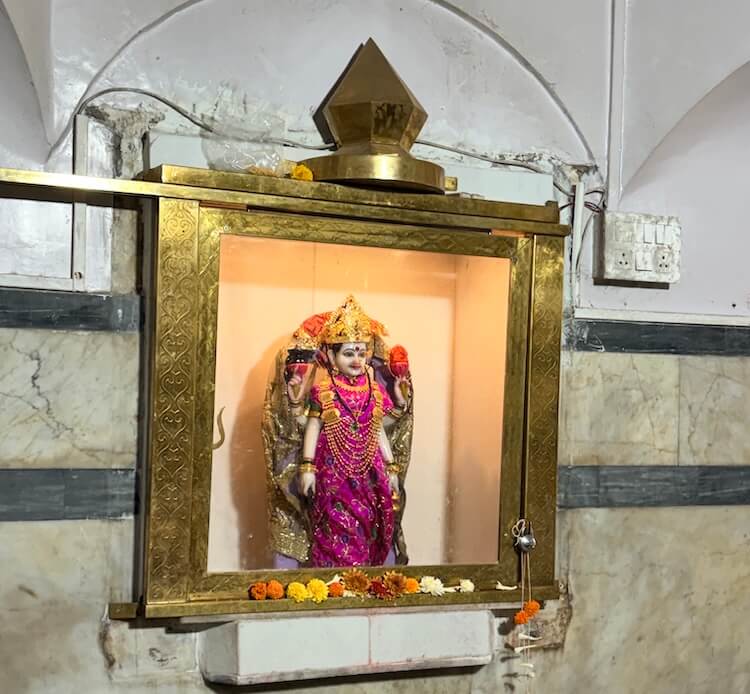
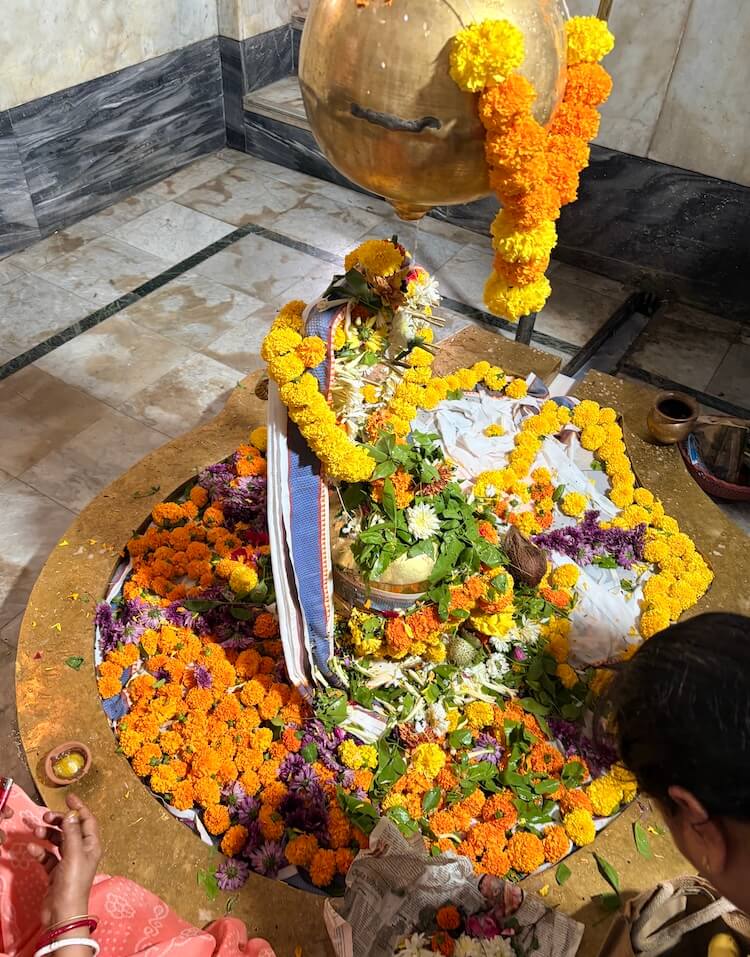
In the premises of this temple, there are temples of Ganpati and Mahadev. The Ganesha temple is to the right of the Vitthal temple. In this marble temple, a stone idol of Ganesha is seated on a high pedestal. To the left of this idol is a marble idol of the three-faced Dattatreya in a seated position, while to the right is a pleasant-faced marble idol of Goddess Durga. In the Mahadev temple, a stone Linga of Mahadev is installed in a brass base (Shalunka). This Linga is also covered with a metal casing. Above the Shiva Linga is a brass dripping vessel (Galantika). In a golden niche on the back wall of the Shiva temple, an idol of Goddess Parvati is seated. Both these temples have high Shikharas.
Devotees can have Darshan in this temple from ๖:०० AM to ๑๒:๔๕ PM and from ๔:०० PM to ๙:०० PM. Various festivals and occasions like Ram Navami, Hanuman Jayanti, Shivratri, and Navratri are celebrated with great enthusiasm in the temple. A large fair is held on Ashadhi Ekadashi at this temple, which is considered Prati Pandharpur. An unbroken Bhajan program begins in this temple from Ashadhi Dashami and continues until night on Ekadashi. On Ekadashi, Kakad Aarti is performed in the temple. Aarti takes place at ๑:०० PM and ๗:०० PM. Shejarti is performed at ๙:३० PM. A special Puja of Vitthal-Rukmini is organized on this day. Many Warkari Dindis from Mumbai and surrounding areas come here on this day. Ashadhi Ekadashi holds a very important place in the Bhagavata sect. Therefore, thousands of devotees gather here on this auspicious occasion to have a glimpse of Pandurang. A large gathering of Vaishnavas also assembles here on the day of Kartiki Ekadashi.
This sacred temple stands as a testament to deep spiritual devotion, ancient architectural grandeur, and rich local cultural traditions.
The sanctum sanctorum houses the divine idol consecrated according to ancient Vedic traditions, surrounded by serene courtyards and traditional temple architecture.
Navratri, Maha Shivratri, Annual Temple Jatra & Deepotsav
Compare and book flights, secure top-rated local hotels near the temple, hire reliable guides, and rent cars instantly.
Extend your pilgrimage by visiting other highly sacred temples located nearby.


Add ₹999 more to unlock FREE SHIPPING!
Your sacred cart is currently empty.
Shop Photo FramesFill in your delivery details below to place your order.
Add comment