
Add ₹999 more to unlock FREE SHIPPING!
Your sacred cart is currently empty.
Shop Photo FramesVagheshwari (Vageshwari), also known as Vyaghreshwari, is an original folk deity. She is revered as the primordial village deity of the Parel-Sewri region. The tiger is the mount of this Goddess, and she is believed to be a form of Goddess Katyayani. The ancient seat of the Goddess is located on a hill in Parel, formerly known as Golangi Hill. According to historians, the Goddess’s presence here dates back approximately 700 to 750 years. The original temple of the Goddess was likely built during the reign of Pratap Bimb, the first king of Mumbai. A grand festival for the Goddess is held here during Navratri. In the past, a large fair used to be held here on Chaitra Amavasya.
According to the ‘Mahikavatichi Bakhar’, edited by the historian Itihasacharya V. K. Rajwade, Pratap Bimb established a colony here after capturing Mahim. Pratap Bimb’s son, Mahi Bimb, arrived here from Champaner with 66 clans. These clans included 27 Somavanshi, 12 Suryavanshi, 9 Sheshvanshi, and other clans. Some people from the Somavanshi Kshatriya clan established their settlement in the present-day Parel area. These people are known as Pachkalshi. In the book “The Rise of Bombay – A Retrospect”, published in 1902, the gazetteer author and historian S. M. Edwards wrote that “(Bhim) Raja, under his patronage, the Pachkalshi community built three temples here. Two of them were for their family deities, namely Vagheshwari and Chandika, and the third was for Mahadeva.” Bimbadeva, also known as Bhimraja, was the fourth son of Ramdevrao Yadav of Devgiri. In Muslim chronicles, he is referred to as Bhimdev. This Bimbadeva established his capital at Mahim in the year 1295. Edwards asserts that it was during his time that the Pachkalshi community built these three temples in Parel.
The etymology of areas like Wadala and Chinchpokli in Mumbai is explained by the trees or plants found there. Similarly, the origin of the name Parel is also explained. In his book ‘The Origin of Bombay’ (1900), historian J. Gerson da Cunha stated that the name ‘Parel’ originated from the plant ‘Bignonia Suaveolens’ or ‘Tree-Trumpet Flower’. This tree is called Padal in Marathi, from which the name Parel is derived. However, S. M. Edwards proposed a different theory regarding this etymology. According to him, the Pachkalshi community built the temples of Vagheshwari, Chandika, and Mahadeva. It is believed that the Mahadeva Linga in this temple is Swayambhu (self-manifested). This Linga attained the same importance and sanctity as the famous Vaijnath Linga at Parli-Vaijnath. The original temple at Parli-Vaijnath was built in the year 1186 by the Yadav king Bhillam. Bimbadeva belonged to this same Yadav clan. Therefore, to preserve the memory of the Parli-Vaijnath temple, the temple here also came to be addressed as ‘Parli Vaijnath Mahadeva’. According to Edwards’ theory, the name of this deity eventually gave the area its name, Parel. This temple of Parli Vaijnath Mahadeva in Parel was demolished by Portuguese fanatics sometime between 1596 and 1693. The Jesuits established their place of worship and monastery at that site. Later, the British expelled these Jesuits and started the offices of the ‘Registrars’ of Mumbai there. Over time, this building began to be used as the residence of the Governor of Mumbai. After the outbreak of the plague (bubonic plague) in Mumbai, the British government summoned Dr. Waldemar Haffkine to develop a vaccine for the virus. On 10 August 1899, this building was given to him for research. Today, the Haffkine Institute stands there.
This temple of the Goddess is situated to the east of this institute. According to the book ‘Mumbai-til Aadya Jagrut Shaktipeethe’ by Prof. Dr. Bhalchandra Aklekar, the Goddess’s seat is on the Golangi Hill here. During the time of the Governor’s House in Parel, the British government’s flag used to fly on the summit of this hill. Therefore, the hill was called ‘Flagstaff Hill’ in those days. The then Golangi Hill covered a vast area from Bhoiwada to Chinchpokli, and a part of Parel village was on the slopes of the hill. Over time, most of this hill was leveled.
According to Prof. Dr. Bhalchandra Aklekar’s book, this Goddess is the primordial village deity of the Sewri area. The book provides a legend regarding the name of the Goddess. According to it, in ancient times, there was a dense forest in this area. In those days, a tiger used to come to the Goddess’s temple every night to offer its respects. Therefore, the Goddess was named Vyaghreshwari. The ‘Greater Bombay District Gazetteer’ mentions that wild cats once existed in this Parel-Sewri area. It is possible that tigers also existed in this region at that time.
The concrete and precise history of this temple is unknown. Historians believe that the Goddess’s seat here dates back to the thirteenth century. The temple must have been renovated many times since then. According to Aklekar, a gentleman named Vishwanath Dhakuji Patil of the Somavanshi Kshatriya community established this temple. A verse in this regard is quoted in the book as follows:
“Shri Vageshwari Prasanna, my father’s name Vishwanath
Dhakuji Patil, a devotee of Shri Dattatreya
Constructed the Shri Nilkantheshwar area in Worli…
We are Suryavanshi Kshatriyas, we were tasked
With one Kanjaki, that the service of the Goddess
Should happen constantly, hence Shri Vageshwari was established here.”
A variant in the history of this temple is also found. According to it, this temple belongs to the Gharat and Mhatre families of the Chokalsi caste. Their ancestors established this temple in the year 1800. The residence of their descendants is still near the temple today. According to an inscription in the temple, some Gujarati brethren renovated this temple in 1971.
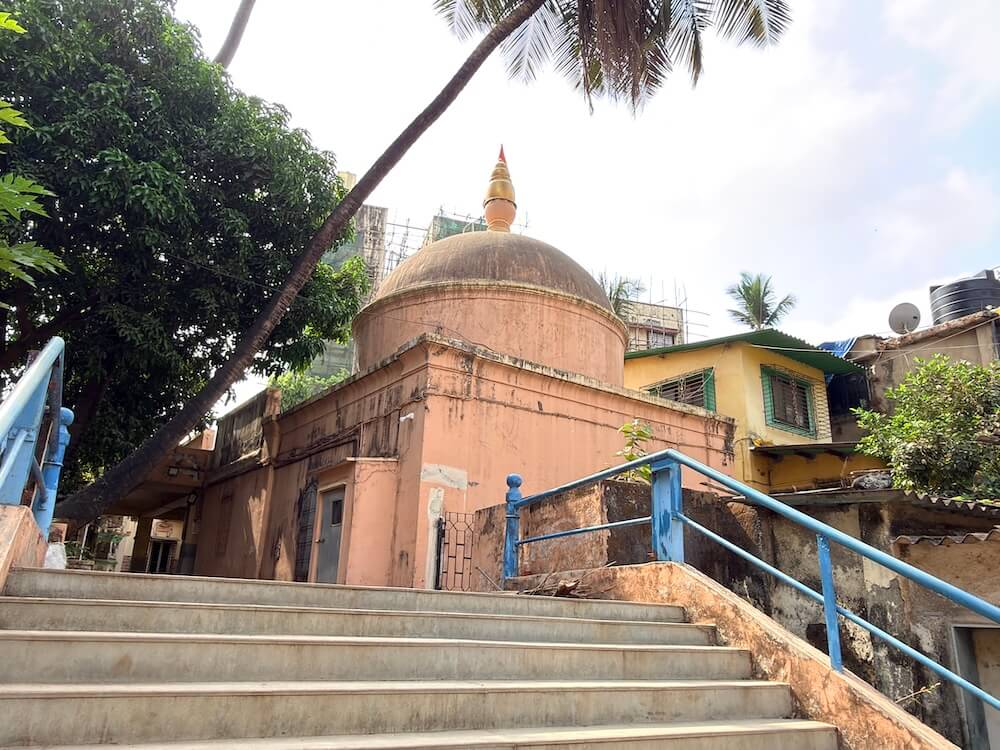
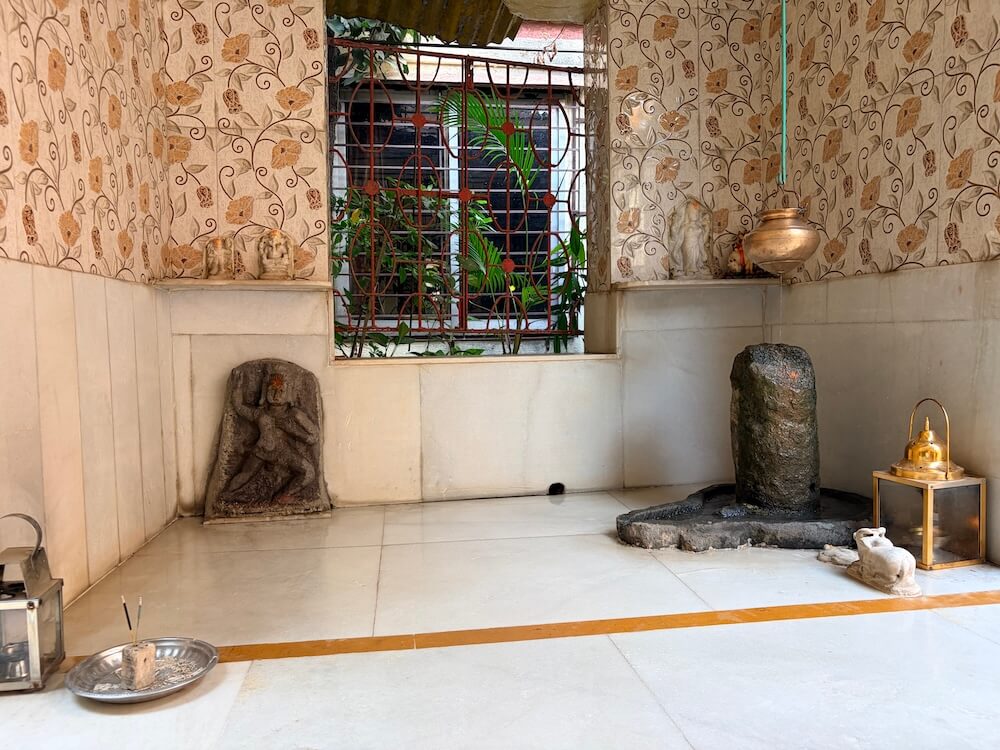
One enters the courtyard of this temple by climbing 21 steps from the road in the settlements on Golangi Hill. In this courtyard, surrounded by residential buildings, there is an old Deepmal (lamp tower) and a Deepstambh (pillar of light) on one side. At the base of this Deepmal and Deepstambh, carved deity idols are found, which bear witness to the ancient history of the area. Nearby, on a high platform, is the seat of Lord Shankara. On the ground lies an ancient stone Shalunka, and upon it is installed a tall, cylindrical Shiva Linga. In front of the Shiva Linga is a small marble Nandi and an idol of Lord Kurma.
In this small shrine, an ancient carved deity is enshrined. From the perspective of archaeological scholars and researchers, this site of Lord Shiva is considered extremely significant because there is an ancient and rare Dhenugal (cow-calf stone sculpture) on this platform. Although worn down by the passage of time, the figure of the cow in this Dhenugal is still clearly visible.
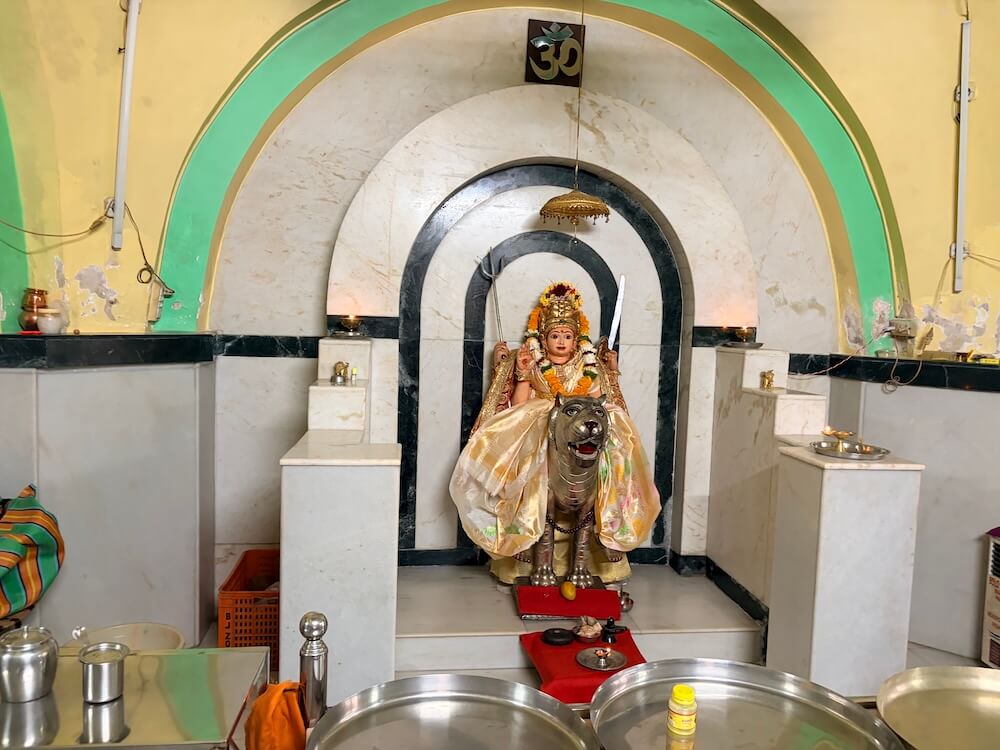
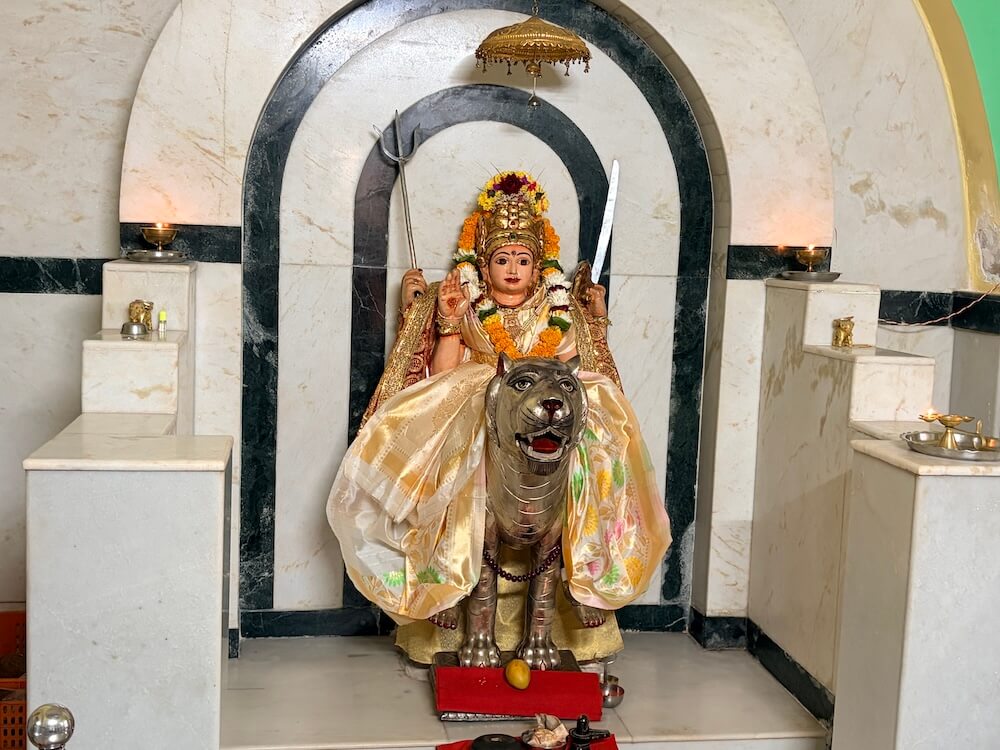
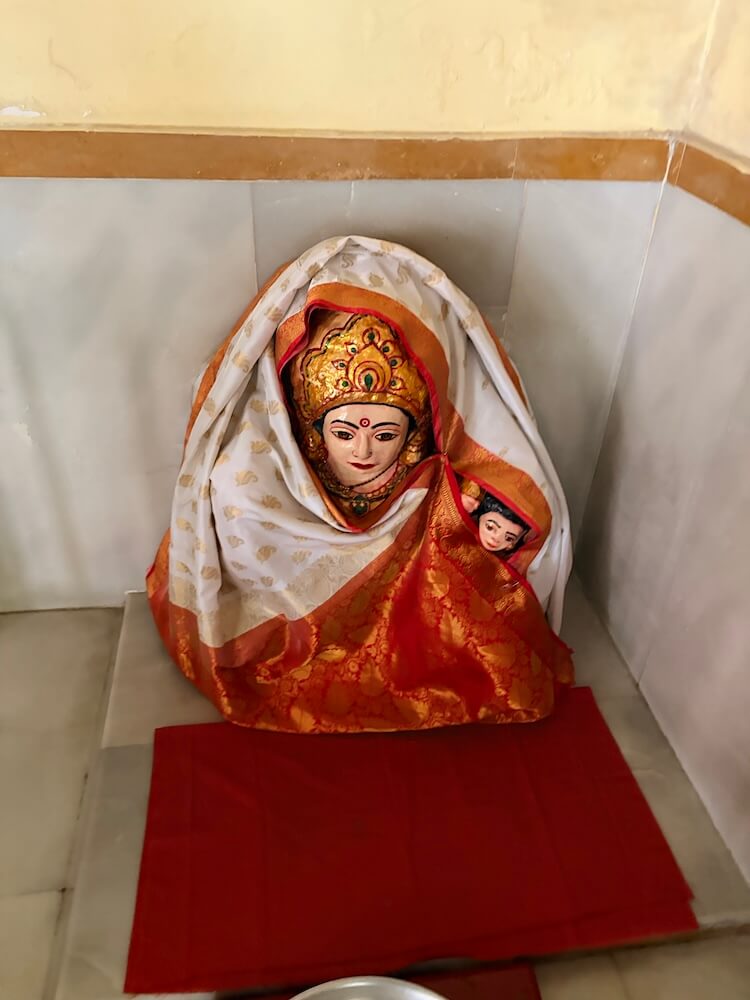
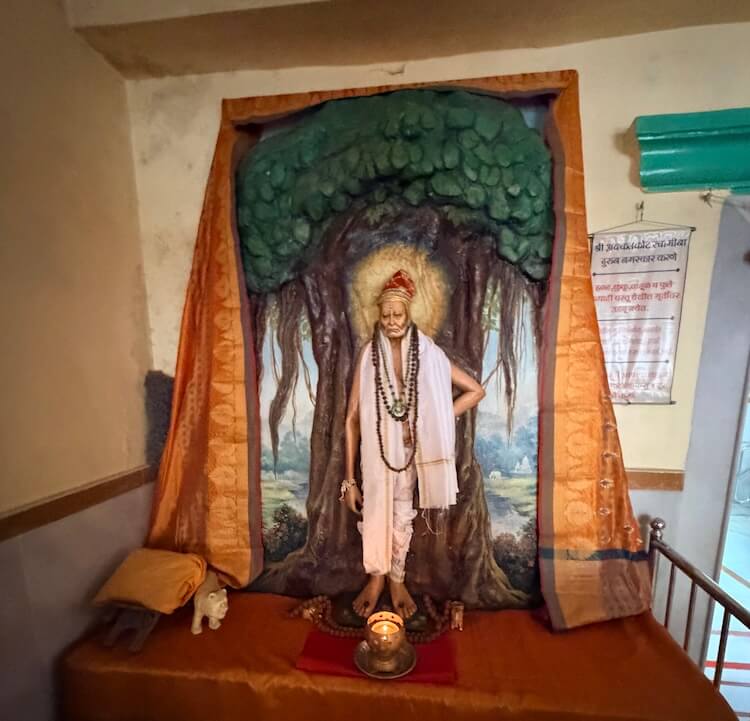
The temple of Goddess Wagheshwari is small and simple. Its original structure consists of a Sabhamandapa (assembly hall) and a Garbhagriha (sanctum sanctorum). During the renovation, a large cement-concrete pavilion was built in front of this temple. There is a large Homa-kunda (sacrificial fire pit) in this pavilion, which has marble flooring. In the main assembly hall of the temple, to the left, is the seat of Akkalkot Swami Samarth. On a high pedestal there, stands the idol of Swami Samarth. To the right, an idol of a folk deity is enshrined. In the sanctum sanctorum, on a marble altar, the idol of Goddess Wagheshwari, mounted on a tiger, is consecrated. Here, the Goddess is four-armed and holds weapons.
Adorned with garments, ornaments, and garlands of flowers, the Goddess wears a golden crown on her head. Above the sanctum sanctorum of the temple, there is a large dome-shaped Shikhara (spire) with a Kalasha structure on all four levels.
In the Wagheshwari Devi temple, one can have Darshan of the Goddess from 8:30 to 11:30 in the morning and from 6:00 in the evening to 8:00 at night. A grand festival of the Goddess is held here during the Navaratri of the Chaitra and Ashwina months. During Navaratri, a grand Homa is performed here on Ashtami. Information reveals that in those days, shops and swings used to be set up as far as Parel railway station.
However, this pilgrimage fair stopped after the Hindu-Muslim riots that took place in the year 1947. Even so, today, during the Navaratri festival, a large number of devotees of the Goddess from the Pachkalshi, Chokalkshi, and Koli communities, as well as from the Gujarati and Marwari communities from across Mumbai, come here.
This sacred temple stands as a testament to deep spiritual devotion, ancient architectural grandeur, and rich local cultural traditions.
The sanctum sanctorum houses the divine idol consecrated according to ancient Vedic traditions, surrounded by serene courtyards and traditional temple architecture.
Navratri, Maha Shivratri, Annual Temple Jatra & Deepotsav
Compare and book flights, secure top-rated local hotels near the temple, hire reliable guides, and rent cars instantly.
Extend your pilgrimage by visiting other highly sacred temples located nearby.


Add ₹999 more to unlock FREE SHIPPING!
Your sacred cart is currently empty.
Shop Photo FramesFill in your delivery details below to place your order.
Add comment