
Add ₹999 more to unlock FREE SHIPPING!
Your sacred cart is currently empty.
Shop Photo FramesGanesha is the beloved deity of the people of Mumbai. The worship of Ganesha has been practiced on these islands since ancient times. There are many temples of Ganesha in Mumbai, who is worshipped not only in Mumbai or Maharashtra but throughout all of Asia. Among these, the Siddhivinayak Temple in Prabhadevi is famous across the entire country. The Ganesha temple in Parel village has also gained fame over the last few years. Here, a Swayambhu (self-manifested) idol of Ganesha in his child form is enshrined. Due to this unique, magnificent idol and the temple’s decoration, this temple has become a center of attraction for Ganesha devotees.
The worship of Ganesha, whom the renowned Indologist Dr. Madhukar Keshav Dhavalikar called the ‘Adored Deity of Asia’, has been prevalent in Maharashtra since ancient times. In the ‘Gaha Sattasai’ (Gatha Saptashati), a collection of 700 verses (songs) compiled by King Hala Satavahana in the first or second century AD, Ganesha is mentioned by the name ‘Ganavai’. A Prakrit verse from it describes Ganesha as follows:
“Helakaragga-atthi-ajarikkham-maram-pasanto. Jai anigga-avadaggi-bhario-gagano-ganahivai.” (Gatha no. 403)
The meaning of this is as follows: “Victory to Ganapati, who absorbs the ocean water with the tip of his trunk, thereby letting the unbridled Vadavagni (submarine fire) fill the sky.”
An Ekadanta Ganesha idol, 32 centimeters in height and dating back to the period between 1000 and 1200 AD, was found in Thane, near Mumbai. This indicates that Ganesha worship was prevalent in Maharashtra and the Mumbai region during that period.
In Mumbai, the festival of Ganeshotsav is celebrated on a grand scale. In the book ‘Mumbai cha Vruttant’, published six years after the rebellion of 1857, Govind Narayan Madgaonkar provided information about this festival. According to his writing, “The enthusiasm for Ganapati continues intensely in this city for ten days. Many gentlemen spend six months working hard to prepare the Ganapati themselves. It is indeed made of clay, but it is a work of skill, and they spend one or two hundred rupees on it.
In some places, excellent paintings are made. Hundreds of Ganapatis are prepared everywhere. Many make beautiful Makharas (decorative shrines).” This Ganeshotsav was of a domestic nature. The Ganesha of Laxman Harishchandra Ajinkya, also known as ‘Bhau Rasul’, who built the Bhaucha Dhakka of that time, was particularly renowned. It started at his home in Girgaon in the year 1845. In 1893, Lokmanya Tilak gave the Ganeshotsav a public character for political and social purposes. In the same year, public Ganeshotsav began at Keshavji Naik Chawl in Girgaon. Many temples of this beloved Bappa of Mumbaikars are situated in various parts of the city. The Swayambhu Siddha Bal Ganesh Temple, located near Tata Colony in Parel, is one of them.
A legend is famous regarding the establishment of this temple. According to it, a Ganesha devotee named Gangaram Narayan Salunkhe lived in this part of Ram Tekdi in 1932. One night, he had a divine vision of Ganesha. In it, Ganesha told him that he was enshrined on this hill in the form of a rock.
Based on that vision, he started searching for that rock here the next day. Finally, while digging in one place, he saw this rock. An image of Ganesha had appeared on it naturally. He cleaned this rock, built a temple at that very spot, and consecrated it according to rituals. This temple, built in 1932, has been renovated many times over the course of time. Recently, this temple has been given a very beautiful appearance.
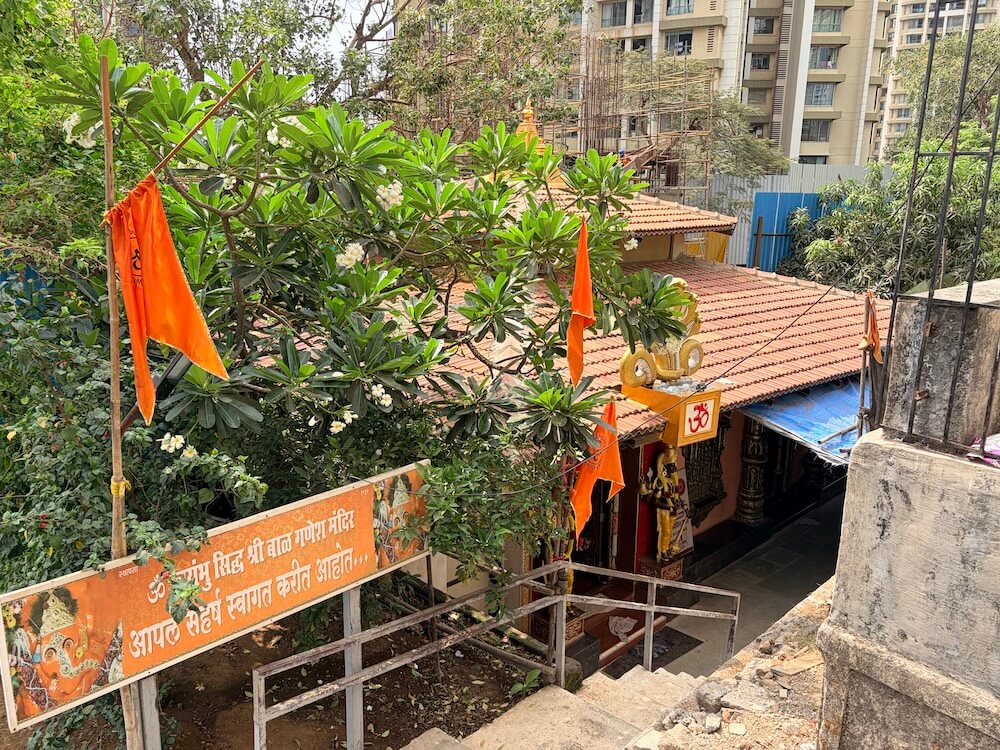
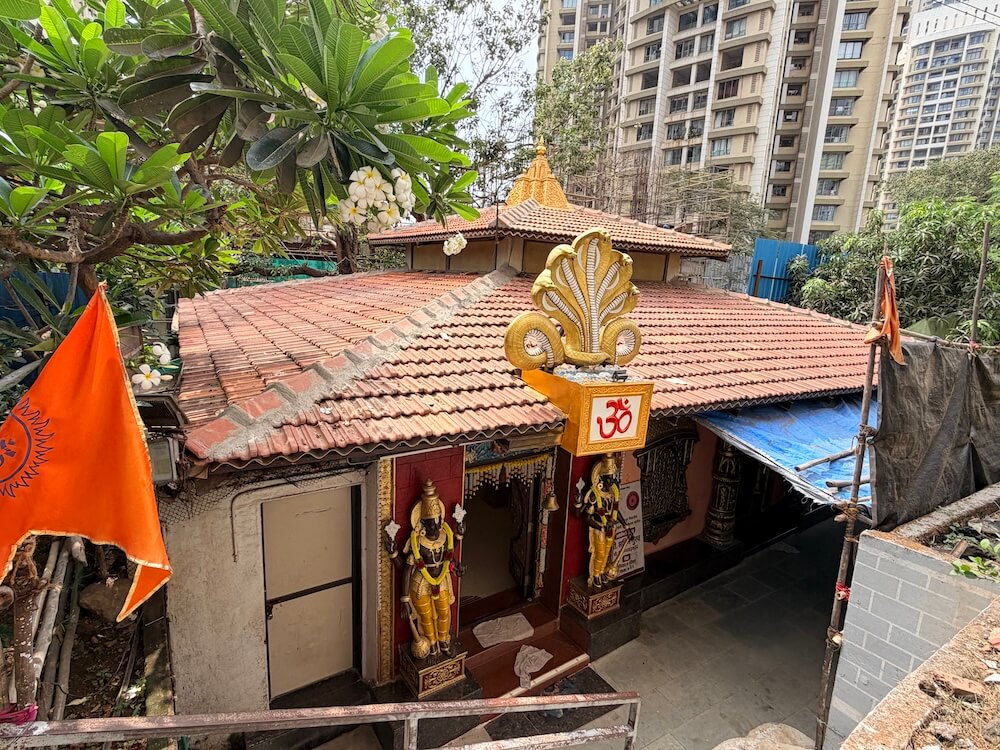
This temple is situated on a hill in the premises of the Ganeshwadi Cooperative Housing Society in Parel. One enters this temple by descending 15 steps from the Ganeshwadi buildings here. This temple is in a charming structure with a sloping roof in the Konkani style. There is a small courtyard in front of the temple. The structure of this temple consists of a Sabhamandap (assembly hall) and a Garbhagriha (sanctum sanctorum) within it. There is a small golden spire on the Garbhagriha, and a Kalash is placed upon it.
In front of the temple entrance, there are two tall, colorful statues of Vaishnava gatekeepers. In the upper part of the entrance, near the ceiling, there is a large Naga sculpture.
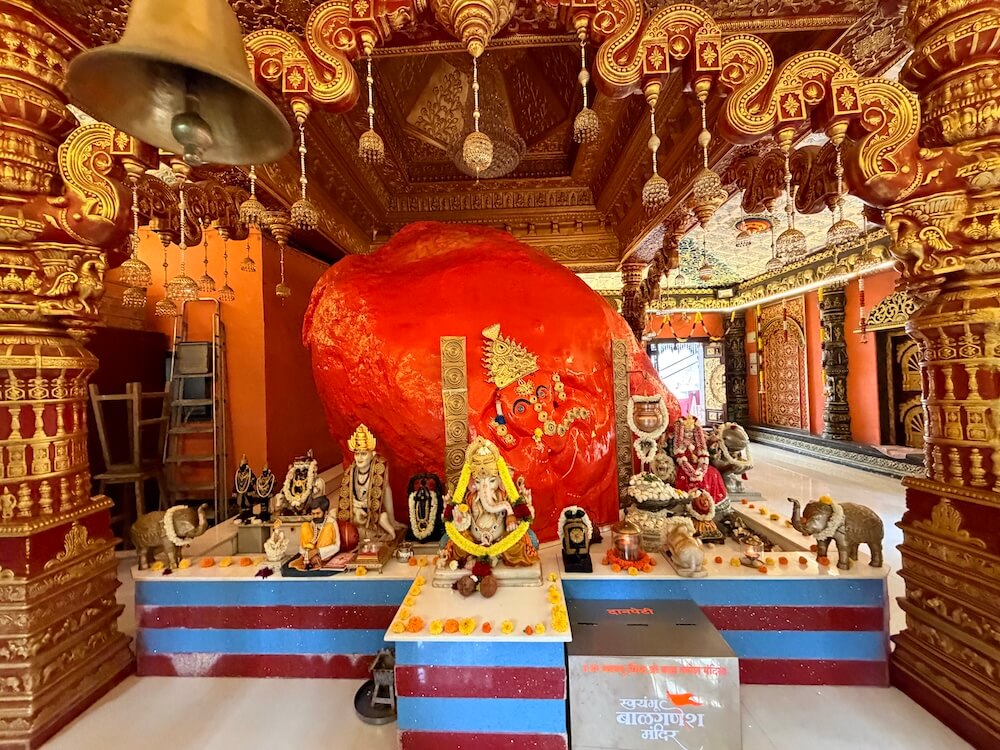
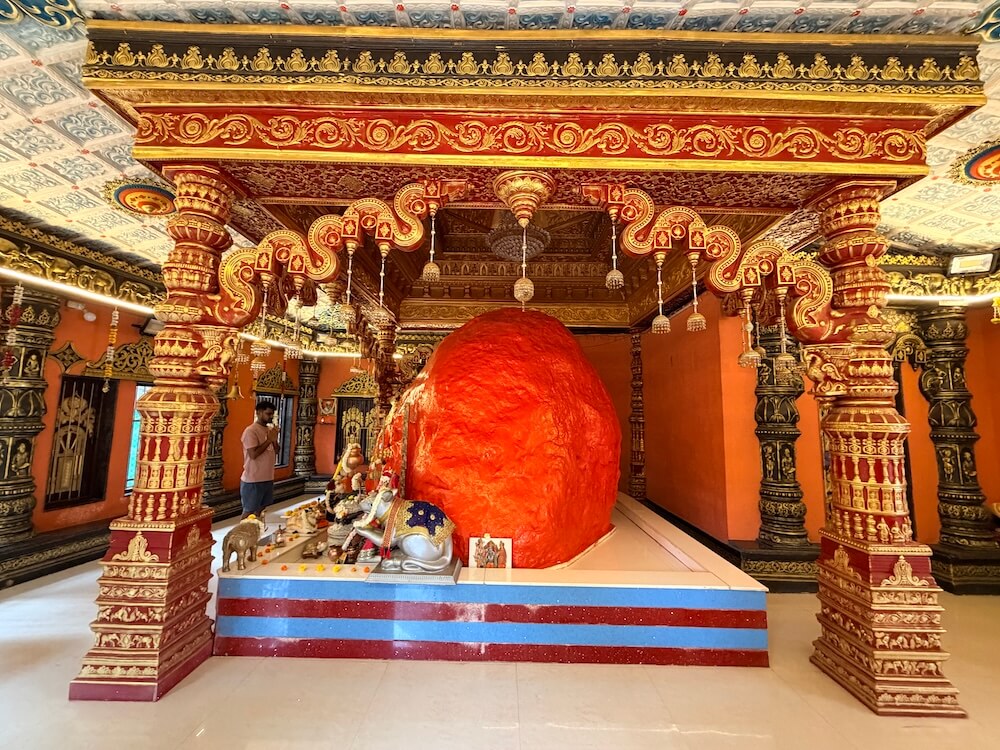
The Sabhamandap is decorated with half-pillars adorned with carvings and sculptures, carved decorations on the window frames, a row of elephants (Gajathar) at the top of the walls, carvings on the ceiling, and is painted in ocher color. There is a large relief sculpture on one of the walls of the Sabhamandap. It depicts the incident of the discovery of the stone idol of Ganesha.
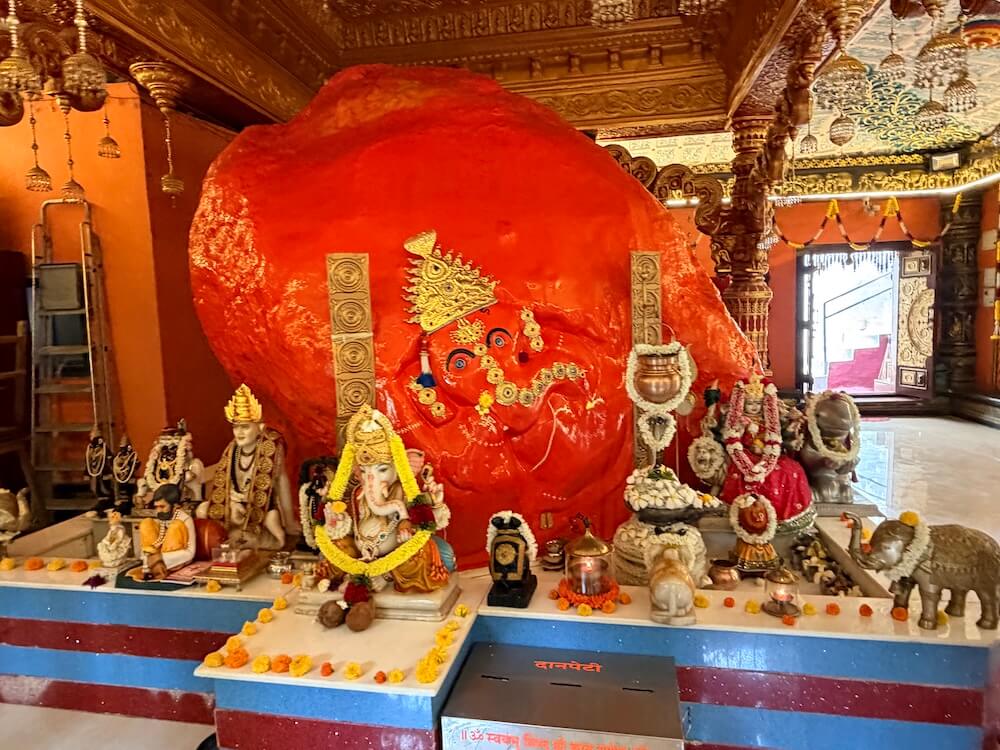
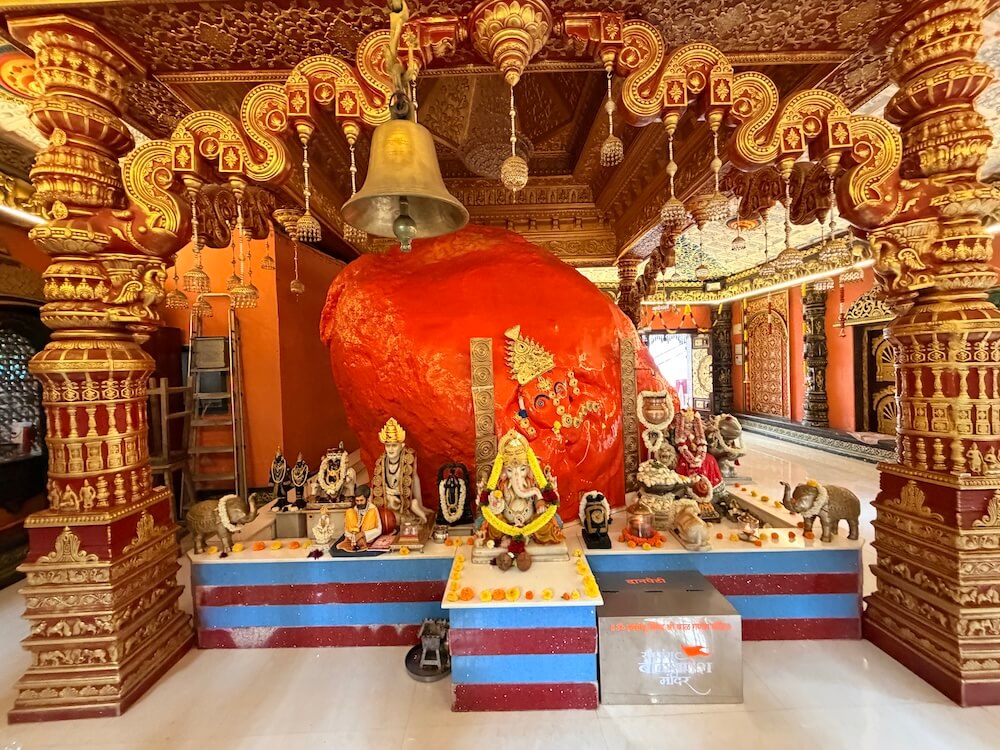
The Garbhagriha of the temple faces east. It is of an open design. The structure of this Garbhagriha consists of a high stone pedestal in the center, colorful pillars with carved designs on all four sides, beautiful Makartoranas (archways), and an ornate ceiling above. On this stone pedestal, a large rock of Bal Ganesha is consecrated in the center. On the front side of this vermilion-smeared rock, the face of Ganesha is carved.
It has a golden crown on it. Devotees believe that this is the child form of Ganesha. In front of this Ganesha rock, there is a small marble idol of Ganapati.
Similarly, there are idols of Vitthal-Rukmini, Dattatreya, Swami Samarth, Shankar Maharaj, Tulja Bhavani, Ganapati, as well as Durga Mata here. Beside the Ganesha idol is a silver Mushakraj (the mouse). There is also a Shiva Linga here, and it is said to be ancient.
One can have the darshan of Ganesha in this temple between 6 AM and 10 PM. Devotees believe that the Bal Ganesh here fulfills prayers.
Therefore, there is a large crowd of devotees in this temple on Sankashti and Angarki Chaturthi, as well as during Ganeshotsav. Ganeshotsav is celebrated with great enthusiasm and various religious programs in this Bal Ganesh temple in Ganeshwadi.
This sacred temple stands as a testament to deep spiritual devotion, ancient architectural grandeur, and rich local cultural traditions.
The sanctum sanctorum houses the divine idol consecrated according to ancient Vedic traditions, surrounded by serene courtyards and traditional temple architecture.
Navratri, Maha Shivratri, Annual Temple Jatra & Deepotsav
Compare and book flights, secure top-rated local hotels near the temple, hire reliable guides, and rent cars instantly.
Extend your pilgrimage by visiting other highly sacred temples located nearby.


Add ₹999 more to unlock FREE SHIPPING!
Your sacred cart is currently empty.
Shop Photo FramesFill in your delivery details below to place your order.
Add comment