
Add ₹999 more to unlock FREE SHIPPING!
Your sacred cart is currently empty.
Shop Photo FramesThe city of Jālnā, nestled on the banks of the Kuṇḍalikā River, is renowned as an important ancient trading hub in Marāṭhvāḍā. In the New Moṇḍhā area of this city, along the Jālnā to Rājūr road, stands the Dhawaḷeśvar Mahādev Mandir, a revered shrine for thousands of devotees. This sacred abode holds special significance in the cultural and social traditions of the city. It is counted among the prominent religious sites in Jālnā. Along with the Amṛteśvar Shiv Mandir, Mukteśvar Mahādev Mandir, Someśvar Mandir, and Ānandīsvāmī Mandir in old Jālnā, hundreds of devotees also visit this temple in the New Moṇḍhā area daily in large numbers for Darśan.
The name Dhawaḷeśvar Mahādev Mandir originates from the amalgamation of two Sanskrit words: ‘Dhavaḷ’ and ‘Īśvar’. Here, the root meaning of the word ‘Dhavaḷ’ is pure white, and ‘Īśvar’ directly translates to God. In the Sanātan Hindu tradition, the ancient scripture ‘Shivpurāṇ’ is considered an extremely important and primary literary source, describing the various forms of Bhagavān Śaṅkar, His philosophy, and worship. The Shivpurāṇ is one of the eighteen Mahāpurāṇs, containing an elaborate description of Bhagavān Shiv’s divine sport (Līlā) and glory (Mahimā). This scripture provides profound information about Mahādev’s extremely peaceful, meditative, and sacred form, alongside His destructive aspect. The original reference to Mahādev’s ‘Dhavaḷ’ – meaning white, pure, and Sāttvik – form is primarily found in this Shivpurāṇ. Although the practical meaning of the word ‘Dhavaḷ’ is white or clean, in spiritual terminology, it is associated with the Sāttviktā (purity) of the human mind and the purity of the soul.
In the Vidyeśvar Saṃhitā and Rudrasaṃhitā sections of the Shivpurāṇ, there is a detailed description of Mahādev’s ash-covered, camphor-white (Karpūrgour), and crystal-clear, Dhavaḷ form. The Vidyeśvar Saṃhitā extols the greatness of Shiv’s Liṅg form and His idol form. ‘Karpūrgour’ – meaning pure white like camphor – and an extremely transparent and clean nature like crystal are considered the core essence of Shiv’s Dhavaḷ form. This description underscores that Shiv is completely free from imperfections (Vikārrahit), pure (Nirmal), and an ocean of peace. In the second chapter of the Sṛṣṭi Khaṇḍa of the Rudrasaṃhitā, there is a detailed mention of Mahādev’s Sāttvik and meditative form. Devotees firmly believe that this Dhavaḷ form of Mahādev shows humanity the path of purity and Sāttviktā in life.
This original temple is built in the Hemāḍpantī style. In the year two thousand fourteen, the temple underwent extensive renovation. Devotees and local residents funded this renovation themselves, and in making these changes, they endeavoured to preserve the temple’s original Hemāḍpantī character and ancient charm. A beautiful welcome arch for this temple has been built on the main thoroughfare of Jālnā. After passing through this grand welcome arch, one enters the temple’s spacious and clean paved courtyard. In this courtyard, directly in front of the main temple, there is a small stone temple dedicated to Hanumān. Doṅgre Mahārāj has consecrated the idol of Hanumān in this Hanumān temple with full Vedic rituals. Next to this Hanumān temple stands an extremely ancient tree.
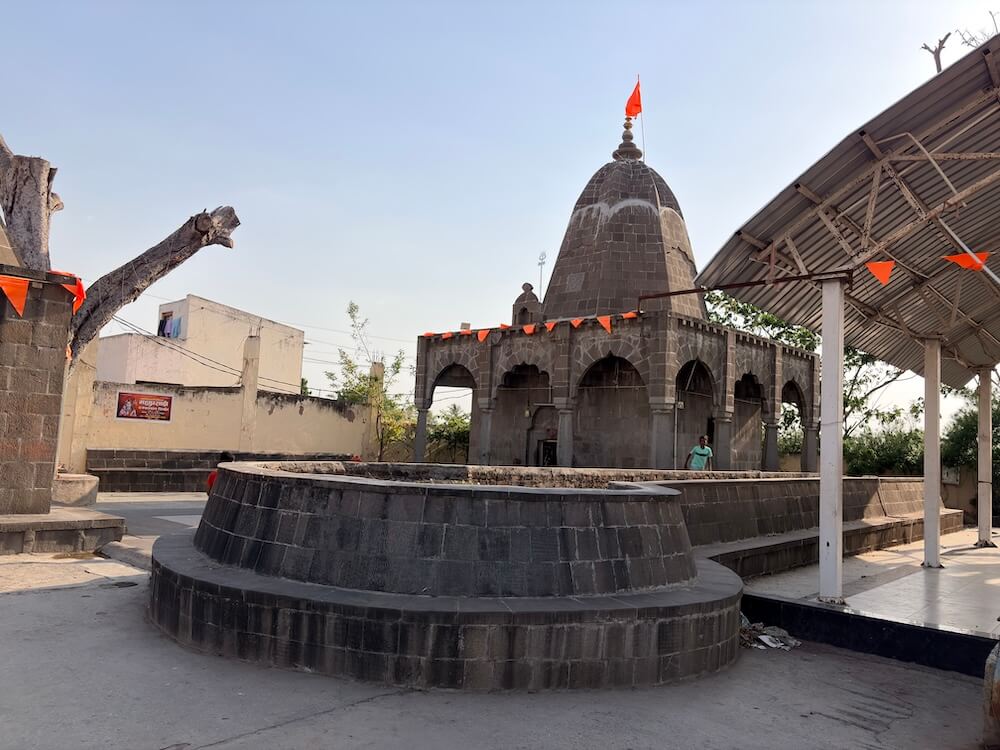
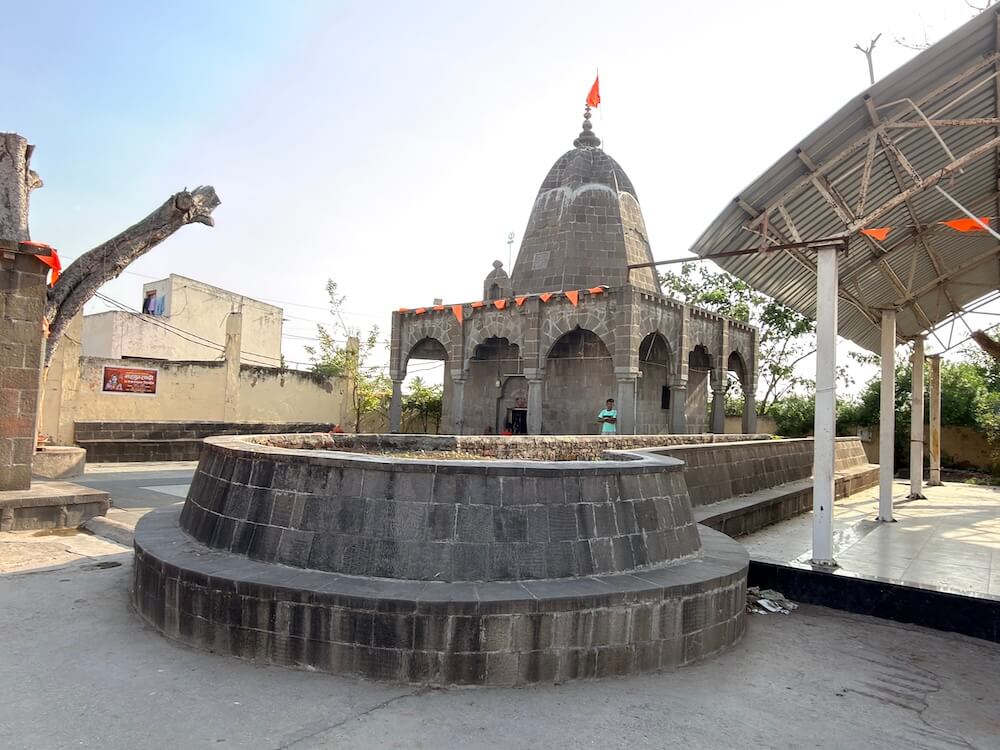
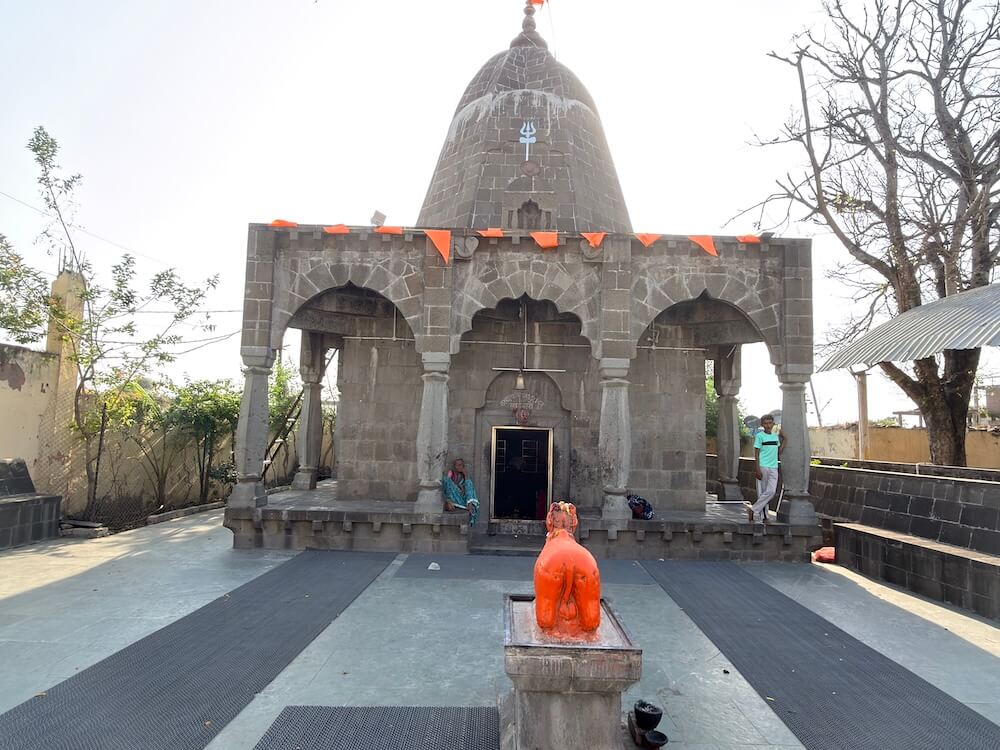
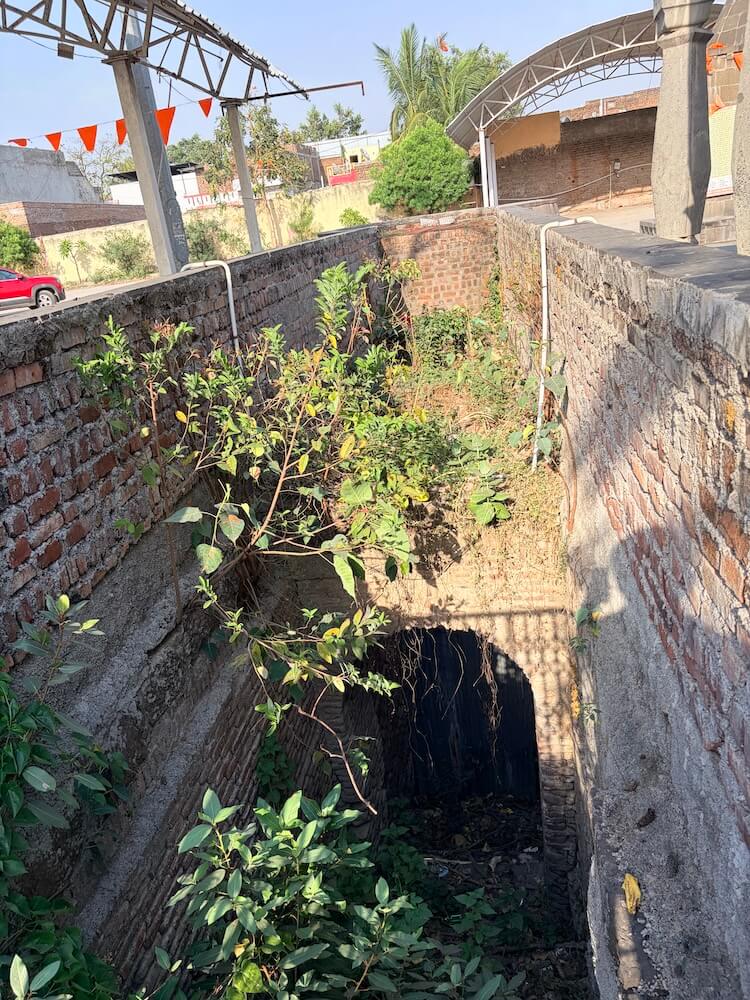
Immediately adjacent to the main temple, on the right side, there is a large and historic stepwell (Bārav) shaped like a Shivpiṇḍī. This historic stepwell, constructed using stone and bricks, has an excellent system of steps for descending. This ancient stepwell and its stone steps are still in very good condition today. This stepwell testifies to the temple’s antiquity. In front of the main temple, a beautiful idol of Nandī is installed on a small stone platform. The main temple, which has a square layout, is surrounded on all four sides by a narrow verandah (Oasrī). Strong stone pillars are erected on the outer side of this verandah, and beautiful arches are built upon these pillars. There are a total of three arches on the main front side of the temple. Among these three arches, the main entrance is directly in front of a cusped arch (Mahirapī Kamān), and the arches on the other two sides are semicircular in shape. Similar beautiful arch designs can also be seen along the verandahs on both sides of the temple.
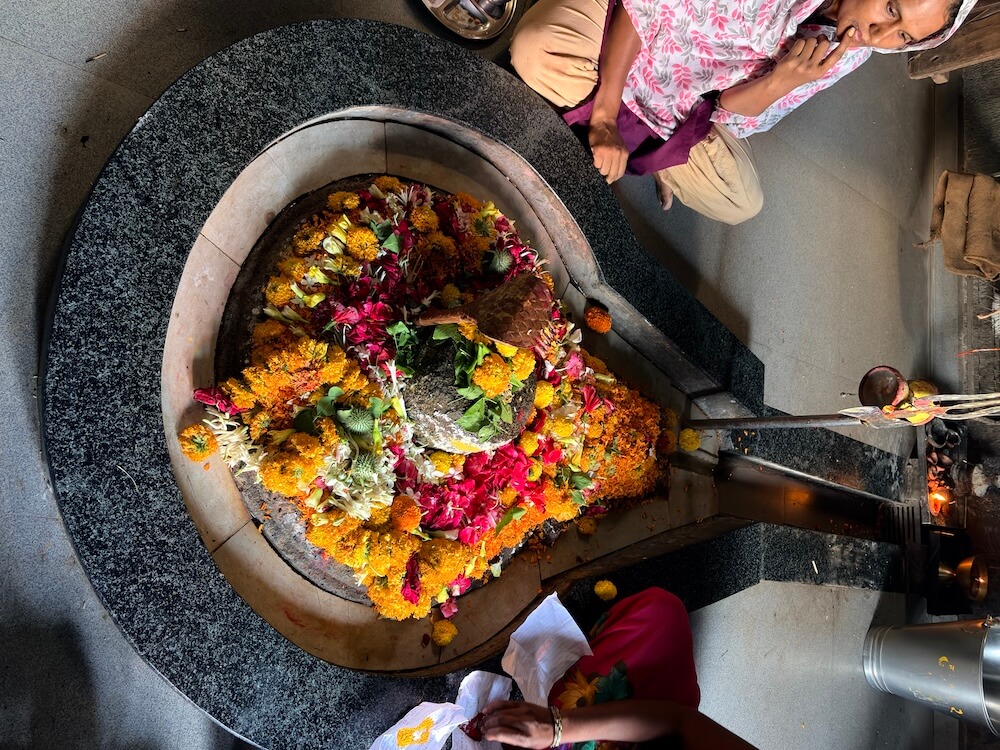
A beautiful idol of Gaṇapati is carved on the lintel (Laḷāṭbiṃb) of the temple’s main entrance. From this central cusped arch in front of the entrance, one descends a step to enter the main Garbhagṛha (sanctum sanctorum) of the temple. In earlier times, the Garbhagṛha of this temple was much deeper than the ground level, but during the renovation work in two thousand fourteen, the entire area around the Garbhagṛha was levelled. Now, at the very centre of this Garbhagṛha, a sacred Shivliṅg is installed in an elegant Shāḷuṅkā. In the two niches (Devkoṣṭak) in the back wall of the Garbhagṛha, idols of Gaṇapati and Mātā Pārvatī are enshrined. Both these idols are extremely ancient, exquisite, and carved from black stone. The entire construction of this temple’s Śikhar (spire) is also entirely made of stone. A small niche is created on the front side of this stone Śikhar, upon which an iron Triśūl (trident) is mounted. At the very apex of the Śikhar, a stone Āmalak and a Kalaś (finial) are installed.
Since this main temple of Mahādev is relatively small in size, a large and spacious Maṇḍap (hall) has been constructed on the right side of the temple for the convenience of visiting devotees. A tin shed has been placed over this large Maṇḍap to provide complete protection from sun and rain for all devotees visiting the temple. Immediately adjacent to this new Maṇḍap is also a beautiful and ancient temple of Reṇukā Mātā. The entire structure and design of this Reṇukā Mātā temple closely resemble the main Dhawaḷeśvar Mahādev Mandir. In the courtyard in front of the Reṇukā Mātā temple, there is a stone Dīpmāḷ (lamp tower) on a large stone platform. On this same platform, an attractive brass idol of a lion, the vehicle of Reṇukā Devī, is installed. Beyond this platform is a Homkuṇḍ (sacrificial pit), and further beyond that is the temple’s open verandah.
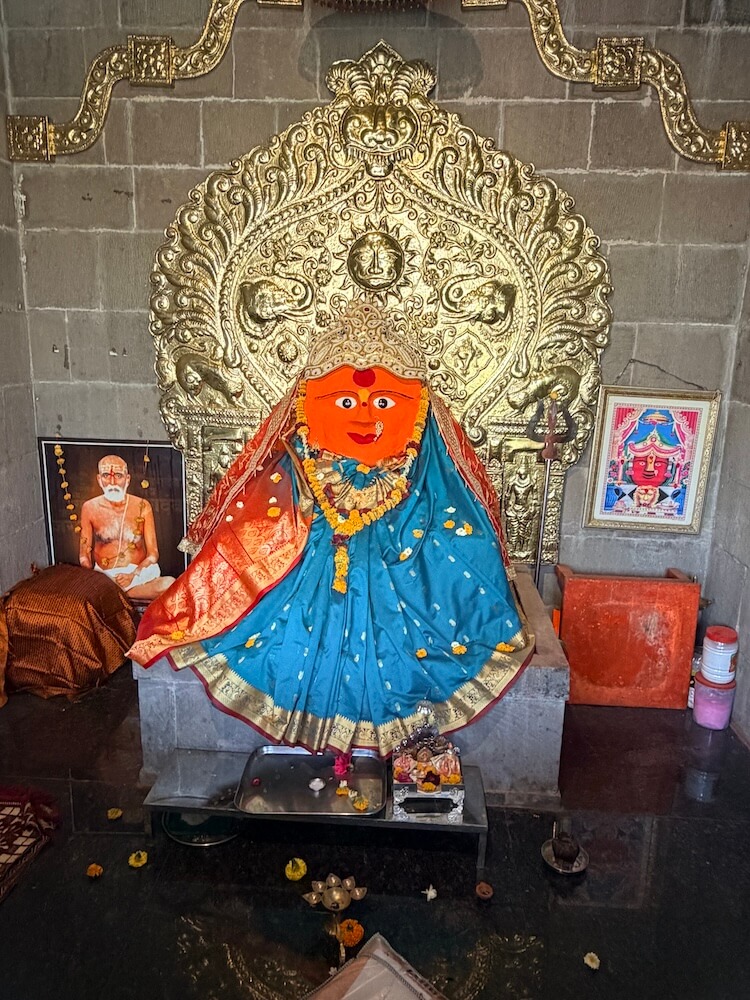
From the main entrance beyond that, one enters the Garbhagṛha of the Reṇukā Mātā temple. In this Garbhagṛha, on a Vajrapīṭh (pedestal) against the wall, is enshrined the vermillion-smeared idol of Reṇukā Devī. This divine Mother’s murti (sacred image) is adorned with exceptionally beautiful and captivating eyes, a lovely pearl nath (nose ring) gracing Her nose, and a golden crown upon Her head. Directly behind the murti is a golden prabhavali (halo) of exquisite craftsmanship. At the very top of this prabhavali, a magnificent Kirtimukha is carved. According to Hindu scriptures, Kirtimukha is considered a primary symbol of devotees’ protection, as well as the complete annihilation of time and the ego within the human mind. In the very center of the prabhavali, a beautiful replica of the Sun is carved, which is regarded as the main source of power and light in the universe. On both sides of this prabhavali, figures of elephants are carved, which in ancient tradition are considered symbols of prosperity and good fortune. This elaborate and intricate carving on the prabhavali clearly testifies to the royal patronage bestowed upon this holy shrine and the historical richness of the temple. The renowned Saint Hariharanand Maharaj of Sonai, with great enthusiasm, performed the ritualistic Prana Pratishtha (consecration) of this murti of Renuka Mata in this temple in the year one thousand nine hundred and eighty-four.
Hundreds of citizens from Jalna city and its surrounding areas have immense and unwavering faith in Dhawaleshwar Mahadev. Newlywed couples from the city make their first visit to this temple to begin their happy and prosperous married life auspiciously and seek the blessings of Mahadev. During the month of Shravan, various special religious programs are organized every Monday in this temple. On the occasion of Shravani Somvar (Monday in Shravan), Jalabhishek (offering of water) and Dugdhabhishek (offering of milk) are performed on the Mahadev Pindi (lingam) throughout the entire day. The day of Mahashivratri is celebrated here with enthusiasm and devotion. On this day, long queues of devotees form for darshan (sacred viewing) from early morning. After the ritualistic Mahabhishek (grand anointing) and puja (worship) of the main Shiva Lingam in the early morning, the Garbhagriha (sanctum sanctorum) is opened for devotees to have darshan. On this day, free faral (fasting snacks) is distributed to all devotees visiting here.
Considering the immense crowd during Mahashivratri, special police teams are deployed by the temple administration and the police to maintain smooth traffic flow and ensure safety in the temple premises. During this festival, the entire temple area takes on the appearance of a large fair. In addition to Mahashivratri and the month of Shravan, on the day of Kartik Purnima (full moon in Kartik), the temple is also adorned with attractive lighting of lamps. On Kartik Purnima, hundreds of earthen lamps are lit, illuminating the temple premises. The temple is open to all devotees daily from six o’clock in the morning until nine o’clock at night.
This sacred temple stands as a testament to deep spiritual devotion, ancient architectural grandeur, and rich local cultural traditions.
The sanctum sanctorum houses the divine idol consecrated according to ancient Vedic traditions, surrounded by serene courtyards and traditional temple architecture.
Navratri, Maha Shivratri, Annual Temple Jatra & Deepotsav
Compare and book flights, secure top-rated local hotels near the temple, hire reliable guides, and rent cars instantly.
Extend your pilgrimage by visiting other highly sacred temples located nearby.


Add ₹999 more to unlock FREE SHIPPING!
Your sacred cart is currently empty.
Shop Photo FramesFill in your delivery details below to place your order.
Add comment