
Add ₹999 more to unlock FREE SHIPPING!
Your sacred cart is currently empty.
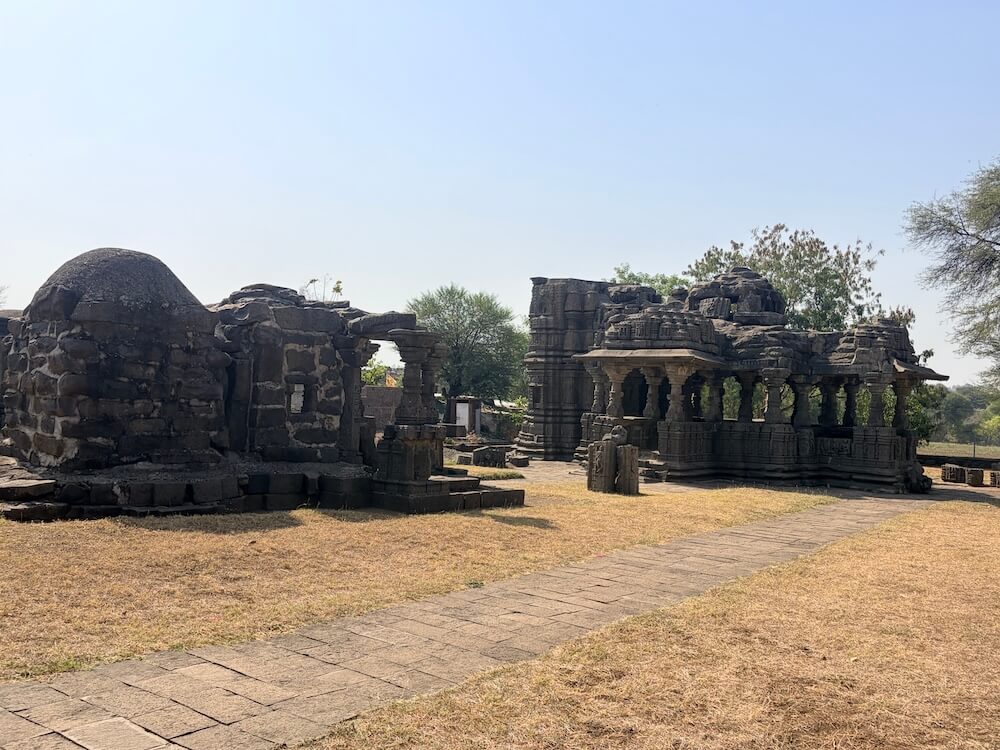
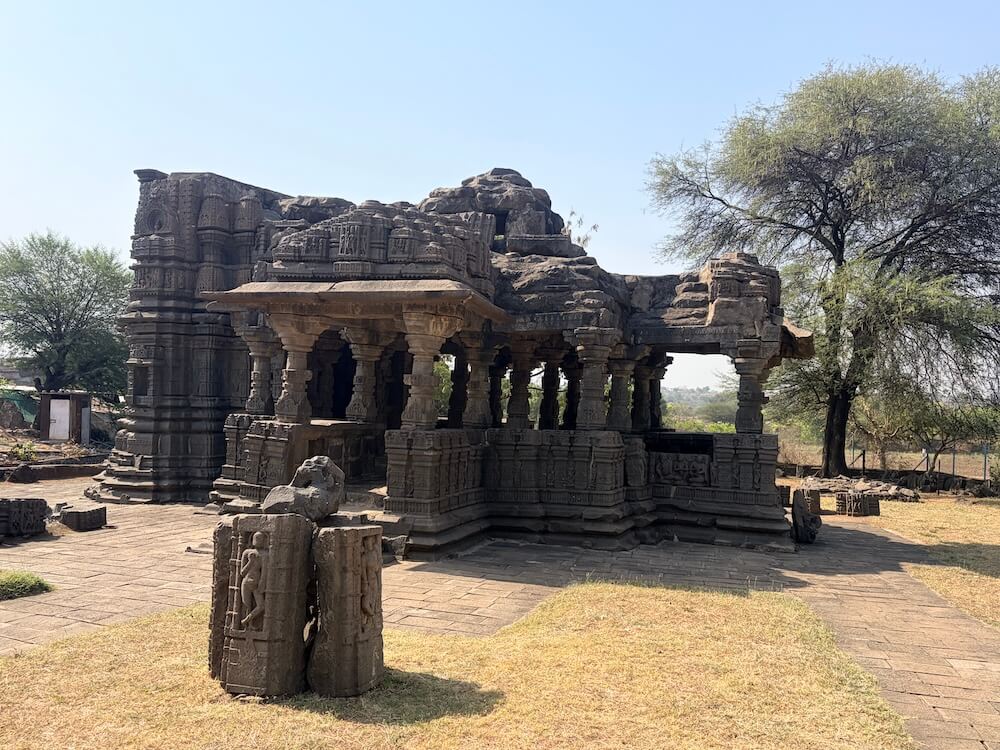
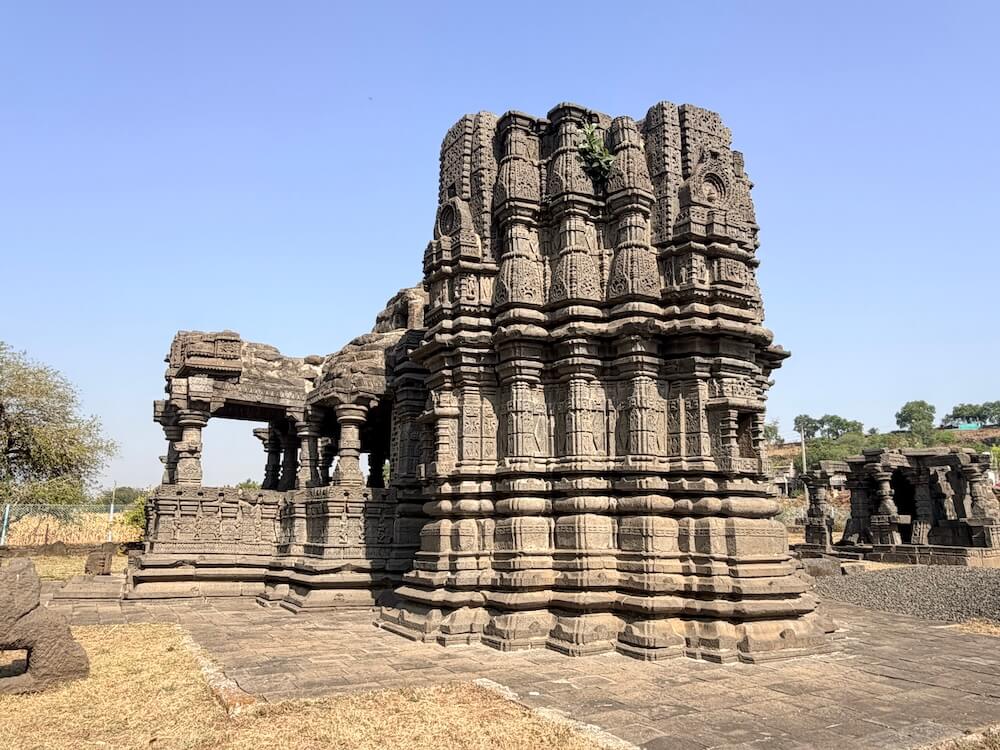
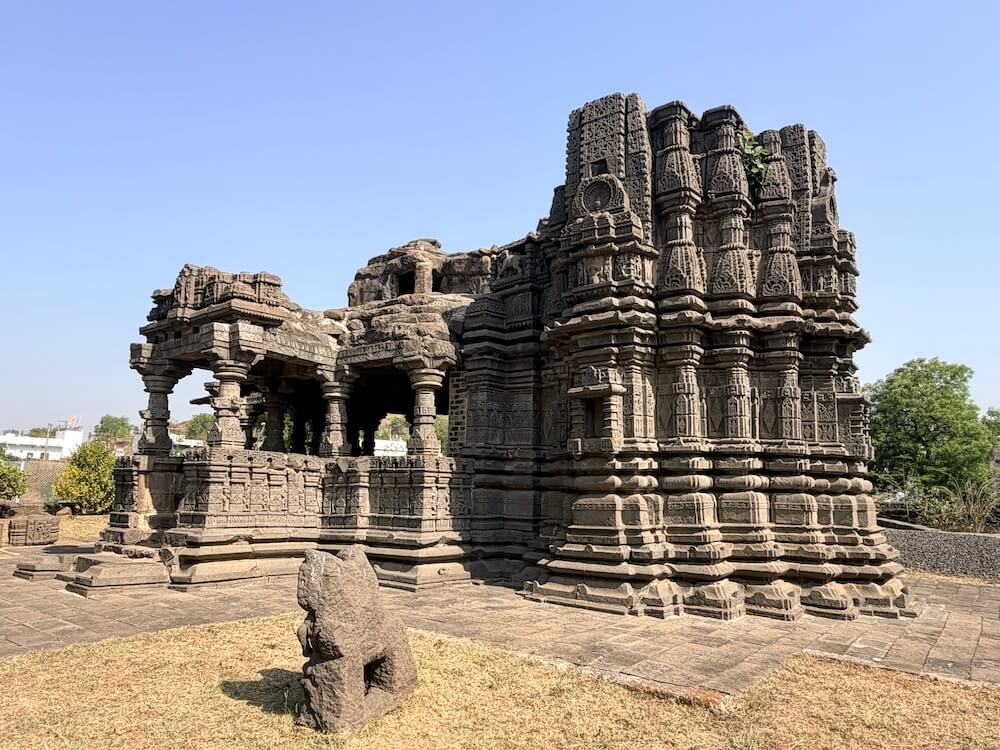
Shop Photo FramesThe ancient Vishnu Temple situated in Satgaon-Bhusari, in the Chikhli Taluka of Buldhana district, is a rich and significant heritage of medieval architecture in Maharashtra. Dating roughly between the 11th and 14th centuries, this temple is a fine example of Yadava-era and Northern Chalukyan architecture. As a witness to the historical glory of Vidarbha, this temple is primarily known for its distinctive carvings and unique architectural style. Along with the Vishnu Temple, the Mahadeva Temple and the Sita Nhani (Sita’s Bath) structure are also historically significant. Due to the beautiful sculptures depicting human emotions and various postures carved on the exterior walls, this site is also referred to as the ‘Khajuraho of Vidarbha’.
The history of Buldhana district is a testament to a rich ancient and medieval culture. The village of Satgaon-Bhusari, located in the Chikhli Taluka of this district, is extremely important from a historical perspective. The scattered ruins here clearly indicate that there was once a large complex of temples. This temple complex is situated adjacent to the main road, and the grandeur of these structures draws immediate attention. The Vishnu Temple here stands out from other contemporary temples in Vidarbha due to certain unique features. While scholars have some differences in opinion regarding the exact period of the temple’s construction, most evidence suggests it dates back to the 11th to 12th centuries. Some researchers attribute it to the 12th to 14th centuries. The discovery of remnants of Jain Tirthankara images in the vicinity of the Vishnu Temple is a symbol of the religious harmony of that era. Considering the architectural style, it is likely that this temple was built during the Northern Chalukyan rule. However, the influence of the Shilahara and Yadava dynasties is also evident. The style in which these temples are built is called the Hemadpanti style, which is famous for medieval temples in Maharashtra. Dr. G. B. Deglurkar has provided a detailed analysis of the architecture and sculpture of this temple in his book, ‘Temple Architecture and Sculpture of Maharashtra’. He concludes that the temple is primarily from the 13th century and represents the Bhumija style of architecture.
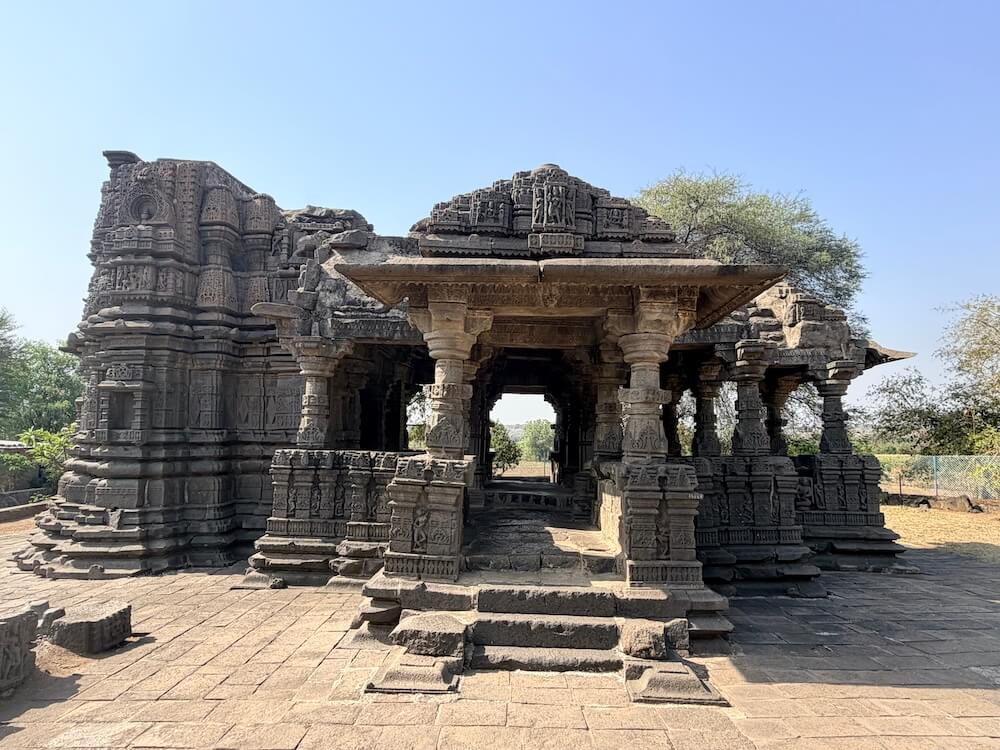
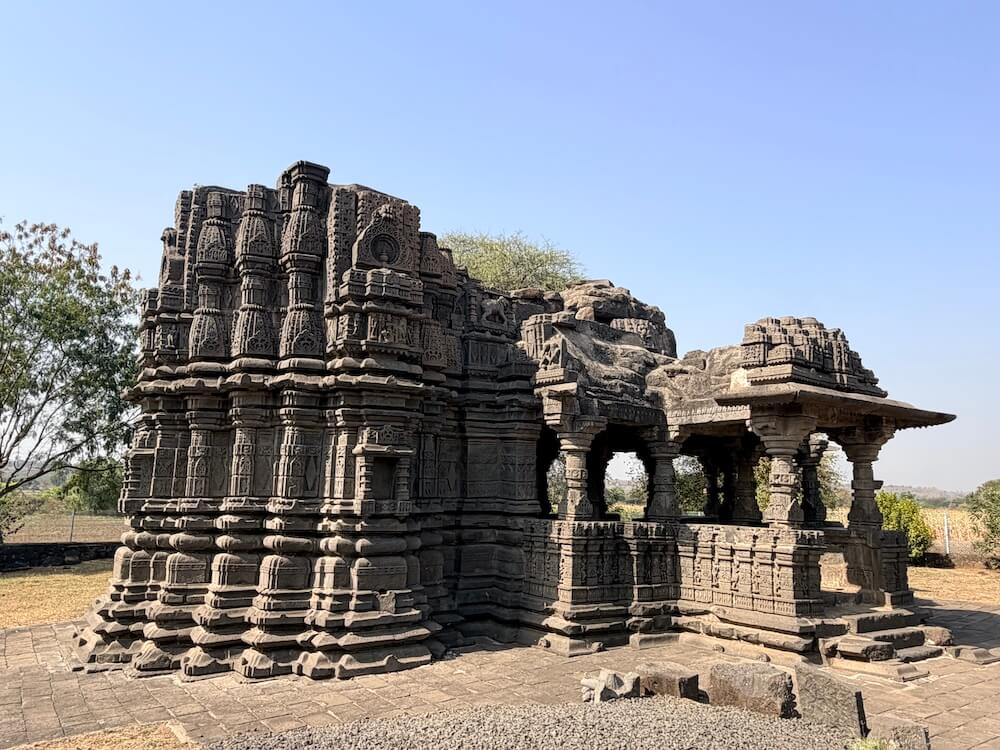
Most Hindu temples face east, but a major unique feature of the Vishnu Temple at Satgaon-Bhusari is that it faces west. When the rays of the setting sun reach the sanctum sanctorum from the west, the beauty of the temple is further enhanced. The base and the sanctum sanctorum of the temple are star-shaped. Due to this type of design, many angles have been created on the exterior walls of the temple. The temple is built on a high jagati, or platform. The carvings on the exterior of the temple are highly distinctive. This ornamentation is divided into various layers from the plinth to the shikhara (spire). These include layers such as the gajathara (elephant frieze), ashwathara (horse frieze), and narathara (human frieze). Depictions of various events from human life and mythological stories can be seen here. Being a Vishnu temple, depictions of various forms of Vishnu and the Dashavatara (ten incarnations) are found extensively on the outer walls. The expressions and physique of the idols in the Varaha, Narasimha, and Vamana incarnations are carved with great proportion.
The sabhamandapa (assembly hall) of the temple is supported by sixteen ornate pillars. This hall has three entrances, each with a mukhamandapa (porch). In the center of the sabhamandapa are four main pillars that bear the weight of the ceiling. These pillars, in the ‘ghata-pallava’ (vase and foliage) style, are beautifully carved with pots, vines, and leaves. The most important feature of the temple’s pillars is the ‘Kichaka’ (bracket figure) image. A small ‘Chaturbhuja Kichaka’ (four-armed bracket figure) is carved between the load-bearing Kichakas that support the ceiling at the top of the pillar. This design is so unique and rare that it is not seen in any other contemporary temple. The base of the pillars is square, becoming octagonal in the middle and circular at the top. These pillars feature delicate carvings of kirtimukhas (glory faces), floral patterns, and small human figures.
The ceiling of the sabhamandapa is shaped like a circular dome. A magnificent lotus flower with descending petals is carved within it. The design of these lotus petals is so delicate and beautiful that it reminds one of the carvings at the famous Dilwara Temple in Mount Abu, Rajasthan. Kirtimukhas are carved on the four corners around this dome of the ceiling, while a stone chandelier appears to hang in the center. The ceiling of the sabhamandapa is domed and features a design of a lotus flower and coiled serpents. In his book, Dr. Deglurkar has drawn special attention to the idols of Sursundaris (celestial beauties) in this temple. He notes that various postures, such as a woman looking into a mirror, a heroine writing a letter, or a woman playing a musical instrument, are brought to life vividly. The rhythm and grace in these sculptures testify to the skill of the craftsmen of that era. The idols reflect the attire and lifestyle of the society of that time.
Various symbols of Vishnu and images of dwarapalas (gatekeepers) are carved on the doorjambs of the antarala (vestibule). The entrance to the sanctum sanctorum is decorated with great artistry. An image of Vishnu is seated on its lalata-bimba (lintel). The images of the gatekeepers and the river goddesses Ganga and Yamuna are carved in great detail on the entrance. There are devakoshtas (niches for deities) in the walls of the sanctum sanctorum. In the lower part of the pedestal, ‘gaja-pratima’ (elephant images) are carved. The main sanctum sanctorum of the temple is somewhat in a dilapidated state. Due to historical invasions and natural disasters, the main idol here has been damaged. Currently, the complete image of Vishnu is not available there; instead, one can see a broken idol where only the two feet of Vishnu remain on the image of Garuda.
Many fascinating legends are associated with the Vishnu temple at Satgaon-Bhusari. The most famous folklore here is that this temple was constructed ‘overnight’. It is believed that Hemadpant, also known as Hemadri Pandit, who served as the Prime Minister to the Yadava kings, built these temples. According to local legend, Hemadpant had mastered certain Vetalas or invisible spirits, and with their assistance, he completed this magnificent structure in just one night. Another belief is that Lord Shri Ram and Mother Sita stayed at this place during their period of exile. The structure located to the north of the temple, known as Sita Nhani, is linked to this very story. It is believed that Mother Sita bathed here, which is why this place has attained religious significance.
Although the Vishnu temple is the primary temple in this complex, there are other significant structures surrounding it. Very close to the Vishnu temple is the temple of Mahadeva. This temple is square-shaped and smaller in comparison to the Vishnu temple. The inner sanctum contains a Shiva Linga, and the outer pillars feature intricate carvings. The presence of Vishnu and Shiva temples side by side is considered a symbol of the Harihara harmony of that era. The structure of Sita Nhani, located to the north of the Vishnu temple, is supported by stone pillars.
It is highly ornate, and remnants of some Jain idols can also be seen here. Although the temple’s spire is somewhat in a dilapidated state today, it is clear from the available remains that it was built in the Bhumija style.
Religious rituals are still performed at the Vishnu temple in Satgaon-Bhusari today. Devotees gather here for darshan on Tripuri Purnima, Mahashivratri, and other special dates associated with Lord Vishnu.
This temple has been protected as a monument of national importance by the Archaeological Survey of India. Funds for the preservation of this structure are provided by the Union Ministry of Culture. Devotees can visit here daily from early morning until late at night.
This sacred temple stands as a testament to deep spiritual devotion, ancient architectural grandeur, and rich local cultural traditions.
The sanctum sanctorum houses the divine idol consecrated according to ancient Vedic traditions, surrounded by serene courtyards and traditional temple architecture.
Navratri, Maha Shivratri, Annual Temple Jatra & Deepotsav
Compare and book flights, secure top-rated local hotels near the temple, hire reliable guides, and rent cars instantly.
Extend your pilgrimage by visiting other highly sacred temples located nearby.


Add ₹999 more to unlock FREE SHIPPING!
Your sacred cart is currently empty.
Shop Photo FramesFill in your delivery details below to place your order.
Add comment