
Add ₹999 more to unlock FREE SHIPPING!
Your sacred cart is currently empty.
Shop Photo FramesThe Bhrigu Rishi Mahadev Temple, located on the banks of the Vatrak River in Bharkunda of Kheda district, is considered an ancient and highly revered site. Known as the ‘Tapobhumi’ of Sage Bhrigu—a respected Saptarishi—the temple holds a Shivalinga that, tradition says, was consecrated by the Sage himself. The architectural style suggests the temple is seven to eight centuries old. Devotees believe visiting this site, considered a ‘Jagrut Devasthan’, brings blessings—especially for those seeking children, given Sage Bhrigu’s association with Vedic astrology and civilising local culture.
The city of Bharuch in Gujarat, known in antiquity as ‘Bhrigukachchha’, derives its name from Sage Bhrigu, as his hermitage was situated in this very region. Born as a ‘Manasputra’ (mind-born son) from the skin of Lord Brahma, he is considered as a ‘Prajapati’. According to the ‘Taittiriya Aranyaka’, Lord Varuna adopted him as his son. His name resonates through numerous Vedic texts. He was wedded to Khyati and Puloma and Goddess Lakshmi Herself is considered his daughter. His lineage includes illustrious sons such as Sage Chyavana—the father of Chyavanprash—the demonic preceptor Shukracharya and the deities Dhata and Vidhata. Lord Parshurama and Sage Markandeya are his grandsons. It was Sage Bhrigu who introduced the world to the science of astrology; his magnum opus, the ‘Bhrigu Samhita’, is regarded as the first authoritative treatise on the subject. Furthermore, it is mentioned that he was the first to discover how to produce fire artificially. Similarly, it is said that he likely transformed the original work ‘Jaya’ (the account of the Kaurava-Pandava war) into the version of the ‘Mahabharata’ we know today—a text focused on imparting moral and religious education.
Due to his unparalleled greatness, Lord Krishna identifies himself as Bhrigu among the sages in the Shrimad Bhagavad Gita. To determine who was the greatest among the Trinity—Brahma, Vishnu and Mahesh—he tested Lord Vishnu by kicking him on the chest. Even after being kicked, Vishnu humbly pressed Bhrigu’s feet. Consequently, Bhrigu declared Vishnu as the supreme deity, while Vishnu permanently bore the mark of the sage’s footprint on his chest as ‘Shrivatsa’. This mark came to be known as ‘Bhrigupad’.
Sage Bhrigu’s ashram was located at Bharkunda in the Kheda district, where he installed a Shivling (Shivpindi) and performed penance for a long period. He did not merely offer spiritual guidance; he also significantly contributed to civilizing the local people by teaching them agricultural techniques. It is said that through the saplings and blessings given by Sage Bhrigu, his grandson’s wife Satyavati and her mother were blessed with sons. Because of these mythological references, devotees believe even today that seeking the blessings of the Shivling installed here grants one their desired offspring.
The temple is said to be of great antiquity. Local chronicles suggest that the influential King Mulraj (r. 941–996 CE) of the Chaulukya dynasty, granted lands to Brahmins, leading to the establishment of settlements in this area. Scholars observe that the temple’s architectural features point to an origin roughly seven to eight centuries ago. Although the shrine has undergone recent restoration, its original structural integrity has been meticulously preserved.
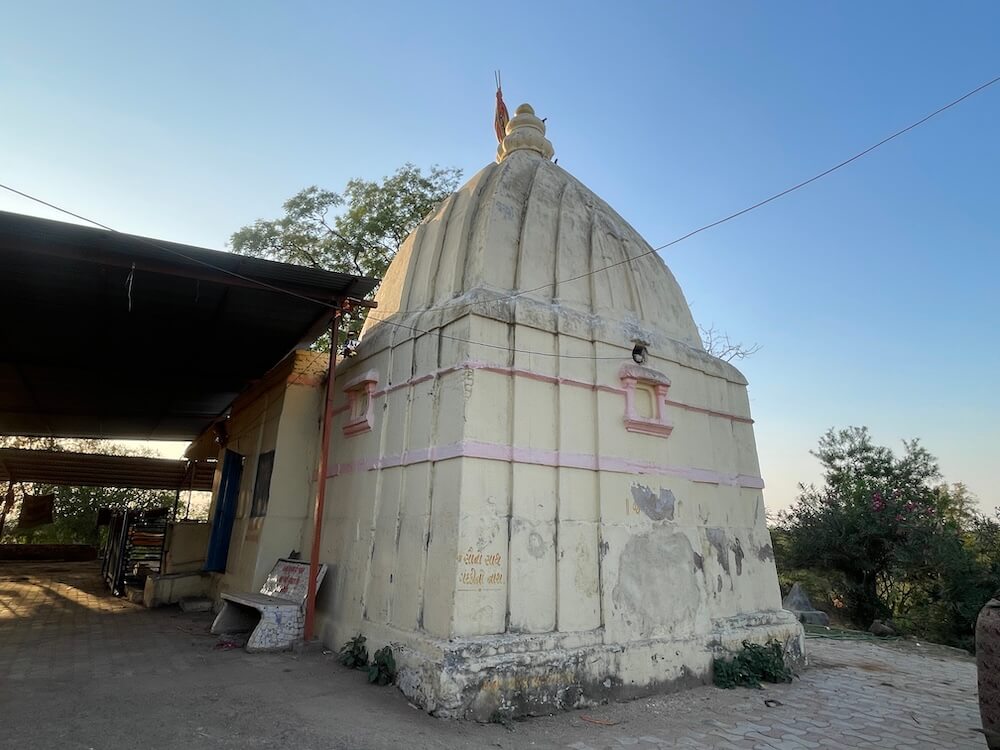
Located a short distance from the village, the temple sits gracefully on the riverbank. In front of the main structure lies a ‘Rangmandap’ (covered pavilion) featuring a corrugated metal roof supported by iron pillars. This recently constructed hall houses a ‘Yajnakunda’ for sacrificial fires and several ancient ‘Samadhis’. While local tradition claims these are the resting places of the ancient priests of Bhrigu Rishi’s ashram, scholars suggest they are the tombs of more recent Mahants (head priests).
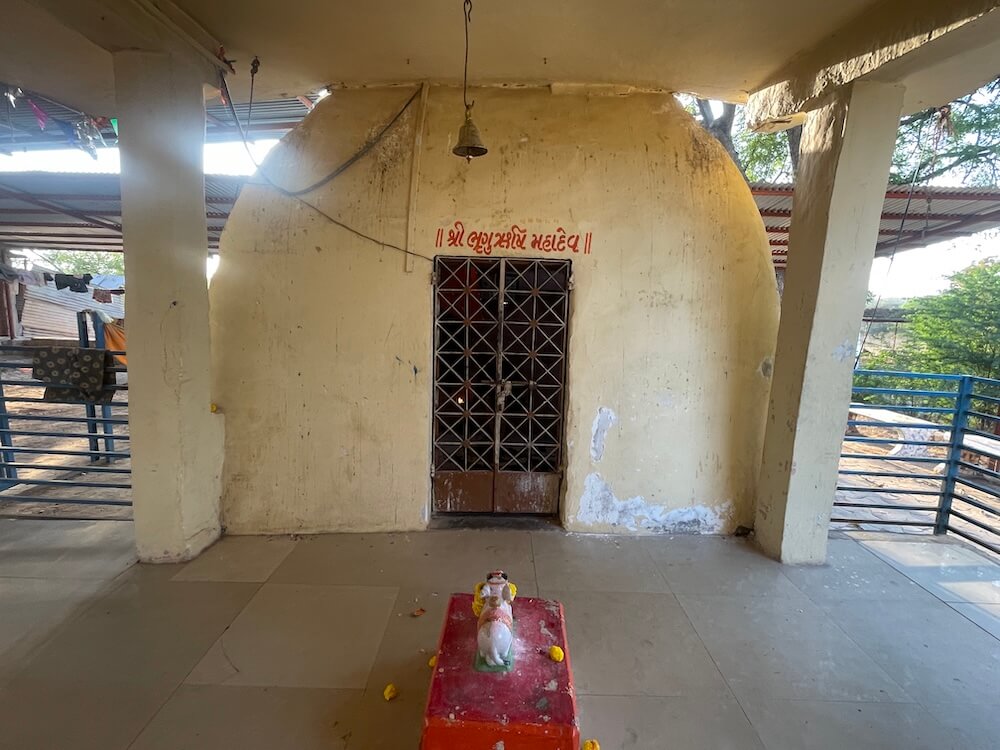
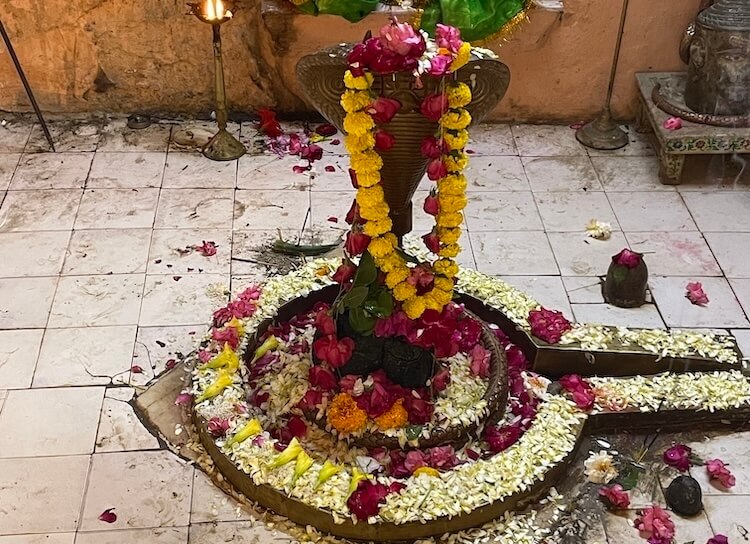
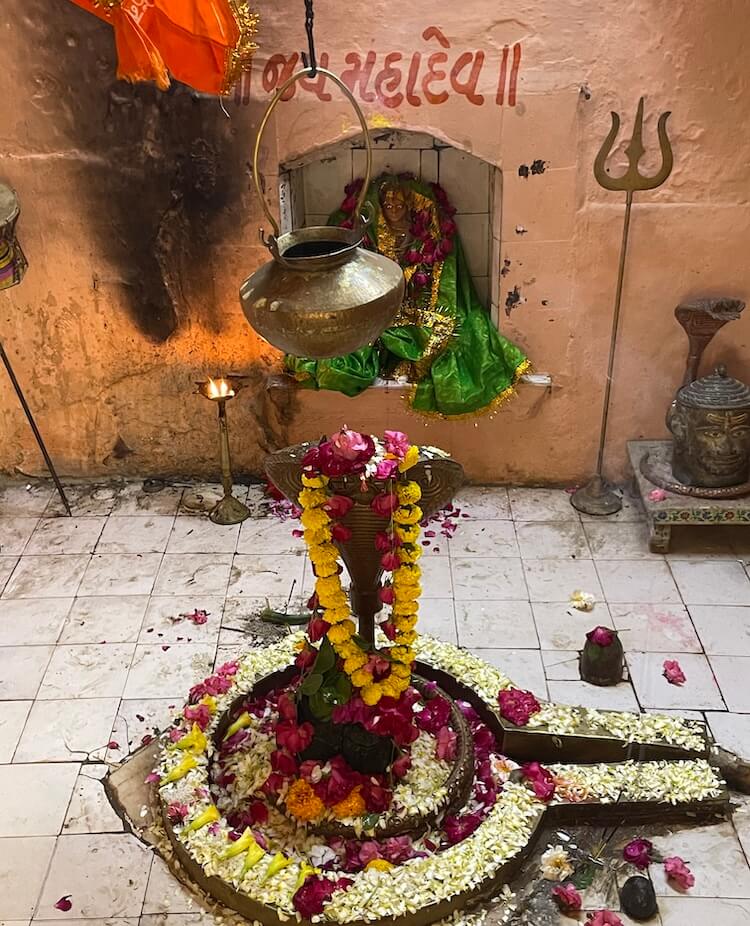
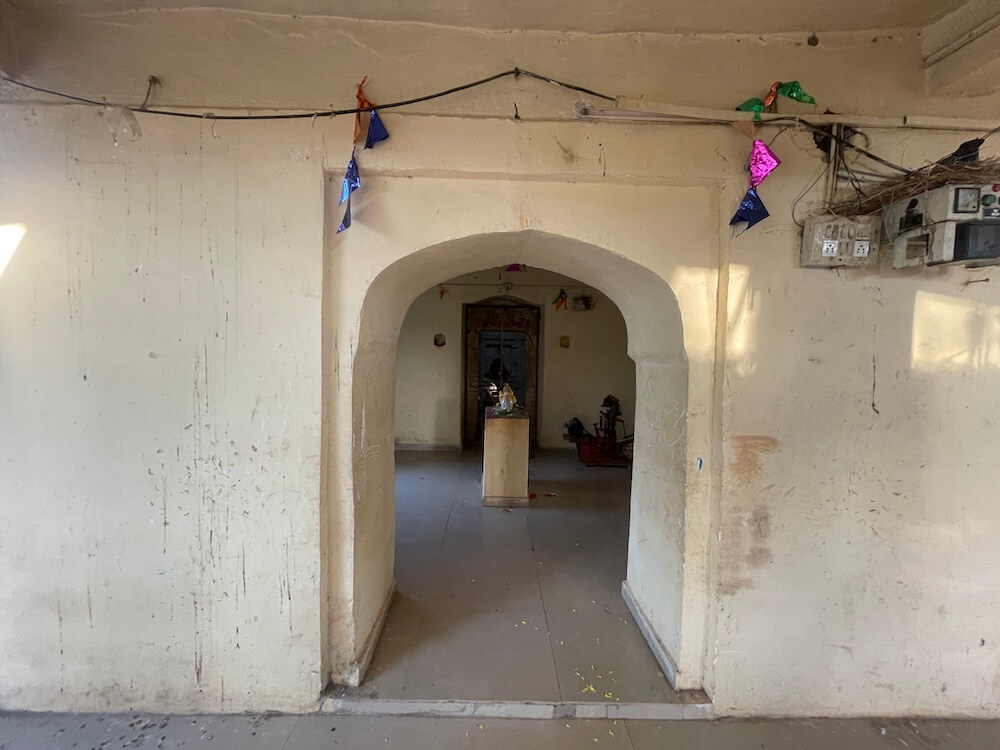
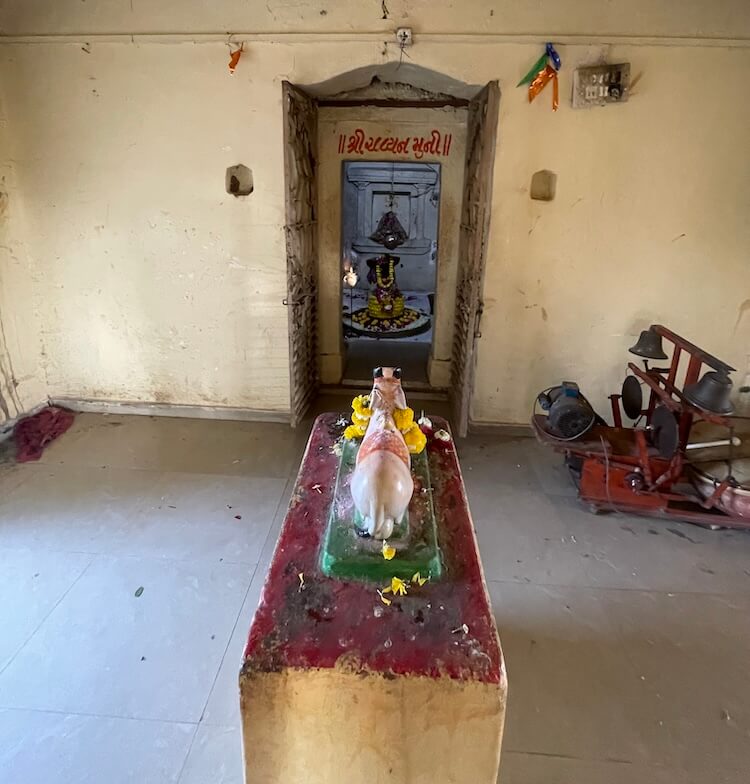
The primary temple follows a classic tripartite layout consisting of a ‘Sabhamandap’ (assembly hall), ‘Antarala’ (vestibule) and ‘Garbhagriha’ (sanctum sanctorum). The ‘Sabhamandap’ is an open structure supported by exterior pillars that leads to the vestibule entrance. The vestibule itself features two additional doors on the right and left. Facing the entrance of the sanctum, a marble idol of Nandi rests upon a pedestal. Enshrined in the centre of the sanctum floor is the Shivalinga, which devotees believe to be ‘Swayambhu’ or self-manifested. The Linga is encased in brass, shielded by the hood of a copper serpent. A brass trident stands adjacent to the Linga, while a copper vessel suspended from the ceiling performs a perpetual ‘Abhisheka’ by dripping water upon it. A niche in the rear wall of the sanctum houses an idol of Goddess Parvati. The structure is crowned by a square spire, topped with an ‘Amalaka’ and a ‘Kalasha’ (finial).
Opposite the main shrine, on the other side of the pavilion, stands another Shiva temple. Before its entrance, a marble Nandi is positioned on a pedestal. The sanctum contains a Shivalinga with a metallic serpent hood and a suspended libation vessel. Accompanying the central Linga are two smaller ones, believed to have been installed by devotees upon the fulfilment of their vows. An idol of Parvati rests upon a ‘Vajrapitha’ near the back wall. This temple is similarly topped with a square spire, ‘Amalaka’ and a finial.
The Vatrak River flows a short distance behind the temple, providing a site for pilgrims to perform sacred immersion rituals. Mahashivratra and every Monday during the holy month of Shravan are the main celebration days, drawing thousands of pilgrims from nearby regions.
On these days, rituals such as ‘Laghurudra’ and ‘Maha Abhisheka’ are performed. Other major festivals celebrated with enthusiasm include Dussehra, Diwali, Janmashtami and Kojagiri Purnima. The temple is open for devotees daily from 6 am to 7 pm.
This sacred temple stands as a testament to deep spiritual devotion, ancient architectural grandeur, and rich local cultural traditions.
The sanctum sanctorum houses the divine idol consecrated according to ancient Vedic traditions, surrounded by serene courtyards and traditional temple architecture.
Navratri, Maha Shivratri, Annual Temple Jatra & Deepotsav
Compare and book flights, secure top-rated local hotels near the temple, hire reliable guides, and rent cars instantly.
Extend your pilgrimage by visiting other highly sacred temples located nearby.


Add ₹999 more to unlock FREE SHIPPING!
Your sacred cart is currently empty.
Shop Photo FramesFill in your delivery details below to place your order.
Add comment