
Add ₹999 more to unlock FREE SHIPPING!
Your sacred cart is currently empty.
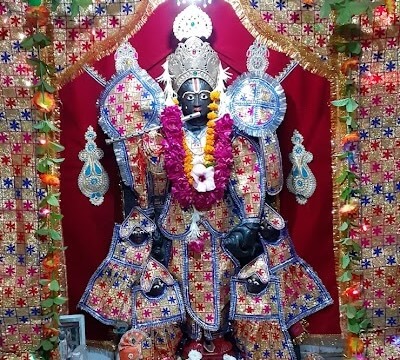
Shop Photo FramesFollowing the slaying of Kansa, Lord Shri Krishna abandoned the battlefield during the invasion of Jarasandha to avert unnecessary bloodshed. This divine act bestowed upon Him the appellation ‘Ranchhod’ (the one who leaves the field of battle). According to popular legend, Shri Krishna rested in the village of Gambhu, within the Becharaji Taluka, while journeying from Mathura to Dwarka. In this land, hallowed by the footsteps of the Lord of Dwarka, stands the ancient Ranchhodrai Temple, affectionately known as ‘Mini Dakor’. The exquisite idol of Lord Ranchhodrai, enshrined here and meticulously carved from ‘Shaligram’ stone (a sacred black fossil stone), was discovered by villagers during an excavation in 1882. A defining feature of this pilgrimage site is the ‘Varghado’, a grand ceremonial procession which traverses the village annually on ‘Sharad Purnima’.
The historical lineage of Gambhu village stretches back to the ninth century AD. In antiquity, the settlement was known by various names, such as Gambhira or Gambhuta and served as the principal administrative and political seat for no fewer than 144 villages. Possessing an antiquity even more profound than that of the Prabhas Nagari of Patan, Gambhu is mentioned in several significant historical texts. Concrete evidence of its stature is found in a copper-plate inscription belonging to King Karnaraja, dating to 1140 AD and a detailed record exists on the copper plate of Maharaja Siddharaj Jaysinh from 1156 AD. Flourishing under various dynasties, this region has remained vital not only for administrative governance but also as a crucible of religious and cultural heritage.
Political developments in North Gujarat during the Maurya, Gupta and Solanki eras directly influenced the village’s evolution. The Mehsana district attained great splendour during the golden age of the Chaulukya and Solanki monarchs, a period marked by the construction of several magnificent temples in the district. Jain and Hindu scriptures provide historical context confirming the village’s existence even during the reign of King Samprati. The spiritual significance of this soil was further elevated by Lord Shri Krishna’s sojourn during His migration to Dwarka.
It is said that in ancient times, learned scholars in this village penned detailed commentaries on the ‘Charaka Samhita’ and the ‘Sushruta Samhita’. This intellectual legacy is believed to have earned the settlement the name ‘Gambhira Nagar’ (the profound city) and some historical documents even claim that the seminal Ayurvedic text ‘Sushruta’ was composed here. Scholarly activity flourished through the ages. In 862 AD (Vikram Samvat 919), Acharya Shilankacharya authored an exhaustive commentary on the ‘Acharanga Sutra’; in 1171 AD (Vikram Samvat 1228), Parshvanag, a disciple of Yakshadev, wrote a commentary on the ‘Shravak Pratikraman Sutra’ on palm leaves and in 1248 AD (Vikram Samvat 1305), the composition of the ‘Upangapanchak’ was completed within the village.
To shield their sacred icons from the iconoclasm of invaders, the villagers had buried the temple idols underground. To the south of the village lies a five-hundred-year-old temple of Shitala Mata. In 1882, whilst renovating this shrine, the villagers unearthed the ‘Shaligram’ idol of Lord Ranchhodrai. Subsequently, a dedicated temple was erected. In 2022, the local community collaborated to restore the sanctuary through public contributions, resulting in the magnificent edifice that stands today.
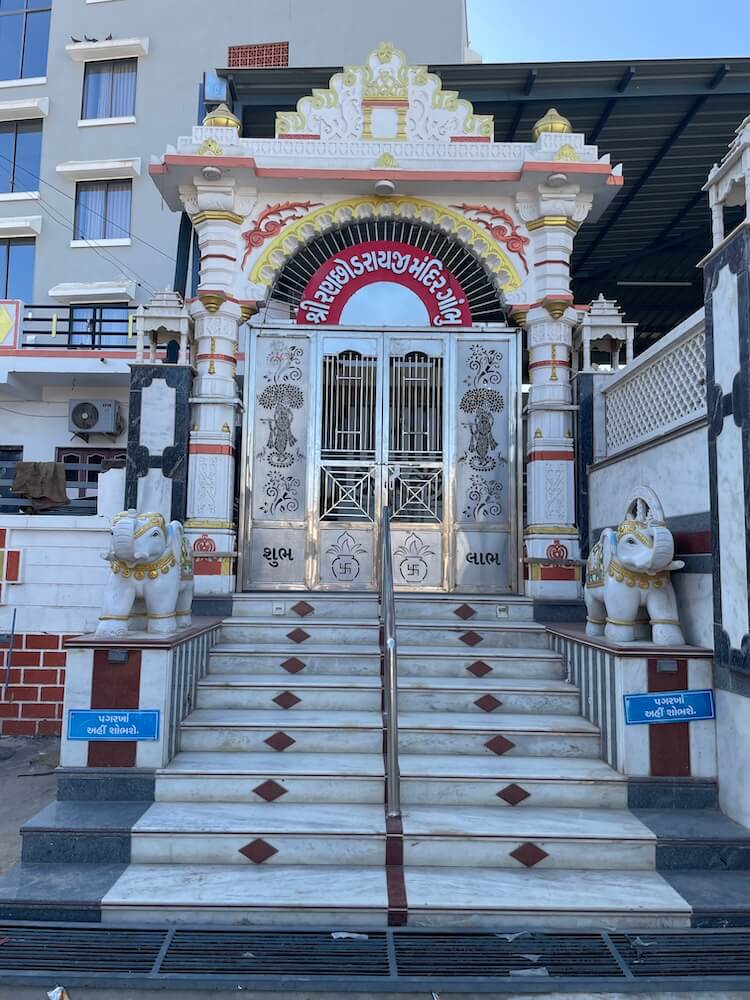
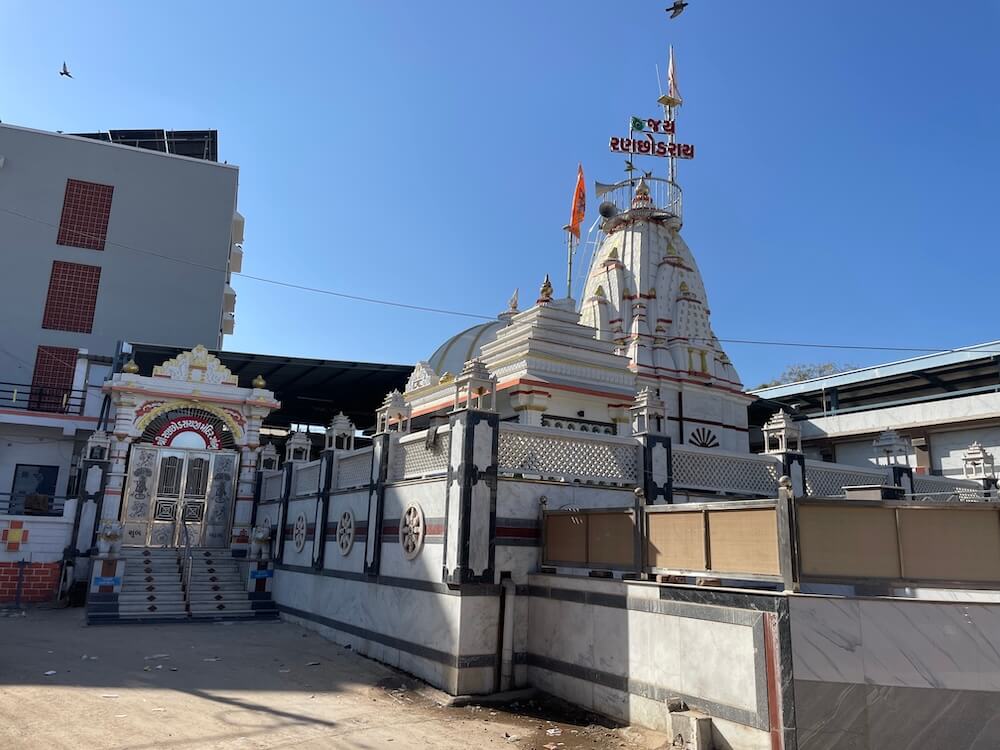
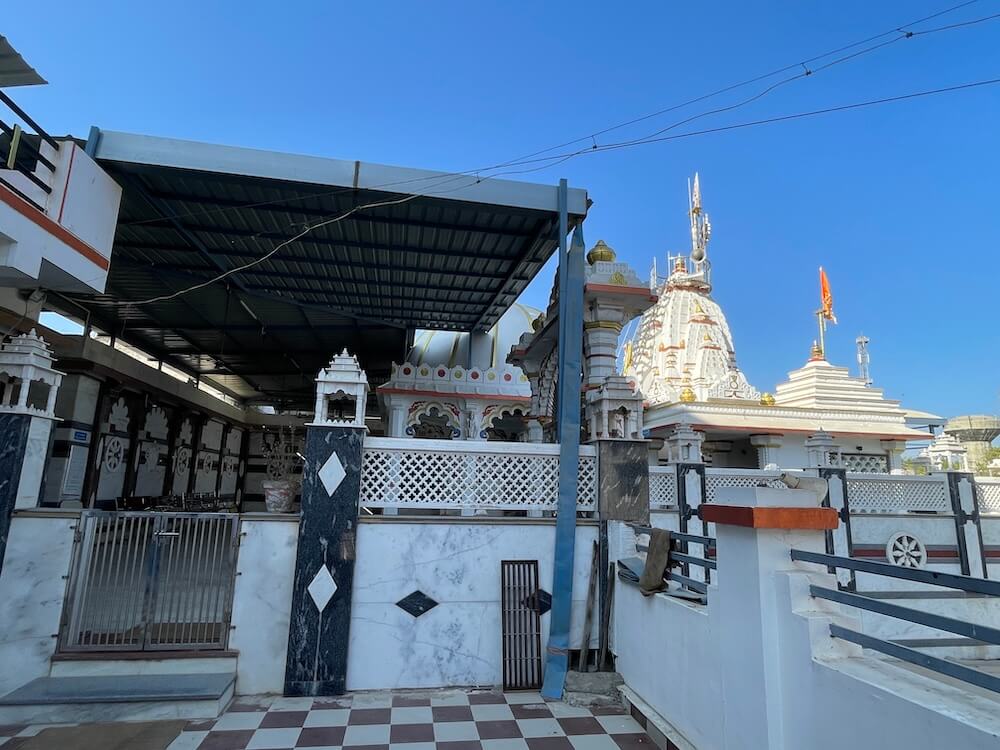
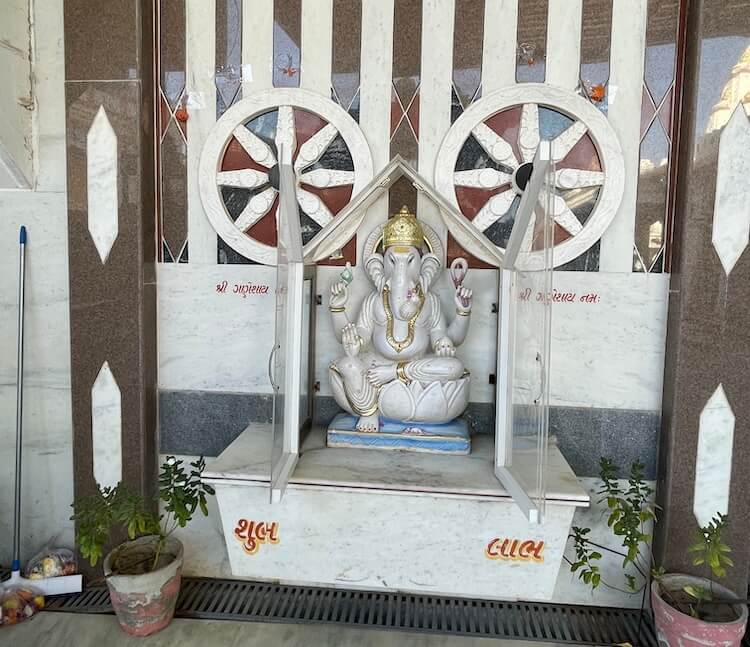
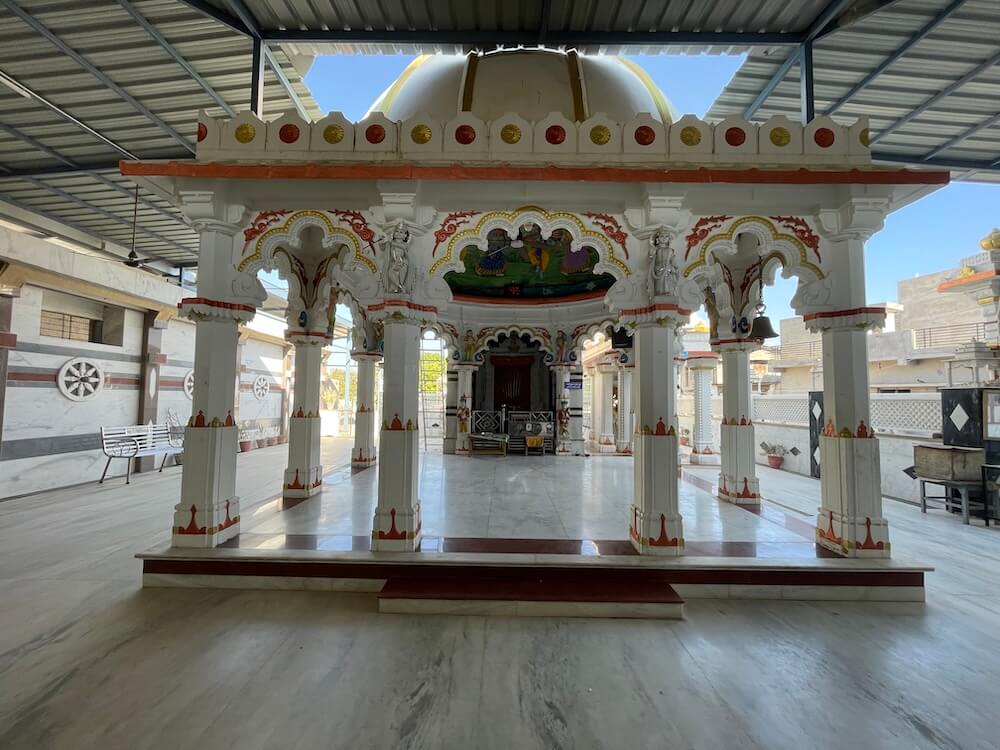
The Ranchhodrai Temple features an inviting entrance, where finely carved sculptures of ‘Gajarajas’ (elephants) welcome the faithful. For security, the precinct is enclosed by a protective fortification. At the heart of the courtyard sits the temple structure, following a traditional architectural plan consisting of an open ‘Sabhamandapa’ (assembly hall), an ‘Antarala’ (antechamber) and the ‘Garbhagriha’ (sanctum sanctorum). The facade of the assembly hall is graced with exquisite arched gateways and the upper sections of the pillars are adorned with beautiful sculptures of ‘Surasundaris’ (celestial beauties). The ‘Vitan’ (ceiling) of the hall features a vibrant, meticulously rendered depiction of the ‘Rasleela’ (the divine dance of Krishna). Within the antechamber, niches house the idols of Hanuman and Ganesha. Enshrined within a marble ‘Makhar’ (ornate frame) upon a high pedestal in the sanctum is the four-foot-tall idol of Ranchhodrai. This ‘Shaligram’ icon is reputed to be larger in scale than its famous counterpart at Dakor in the Kheda district. Four smaller figures are carved at the feet of the primary deity and a small ‘Panchadhatu’ (five-metal alloy) idol stands before the main image, which depicts the Lord in a flute-playing posture. The marble frame is further embellished with peacock motifs at the top.
The ‘Garbhagriha’ is crowned by a towering, tapering ‘Shikhara’ (spire), intricately carved with numerous smaller subsidiary spires. The summit is adorned with a circular ‘Amalaka’ and a ‘Kalasha’ (pinnacle), while the assembly hall features a domed roof.
Adjacent to the main shrine is a modest temple dedicated to Labheshwar Mahadev, comprising a semi-open assembly hall, an antechamber and a sanctum housing the ‘Pinda’ (symbolic icon) of Lord Shiva and an idol of Mother Parvati. Archaeological excavations in 2022 revealed eleven ancient sculptures from the eleventh and twelfth centuries, testifying to the exceptional skill of the craftsmen of that era and the village’s enduring history.
The temple hosts various religious celebrations with great enthusiasm throughout the year. Special rites are performed on ‘Gokulashtami’ (the birth of Krishna), but the pre-eminent festival occurs on ‘Sharad Purnima’, marking the anniversary of the day the idol was discovered. On this day, the ‘Varghado’ – the grand palanquin procession – is taken through the village amidst festive music. Along the route, the Lord, ensconced in a decorated chariot, is worshipped with profound devotion by the villagers and throngs of pilgrims from the surrounding regions. Every full moon day sees special programmes and on ‘Magha Shuddha Panchami’, a grand ‘Patotsav’ (anniversary of the idol’s installation) is held, featuring a ‘Navchandi Yagya’ (a sacred fire ritual dedicated to the Goddess). The temple remains open for devotees from 6 am to 12.30 pm and from 4 pm to 8:30 PM daily.
This sacred temple stands as a testament to deep spiritual devotion, ancient architectural grandeur, and rich local cultural traditions.
The sanctum sanctorum houses the divine idol consecrated according to ancient Vedic traditions, surrounded by serene courtyards and traditional temple architecture.
Navratri, Maha Shivratri, Annual Temple Jatra & Deepotsav
Compare and book flights, secure top-rated local hotels near the temple, hire reliable guides, and rent cars instantly.
Extend your pilgrimage by visiting other highly sacred temples located nearby.


Add ₹999 more to unlock FREE SHIPPING!
Your sacred cart is currently empty.
Shop Photo FramesFill in your delivery details below to place your order.
Add comment