
Add ₹999 more to unlock FREE SHIPPING!
Your sacred cart is currently empty.
Shop Photo FramesNestled in the Sahyadri mountain ranges in Mangaon Taluka of Raigad District, Shri Bapujibuwa and Shri Kalikai Mandir is a revered pilgrimage site for thousands of devotees. From ancient times, the Konkan region has been renowned for its awakened divine abodes. The rural society of Maharashtra is inherently a worshipper of nature. For centuries, the local people here have worshipped hills, cliffs, trees, anthills, and stones as deities. This temple at Kadape is a part of this very tradition. The deities here hold an unparalleled place in the local way of life. Situated in the lap of the Sahyadris amidst dense foliage, this temple is intertwined with the social and justice system of the village.
This temple at Kadape is said to be more than one hundred years old. The legend of this temple recounts that in ancient times, there was a cow shed here for cowherds. A cowherd named Bapu used to tend his cattle here. He was known by names such as Bapu Anali or Bapu Gavana. Around the year एक हजार नऊशे अडसष्ठ, a stone began to emerge from an anthill in his cow shed. When Bapu attempted to level the area, a stream of blood flowed from that stone. That very night, Bhagwan Shankar appeared in Bapu’s dream. He revealed, ‘I have manifested here in the form of Bapujibuwa.’ After this divine vision, a small temple was built there. Later, when Kalika Mata was proceeding towards the sea from Tamhini Ghat, Bapujibuwa requested the Devi to stop here for the protection of devotees. The Devi agreed to reside here on the conditions that She would sit to the right of Bapujibuwa, grant boons from the earth itself, and that devotees would first take darshan of Bapujibuwa. In this manner, Kalika Mata was also established here.
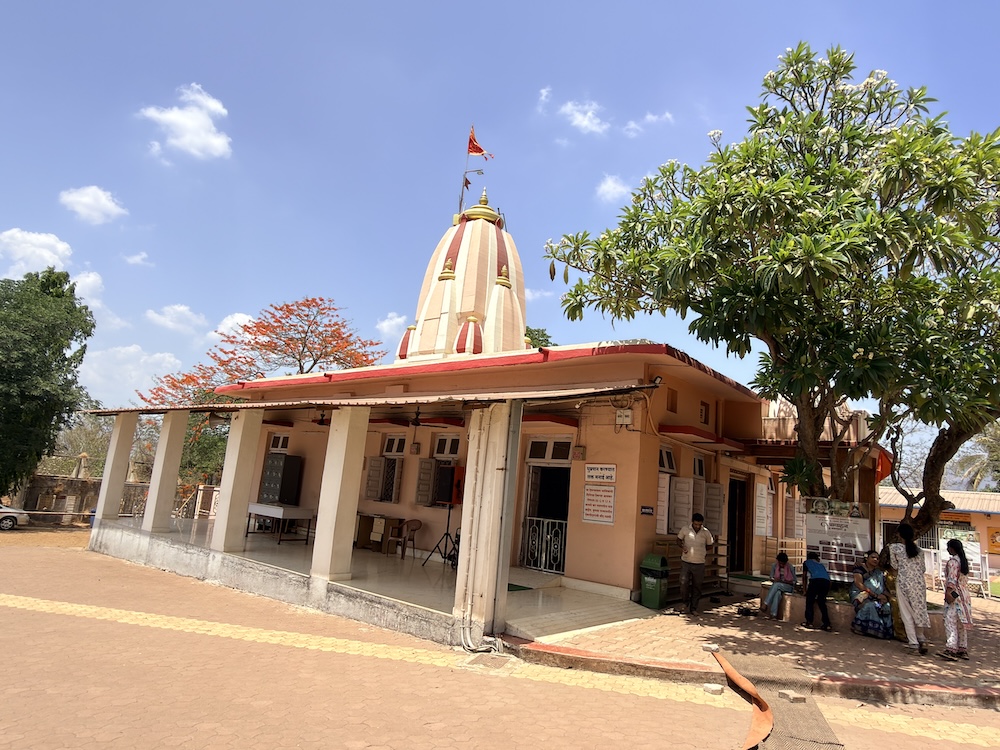
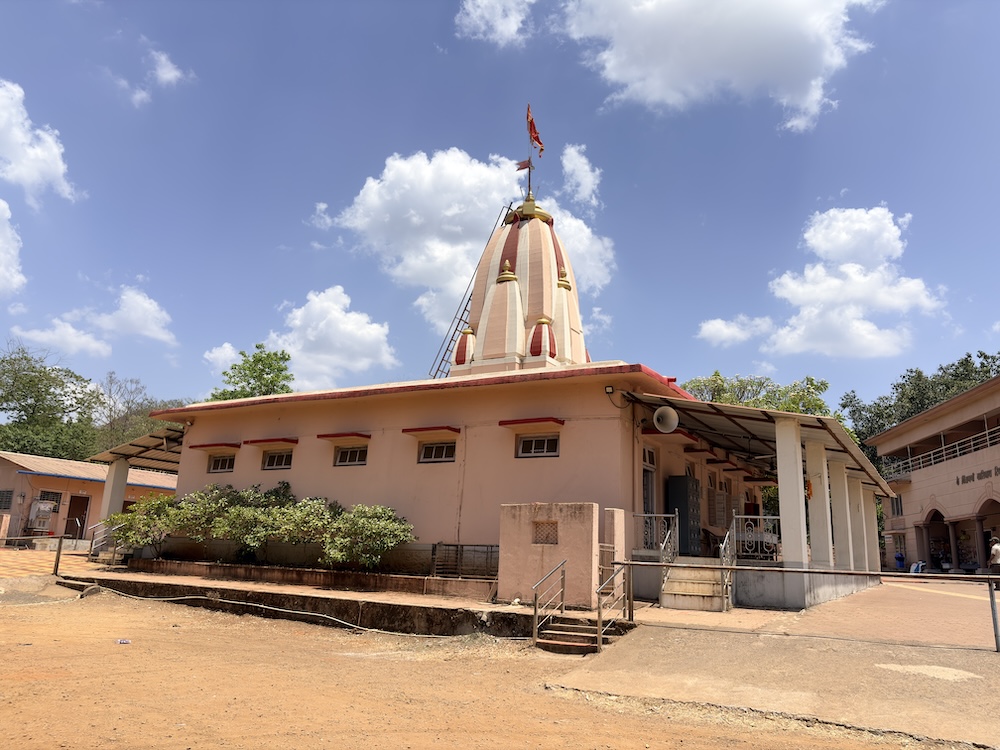
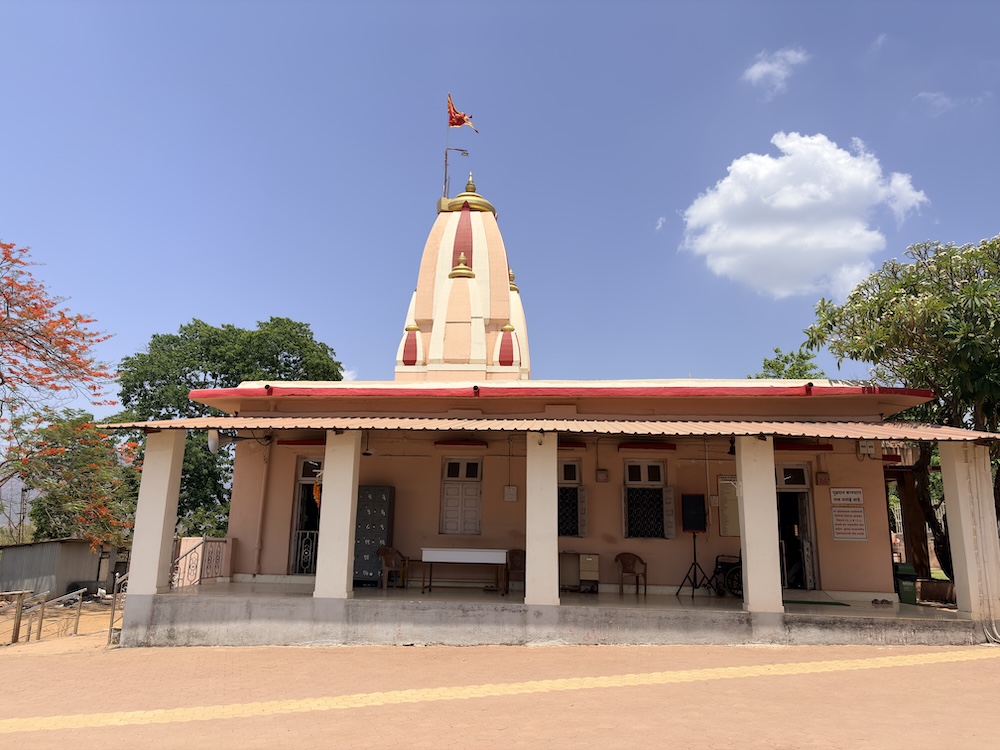
The current main building of the temple was constructed between the years एक हजार नऊशे सदुसष्ट and एक हजार नऊशे सत्तर. Later, in the year एक हजार नऊशे सत्याहत्तर, it was renovated with public participation. Black stone has been used in the construction. Ancient remains of Virgal (hero stones) and Sati Shilas (sati stones) from the eleventh to the thirteenth centuries are found here. Sculptures of a kalash, sun, moon, and a cow-calf are carved on one stone. These remains attest to the antiquity of this place. As one approaches the temple, on the right side of the road, there is an old platform with a three-tiered hexagonal Deepmala (lamp tower). The entrance to the temple is within the surrounding compound wall. The temple courtyard is adorned with various types of trees. In front of the main temple, there is another three-tiered Deepmala and a Tulsi Vrindavan.
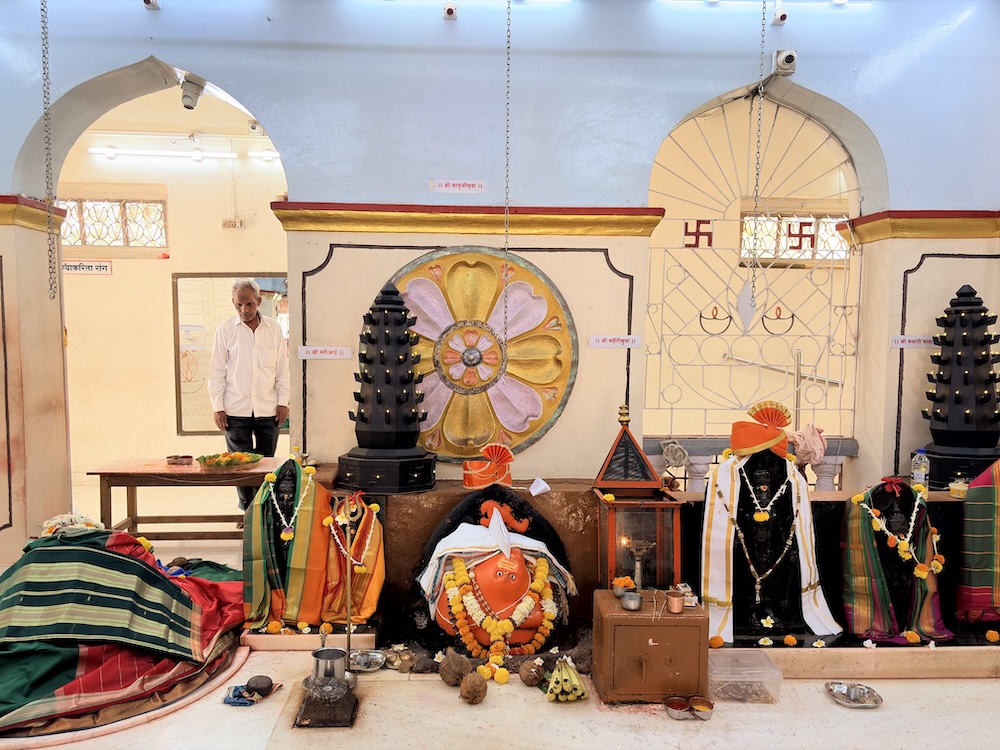
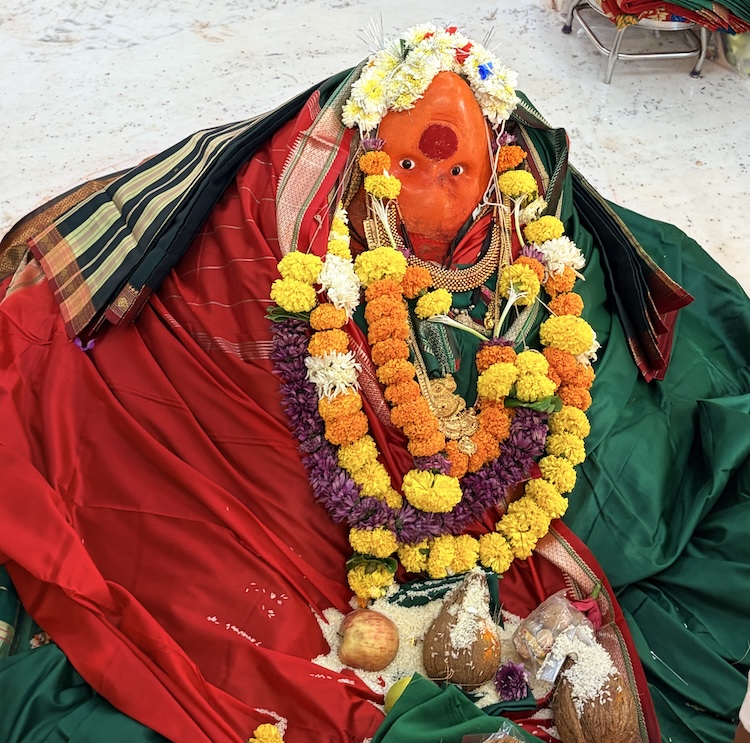
The temple’s architecture comprises a Mukhamandap (front porch), a Sabhamandap (assembly hall), and a Garbhagriha (sanctum sanctorum). The Mukhamandap is supported by two square pillars. The Sabhamandap has entrances on both sides, with verandas featuring sloping roofs. The main entrance of the Sabhamandap has vertical fluted carvings and ornate wooden doors. The enclosed Sabhamandap here has windows for ventilation and light. Brass bells are hung from the ceiling. In the center of the Sabhamandap is an open-plan Garbhagriha. Here, six ornate pillars are connected by archways. The Garbhagriha houses the stone idol of Bapujibuwa in the form of rice grains, and behind it is the idol of Kalikai Devi. The backs of both these idols face each other, while their faces are in opposite directions. The Devi is adorned with a silver mask. Beside Bapujibuwa are the idols of subsidiary deities: Bhairoba, Khandoba, Mhalasa, Banai, Tuljabhavani, Waghjai, Jarimari, and Dhaksiddh Buwa. There is a circumambulation path outside the Garbhagriha. The Mukhamandap has a dome-shaped shikhara (spire), while the Garbhagriha has a square shikhara of the Urushringa type. This main shikhara has eight smaller subsidiary shikharas. At the apex of the shikharas are the amalaka, kalasha, and dhwajapataka (flag).
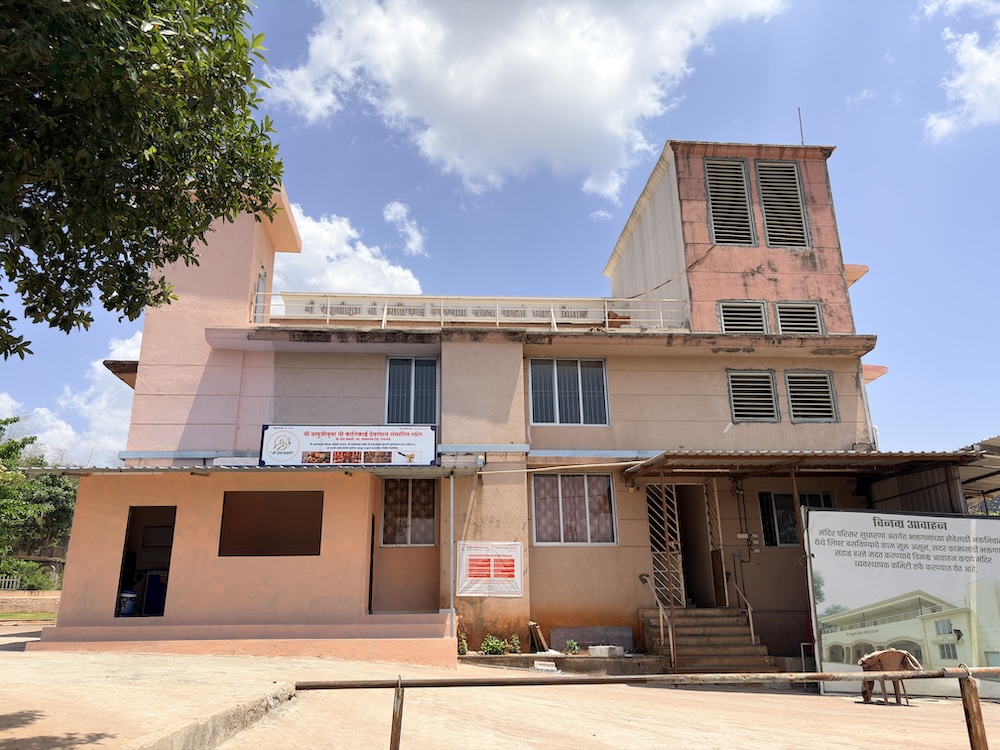
There are other important structures within the temple complex. Adjacent to the boundary wall is a separate small temple of Gosavibuwa. Here, there is a self-manifested stone of Gosavibuwa. An old Shiva temple is also present in the vicinity. This temple also houses idols of Ganapati, Bhavani Mata, and Hanuman. Additionally, a two-story auditorium for cultural programs, a pilgrim’s rest house (bhaktiniwas), a refreshment stall (upaharagriha), and a stage are available. Some special religious practices are observed here. Visiting the Raool (village deity) temple before darshan is considered mandatory. The ritual of ‘Sote Marane’ is performed in the temple for the destruction of evil forces. Also, the priests offer grievances before the deities on behalf of the devotees. A grand annual Jatrotsav (fair) is held here on Chaitra Pournima. During this time, a palanquin procession of Bapujibuwa and Kalikai Mata traverses the entire village. Sharadiya Navratri is another major festival celebrated here. During the festival period, bhajans, kirtans, pravachans (discourses), and dance programs take place. Festivals like Chaitra Padwa, Mahashivratri, Diwali, and Dussehra are also celebrated here. Tuesdays, Fridays, and Pournima witness a special rush of devotees. Devotees can take darshan here daily from seven o’clock in the morning to seven o’clock in the evening.
This sacred temple stands as a testament to deep spiritual devotion, ancient architectural grandeur, and rich local cultural traditions.
The sanctum sanctorum houses the divine idol consecrated according to ancient Vedic traditions, surrounded by serene courtyards and traditional temple architecture.
Navratri, Maha Shivratri, Annual Temple Jatra & Deepotsav
Compare and book flights, secure top-rated local hotels near the temple, hire reliable guides, and rent cars instantly.
Extend your pilgrimage by visiting other highly sacred temples located nearby.


Add ₹999 more to unlock FREE SHIPPING!
Your sacred cart is currently empty.
Shop Photo FramesFill in your delivery details below to place your order.
Add comment