
Add ₹999 more to unlock FREE SHIPPING!
Your sacred cart is currently empty.
Shop Photo FramesIn the rural hinterlands of Western India, specifically within the states of Rajasthan and Gujarat, Meldi Mata is venerated as a pre-eminent folk deity. The agrarian communities and the Koli society, in particular, offer fervent devotion to the Goddess, seeking her divine aegis against malevolent forces. Renowned far and wide as Rajrajeshwari, she is the provider of security and stability in the lives of her supplicants. According to sacred lore, the Goddess derives her name, Meldi Mata, from her miraculous origin from the mal (impurity or divine essence) of Mother Parvati’s body. Established firmly in the hearts of the faithful as a protectress who rushes to one’s aid in times of calamity, her shrine in the village of Marida, situated within the Nadiad Taluka, serves as a hallowed sanctuary for thousands of devotees.
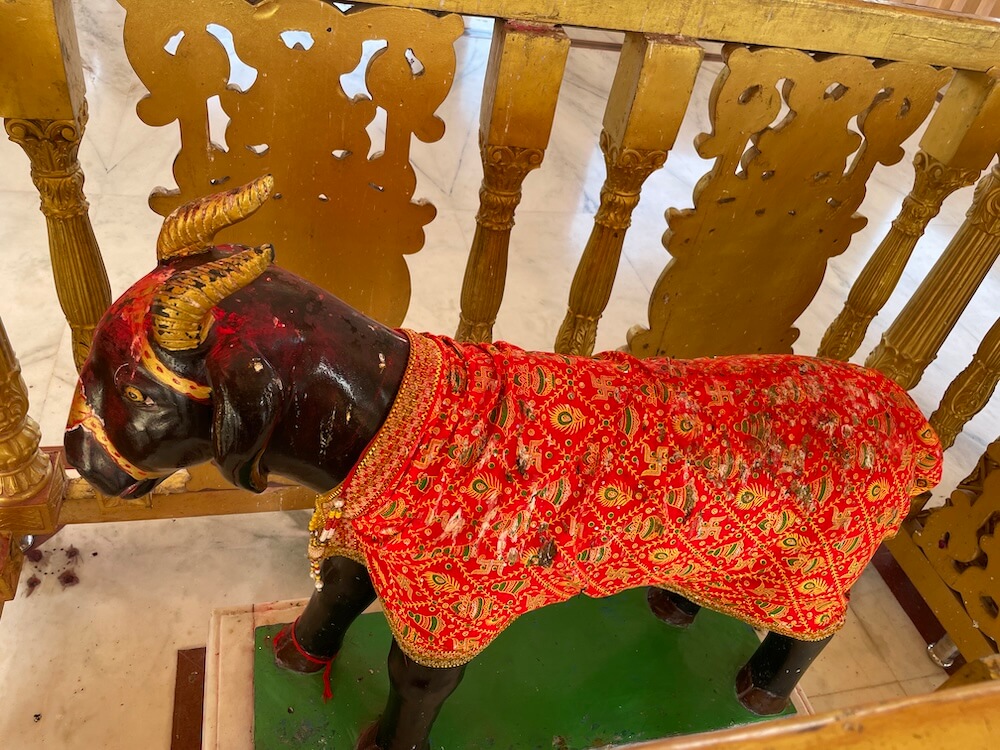
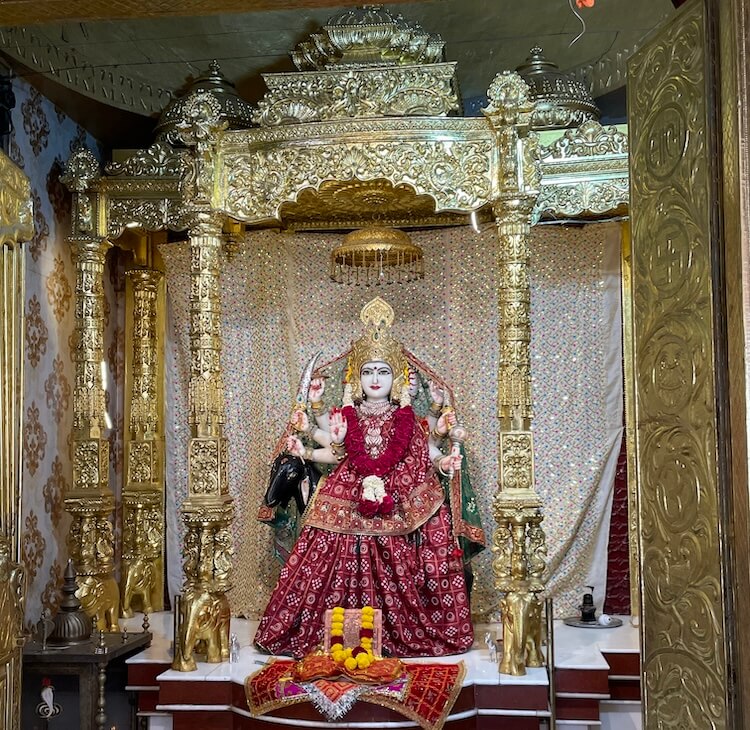
The genesis and spiritual presence of Meldi Mata are chronicled within the ‘Devi Bhagavata’ Purana. It is recounted that in antiquity, Goddess Uma manifested upon the earth to slay a most ruthless demon named Amruva in the Saurashtra region. Struck with terror by the Goddess’s formidable effulgence, the demon sought refuge within the impure hide of a dead cow. Enraged by this desecration, Goddess Uma rubbed her palms together and from the mal (dart) that fell from them, a luminous divine maiden was birthed. Because she was born from ‘mal’, she was bestowed with the name Meldi. This Meldi Mata subsequently vanquished Amruva, liberating Saurashtra from his reign of terror. Following this triumph, Goddess Uma sent Meldi Mata to Goddess Chamunda, who, to test her prowess, dispatched her to the Kamrup region. There, employing her celestial potencies, Meldi Mata transformed malevolent ‘Tantric’ (occult) forces into a black goat and imprisoned their powers within a bottle. She adopted this black goat, a symbol of conquered evil, as her permanent Vahana (divine vehicle). According to Murtishastra (iconography), Meldi Mata appears as a youthful woman clad in a traditional red saree and tribal ornaments. Seated upon the black goat, this eight-armed Goddess wields a ‘Trishula’ (trident), sword, lotus, ‘Chakra’ (discus), dagger and mace, while holding the vessel containing the captured occult powers; one hand remains poised in the ‘Abhaya Mudra’ (the gesture of fearlessness).
The history of this temple’s inception is intricately linked to a devotee named Rajba, a resident of Marida. It is said that Meldi Mata appeared in Rajba’s dream, revealing that her idol lay hidden on a mountain in Rajasthan. Upon Rajba sharing this revelation, several other villagers experienced similar divine visions. Following these spiritual cues, the community journeyed to Rajasthan, where they discovered the idol in Jaipur. With great jubilation, the villagers brought the deity to Marida. The formal consecration took place in 2003 and through the collective endeavours of the faithful, the temple was swiftly erected, transforming the village into a significant pilgrimage site.
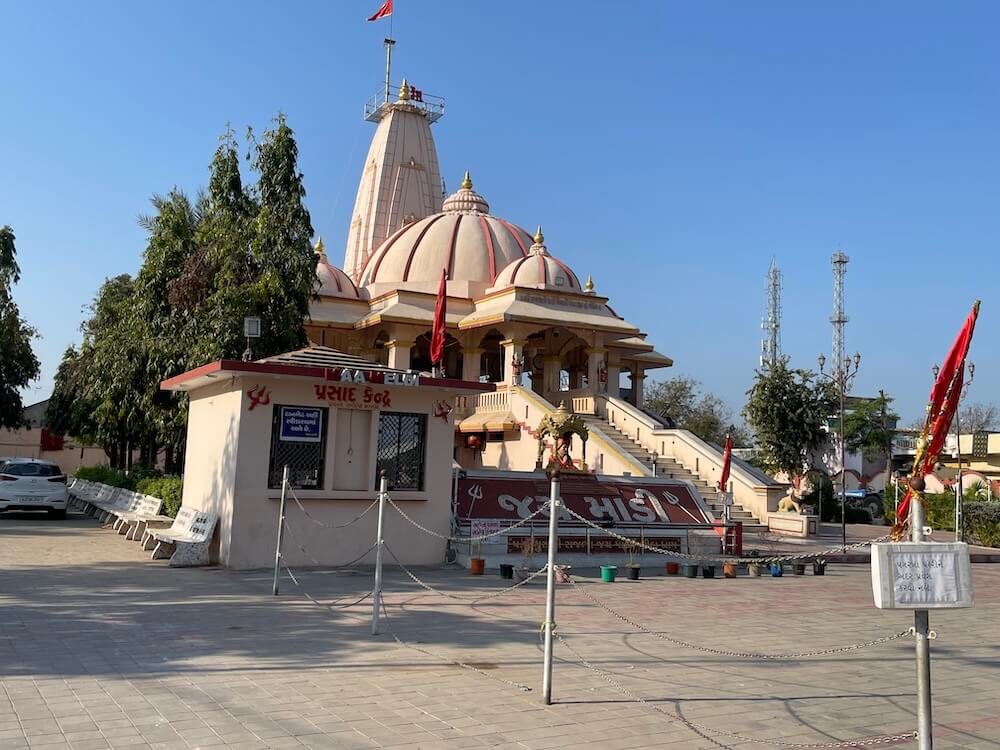
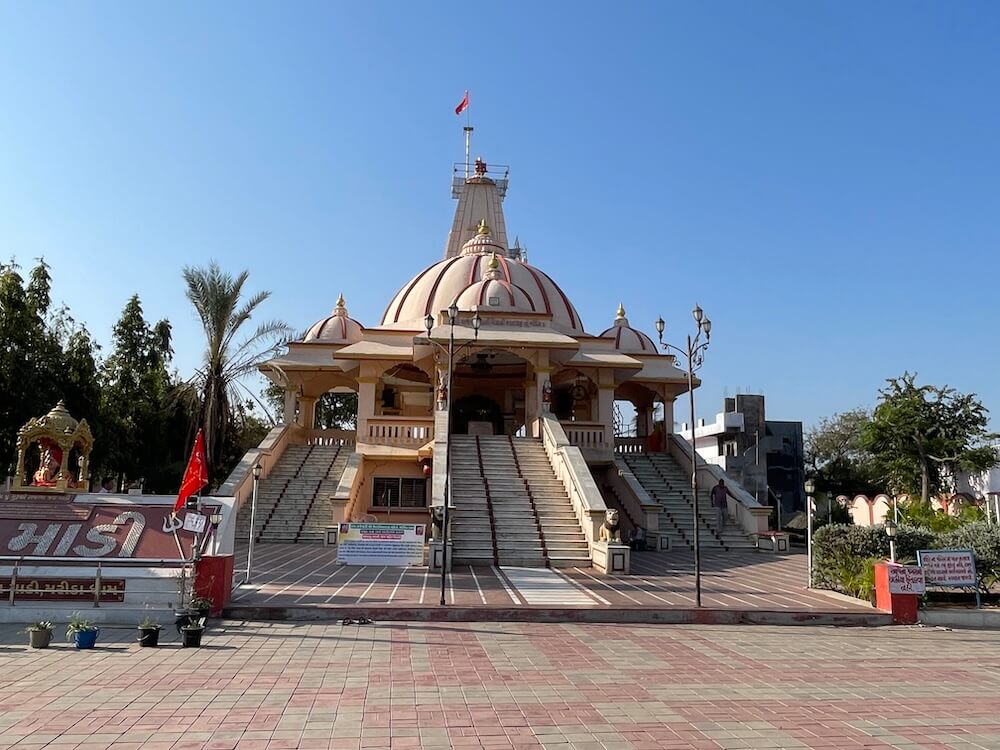
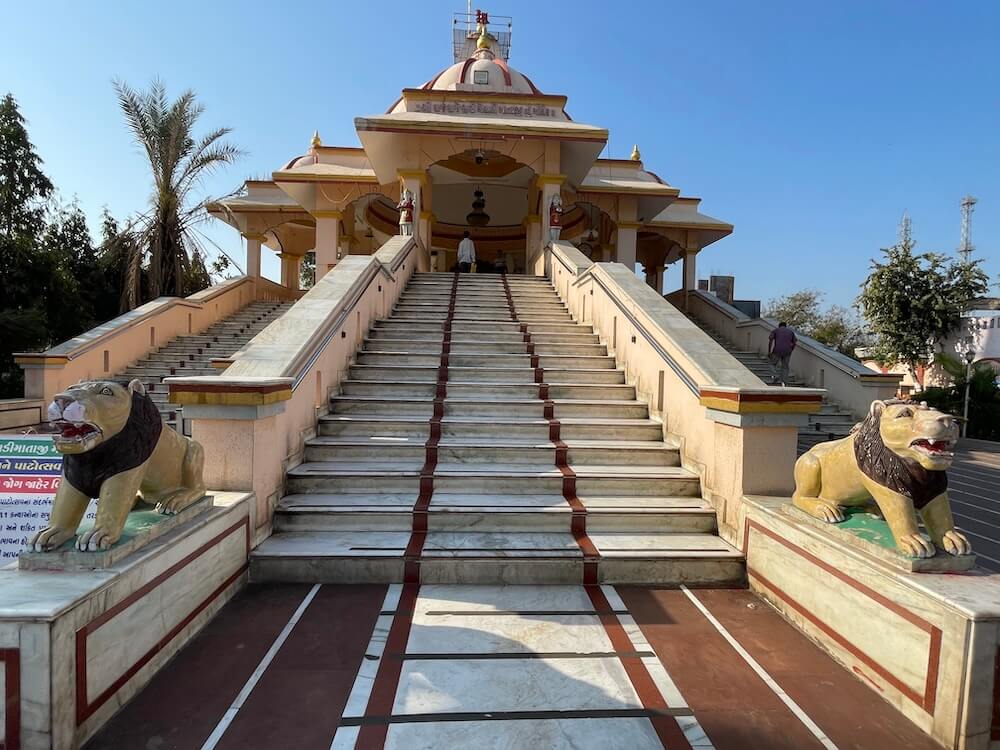
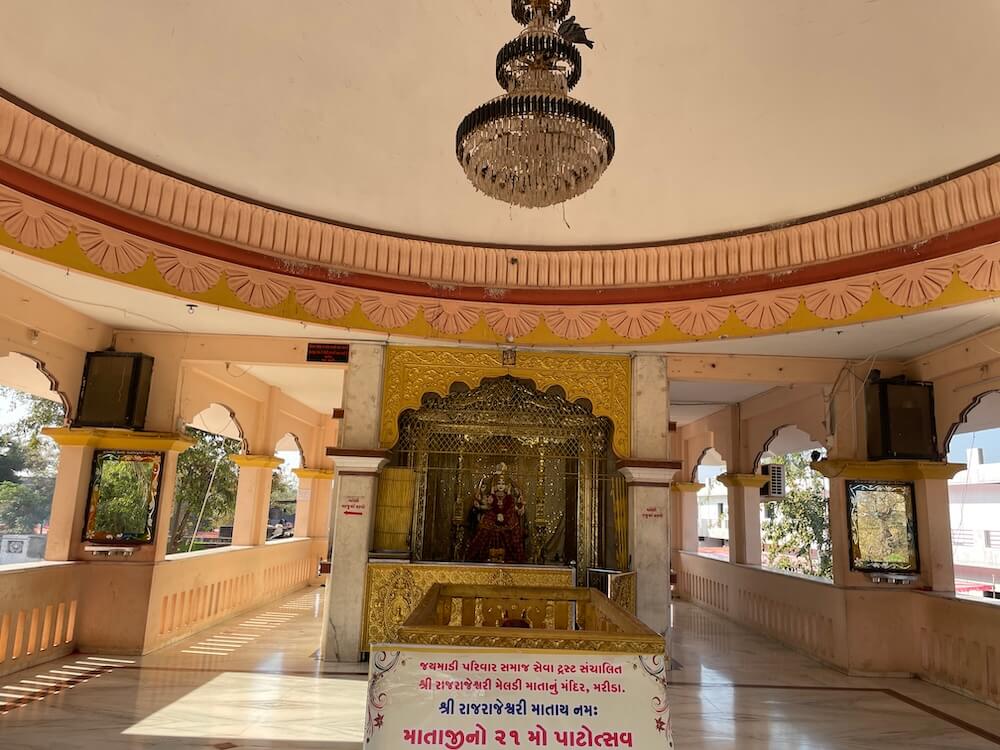
The temple is prominently situated adjacent to the main thoroughfare in the heart of the village. One enters the expansive courtyard through a grand gateway set within the surrounding ramparts. This portal consists of one primary and two subsidiary entrances, all featuring intricately carved wooden shutters. The summit of the gateway is adorned with three domed spires topped with Kalashas (sacred finials). Within the courtyard, directly facing the main temple, stands a beautiful lotus-shaped Yajnashala (hall for fire rituals), its central Havankunda (sacrificial pit) protected by a modest metal shed. Beyond this lies the principal two-storey temple. One ascends twenty-one steps to reach the viewing hall on the second floor. At the base of the staircase, pedestals on either side feature exquisite sculptures of lions, the divine vehicle of the Goddess Durga. To the left of the stairs, a half-bust of the temple’s founder, Rajba, is installed within a canopy-like structure, adjacent to which is the shrine’s Prasad centre. The architectural layout comprises three Darshanmandapas (viewing halls), a Sabhamandap (assembly hall), an Antarala (vestibule) and the Garbhagriha (sanctum sanctorum). The viewing and assembly halls are designed in an open fashion. In the centre of the assembly hall sits a sculpture of the goat, the Goddess’s vehicle, beyond which lies the sanctum. The walls and entrance of the Garbhagriha are encased in ornate golden plating. Enshrined within a carved golden Makhara (niche) upon a marble Vajrapitha (pedestal) resides the idol of the Goddess. Clad in fine vestments and jewellery, the Goddess, mounted upon the goat, wields various weapons and wears a decorative crown. Along the circumambulatory path, niches in the exterior walls of the sanctum house various manifestations of the deity. The roof features four domed spires over the halls, while the main Shikhara rising over the sanctum is tall and tapering, all crowned with golden finials.
The shrine witnesses a surge of devotees every Sunday and Tuesday. A grand fair is held on the day of ‘Ashadhi Bij’ and the temple’s Patotsav (anniversary of consecration) is celebrated on 15th April with ‘Garba’ and various cultural festivities.
A unique tradition of fulfilling Navas (vows) exists here. Upon the granting of their prayers, devotees personally take up brooms to clean the temple and its entire premises.
Many seek the Mother’s blessings for successful marriages or the gift of progeny. In contemporary times, many youths also make vows for the successful acquisition of foreign visas.
The primary offering to the Goddess is ‘Lapsi’ (a sweet wheat preparation), traditionally referred to as ‘Tawa’. Many devotees prepare this ‘Tawa’ on-site as an offering upon the fulfilment of their vows.
Daily rituals include the Mangala Aarti at 5:30 am, the Rajbhog Aarti at 12:00 noon and the Sandhya Aarti between 6:30 pm and 7:00 pm. The temple remains open for devotees daily from 5:30 am to 8:00 pm.
This sacred temple stands as a testament to deep spiritual devotion, ancient architectural grandeur, and rich local cultural traditions.
The sanctum sanctorum houses the divine idol consecrated according to ancient Vedic traditions, surrounded by serene courtyards and traditional temple architecture.
Navratri, Maha Shivratri, Annual Temple Jatra & Deepotsav
Compare and book flights, secure top-rated local hotels near the temple, hire reliable guides, and rent cars instantly.
Extend your pilgrimage by visiting other highly sacred temples located nearby.


Add ₹999 more to unlock FREE SHIPPING!
Your sacred cart is currently empty.
Shop Photo FramesFill in your delivery details below to place your order.
Add comment