
Add ₹999 more to unlock FREE SHIPPING!
Your sacred cart is currently empty.
Shop Photo FramesNadiad is regarded as a pre-eminent urban centre within the ‘Tal Charotar’ region of the Kheda district. Situated upon the banks of the Shedhi River, the Mota Kumbhnath Mahadev Temple stands as a vital sanctuary of faith for the devout. Hundreds of pilgrims visit daily to seek the ‘Darshan’ (sacred viewing) of this ‘Swayambhu’ (self-manifested) Shivalinga (the iconic representation of Lord Shiva). It is piously believed that this shrine, known for fulfilling the cherished desires of its seekers, bestows profound mental peace and spiritual fortitude. The glory of this hallowed self-manifested Shivalinga has been extolled in various religious chronicles, including the ‘Santram Gatha’.
Known in antiquity as Nandpur or Natpur, the city of Nadiad is considered historically opulent. The region, once a dense forest of ‘Palash’ (Flame of the Forest) trees and thus known as ‘Palashvancharini’, was ruled by the Mughals and subsequently the Gaekwad kings of Baroda. In the seventeenth century, the city gained fame for its ‘Bafta’ cotton textiles and the ‘Akik’ (agate) stone jewellery from Kapadvanj. As the birthplace of the ‘Iron Man of India’, Sardar Vallabhbhai Patel, the city played a defiant role in the 1921 freedom struggle by severing ties with the British administration to manage its primary schools independently. An iconic mansion built in 1783 has hosted such illustrious figures as Mahatma Gandhi and Swami Vivekananda. Amidst the famous shrines of Santram, Devimai, Swaminarayan, Ranchhoddas and Jalaram Bappa, stands the ancient Mota Kumbhnath Mahadev Temple.
According to mythological lore, during the celestial conflict between the ‘Devas’ (gods) and ‘Danavas’ (demons) over the ‘Amrit Kumbh’ (the pitcher of nectar) obtained from the churning of the ocean, a drop of the nectar fell upon the earth at Nadiad. At this very spot, a primary ‘Shivalinga’ manifested, accompanied by five smaller ones where five drops of the nectar had landed. Owing to the presence of the large ‘Shivalinga’, the site earned the name ‘Mota Kumbhnath Mahadev’ (The Great Lord of the Nectar Pitcher). In the fullness of time, these ‘is’ (phallic symbols of Shiva) were interred beneath the earth and a dense wilderness reclaimed the land. As per local myth, a milch cow amongst the herds brought to graze in this forest would habitually release her milk at a specific spot. Struck with wonder, the cowherds excavated the site, whereupon the ‘is’ were revealed once more. Consequently, the cowherds, aided by the local villagers, erected the first shrine at this location.
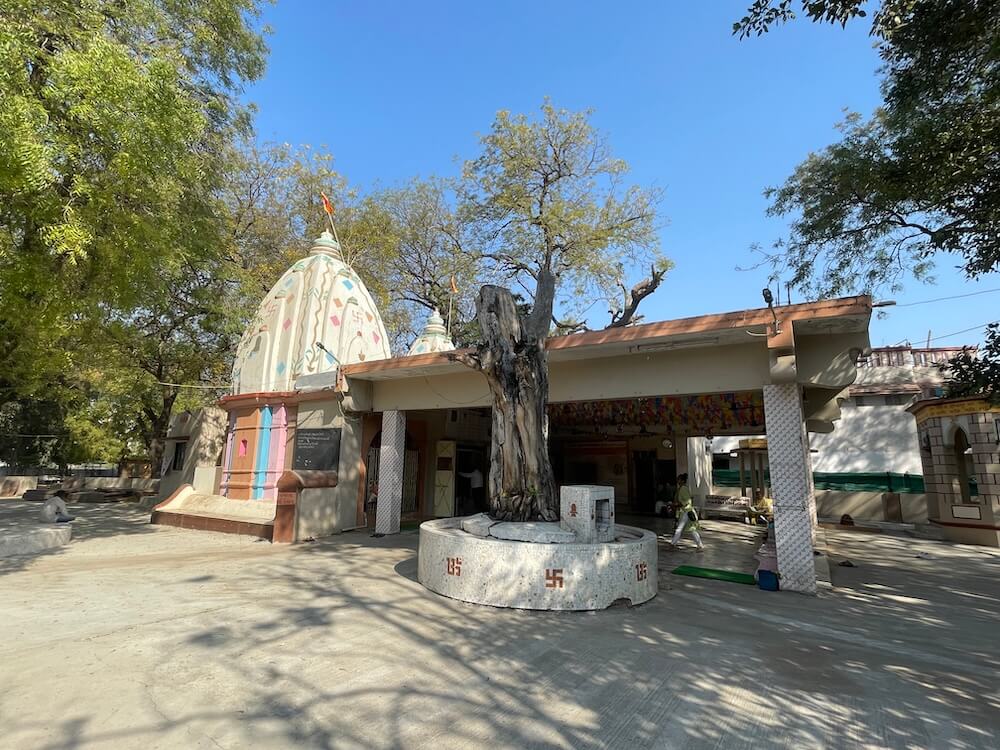
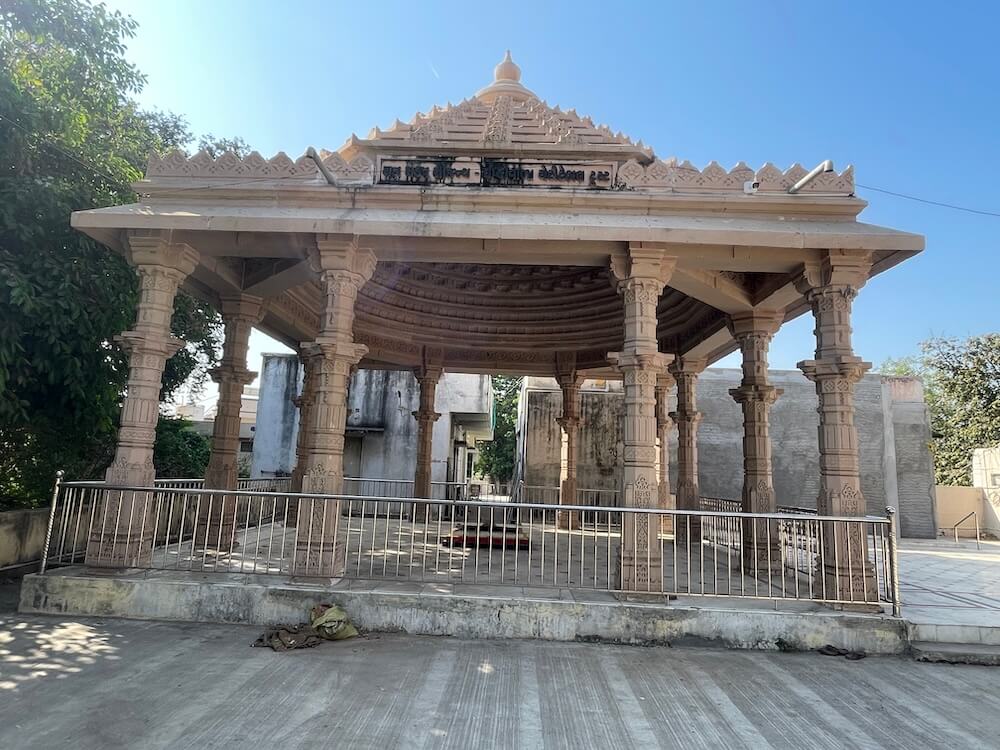
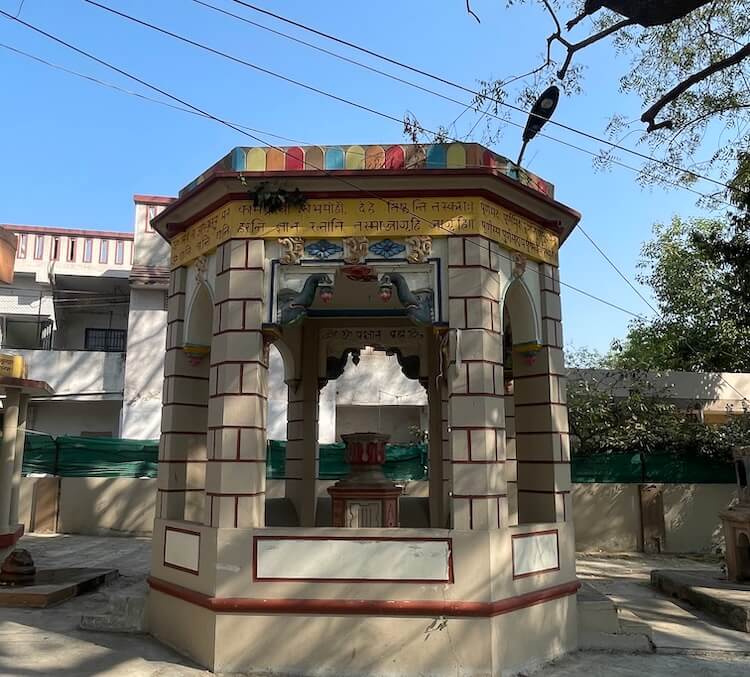
While a definitive historical record is unavailable, the temple is reputed to be four to five hundred years old. Located in a tranquil quarter of the city, the temple features a parking area at its front. Within the expansive courtyard, enclosed by ramparts and a gateway, stands a sacred ‘Rudraksha’ tree. Facing the temple in the courtyard is a ‘Yajnamandap’ (sacrificial hall) supported by ten pillars and topped with a dome. At its centre lies a ‘Yajnakunda’ (sacrificial fire pit) protected by an iron railing. Furthermore, a ‘Tulsi Vrindavan’ within an octagonal pavilion in the courtyard is said to be the ‘Samadhi’ (memorial shrine) of a departed ‘Mahant’ (high priest).
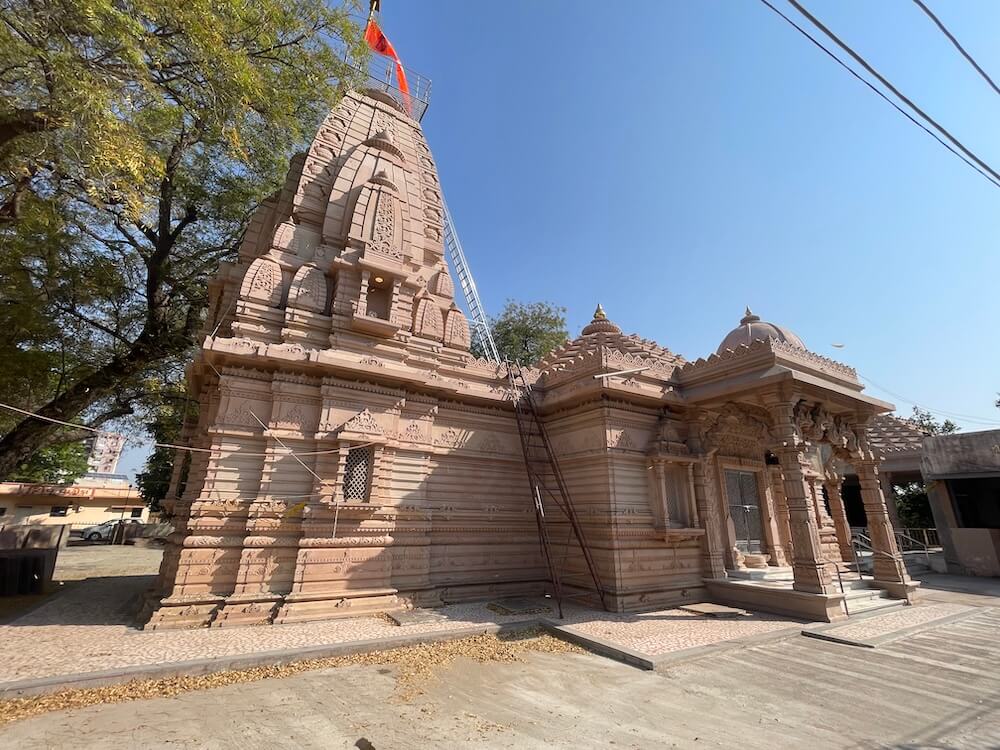
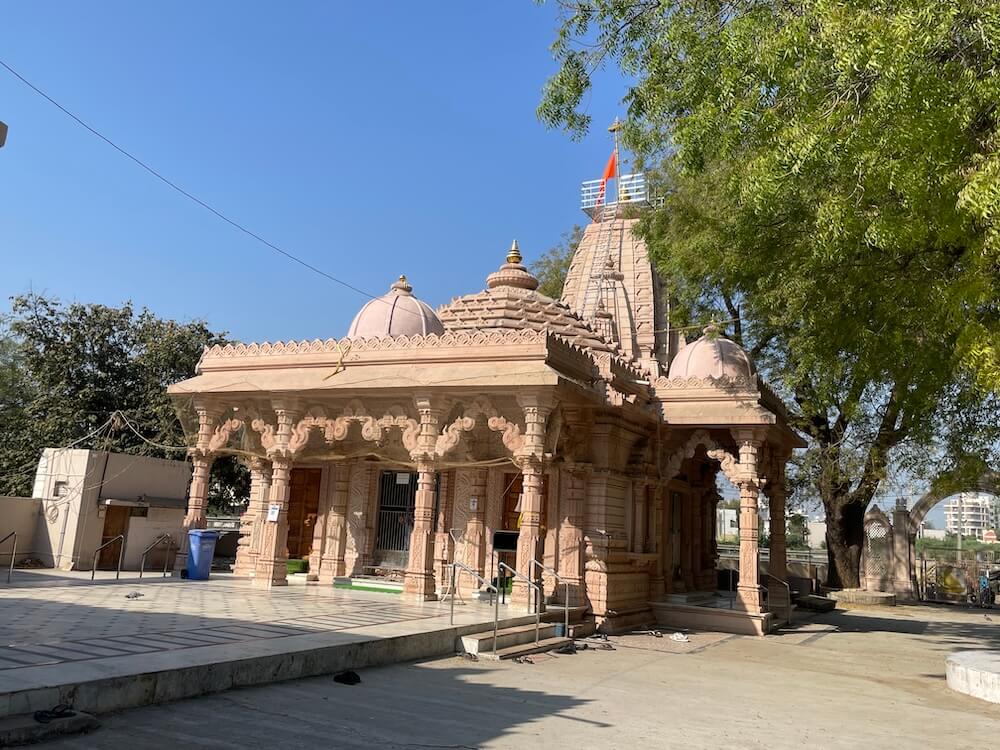
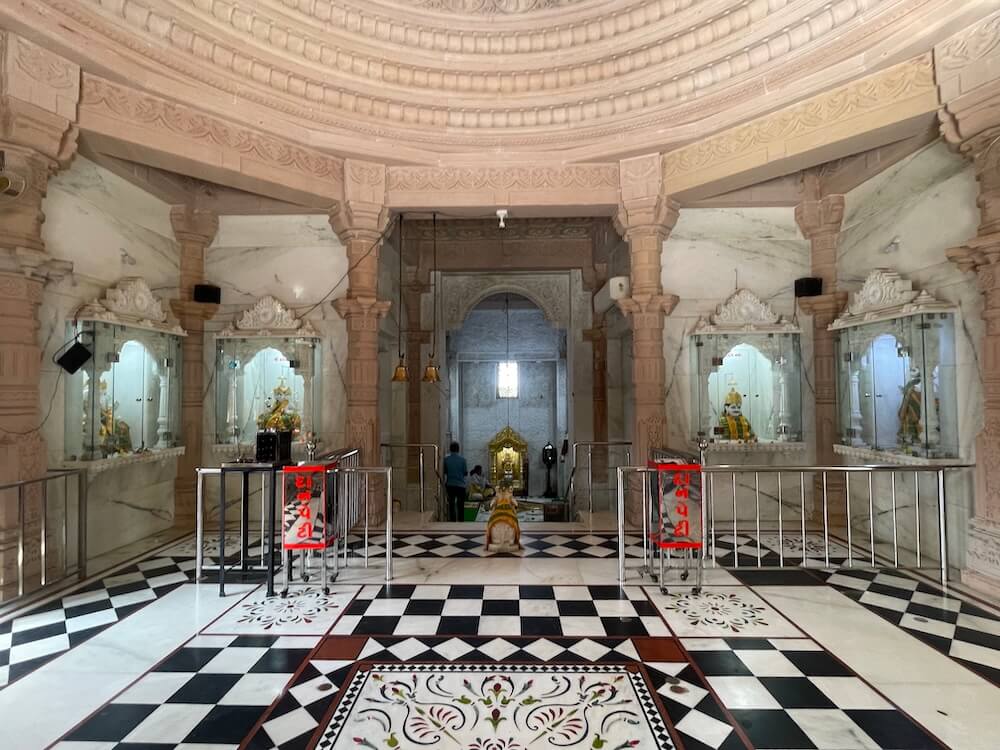
The temple’s architectural composition consists of an ‘Ardhamandap’ (half-porch), a ‘Sabhamandap’ (assembly hall), an ‘Antarala’ (vestibule) and the ‘Garbhagriha’ (sanctum sanctorum). The ‘Ardhamandap’ features four decorative pillars interconnected by decorative arches. The subsequent assembly hall has two entrances, with ornate ‘Mukhamandapas’ (entrance porches) on the front, left and right sides, supported by carved pillars and arches. Every portal of the assembly hall is adorned with intricate ‘Dwarashakhas’ (doorframe layers). This hall is graced by carved pillars and a domed ceiling featuring wheel motifs. In the vestibule preceding the sanctum, a statue of Nandi sits upon a pedestal. This vestibule also houses four niches containing idols of Baliya Dev, Hanuman, Kartik Swami and Ganesha.
One descends a few steps from the vestibule to enter the sunken sanctum sanctorum. An image of Ganesha presides over the ‘Lalatabimba’ (central point of the lintel) of the intricately carved sanctum entrance. At the centre of the sanctum floor lie six ‘Swayambhu is’. Amongst these, five are small, while the larger central ‘a’ is adorned with a brass casing and a brass serpent holding a canopy. A silver ‘Abhishekpatra’ (ritual vessel) is suspended from the ceiling to maintain a continuous flow of water over the deities. A niche in the rear wall of the sanctum enshrines an idol of Parvati. The roofs of the porches feature circular domes, while the assembly hall is topped by an octagonal dome, all crowned with ‘Amalakas’ (ribbed stone disks) and ‘Kalashas’ (finials). Rising above the sanctum is a tall, square primary ‘Shikhara’ (spire), flanked by ‘Angashikharas’ (subsidiary spires) with half-‘Amalakas’ and topped with a finial. Adjacent to the main Shiva temple is another shrine comprising a semi-open assembly hall and three sanctums. The central sanctum of this second temple houses idols of Shri Krishna and Ambe Devi, while the flanking sanctums contain ‘is’.
As a hub of Nadiad’s cultural and religious life, the temple celebrates various festivals throughout the year. The shrine is thronged by devotees during Mahashivratri, Krishna Janmotsav, the Chaitra and Sharadiya Navratris, Nag Panchami and the month of ‘Shravan’.
On the special occasion of Mahashivratra, the temple is brilliantly illuminated and an exact replica of the Mahakaleshwar Jyotirlinga of Ujjain is created. Every Monday of ‘Shravan’, the ‘Shivalinga’ is elaborately adorned with flowers, fruits, ‘Bel’ leaves and various grains.
During this month, the temple organises ‘Parthiv Puja’ (worship of earthen lingas) and ‘Amrit Bindu Abhishek’.
Festivals are marked by a devotional atmosphere with ‘Bhajans’, ‘Kirtans’, scriptural readings and ‘Satsangs’.
The temple administration provides ‘Mahaprasad’ (sanctified food) for the thousands of pilgrims during these festivities.
Devotees may avail themselves of ‘Darshan’ daily from 5:00 am to 12:30 pm and from 3:30 pm to 8:00 pm.
This sacred temple stands as a testament to deep spiritual devotion, ancient architectural grandeur, and rich local cultural traditions.
The sanctum sanctorum houses the divine idol consecrated according to ancient Vedic traditions, surrounded by serene courtyards and traditional temple architecture.
Navratri, Maha Shivratri, Annual Temple Jatra & Deepotsav
Compare and book flights, secure top-rated local hotels near the temple, hire reliable guides, and rent cars instantly.
Extend your pilgrimage by visiting other highly sacred temples located nearby.


Add ₹999 more to unlock FREE SHIPPING!
Your sacred cart is currently empty.
Shop Photo FramesFill in your delivery details below to place your order.
Add comment