
Add ₹999 more to unlock FREE SHIPPING!
Your sacred cart is currently empty.
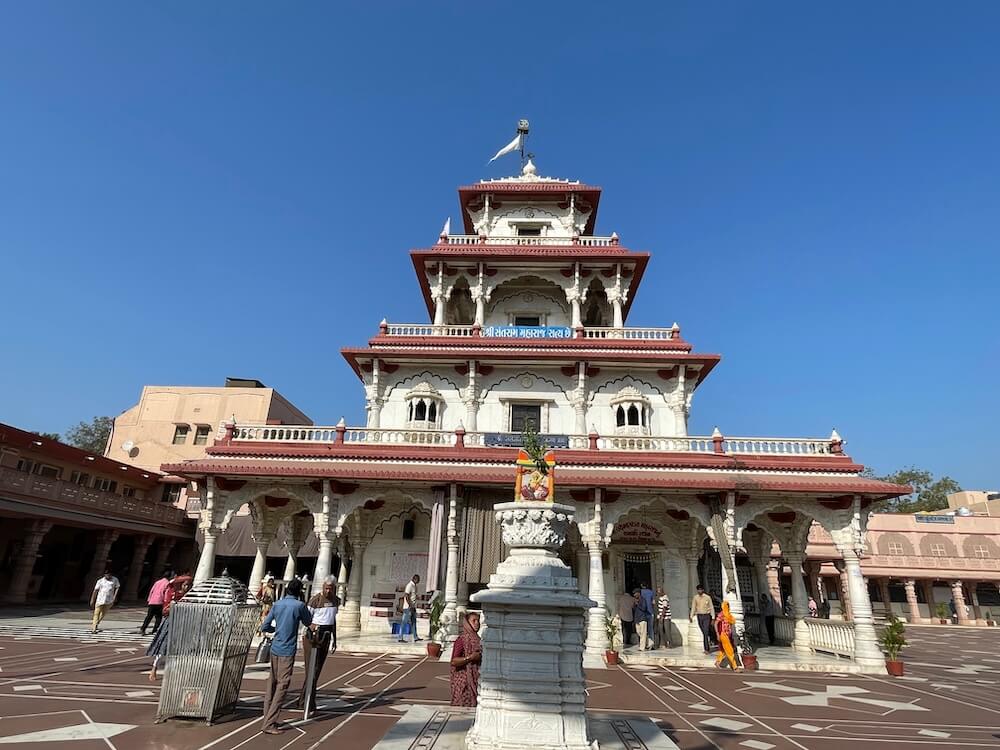
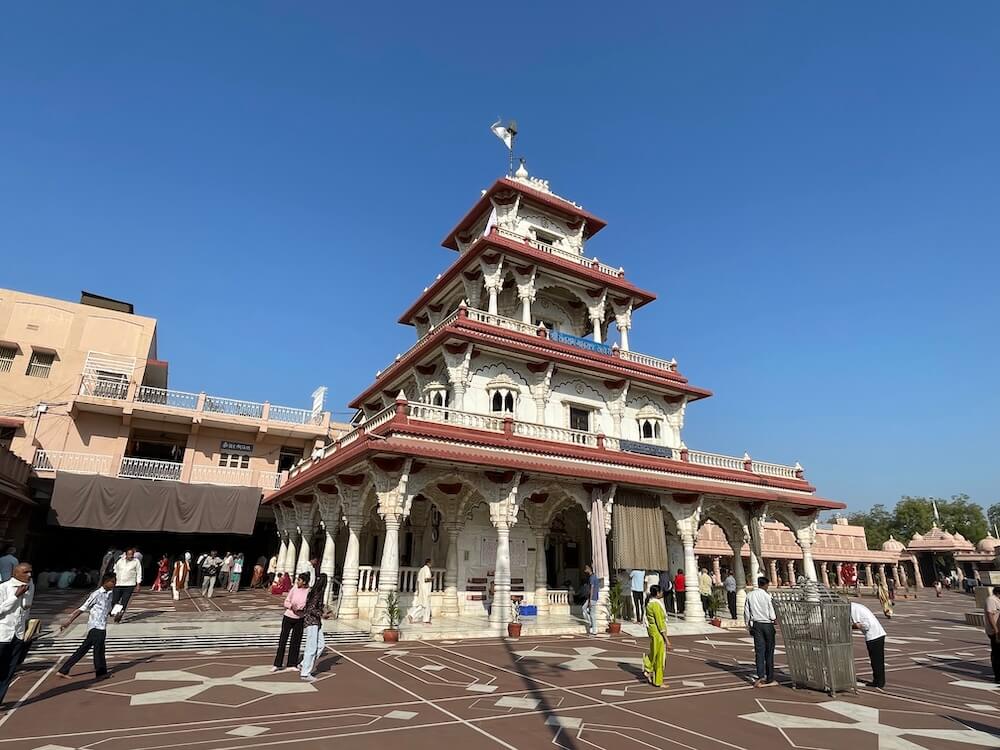
Shop Photo FramesIn the heart of Nadiad, the administrative pivot of Kheda district famed for its ‘Amul’ legacy, stands the majestic temple of Santram Maharaj. The faithful revere this sublime saint as an incarnation of Shri Dattatreya. Known affectionately as ‘Girnari Bawa’, ‘Videhi Bawa’ and ‘Sukhsagarji’, this Avadhuta (a liberated mystic) established a sanctuary that transcends the barriers of caste and creed. Today, it serves as a pre-eminent spiritual and social citadel, drawing thousands of devotees every Thursday, Ekadashi and Purnima (full moon). Governed by the maxim ‘Service to humanity is service to God’, the shrine provides sustenance to the hungry and medical solace to the weak through its charitable endeavours.
It is chronicled that when Bhagwan Swaminarayan visited Nadiad, he declined the devotees’ request to construct a temple, prophesying instead that the site was ordained for a great social reformer whose institution would expand from the Rayan tree to the Panchoteria banyan. Santram Maharaj, a yogi of profound mastery over the Vedas, Puranas and Yoga, arrived in Nadiad from the Girnar mountains in 1816. Initially, he dwelt in meditative seclusion within the hollow of a Rayan tree. After fifteen years, as he prepared to depart, a devoted farmer named Pujabhai Patel of Lakhawad intercepted him beneath the Panchoteria banyan. Beseeching the saint to remain, Pujabhai lamented that the city’s fortune would vanish with his departure. To test this devotion, the Maharaj imposed a condition of lifelong service, which Pujabhai accepted, subsequently donating the land containing the Rayan tree to lay the foundation of the Ashram.
In time, a youth named Lakshmandasji joined the Maharaj’s fold. Found unconscious near the tree, exhausted by travel, he was revived by the Maharaj’s touch and called by name. Lakshmandasji ascended to become the principal disciple and the first Mahant (superior) of the Ashram. He instituted rigorous mandates for
the temple’s governance, decreeing that no member of the Ashram should ever solicit funds outside. The institution subsists solely on offerings received through divine will. Following Santram Maharaj’s Samadhi (final meditative departure) in 1831, Lakshmandasji presided until 1869.
This illustrious lineage has been preserved by successive Mahants – Chaturdas, Jayramdas, Mugutramdas, Manekdas, Jankidas, Narayandas and the incumbent ninth Mahant, Ramdas Maharaj.
Under their stewardship, the temple’s branches have flourished across numerous villages including Karamsad, Vadodara, Umreth and Sojitra. The spiritual essence of this tradition is enshrined in texts such as ‘Santram Kalpataru’, ‘Jivan Pathey’ and ‘Pad Sangrah’.
The chronicles of Santram Maharaj are replete with mystical occurrences.
It is said that once, while parched during a journey, he requested a rope and bucket from a labourer at a well. Upon being ignored, the Maharaj sat by the well and, through his yogic potency, commanded the water to rise to the surface without aid. Another lore recounts a farmer who invited the Maharaj for a meal, only to be asked for buffalo milk instead. Though the buffalo had long been dry, the Maharaj instructed the farmer to hold a Tumbipatra (vessel) beneath her.
Miraculously, the vessel overflowed with milk, yet the udders ran dry again the moment the farmer attempted to milk her for himself. On the Thursday of Magh Shud Purnima in 1831, the Maharaj entered Jivan Samadhi (entering the tomb while alive). Before descending, he instructed devotees to place an unlit ghee lamp outside the pit. As his physical form vanished within, a flame erupted from his Brahmarandhra (the crown of the head), spontaneously igniting the lamp. This sacred flame was later enshrined in the main temple by Lakshmandasji.
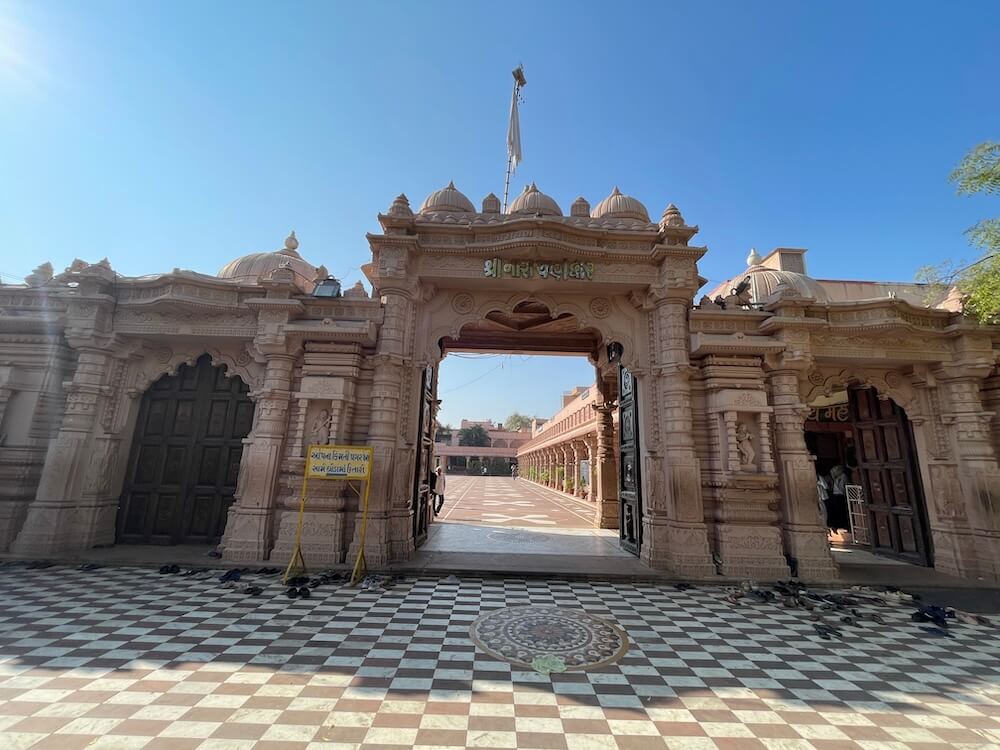
Set within a verdant expanse in Nadiad, the temple is accessed through the ‘Ramdwar’, a grand portal intricately carved with episodes from the life of Shri Krishna and figures of Sursundaris (celestial beauties).
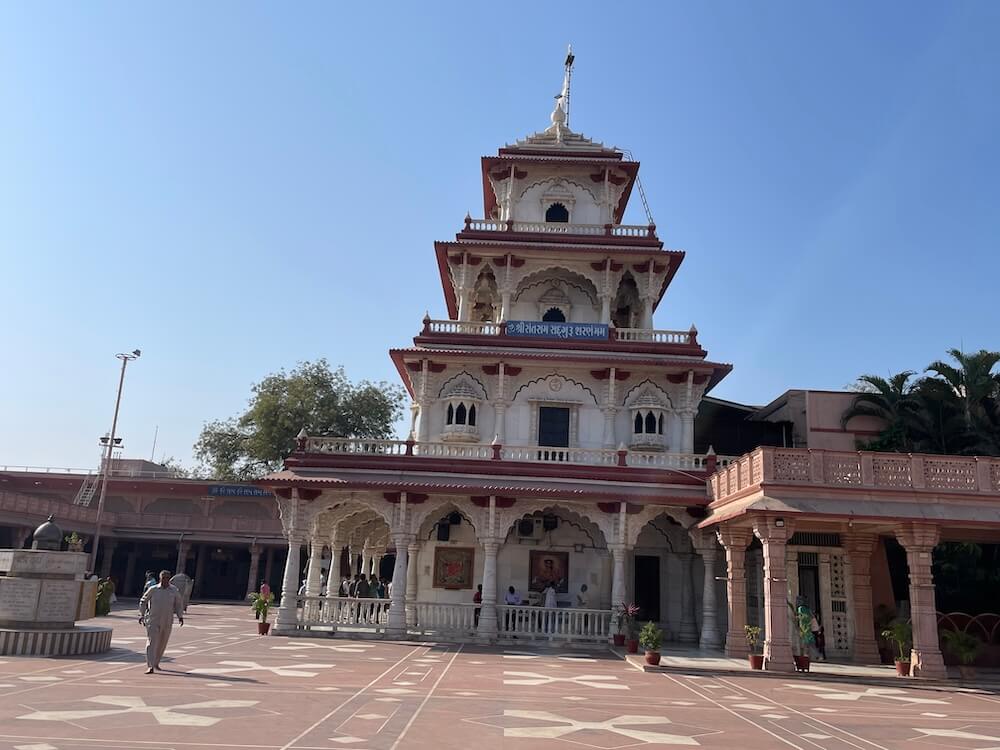
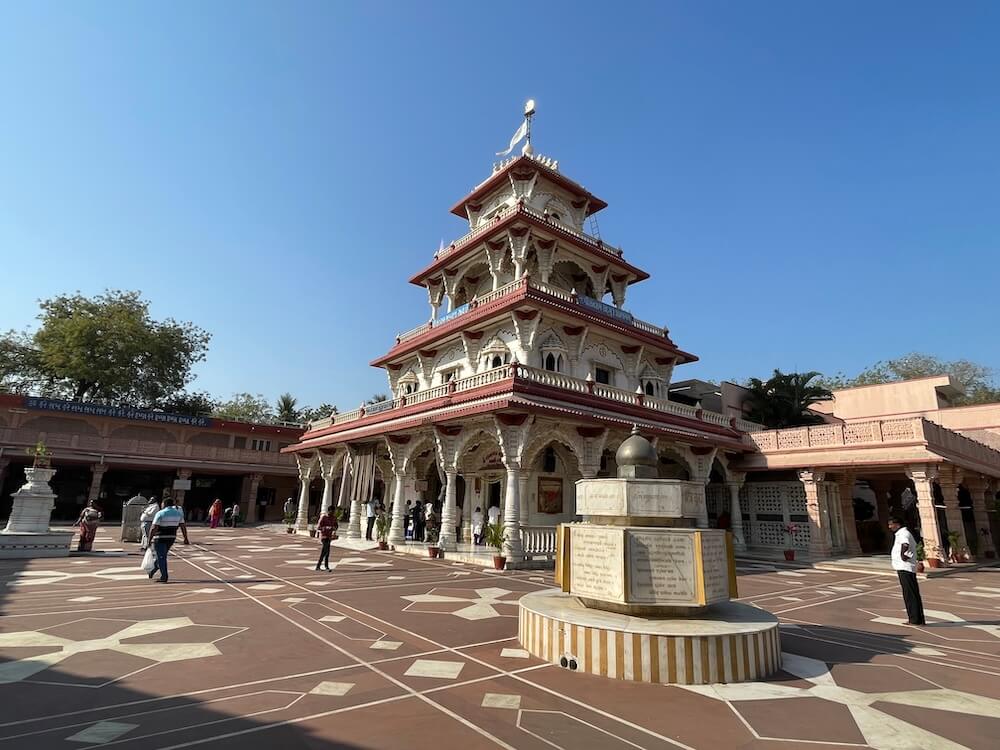
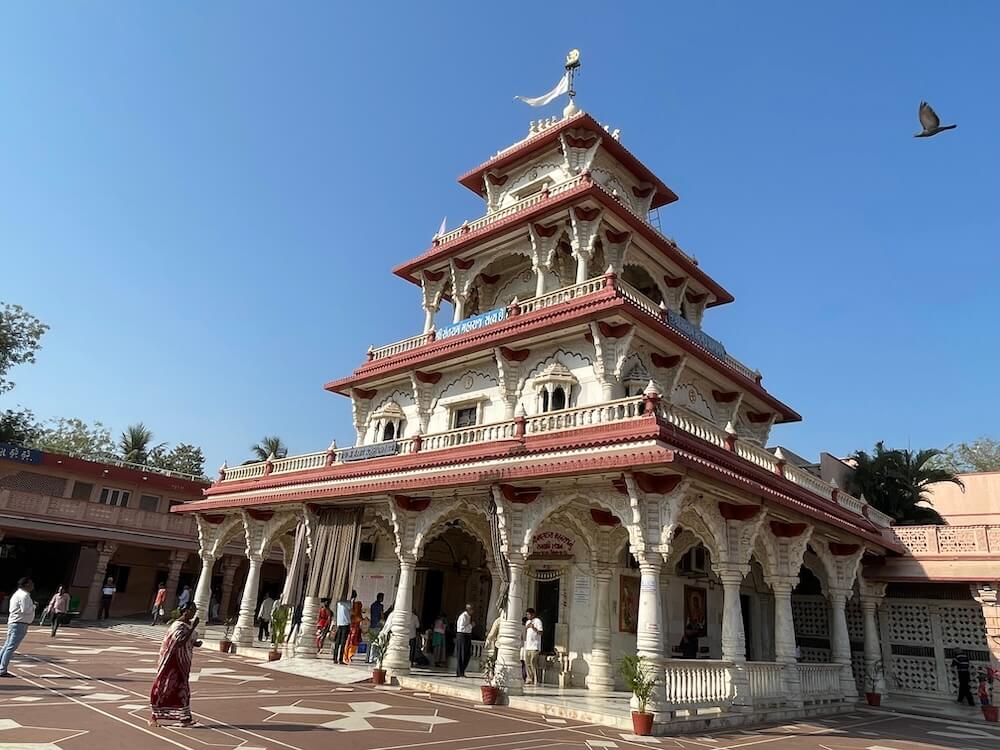
The courtyard is flanked by semi-circular arched cloisters and houses a small Deri at the site of the original Rayan tree. The three-storey main structure is a quintessential specimen of ancient Hindu and traditional Gujarati architecture.
In the sanctum sanctorum, which conspicuously lacks a traditional idol, one finds the sacred Padukas (footprints) and an antique photograph of the Maharaj resting upon a silver pedestal. An eternal flame, preserved for over 171 years, illuminates this space. Above rises a sixty-foot Nagara-style Shikhara (spire), within whose golden finial an ancient manuscript on Yoga is reportedly secured.
The Samadhi Mahotsav on Magh Purnima is the premier annual event, marked by a five-day fair and the unique tradition of showering sugar upon the devotees from the temple spires. A distinctive ritual called ‘Bor Varsha’ (showering of jujube fruits) is performed by parents of children with speech impediments to seek the saint’s blessings.
During Dev Diwali, the precincts are aglow with 125,000 earthen lamps, while the Annakut festival following Diwali sees an offering of 2,550 varieties of delicacies.
The temple also administers extensive philanthropic facilities, including an eye hospital, physiotherapy centre and schools. The temple remains open for devotees from 6 am to 12 pm and from 4 pm to 9 pm every day.
This sacred temple stands as a testament to deep spiritual devotion, ancient architectural grandeur, and rich local cultural traditions.
The sanctum sanctorum houses the divine idol consecrated according to ancient Vedic traditions, surrounded by serene courtyards and traditional temple architecture.
Navratri, Maha Shivratri, Annual Temple Jatra & Deepotsav
Compare and book flights, secure top-rated local hotels near the temple, hire reliable guides, and rent cars instantly.
Extend your pilgrimage by visiting other highly sacred temples located nearby.


Add ₹999 more to unlock FREE SHIPPING!
Your sacred cart is currently empty.
Shop Photo FramesFill in your delivery details below to place your order.
Add comment