
Add ₹999 more to unlock FREE SHIPPING!
Your sacred cart is currently empty.
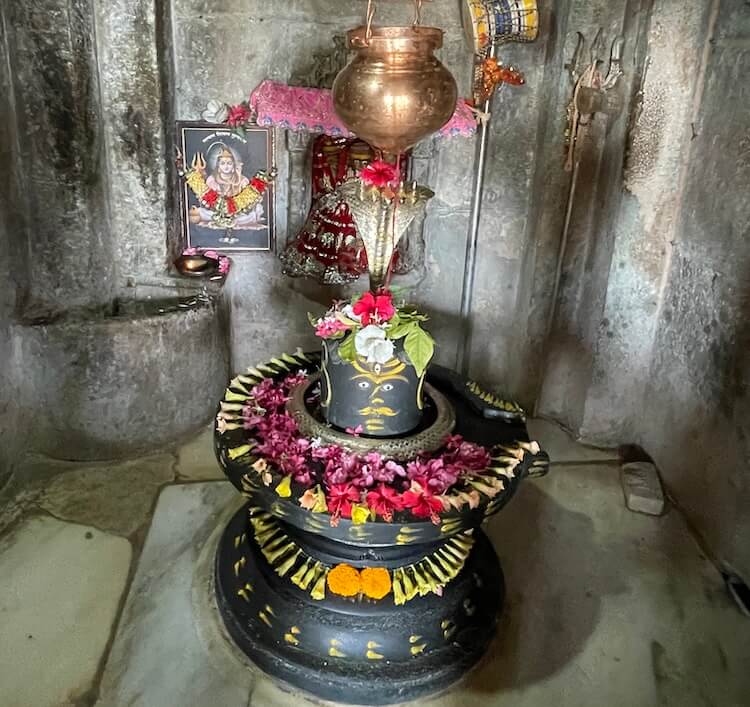
Shop Photo FramesA quintessential paradigm of ancient sculpture and architectural prowess, the Jasmalnathji Mahadev Temple at Asoda stands as one of the most venerable shrines in Gujarat. Historical chronicles suggest that the foundational structure of this edifice dates back to the tenth century. It is widely held that during the twelfth century, the valiant King Siddharaj Jayasinha (r. 1094-1143 CE) – a formidable monarch of the Solanki dynasty and a devout follower of Lord Shiva – undertook the restoration of this sacred sanctuary. Constructed in the ‘Panchayatana’ style, the Shivalinga within is also revered as ‘Vaijnath Mahadev’. It is the unwavering conviction of the faithful that this Shivalinga is spiritually awakened, possessing the divine grace to fulfil the heartfelt aspirations of all who seek its blessings.
The village of Asoda is also known as ‘Asoda Devda’. Historical records indicate that King Siddharaj Jayasinha bestowed this hamlet upon the Devda Chauhans of Kukarvada Sokhada. “Following a divine vision, the monarch resolved to commission this grand Shiva temple. Much like the Sun Temple at Modhera, this shrine suffered extensive desecration during the reign of Sultan Alauddin Khalji and the subsequent incursions of the medieval Sultanate period. The invaders defaced numerous exquisite sculptures, yet the ancient vestiges of the temple remain visible within the precincts to this day. In the preceding century, the Gaekwad State of Baroda oversaw the temple’s restoration. Presently, the shrine is preserved under the aegis of the ‘Archaeological Survey of India’ (ASI) and has been designated a ‘Monument of National Importance’. Significant restorative works have recently been concluded to preserve its structural integrity.
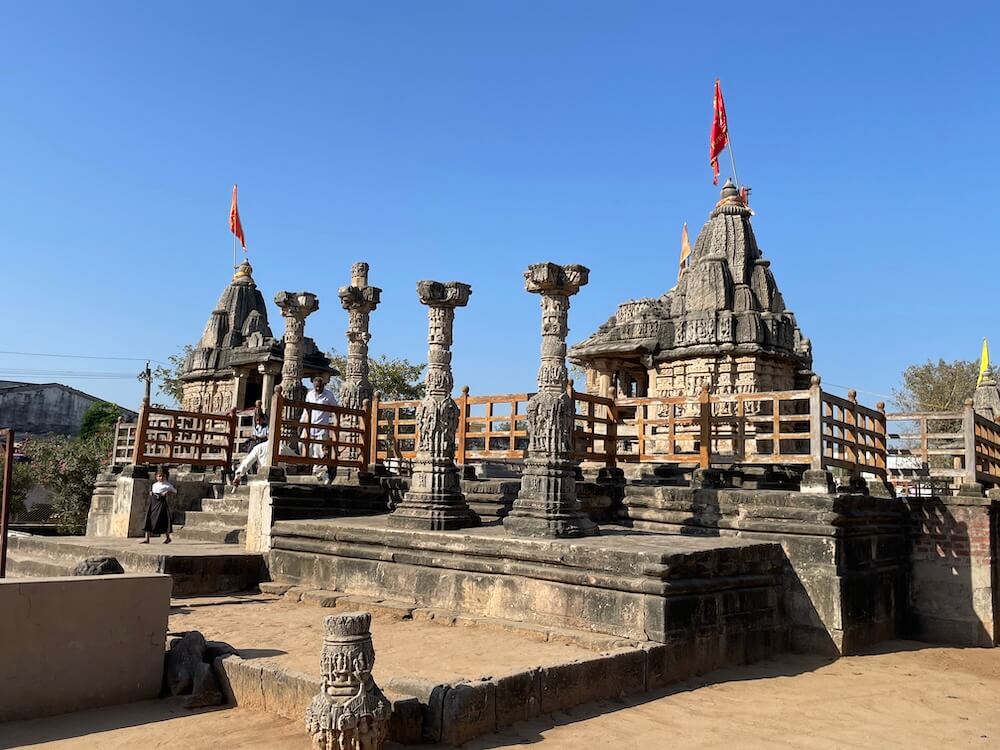
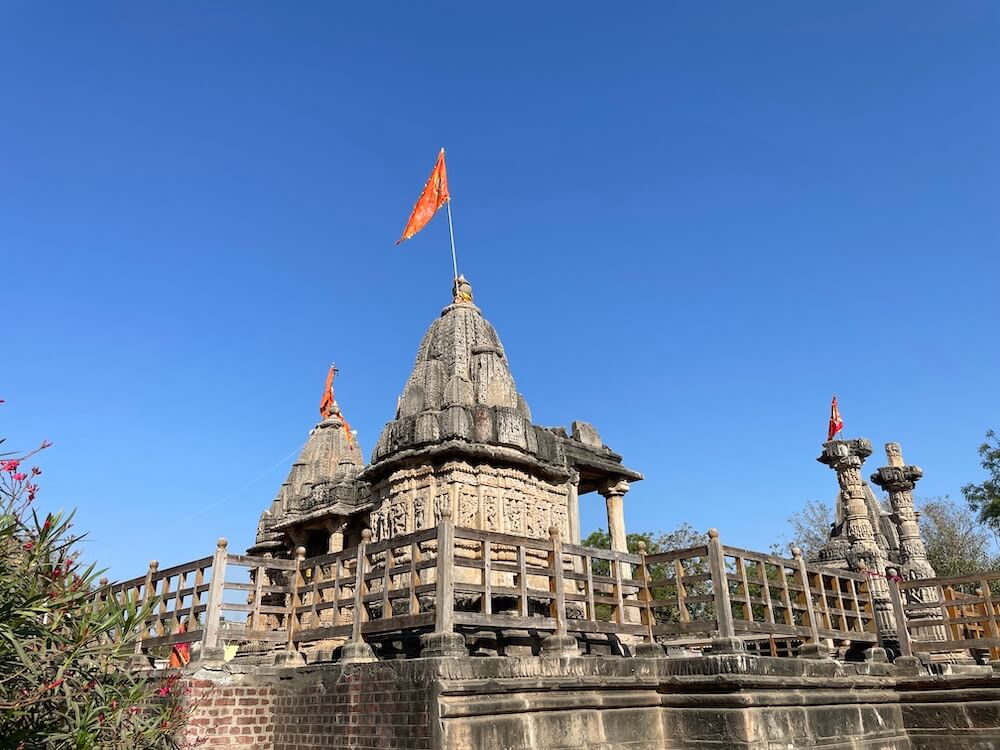
The temple is an architectural marvel built in the ‘Panchayatana’ configuration. In this specific style, a central primary shrine is positioned upon an elevated plinth or ‘Jagati’, flanked by four subordinate shrines at the cardinal corners. Notable examples of this style include the Dashavatara Temple at Deogarh in Uttar Pradesh, as well as several shrines in Khajuraho and Bhubaneswar. At Asoda, three of the four subsidiary shrines remain in a commendable state of preservation, whilst only the foundation of the south-western shrine survives. To the left of the main temple resides a shrine dedicated to Hanuman, with a Ganesha shrine situated to the right. At the rear, towards the south-west and north-west, lie the sub-shrines of the Sun Deity and Lord Vishnu, respectively. The central sanctum enshrines the Shivalinga of Jasmalnathji Mahadev. The temple enjoys a sprawling courtyard and one must ascend a series of steps to reach the elevated plinth. At the threshold, one is greeted by pillars adorned with delicate craftsmanship, suggesting that grand archways or ‘Toranas’ once stood here. The ‘Torana’ at this site mirrors the artistic sophistication found in Vadnagar and the Limboji Mata Temple at Delmal. A ‘Yagnakunda’ (sacrificial pit) stands before the temple, which is further composed of a ‘Dwarmandapa’ (entrance porch), ‘Sabhamandapa’ (assembly hall), ‘Antarala’ (vestibule) and the ‘Garbhagriha’ (sanctum sanctorum).
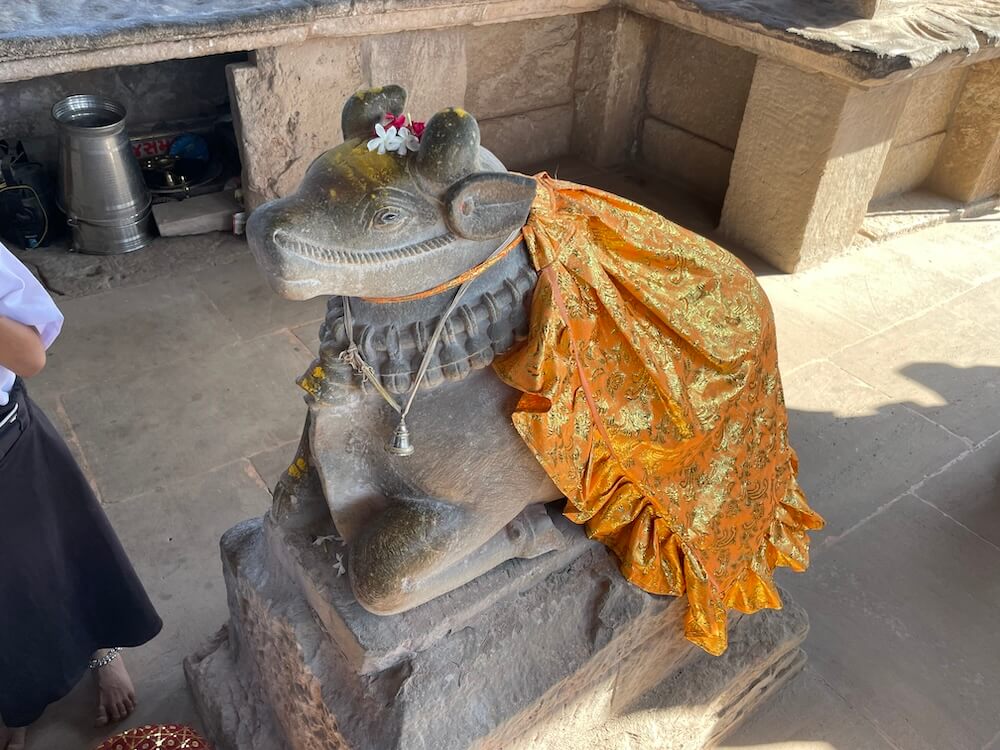
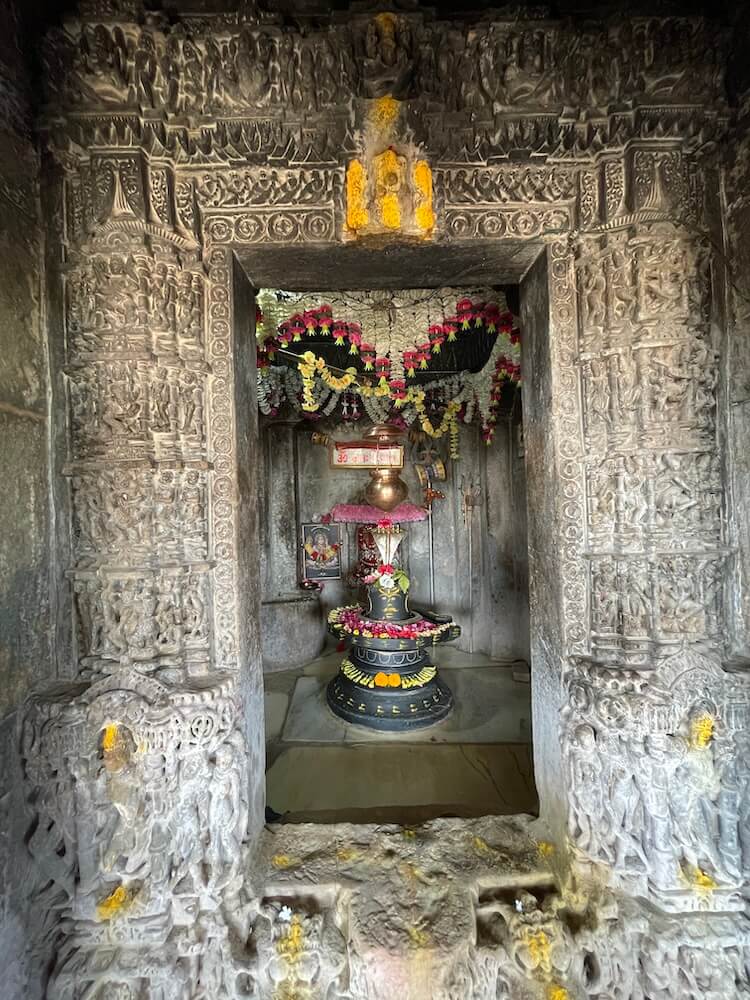
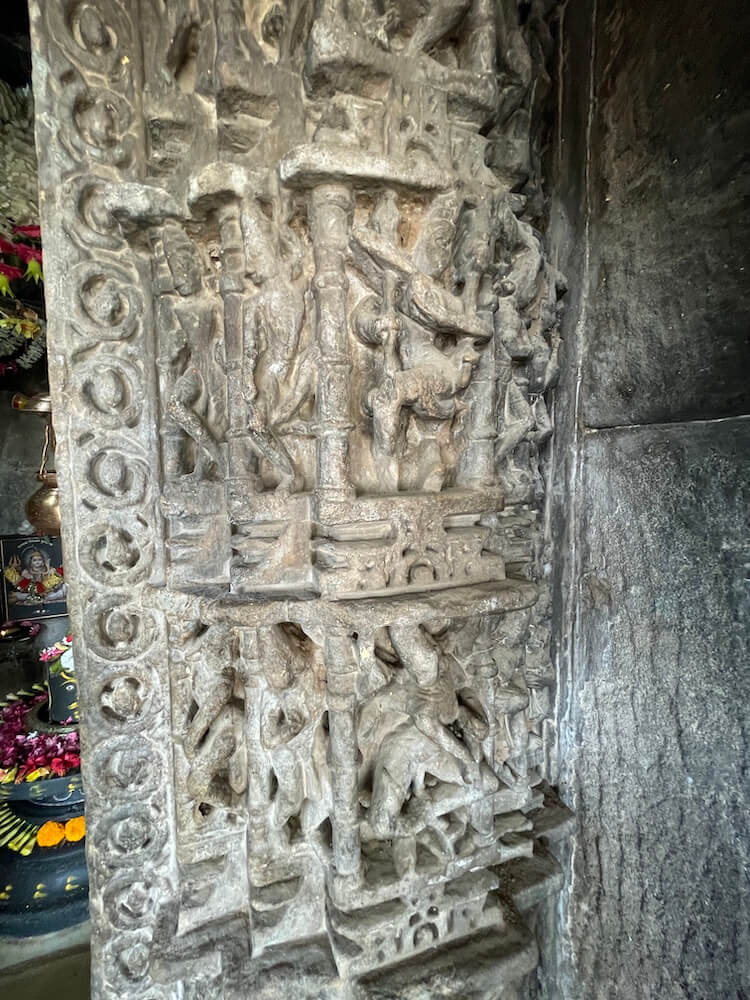
Figures of gatekeepers are carved on either side of the entrance. The archway leading to the assembly hall is decorated with intricate motifs and the hall itself belongs to the ‘Chatushki’ category. Its design and ornamentation bear a striking resemblance to the ‘Vandanmalika’ pattern seen in the famous Rudra Mahalaya Temple at Siddhpur. The hall and its pillars are replete with carvings and celestial sculptures. At the base of these columns, one finds depictions of mythological scenes, ‘Kirtimukhas’ (glory masks) and ‘Makara’ (mythical sea creatures), topped with ‘Ghat-Pallav’ (pot and foliage) designs. The weight of these pillars is metaphorically borne by sculpted ‘Bharavahaka Yakshas’. The ceiling is a tapestry of lotus motifs and dancing ‘Sursundaris’ (celestial beauties). Within the assembly hall, a statue of Nandi sits facing the sanctum. The doorposts and lintel of the sanctum sanctorum are similarly adorned with carvings, featuring ‘Kirtimukhas’ at the base and representations of the holy rivers Ganga and Yamuna. Lord Ganesha occupies the central ‘Lalatabimba’ (auspicious point) on the doorframe. The sanctum houses a large Shivalinga upon an elevated ‘Shalunka’ (pedestal), with Mother Parvati enshrined in a niche on the rear wall.
The primary ‘Shikhara’ (spire) over the sanctum, rising like a majestic mountain peak, is considered a symbolic representation of Mount Meru, embellished with numerous miniature spires. The exterior walls are decorated with Hindu deities, animals, floral patterns and geometric shapes. Idols of the ‘Dikpalas’ (guardians of the directions) and the ‘Ashtavasus’ grace the outer walls, with the sculpture of the ‘Vamana’ avatar of Lord Vishnu being particularly noteworthy. Ancient stones and idols unearthed from nearby fields are preserved within the courtyard.
Numerous devotees frequent this hallowed site to perform ‘Abhishek’ (ritual bathing) of the spiritually vibrant Shivalinga. It is a popular belief that sincere devotion here grants the blessing of progeny to childless couples. The temple serves as a vibrant hub for religious observances throughout the year. On Mahashivratra, long queues of pilgrims form from the early hours of dawn. A ‘Mahayagna’ is conducted on this day, followed by the distribution of ‘Mahaprasad’. Every Monday of the month of Shravan, the precinct transforms into a bustling fairground as devotees congregate to chant the glories of Lord Shiva. On the New Moon day of Shravan, the Shivalinga is honoured with a special offering of 1008 lotus flowers, accompanied by grand sacrificial rituals and communal feasting.
This sacred temple stands as a testament to deep spiritual devotion, ancient architectural grandeur, and rich local cultural traditions.
The sanctum sanctorum houses the divine idol consecrated according to ancient Vedic traditions, surrounded by serene courtyards and traditional temple architecture.
Navratri, Maha Shivratri, Annual Temple Jatra & Deepotsav
Compare and book flights, secure top-rated local hotels near the temple, hire reliable guides, and rent cars instantly.
Extend your pilgrimage by visiting other highly sacred temples located nearby.


Add ₹999 more to unlock FREE SHIPPING!
Your sacred cart is currently empty.
Shop Photo FramesFill in your delivery details below to place your order.
Add comment