
Add ₹999 more to unlock FREE SHIPPING!
Your sacred cart is currently empty.
Shop Photo FramesCradled within the embrace of the Aravalli mountain ranges in the Satlasna Taluka lies the Taranga Tirtha. Situated at an approximate elevation of 1,200 feet above sea level, this ancient Jain pilgrimage site is revered as a sacred ‘Siddhakshetra’ by followers of both the Shwetambar and Digambar sects. According to religious scriptures, it is from this very site that nearly thirty-five million monks, including the Ganadhara Varadatta and Ganadhara Sagardatta, attained ‘Moksha’ or ultimate liberation. The hill is also known as ‘Tarangiri’ or ‘Tarangadh’ and references suggest it is one of the 108 names of the Shatrunjaya Mahatirtha. The precinct hosts a total of nineteen temples, comprising fourteen belonging to the Shwetambar community and five to the Digambar community.
The history of Taranga Hill is profoundly ancient. During the fourth and fifth centuries, it served as a significant centre for Buddhism. According to the treatise ‘Kumarapala Pratibodha’, authored by Acharya Somaprabhasurishwar, the then King Vatsaraja commissioned a temple dedicated to the presiding deity Siddhanyika Devi in the sixth century. Subsequently, in the seventh or eighth century, the same Buddhist monarch, in collaboration with the Jain monk Khaputacharya, erected a temple dedicated to Tara Devi. Following this, the settlement came to be known as Tarapur or Taragram. Within Jain scriptures, the hill is also referred to as Tar-ur, Taravar Nagar, Tarangiri and Tarangadh. As per Mehsana District Gazetteer, the hill seems to have taken the name Taranga from the shrine dedicated to Taran Mata on the hill.
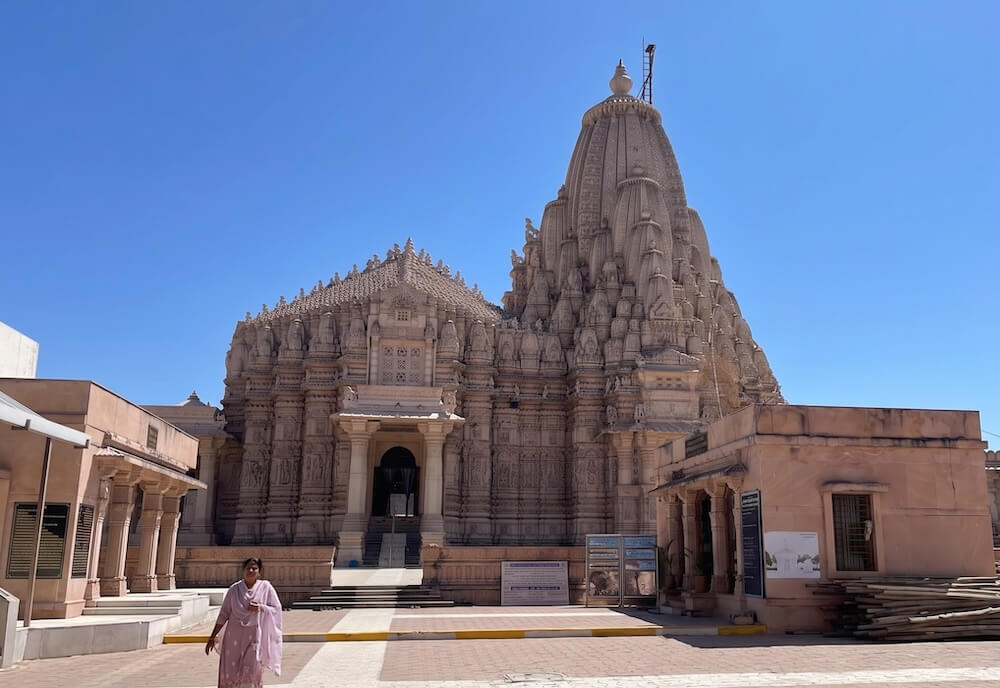
The principal Jain temple, that is of Lord Ajitnath, at Taranga was commissioned by King Kumarapala of the Solanki dynasty between 1165 and 1170 CE. Following his conversion to Jainism, Kumarapala raised this shrine under the spiritual guidance of his mentor, the ‘Kalikalasarvajna’ Acharya Hemchandracharya. Legend has it that when Kumarapala inquired of Hemchandracharya regarding the significance of this mountain, the sage compared the site to the venerable Siddhachal (Shatrunjaya) Hill. Another narrative recounts that in his quest to defeat King Arnoraja (r. c. 1135–1150 CE) of Ajmer, Kumarapala launched eleven unsuccessful campaigns against the Durjayadh fort in Marudesha. Acting upon the counsel of Minister Vagbhatta, he offered prayers at the Ajitnath temple in Anhilwad Patan, which subsequently led to his triumph in battle. Upon his return, he paused at Taranga Hill, where he experienced profound mental serenity. Moved by this experience, he vowed to construct a magnificent temple dedicated to Lord Ajitnath, the 22nd Tirthankara.
Numerous historical records pertain to this temple. In 1228 CE, Vastupala installed two idols and constructed ‘Gavakshas’ (lattice windows) here. According to the fifteenth-century text ‘Sukritsagara’, Jhanjhan Shah, the son of the Malwa minister Prithvidhar, visited the site on a pilgrimage in 1264 CE alongside Dharmaghosha Suri of the Tapagaccha. In the fourteenth century, the forces of Alauddin Khalji attempted to desecrate the temple. Thereafter, Govinda Shrestha (Sheth), son of the renowned merchant Vatsaraja Sanghvi of Idar, undertook the restoration of the shrine. He commissioned a new idol of Lord Ajitnath, fashioned from stones transported by bullock carts from the Arasur mountains. This idol was consecrated in 1422 CE by Acharya Shri Somasundarasuri. The temple is renovated several times, but the fundamental structure and the appearance of the temple are not altered.
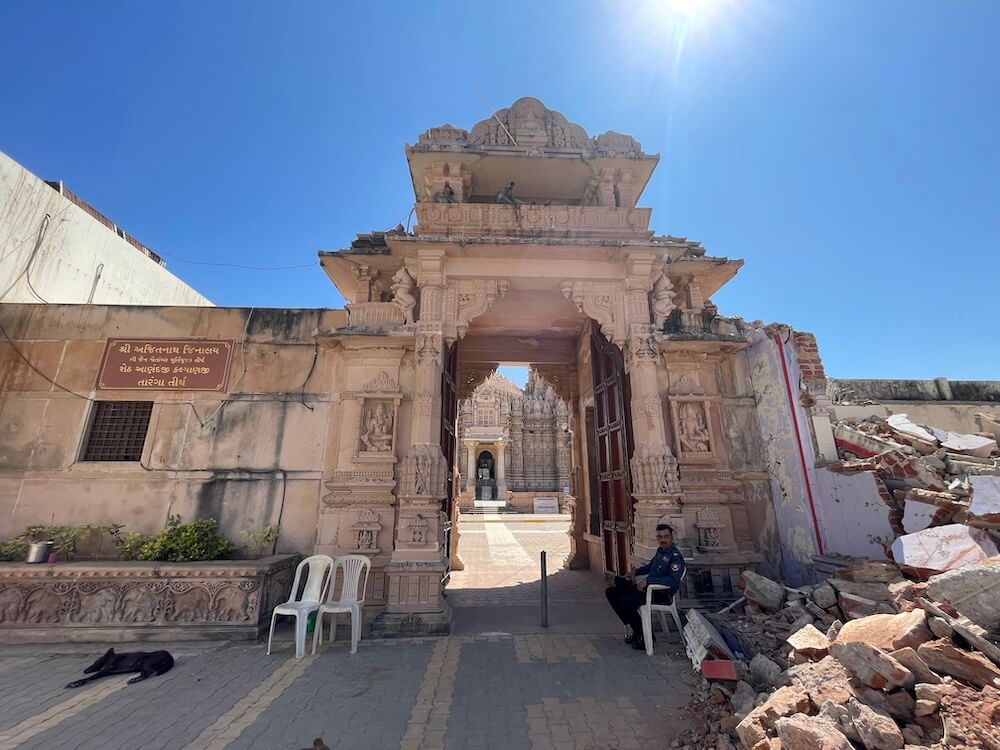
Perched 364 metres above sea level amidst picturesque surroundings, the temple complex spans an area approximately 230 feet in length and breadth. The imposing entrance is flanked by exquisitely carved sculptures. Built in the Maru-Gurjar architectural style, the temple is considered a superlative specimen of craftsmanship. Mehsana District Gazetteer notes that : ‘In beauty and grandeur, this temple is one of the most splendid gems of temple architecture in India.’ It features three triple-branched entrances, with their frames adorned by ‘Grasapatti’ (lion-head) carvings. Upon entering through the eastern portal, one encounters idols of Ambika Mata and various gatekeepers.
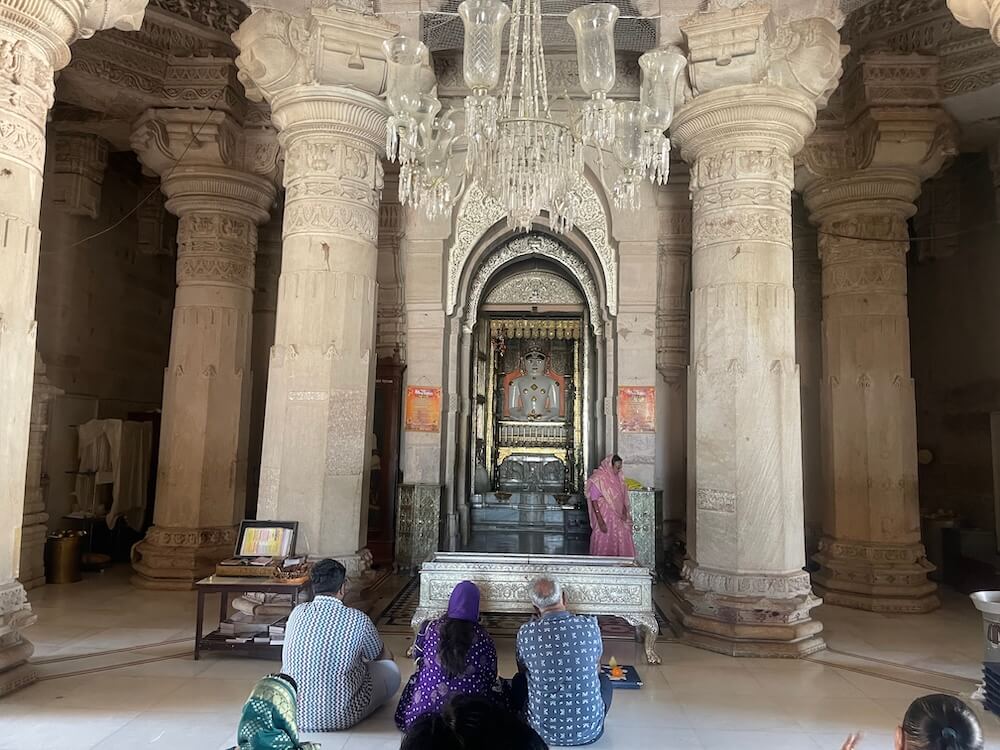
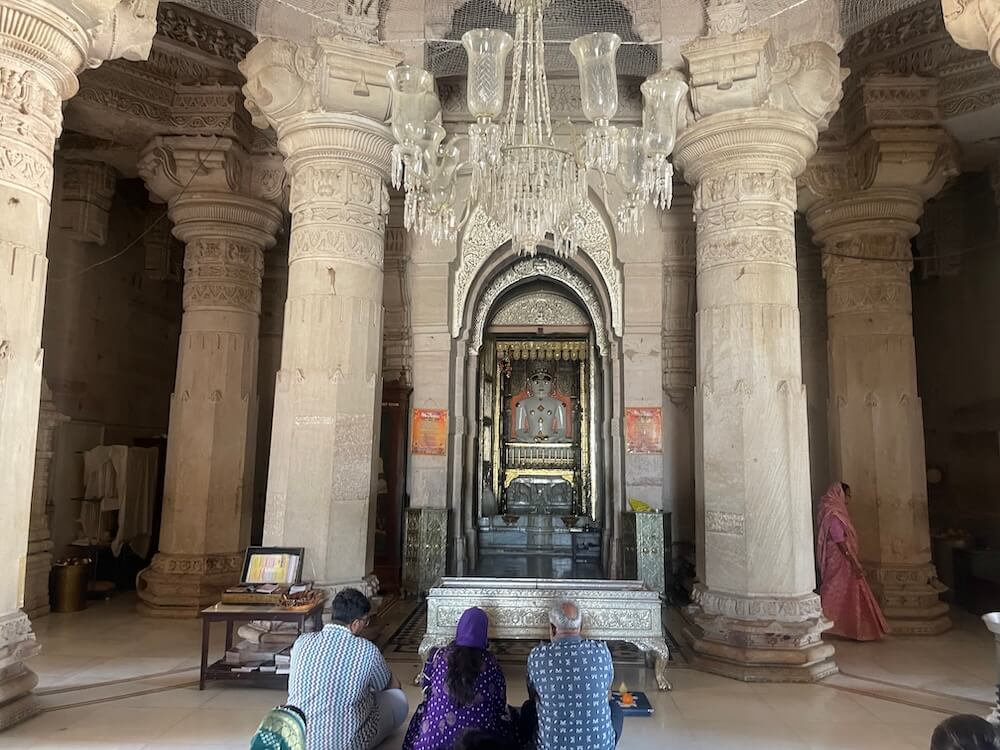
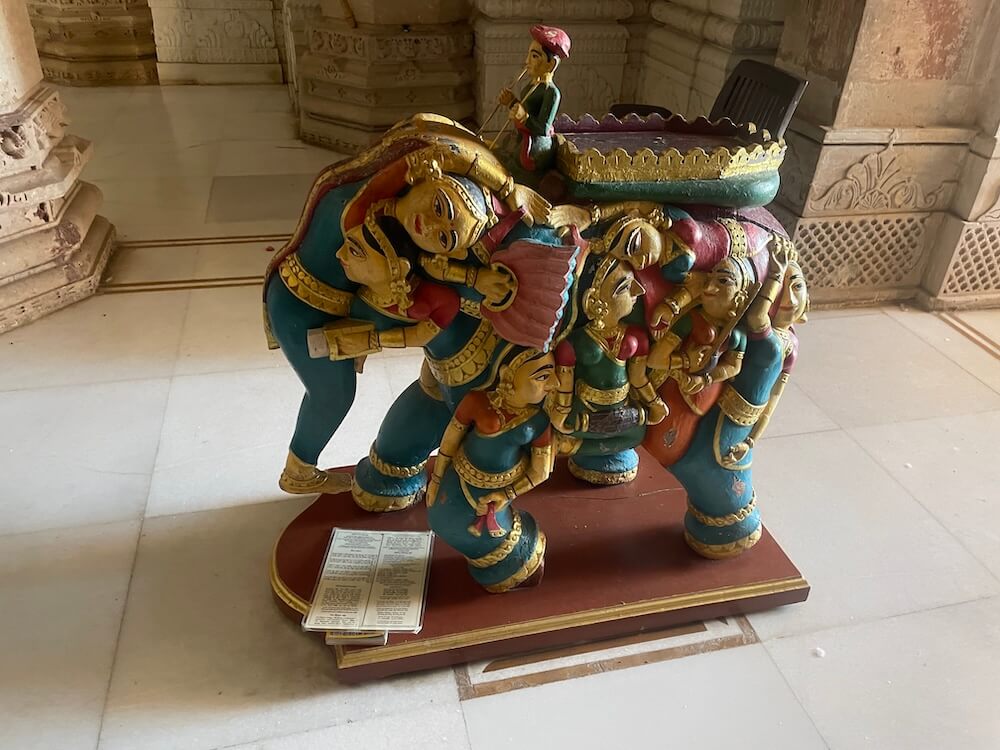
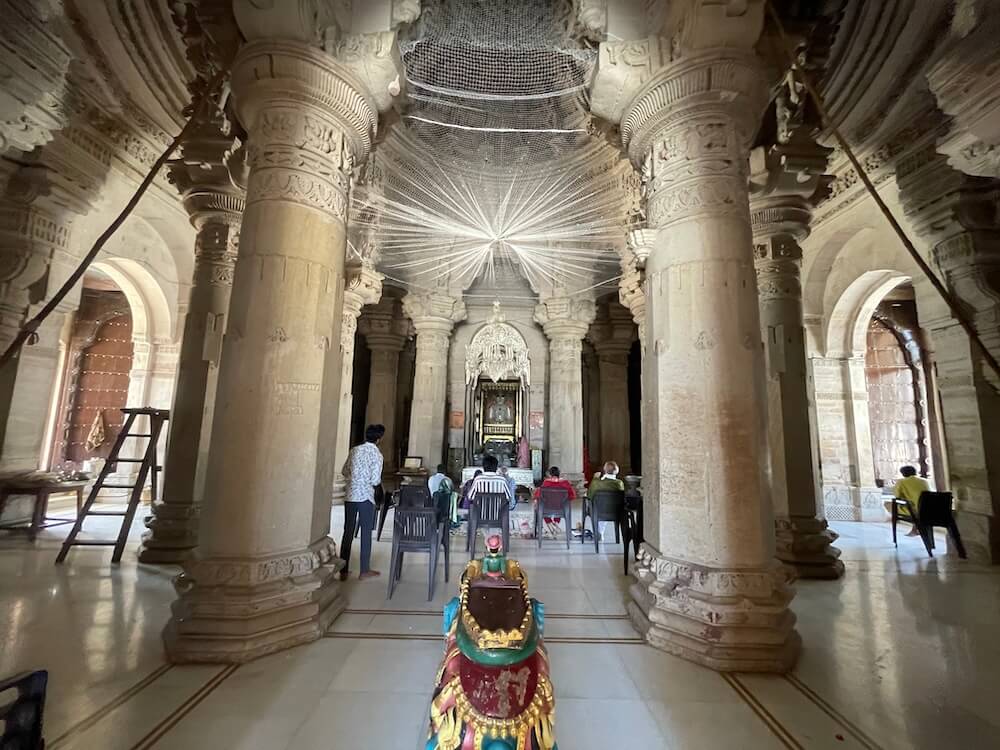
The internal configuration of the temple comprises the ‘Garbhagriha’ (sanctum sanctorum), ‘Gudhamandapa’ (closed hall), ‘Rangamandapa’ (assembly hall) and six ‘Chaukis’ (platforms). Within the marble sanctum, measuring 18 feet by 23 feet, resides a 101-inch-high idol of Lord Ajitnath, the second Tirthankara of Jainism, seated in the ‘Padmasana’ (lotus) posture. Wooden ladders are provided on either side to facilitate the ‘Mastak Puja’ (anointing of the head) of the idol. According to mythological accounts, Lord Ajitnath was the son of King Jitashatru and Queen Vijaya of the Ikshvaku dynasty, born in Ayodhya. His name, ‘Ajit’, signifies ‘Invincible’. Jain Puranas describe his height as 450 ‘Dhanushyas’ and his lifespan as a staggering 7.2 million ‘Purvas’. His emblem is the elephant and his presiding spirits are the Yaksha ‘Mahayaksha’ and the Yakshini ‘Ajitbala’. His praises are sung in hymns such as the seventh-century ‘Ajitshanti Stotra’ composed by Nandishena Muni. In the corners of the sanctum stand two idols in the ‘Kayotsarga’ (meditative standing) posture, which were discovered years ago at Salamkot, situated between Kheralu and Palanpur. A circumambulatory path surrounds the sanctum, punctuated by lattice windows for light and ventilation. Near the eastern door lies an elephant sculpture and a chamber containing the footprints of Lord Ajitnath. The exterior walls of the main temple bear carvings of Goddess Padmavati and King Kumarapala. Standing before the Ajitnath temple is a ‘Kirtistambha’ (pillar of fame) bearing inscriptions from the era of Kumarapala.
A distinctive feature of the temple’s construction is the use of ‘Kelag’ wood. It is believed that this timber is fire-resistant and possesses the miraculous property of exuding water should a fire break out. The ‘Mandovar’ (temple base) and the ‘Shikhara’ (spire) exhibit exceptionally fine carvings. The rear wall galleries are adorned with sculptures of Yakshas, Gandharvas and celestial dancers.
Approximately one kilometre south of the main shrine lies the Kotishila Hill, home to a temple dedicated to Lord Parshvanath, accessible via a flight of steps. The caves known as ‘Jogida ni Gufa’ still house images of the Buddha in meditative repose. Upon the Siddhashila Hill stands an idol of Lord Mallinath. Furthermore, the precinct contains a site known as Mokshashila, colloquially referred to as the ‘Window of Sin and Virtue’.
Taranga Tirtha remains a cornerstone of faith for Jain devotees nationwide. Excellent facilities, including ‘Dharamshalas’ for accommodation and a Jain ‘Bhojanshala’ providing quality meals at nominal rates, are available for pilgrims. Numerous festivals are celebrated here throughout the year, with ‘Kartik Purnima’ being the grandest. On this day, an ‘Annakut’ (offering of food) is presented and a large fair is held. On ‘Chaitra Purnima’, a significant contingent of the ‘Modh Ghanchi’ community arrives for worship.
Furthermore, the ‘Janma Kalyanak’ (birth anniversary) of Lord Mahavira is observed on Chaitra Shudha Trayodashi. The ‘Janma Kalyanak’ of Lord Ajitnath is observed on Magh Shudha Dashami and the ‘Moksha Kalyanak’ on Chaitra Shudha Panchami. The anniversary of the main temple’s foundation, marked by the flag-hoisting ceremony, is celebrated with enthusiasm on Ashwin Shukla Dashami. Following its inclusion in the ‘Jain Tirtha Circuit’ by the Government of Gujarat, the area has witnessed significant development in tourism and infrastructure. The shrine is open to devotees daily from six o’clock in the morning until eight o’clock in the evening.
This sacred temple stands as a testament to deep spiritual devotion, ancient architectural grandeur, and rich local cultural traditions.
The sanctum sanctorum houses the divine idol consecrated according to ancient Vedic traditions, surrounded by serene courtyards and traditional temple architecture.
Navratri, Maha Shivratri, Annual Temple Jatra & Deepotsav
Compare and book flights, secure top-rated local hotels near the temple, hire reliable guides, and rent cars instantly.
Extend your pilgrimage by visiting other highly sacred temples located nearby.


Add ₹999 more to unlock FREE SHIPPING!
Your sacred cart is currently empty.
Shop Photo FramesFill in your delivery details below to place your order.
Add comment