
Add ₹999 more to unlock FREE SHIPPING!
Your sacred cart is currently empty.
Shop Photo FramesAt Sarsa, a settlement nestled at the foot of the hills near Rajparadi and beside a serene lake, stands the Sarsai Mata Temple. The Goddess was originally worshipped as a folk deity in a cave high upon the hill. In the course of time, for the convenience of devotees, a temple was built at the present site. As She is the presiding deity of Sarsa village, She is reverentially addressed as Sarsai. In recent years, this folk deity has been spiritually reinterpreted and it is said that Sarsai is a manifestation of Saraswati Devi. Devotees firmly believe Her to be a Goddess who fulfils vows. On Rishipanchami, a grand annual fair is held here in Her honour. At some distance from Sarsa village, in the Sarsa–Madhavpura region under the jurisdiction of the Gujarat Forest Department, rises a small hill. Upon this hill, within a narrow cave formed naturally between great rock slabs, lies the original abode of the Goddess. Here, She is worshipped in the form of a small unshaped stone idol smeared with vermilion, with two large eyes painted upon it. She has always been venerated as a folk deity. Legend suggests that her presence on this mountain predates the era of the Mahabharata. Local lore attributes her installation to the sage Bhrigu Rishi, after whom the ancient city of Bharuch – formerly known as Bhrigukachha – was named. The greatness of Bhrigu Rishi was extolled by Shri Krishna himself in the tenth chapter of the ‘Shrimad Bhagavad Gita’, where, while describing his divine glories (Vibhuti Yoga), he declared, ‘Among the great sages, I am Bhrigu’. He is regarded as the ‘Manasputra’ of Brahma. Ancient references state that he was the first to discover the method of kindling artificial fire. His name derives from the Sanskrit word bhrig, referring to the sound or brilliance of fire. While his original abode was in the Ballia district of present-day Uttar Pradesh – known as Bhrigukshetra – he eventually journeyed to the site of modern Bharuch. The ‘Skanda Puran’ mentions that this land was once the residence of Lakshmi and it was here, on the banks of the Narmada, that Bhrigu Rishi established his Ashram (hermitage). It is said he performed penance here for fourteen years and composed the ‘Bhrigu Samhita’, an astrological treatise believed to contain five million horoscopes foretelling the destinies of all beings. Sage Bhrigu is counted among the Saptarishis, who are worshipped especially on ‘Rishipanchami’. It is particularly significant that the festival of this Goddess also takes place on this very day. Rishipanchami is a vrata (religious observance) performed by women, believed to absolve sins associated with menstrual impurity. Sarsai Devi, moreover, is closely associated with the blessing of progeny. Devotees believe that those without children receive the boon of offspring when they vow and pray to Her with faith.
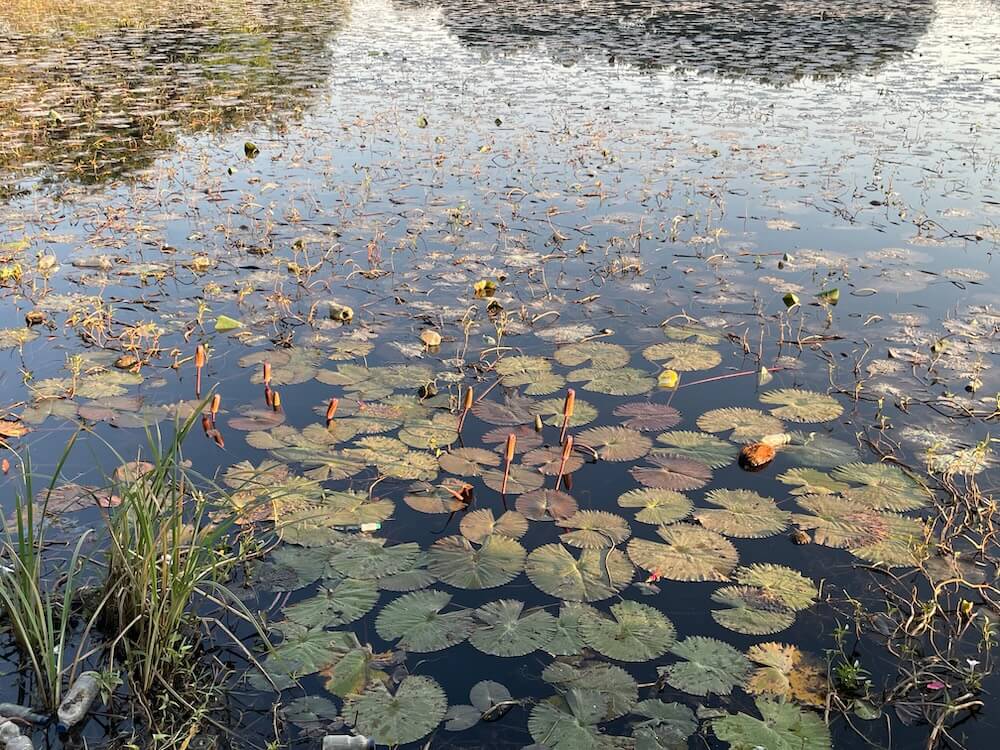
Several legends surround the original mountain shrine, including accounts of the Goddess appearing in person to her devotees. It is said that a tiger—the Goddess’s Vahana (vehicle)—roams the mountain, yet has never caused harm to a soul. To seek Her blessings there, devotees must climb the hill by a rough, unpaved track. This journey is difficult for the elderly, women, the physically challenged and the ailing. About fifty years ago, therefore, the villagers decided to construct a smaller shrine near the village at the foot of the hill. In accordance with this decision, a temple was built beside a lotus-filled lake. Initially, a small stone brought from the Goddess’s cave-shrine was worshipped here. Later, a small marble idol of the Goddess was installed. In 2013, the temple underwent renovation and at that time a larger idol of the Goddess was ceremonially consecrated. The earlier small idol still remains respectfully placed before the main image. The name Sarsai is believed to be a vernacular derivative of Saraswati and She is thus regarded as an aspect of Saraswati Devi. According to religious tradition, the sculptural form of Saraswati is four-armed, holding a book and a veena, while some depictions show the lotus, swan, peacock, lion, or ram as Her seat or vehicle. However, in this temple, the Goddess is enshrined in the form of Durga Devi. She is Ashtabhuja (eight-armed), seated upon a tiger and bears weapons such as the sword, mace and bow.
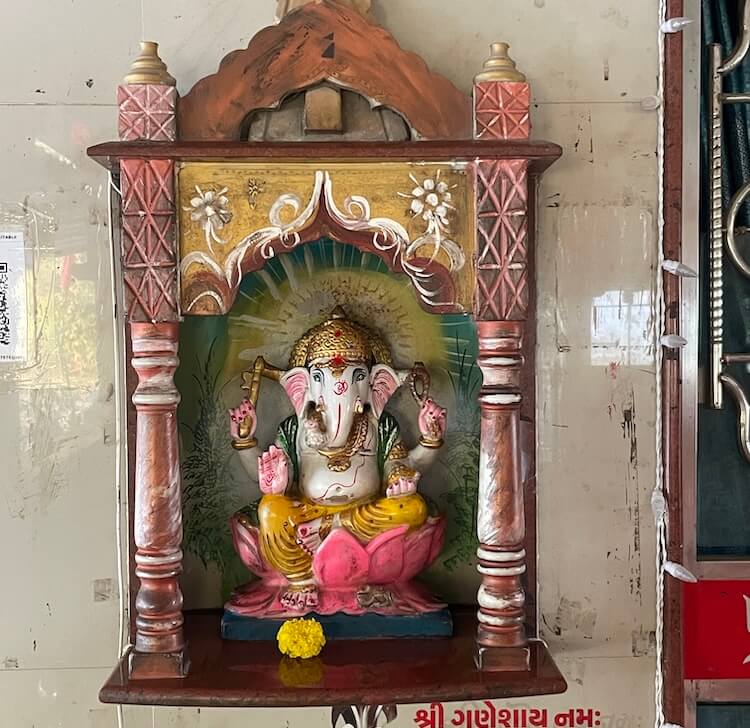
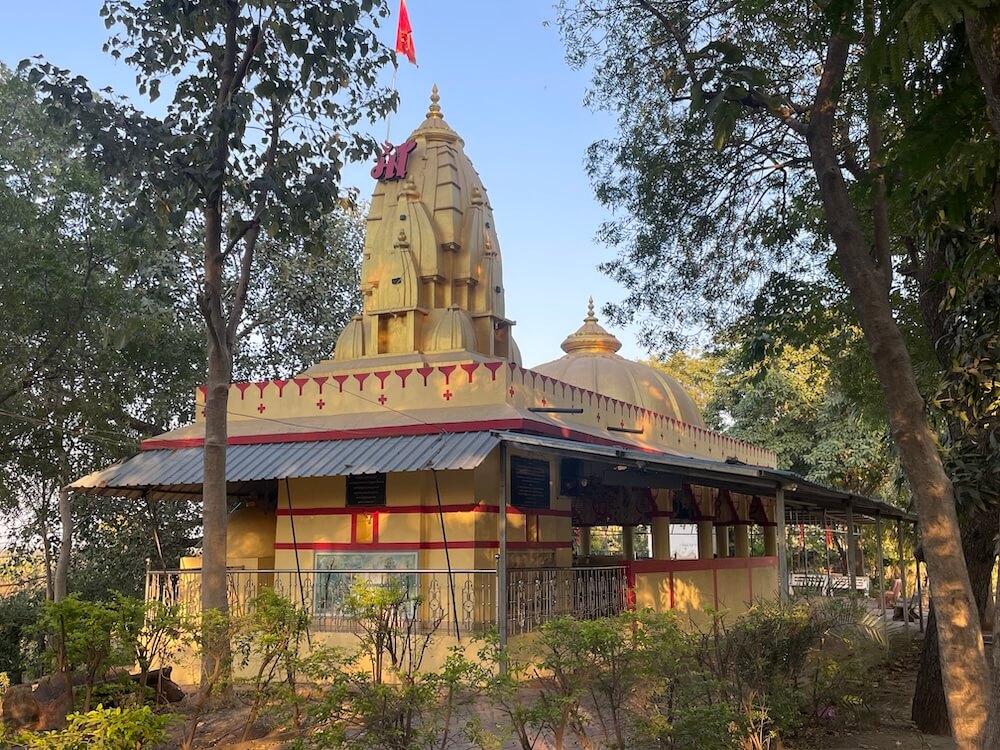
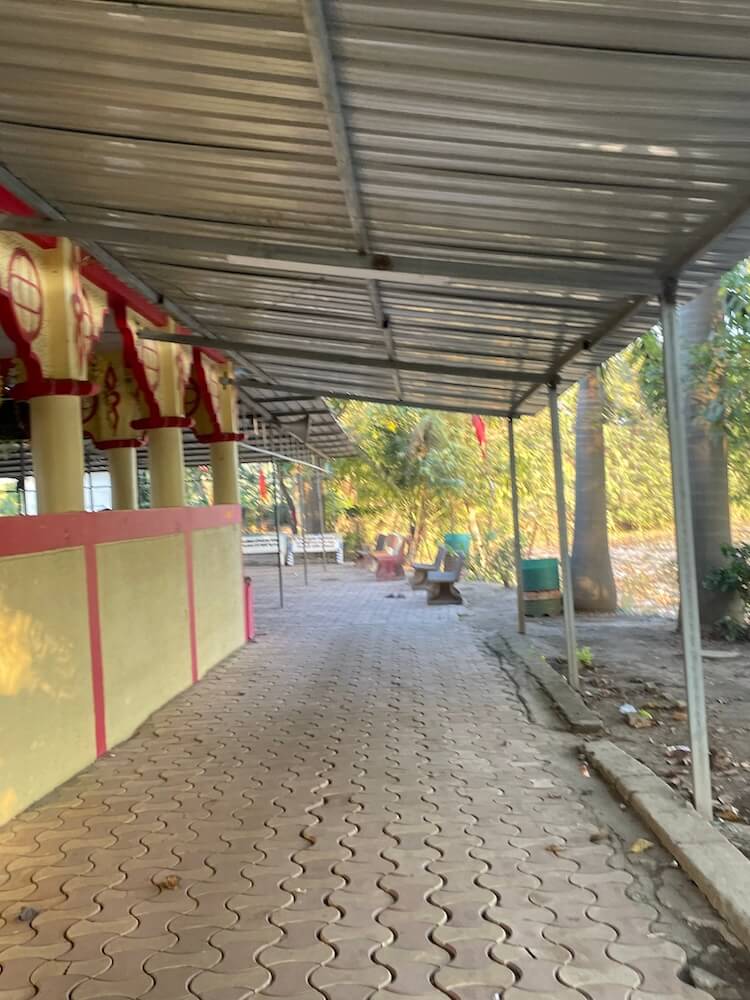
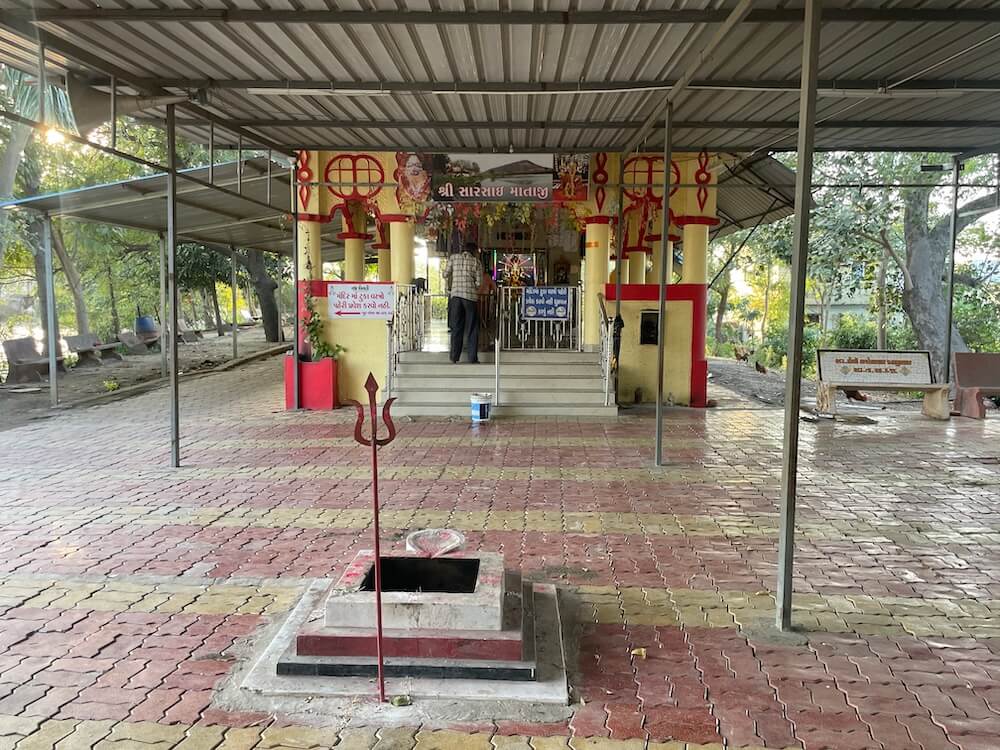
The temple stands close to the main village road, yet in surroundings graced by natural beauty. Outside the entrance, vendors sit with offerings, puja articles, chunri cloths and other sacred items for the devotees. Passing through the iron gateway, one moves along a path shaded on both sides by tall trees, leading towards the temple. To the right of this pathway is a children’s play area and beyond lies the large lake. A little further ahead spreads the temple courtyard, where a large covered shed with a homkunda (fire altar) is constructed. Sacred havan rituals are performed here during festivals. Climbing five steps, one enters the semi-open Sabha mandap (assembly hall). Above it rises a large domed shikhara (spire). Directly ahead is the Garbhagriha (sanctum sanctorum) adorned with marble flooring. A pradakshina marg (circumambulatory path) runs around the sanctum. On the front wall of the sanctum, in the left niche, stands the idol of Ganesh and in the right niche, the idol of Hanuman. In front of the sanctum, upon a high platform, is the statue of the lion, the Goddess’s vehicle. Within the sanctum, upon an elevated marble pedestal, is enshrined the marble idol of Sarsai Devi, while the earlier smaller idol stands reverentially before it. Above the sanctum rises a shikhara of the urushringa type, crowned with a two-tiered amalak and a kalash.
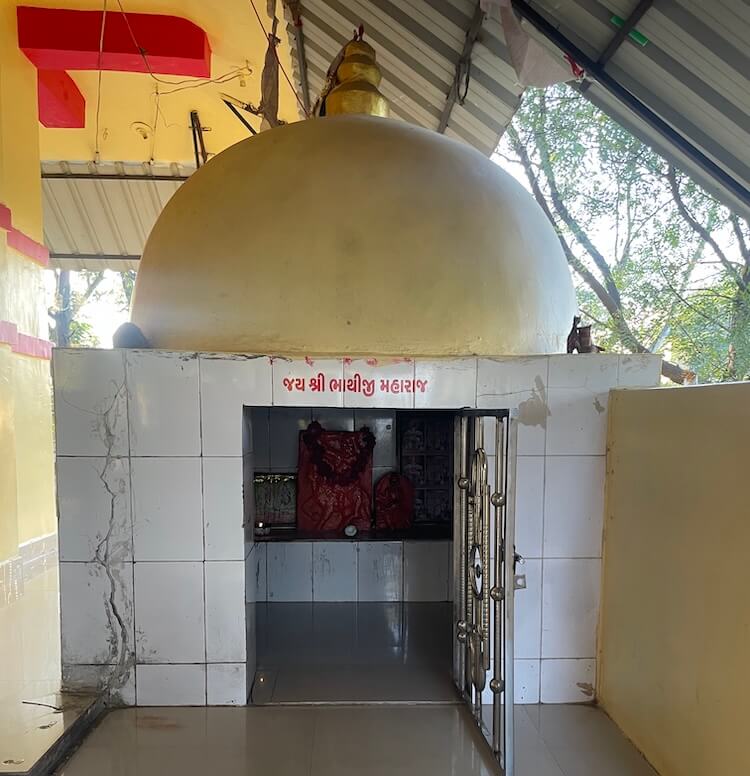
To the left of the temple stands the shrine of Bhathiji Maharaj. Within it, upon a square stone slab, is carved the sacred image of Bhathiji Maharaj, accompanied by a smaller sculpture and framed pictures of various deities.
Devotees may take darshan at the temple from 6.30 a.m. to 2 p.m. and again from 4 p.m. to 7.30 p.m. Aarti is performed at 5.55 a.m. and again at 5.30 p.m. Sundays and Tuesdays draw particularly large gatherings of devotees. Both the Chaitra and Sharadiya Navratri festivals are celebrated here with great fervour. Rishipanchami is regarded as the day of the Goddess’s divine manifestation and on this day, the great pilgrimage fair is held upon the hill. Thousands of devotees from Surat, Vadodara, Bharuch, Ankleshwar, Valia, Netrang and surrounding regions come to participate. Numerous stalls selling food and a variety of goods spring up in the area, with ‘Surat-feni’ (a traditional sweet) being sold in the greatest quantity. Many devotees come here to vow for progeny or to pray for the fulfilment of their dream of a home. When praying for a house, it is customary to place one stone upon another as a symbolic plea. To fulfil vows, there also exists the traditional offering of a rooster to the Goddess.
This sacred temple stands as a testament to deep spiritual devotion, ancient architectural grandeur, and rich local cultural traditions.
The sanctum sanctorum houses the divine idol consecrated according to ancient Vedic traditions, surrounded by serene courtyards and traditional temple architecture.
Navratri, Maha Shivratri, Annual Temple Jatra & Deepotsav
Compare and book flights, secure top-rated local hotels near the temple, hire reliable guides, and rent cars instantly.
Extend your pilgrimage by visiting other highly sacred temples located nearby.


Add ₹999 more to unlock FREE SHIPPING!
Your sacred cart is currently empty.
Shop Photo FramesFill in your delivery details below to place your order.
Add comment