
Add ₹999 more to unlock FREE SHIPPING!
Your sacred cart is currently empty.
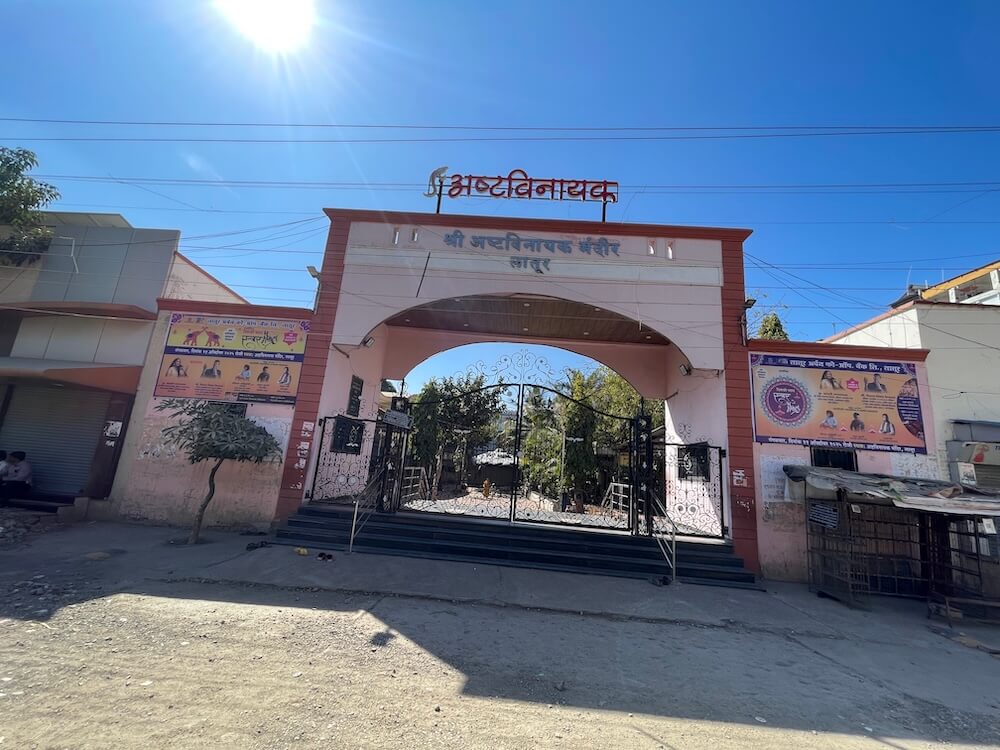
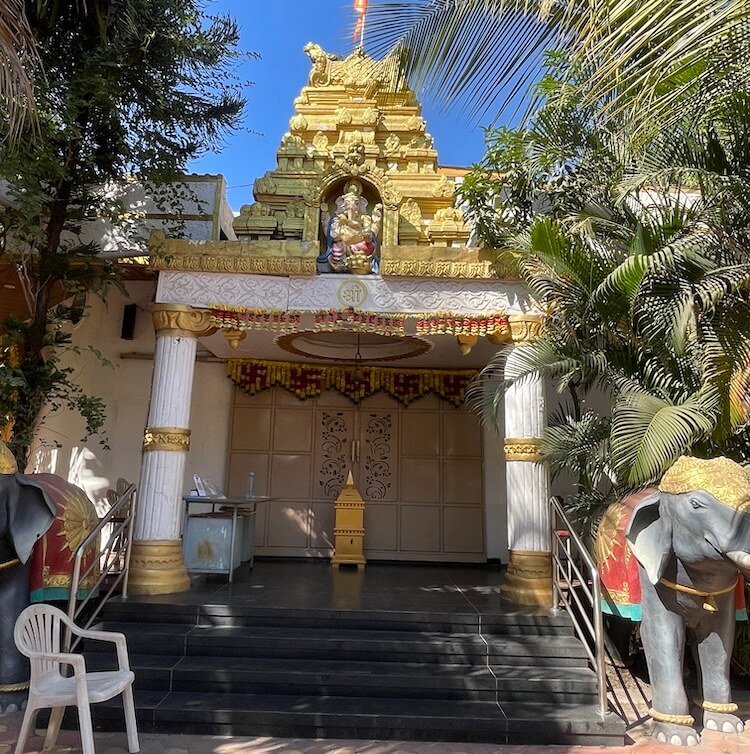
Shop Photo FramesIn Latur city, in the Shivaji Nagar area, popularly known as ‘Tuition Nagar’, there is a temple dedicated to Lord Ganesha, the revered deity of knowledge. This temple beautifully enshrines the images of the Ashtavinayakas along with the main idol of Lord Ganesha. Additionally, it also houses shrines for Lord Shivshankar, the Navagrahas, and Lord Vitthal-Rakhumai. The divine idols, lush gardens, greenery, and unique decorative arrangements make this temple a beloved destination for devotees and tourists alike. On Tuesdays and holidays, a large number of devotees come for darshan. During festive seasons, it is said that over fifty thousand devotees visit for darshan.
There is a specific spiritual significance behind the eight forms of Ganesha in the Ashtavinayak tradition. Since ancient times, the number eight has held great importance in our culture. It is believed that these eight Ashtavinayak shrines represent the eight principal directions. In the Ganapatya tradition, the ‘Ganesha Purana’ and ‘Mudgala Purana’ are considered two important Puranas. Scholars hold various opinions regarding the period of their composition. Mahamahopadhyaya P. V. Kane, in ‘History of Dharmashastra – Volume 2’, states that the period of both these Puranas is uncertain. The renowned Sanskrit scholar Rajendra Chandra Hazra has stated that the ‘Ganesha Purana’ dates back to between 1100 and 1400 AD, and that the ‘Mudgala Purana’ predates the Ganesha Purana.
It is in this ‘Mudgala Purana’ that the concept of the Ashtavinayakas was first introduced. This great scripture comprises nine sections, 428 chapters, and 23,150 shlokas. Eight of its sections describe one Vinayaka each. According to the ‘Mudgala Purana’, humans possess eight main defects or vices: Kama (lust), Krodha (anger), Lobha (greed), Moha (attachment), Mada (arrogance), Matsara (envy), Ahankara (ego), and Ajnana (ignorance). In the eight sections of this Purana, these vices manifest as Kamasura, Krodhasura, Lobhasura, Mohasura, Madasura, Matsarasura, Ahankarasura, and Ajnanasura. The Purana narrates the tale of how the eight forms of Ganesha vanquished these eight asuras. Furthermore, Lord Ganesha is considered the master of the Ashtasiddhis (eight supernatural powers): Anima (ability to become as small as an atom), Mahima (ability to become immensely large and glorious), Garima (ability to become heavy), Laghima (ability to become light enough to fly), Prapti (ability to obtain anything), Prakamya (ability to achieve anything desired), Ishitva (ability to possess divine power), and Vashitva (ability to control others). Devotees believe that undertaking the Ashtavinayak Yatra leads to the attainment of these Ashtasiddhis.
It is said that during the Ashtavinayak Yatra, one should have darshan of the Vinayakas at all eight places in a specific sequence. The Ashtavinayak Yatra is circular or cyclical. In spirituality, the concept of completeness is important. Returning to the starting point is considered a sign that the cycle is complete. Morgaon in Pune district is the primary seat of the Ganapatya tradition. Therefore, it is considered essential to begin and conclude the Ashtavinayak pilgrimage there. However, this is not possible for everyone. For such devotees, temples that offer darshan of all Ashtavinayakas in one place become significant. The Ashtavinayak Temple in Latur has thus become a popular destination.
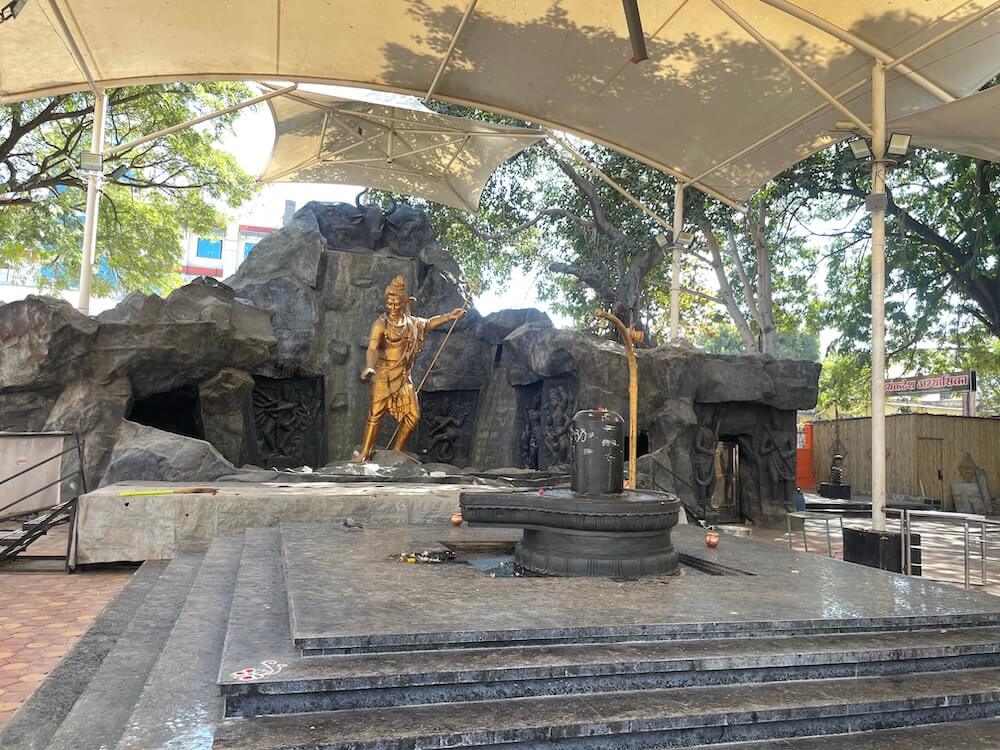
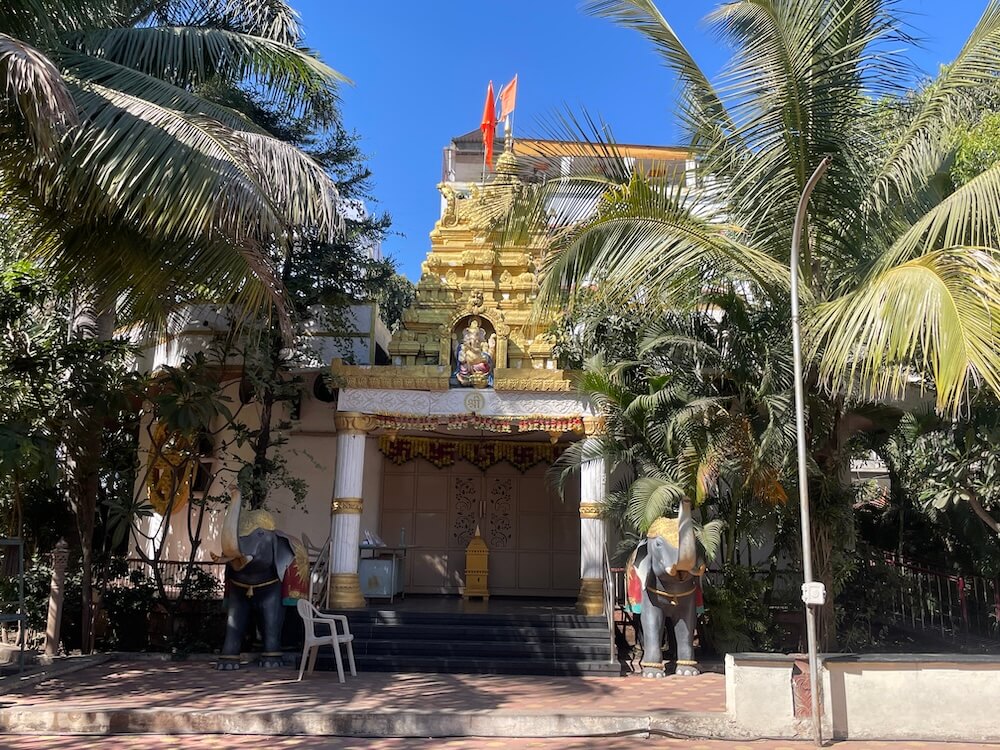
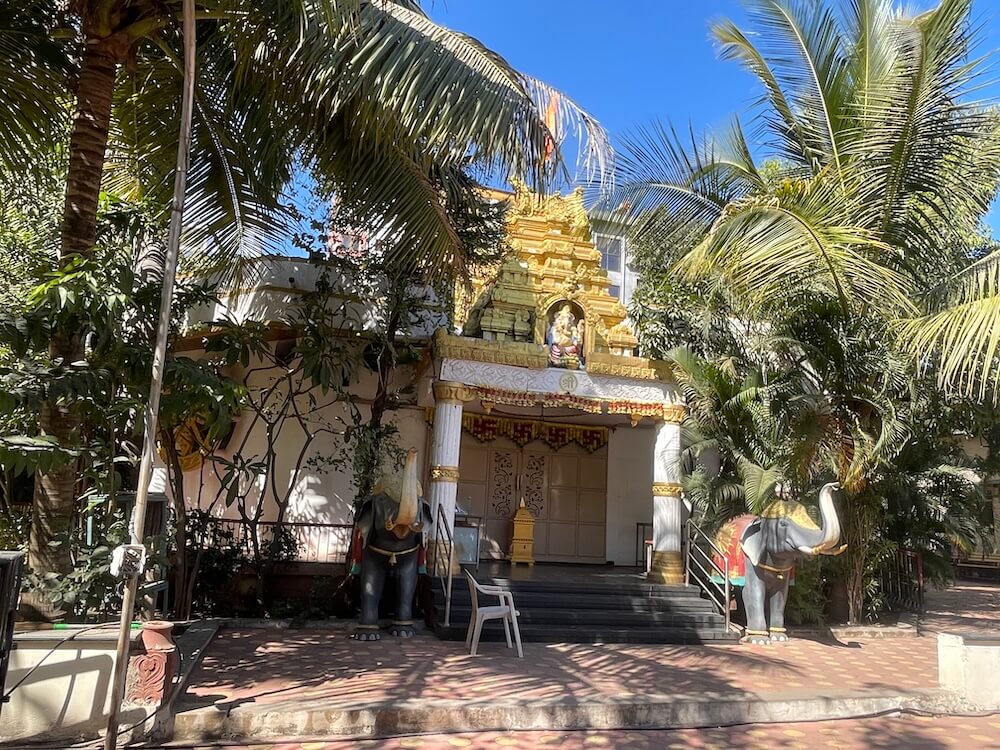
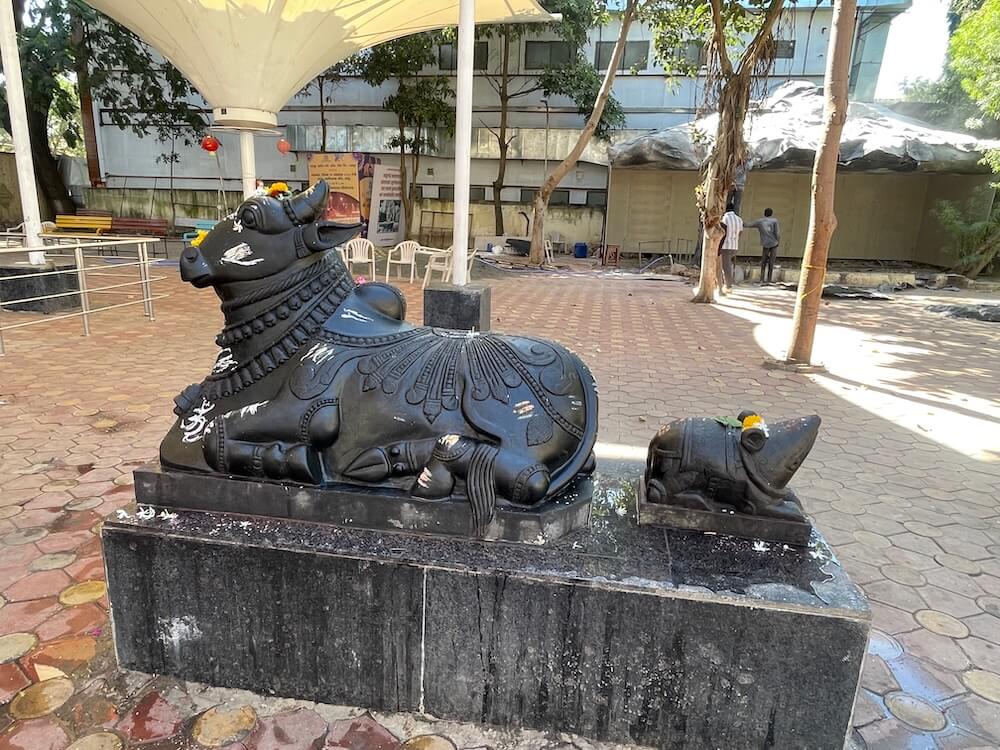
This Ashtavinayak Temple in Latur city was constructed in 1989. This place is exceedingly beautiful and serene. Right in front of the main Ashtavinayak Temple, an artificial mountain has been erected, creating the illusion of small caves and stone idols. In front of this mountain stands a ten-foot-tall idol of Lord Shankara, depicted with a Trishul and matted locks. A Shivling is also present in front of this idol. In front of the Shivling, on a platform, there are two idols placed back-to-back. One is of Nandi, and the other is of Mushak (Lord Ganesha’s mouse). Nandi faces Lord Shankara, while Mushak faces the Ganesha temple. The Ganesha temple has an octagonal structure. Inside, on a high Vajrapeetha, a marble idol of Lord Ganesha is enshrined within a beautiful silver archway. In the niches surrounding this idol, the deities Mayureshwar, Siddhivinayak, Ballaleshwar, Varadavinayak, Chintamani, Girijatmaj, Vighneshwar, and Mahaganapati are consecrated. A beautiful and well-maintained garden surrounds the temple. Within the temple complex, there are also shrines for Vitthal-Rakhumai and the Navagrahas. Many other deity idols are also present in the temple premises. Statues promoting cow protection (Goseva) are also installed here.
Here, the Ganesh Chaturthi festival in the month of Bhadrapada is celebrated with great pomp and show. For ten days until Anant Chaturdashi, various cultural and religious programs are organized. Ganesh Jayanti in the month of Magha is also celebrated with great enthusiasm. On Sankashti Chaturthi every month, thousands of devotees from Latur city and its surrounding areas queue up for darshan. Devotees can have darshan at this temple daily from 6 AM to 12 PM and from 4 PM to 9 PM. Mahashivratri and Ashadhi Ekadashi are also celebrated here.
This sacred temple stands as a testament to deep spiritual devotion, ancient architectural grandeur, and rich local cultural traditions.
The sanctum sanctorum houses the divine idol consecrated according to ancient Vedic traditions, surrounded by serene courtyards and traditional temple architecture.
Navratri, Maha Shivratri, Annual Temple Jatra & Deepotsav
Compare and book flights, secure top-rated local hotels near the temple, hire reliable guides, and rent cars instantly.
Extend your pilgrimage by visiting other highly sacred temples located nearby.


Add ₹999 more to unlock FREE SHIPPING!
Your sacred cart is currently empty.
Shop Photo FramesFill in your delivery details below to place your order.
Add comment