
Add ₹999 more to unlock FREE SHIPPING!
Your sacred cart is currently empty.
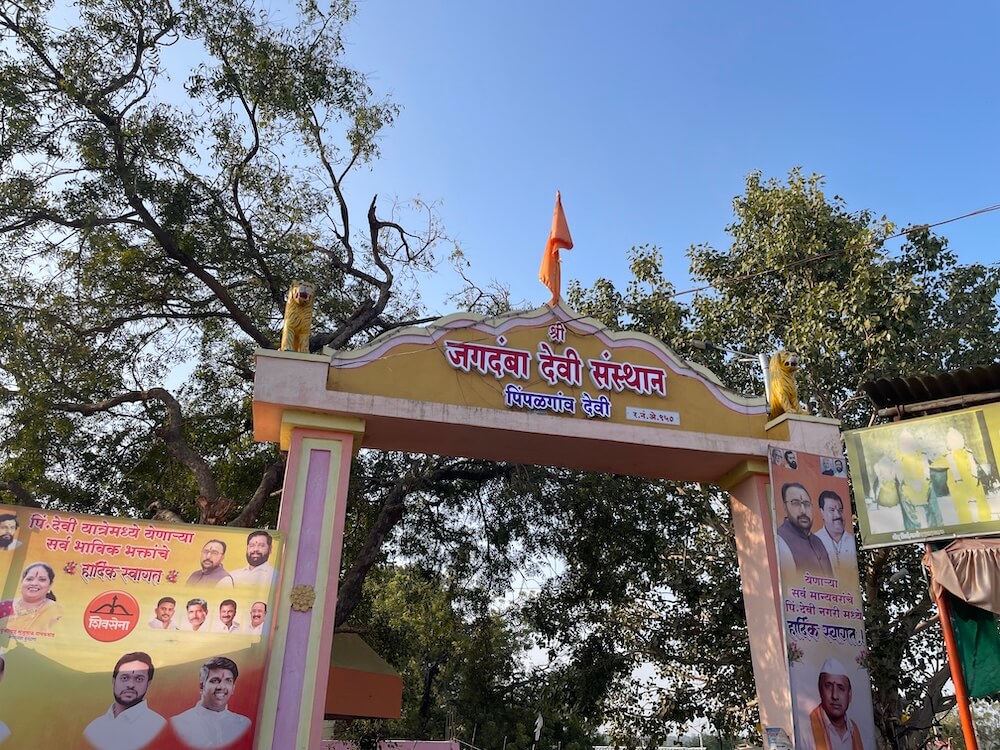
Shop Photo FramesMaharashtra is renowned as the sacred land of saints and deities. Within this holy land, the Vidarbha region is especially famous for its historical, cultural, and religious heritage. The roots of spirituality run deep in the fertile black soil of Vidarbha. Whether it is Shegaon of Sant Gajanan Maharaj, the world-famous meteor crater lake of Lonar, or the birthplace of Rajmata Jijau at Sindkhed Raja, Buldhana district in Vidarbha is enriched in many ways from the perspective of tourism and spirituality. Nestled in the lap of the Satpura mountain ranges on the border of Khandesh and Vidarbha, in Motala taluka of Buldhana district, lies the village of Pimpalgaon Devi, and the abode of the village deity Shri Jagdamba Mata here is a revered place of faith for thousands of devotees.
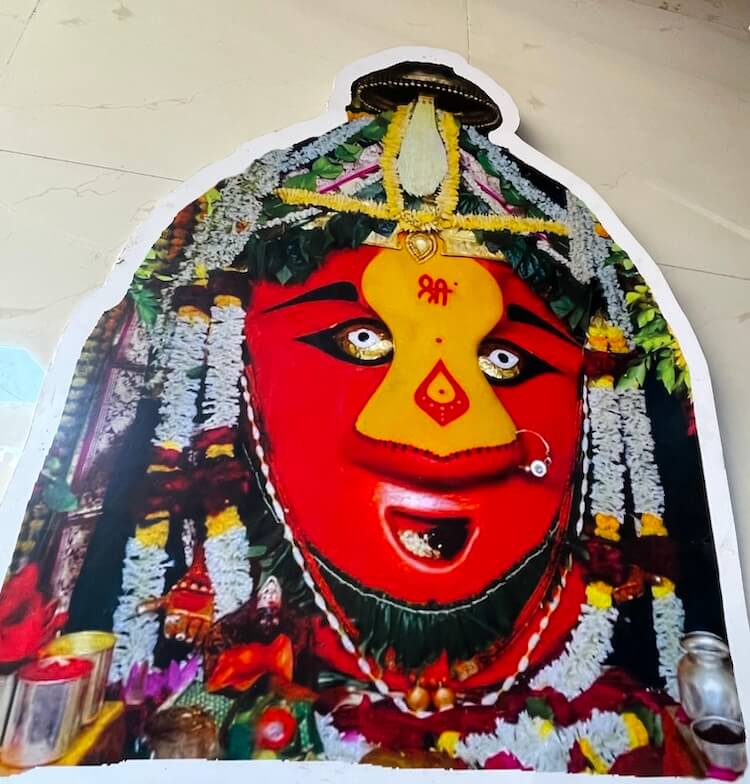
The name ‘Pimpalgaon Devi’ itself highlights the uniqueness of this village. There are many villages named Pimpalgaon in Vidarbha, including names such as Pimpalgaon Raja or Pimpalgaon Nath. However, the title ‘Devi’ bestowed upon this village clearly signifies that its identity and existence revolve entirely around the temple of Jagdamba Mata. In this temple, alongside Goddess Jagdamba, the sacred idols of Goddess Ambabai and Goddess Nimbabai are enshrined. It is believed that the idols of these three sisters were discovered here about a thousand years ago. Since then, devotees hold the firm belief that these Goddesses have been protecting the entire surrounding region. The Goddesses here are worshipped as the Kulswamini (patron family deity) of numerous families across Vidarbha.
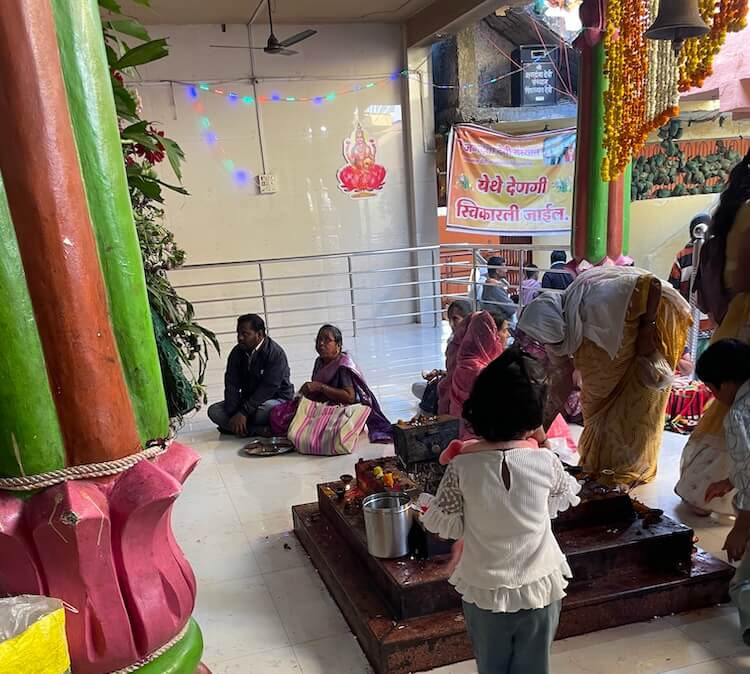
Jagdamba means the Mother of the Universe. The Goddess here is known to be a living and responsive divine presence (Jagrut), ever ready to answer the prayers of her devotees. Many childless couples come here to offer earnest prayers and make vows to the Goddess for the blessing of a child. The tradition of making and fulfilling a vow here is unique. While making a vow, a coconut along with the Goddess’s sacred offering (Oti) is bound in a green cloth. In the local dialect, this bundle is referred to as a ‘Bhar’. Thousands of such Bhars can be seen tied to the temple walls. Once the vow is fulfilled, the Oti of this Bhar is reverently immersed in the natural water sources of the village.
Even through numerous political transitions—such as the decline of the Yadava Empire, the Mughal and Nizam rule, and later the reign of the Marathas—this sacred shrine endured, sustained by the unwavering faith of devotees and its secluded location. In the 17th century, during the era of Lakhuji Jadhav of Sindkhed Raja, temples in this region underwent revival, due to which the architectural structure of this temple reflects a subtle influence of Maratha architecture. This temple is also documented in the British-era gazetteer of the Berar Province.
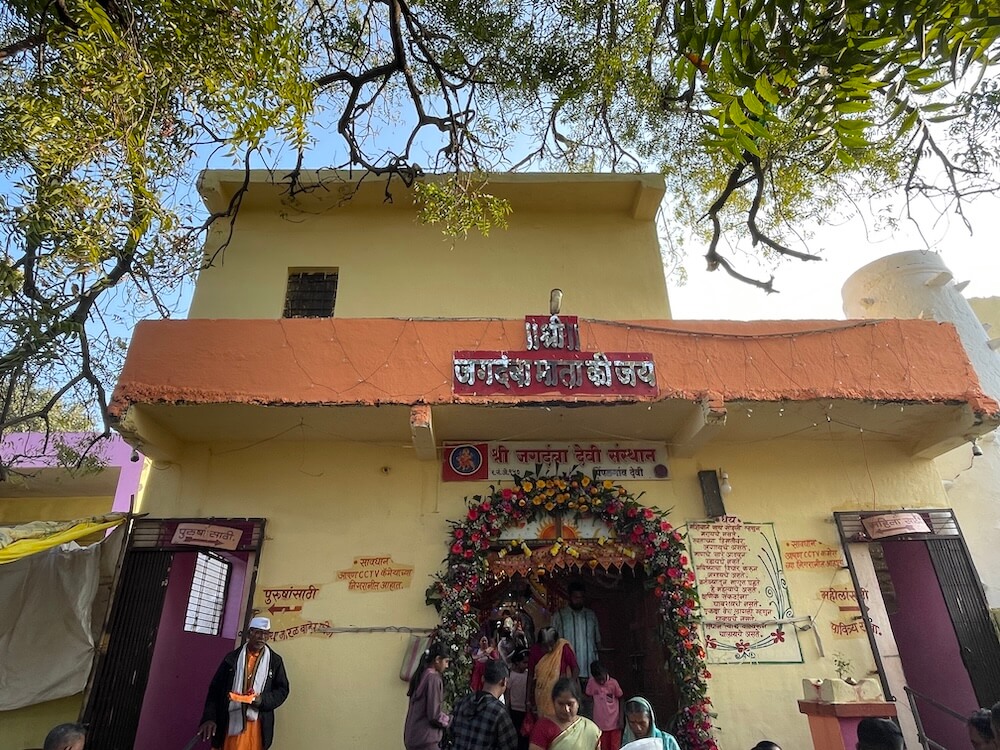
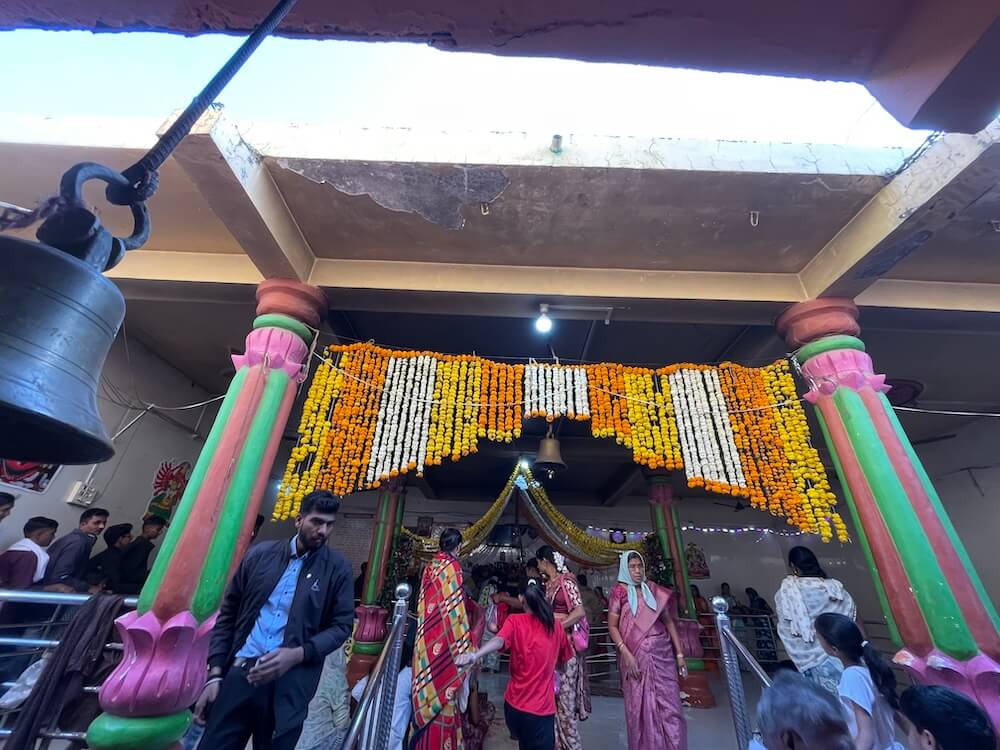
Motala Taluka inherits a grand legacy of ancient temples. Among the chain of ancient shrines—such as the ancient Ambamata Temple of Tarapur, Koleshwar Temple of Rohinkhed, Hemadpanthi Shiva Temple at Kothali, and Rameshwar Temple in Rajur Ghat—this shrine at Pimpalgaon Devi holds a place of significant importance. Located a short distance from the square near the village bus stand, the temple premises are exceptionally peaceful and serene. Entrance to the temple courtyard is through an archway situated a short distance away. Benches are provided in the courtyard for devotees to rest, and a spacious hall stands in front of the temple. Near the entrance of the temple stand two ancient Deepmalas (lamp towers). Near the two-storeyed entrance gate lies the sacred shrine of the Asara Matas.
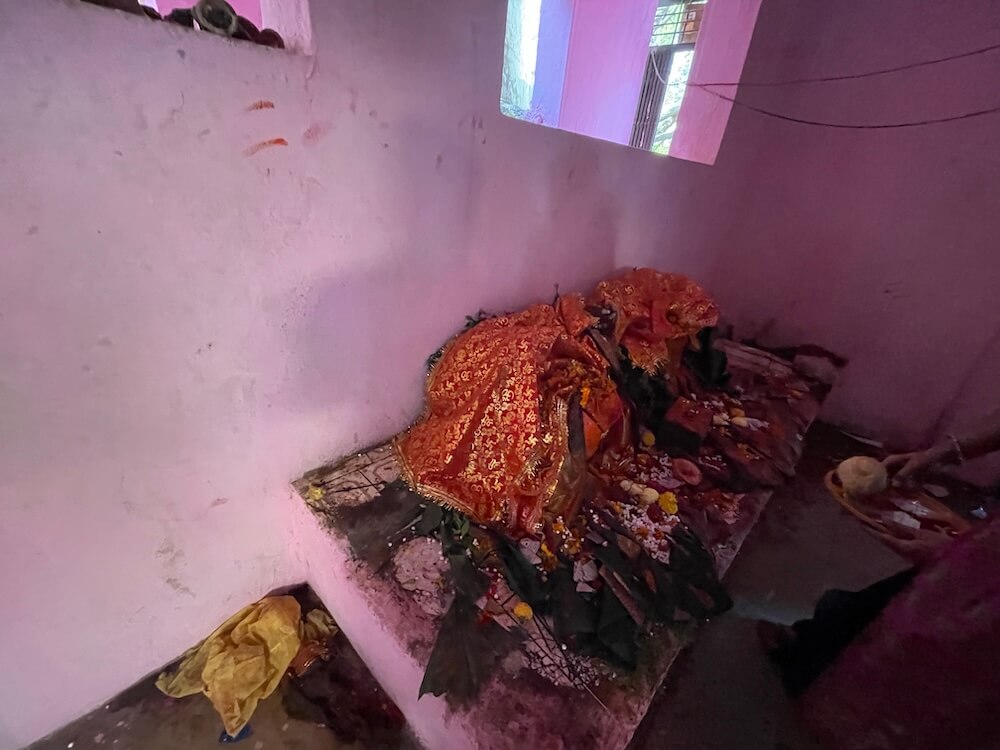
The temple architecture comprises a Sabhamandap (assembly hall) and a Garbhagriha (sanctum sanctorum). The Sabhamandap features a Yagnakunda (sacrificial fire altar). Stainless steel railings have been installed in the assembly hall for managing queue lines of devotees. An icon of Lord Ganesha graces the Lalatabimba (center lintel) above the entrance of the sanctum sanctorum. Inside the sanctum, on a small raised platform, reside the three vermilion-smeared Tandalas (sacred aniconic stones) of the Goddesses. Coconuts bound for vows offered to the Goddess are tied along the walls inside the temple. Above the sanctum sanctorum rises a tall Shikhara (spire). Over the three vertical square tiers of the spire rests a large Amalaka topped with a Kalasha (finial). Sculptures of various deities grace the Devakoshtas (niche shrines) on the Shikhara. Directly in front of the temple, beneath a neem tree, rests a small Shivlinga.
The temple celebrates two major festivals with great fervor and enthusiasm: the Sharadiya Navratri festival and the Paush Purnima Yatra (fair). During Navratri, various religious programs, Kakad Aarti, Haripath, Kirtan, and Bhagavat Katha discourses are organized over nine days. The festival concludes on Navami with the performing of Hom-Havan. The second fair, lasting fifteen days from Paush Purnima to Amavasya, is especially famous among devotees across Vidarbha and Khandesh. Carrying a tradition of nearly three hundred years, during this fair, the Tandalas of the Goddesses are specially decorated. The fair abounds with prasadam, toys, and recreational attractions. Food lovers particularly flock here to savor the taste of the famous local Revdi.
This sacred temple stands as a testament to deep spiritual devotion, ancient architectural grandeur, and rich local cultural traditions.
The sanctum sanctorum houses the divine idol consecrated according to ancient Vedic traditions, surrounded by serene courtyards and traditional temple architecture.
Navratri, Maha Shivratri, Annual Temple Jatra & Deepotsav
Compare and book flights, secure top-rated local hotels near the temple, hire reliable guides, and rent cars instantly.
Extend your pilgrimage by visiting other highly sacred temples located nearby.


Add ₹999 more to unlock FREE SHIPPING!
Your sacred cart is currently empty.
Shop Photo FramesFill in your delivery details below to place your order.
Add comment