
Add ₹999 more to unlock FREE SHIPPING!
Your sacred cart is currently empty.
Shop Photo FramesIn the Indian tradition, Lord Shri Dattatreya is considered a significant deity in the form of the Guru. Many places have been sanctified by the presence of Shri Datta, who is the combined manifestation of Brahma, Vishnu, and Mahesh. Itkhed village in the Sangrampur taluka of Buldana district is recognized as one such spiritually awakened sacred site. Situated on the banks of the Purna River, this village has a history spanning five hundred years. The village houses an ancient temple of Shri Datta. Notably, records indicate that Shri Gajanan Maharaj of Shegaon also visited this place to offer his prayers. A large fair is held here every year on Chaitra Purnima and Datta Jayanti. On these occasions, thousands of devotees from the surrounding areas come for darshan.
The legend of this place states that five hundred years ago, a gentleman named Parashuram Bhise lived in this village. A devout follower of Shri Datta, Bhise would travel to Mahur for darshan every full moon. However, due to his advancing age, it became impossible for him to continue these journeys. One day, while at Mahur, he told Shri Datta, “It will no longer be possible for me to come here for darshan.” At that moment, Shri Datta appeared before him and granted him darshan. He said, “You do not need to come here anymore; I shall accompany you myself.” Accordingly, He set out with Bhise to come to the village. Bhise was walking ahead, and the Lord was following him. Upon reaching the banks of the Purna River in the village, Bhise looked back to ensure the Lord was indeed following him. At that very instant, Shri Datta stopped and decided to stay there. In those days, the area was a forest of Bor trees. During the monsoon, the waters of the Purna River would reach this spot, making it difficult to perform the service of Dattatreya for the four months of the rainy season. Due to this difficulty, Bhise prayed to Shri Datta. The Lord appeared to him again and accepted his request to come into the village. Over time, a temple was built here. Information about this temple is also provided in the ‘Central Provinces and Berar District Gazetteers – Akola District, Volume A’ (१९१०). The original temple was built in १८५६ and was renovated in १९५६. After another recent renovation, the temple attained its current form.
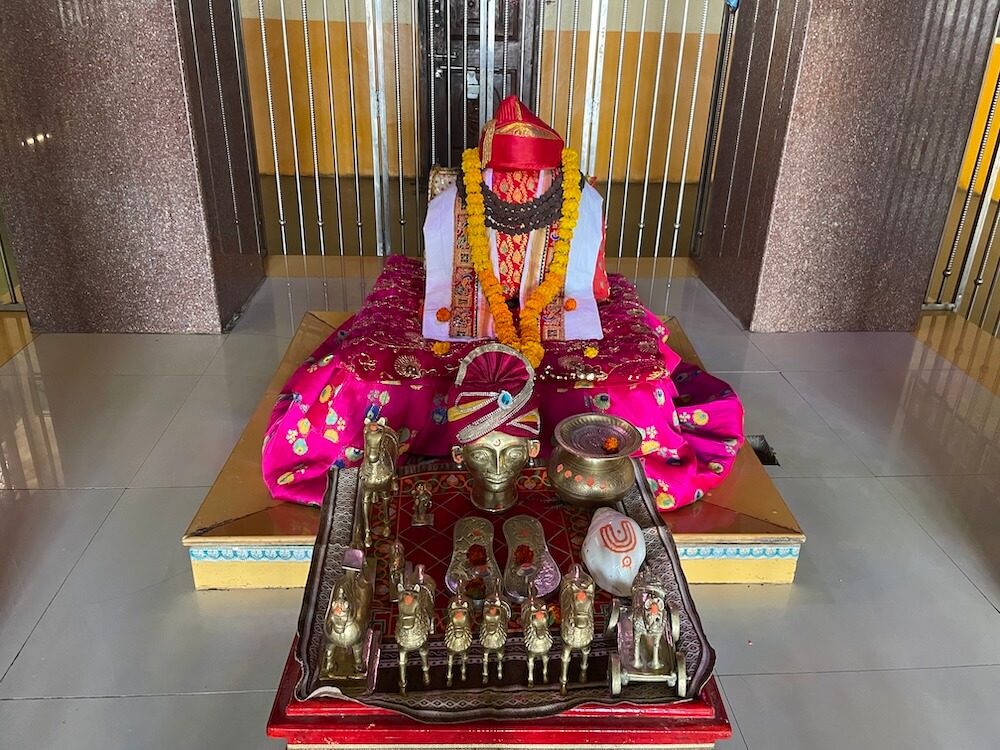
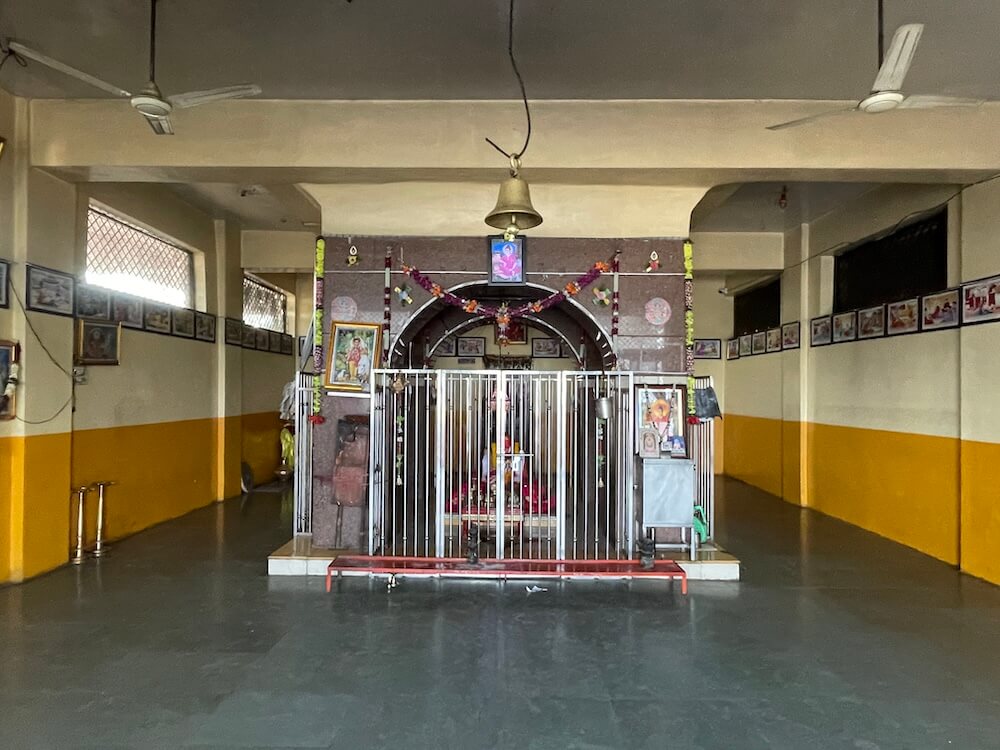
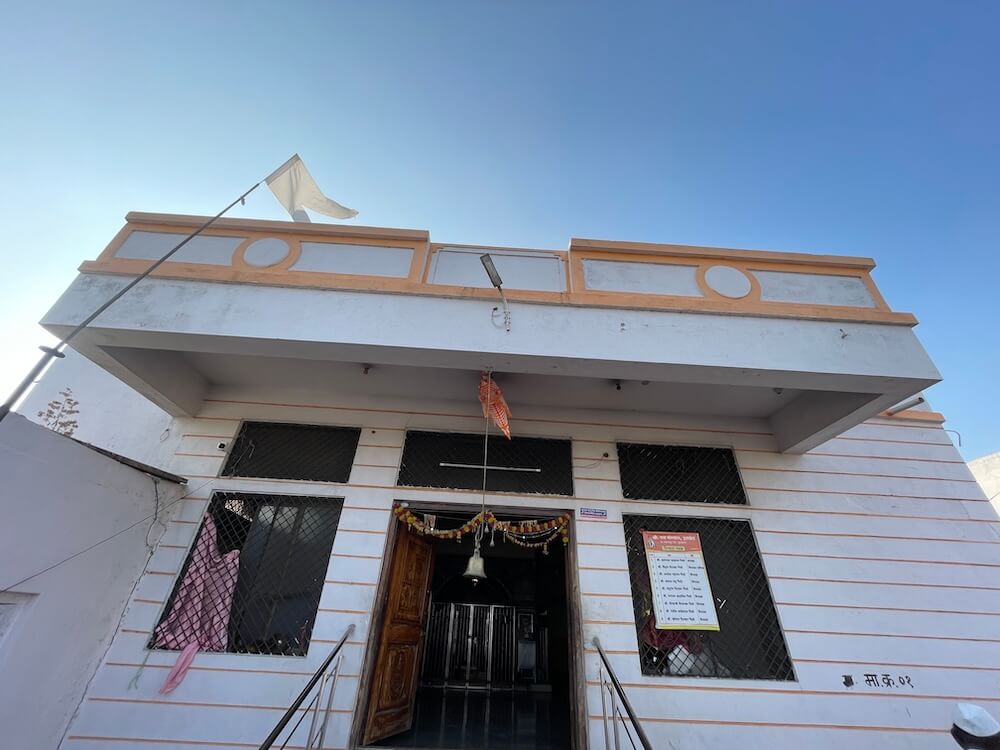
There is a small courtyard in front of this temple. The temple structure consists of a Sabha Mandap (assembly hall) and a Garbhagriha (sanctum sanctorum) in the center. The Garbhagriha is located in the middle of the Sabha Mandap, and the seat of Datta is on a pedestal between pillars connected by arches. This seat is referred to as ‘Vishesh’ here. On a wooden seat in front of this sanctum, there are brass horses in the first row. These were offered by some devotees after the fulfillment of their vows. Behind them are the Padukas (footprints) and a conch shell of Dattatreya. Further back is the trimukhi (three-faced) Panchadhatu idol of Dattatreya, a mask, and a vessel for Tirtha (holy water). In the ceiling area above the sanctum, offerings of ‘Bhar’ (votive offerings) were previously hung on chains. Now, a coconut, two betel leaves, dried dates, almonds, and a one-rupee coin wrapped in a cloth are kept here. Behind the Garbhagriha is the Shayan Kaksha (sleeping chamber) of Shri Dattatreya. After the night Aarti, the Lord is put to rest here. This chamber contains the bed of Shri Dattatreya, upon which are placed the Datta Padukas, an image, a conch, a peacock feather, and a coconut. To the right is a Danda (staff). On the walls to the right of the bed, the clothes of Dattatreya are kept, which are called ‘Galf’ here.
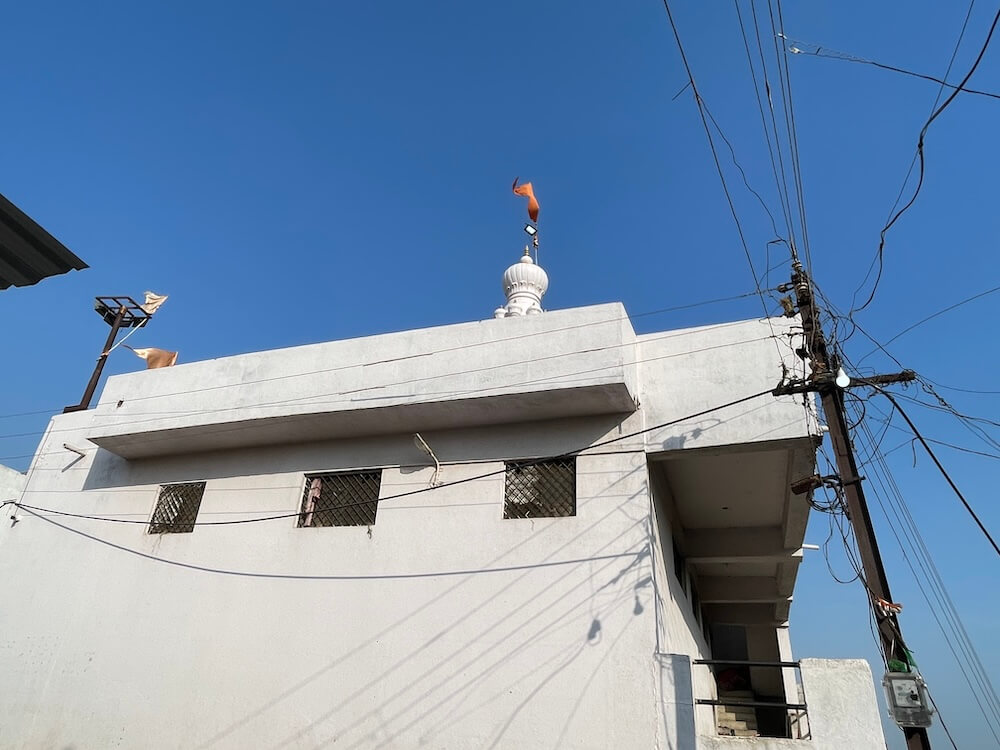
The temple features a beautiful Shikhara (spire). Below the Shikhara, in a square level, there are arched niches, and above this level are replicas of Kalashas. The upper section follows a similar design. Above that is a lotus flower design, followed by a two-tiered Amalaka and a Kalash. Near this temple is a hall built by the temple trust. The original site of the Lord is near the banks of the Purna River. There is a footpath leading there from the fields near the temple. This site is located in a Sabha Mandap in front of an Audumbar tree and is covered with a saffron cloth. Many devotees also come here for the tonsure ceremony of their children.
Many devotees visit the village temple every Thursday for darshan. People suffering from spiritual afflictions are brought here in the belief that the ailment will be destroyed. At such times, camphor is burnt here. On Wednesdays, Fridays, Sundays, Purnima, and Amavasya, Shri Dattatreya is bathed with the water of the Purna River and Panchamrit. The bathing ritual is performed for eight days during Datta Jayanti and for ten days during Ganga Dashara. Many devotees come for darshan every full moon, and many of them perform Annadan (donation of food) here. There is a large crowd of devotees at that time. It is said that Dattatreya arrived in the village on the day of Hanuman Jayanti, which is why a festival is celebrated here on this day as well. During Datta Jayanti, a Bhagavata Saptaha is held in this temple, concluding on the eighth day with a Kalya Kirtan. During this eight-day festival, Mahaprasad is distributed to the devotees. Gokulashtami is also celebrated here with great enthusiasm.
This sacred temple stands as a testament to deep spiritual devotion, ancient architectural grandeur, and rich local cultural traditions.
The sanctum sanctorum houses the divine idol consecrated according to ancient Vedic traditions, surrounded by serene courtyards and traditional temple architecture.
Navratri, Maha Shivratri, Annual Temple Jatra & Deepotsav
Compare and book flights, secure top-rated local hotels near the temple, hire reliable guides, and rent cars instantly.
Extend your pilgrimage by visiting other highly sacred temples located nearby.


Add ₹999 more to unlock FREE SHIPPING!
Your sacred cart is currently empty.
Shop Photo FramesFill in your delivery details below to place your order.
Add comment