
Add ₹999 more to unlock FREE SHIPPING!
Your sacred cart is currently empty.
Shop Photo FramesThe ancient temple of Lord Mahadeva at Sutala (Budruk), situated on the banks of the Bordi River—a tributary of the Payoshni (Purna) River—is immensely famous. Thousands of devotees hold unwavering faith in the self-manifested (Jagrut) Shivalinga here. The divine marriage ceremony of Lord Shiva and Goddess Parvati, held here on Chaitra Shukla Ashtami in the presence of thousands of devotees, is uniquely significant. There is a unique tradition in this village of not building any house taller than the silver pinnacle (kalash) of the Mahadeva temple. Villagers believe that if a house is built higher than the pinnacle, the concerned family has to face the wrath of Mahadeva.
In traditional Indian village architecture, the temple is considered the heart of the village and the source of spiritual energy. In many villages across Maharashtra, the tradition of not building a house taller than the temple pinnacle is still faithfully observed. This practice encompasses spiritual, social, and Vastu architectural perspectives. According to spiritual beliefs, the village deity is regarded as the ‘King’ and protector of the village. Just as it is considered inappropriate for a subject’s seat to be higher than the king’s throne, the foundation of this tradition is the belief that human dwellings must not stand higher than the divine pinnacle. This limitation symbolizes the renunciation of ego and the expression of humility and surrender before the Divine. Having the darshan of the lofty pinnacle every morning makes humans mindful of their limitations, which helps maintain harmony in society.
From the perspective of Vastu Shastra, the temple pinnacle is the primary source that attracts universal energy. If the pinnacle is of the highest elevation, this sattvic energy flows unimpeded throughout the entire village. Popular belief holds that if houses exceed the height of the pinnacle, it obstructs the flow of these positive waves, adversely affecting the village’s energy. From a social perspective, this practice helps maintain equality in the village and ensures that every household has equal access to natural resources. Thus, this tradition has evolved into an important lifestyle that balances the supremacy of God, social harmony, and nature.
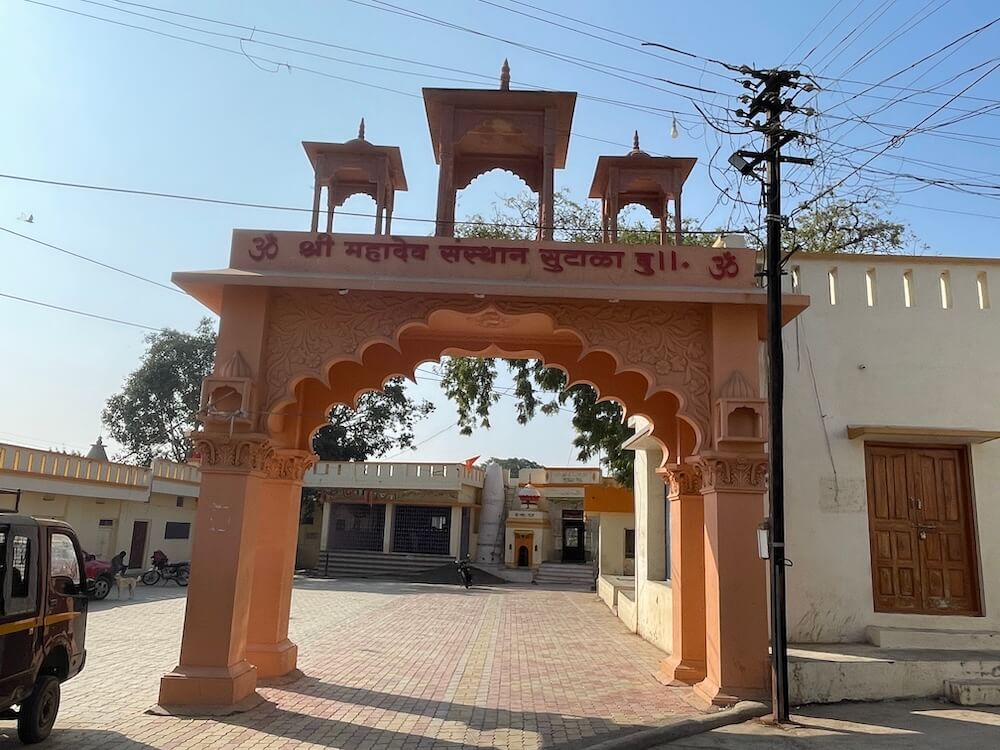
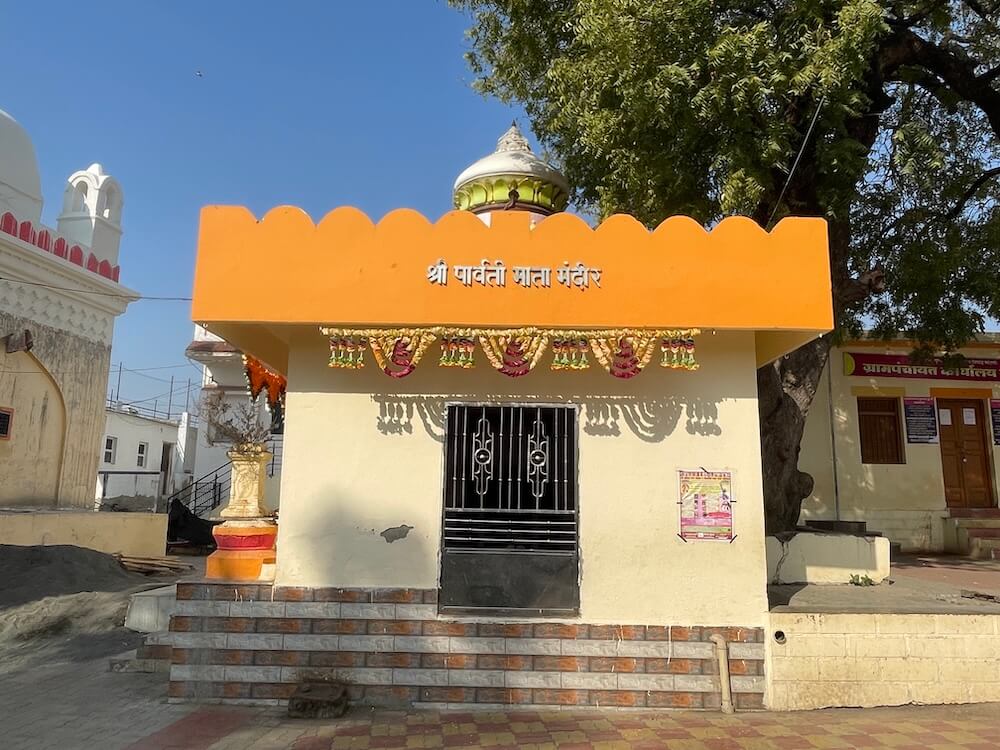
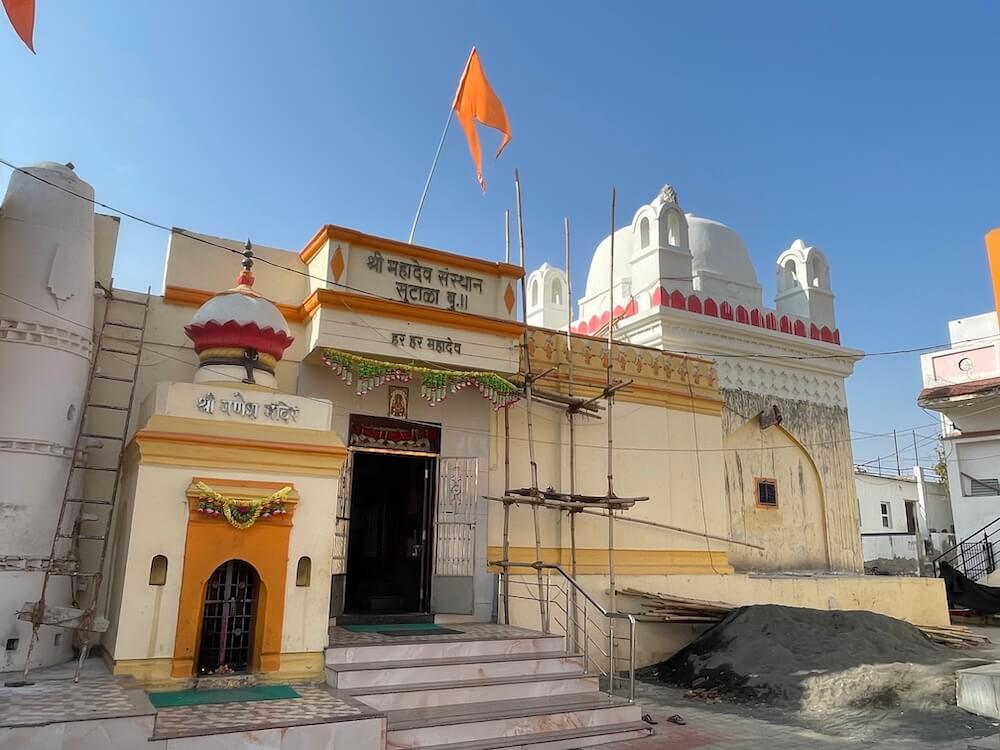
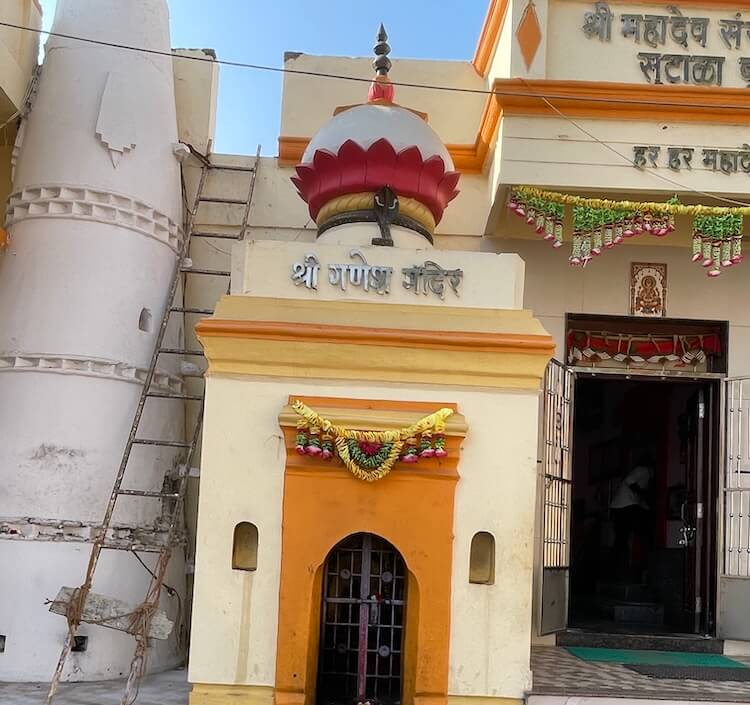
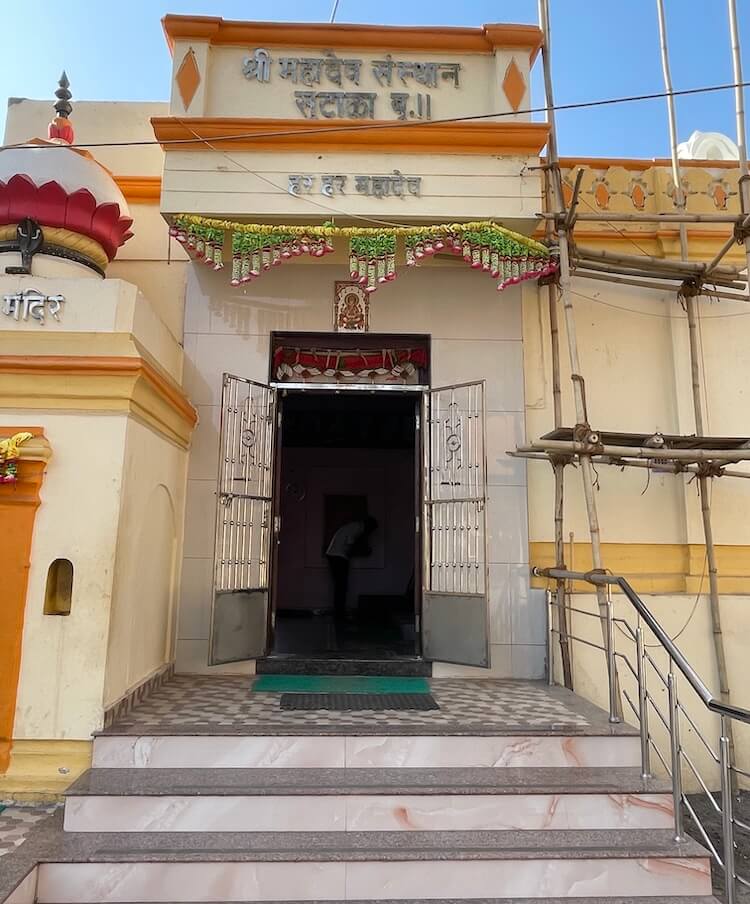
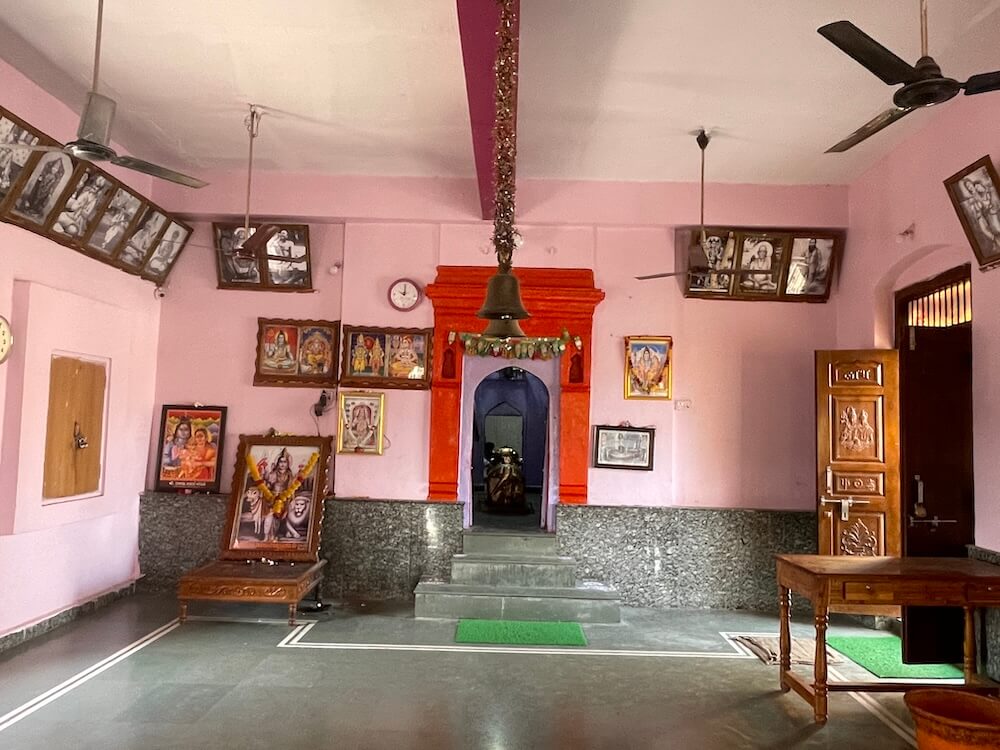
Located on the banks of the Bordi River about three kilometers from Khamgaon, there is no written history available regarding when this temple came into existence. However, it is said that a Shivalinga has been present here since ancient times. The temple acquired its current form following renovations carried out a few years ago. One enters the temple courtyard through an arched gateway in the surrounding wall. In this courtyard, paved with interlocking blocks, the temple of Goddess Parvati is situated on the right. To the left of the temple entrance is the Ganesha temple, and adjoining it on the left stands a stone lamp pillar (deepstambh). The original structure of the temple consists of a sabhamandap (assembly hall) and a garbhagriha (sanctum sanctorum). A large mandap was constructed outside the sabhamandap a few years ago. The sabhamandap has a small arched entrance. It features stone pillars and devotional alcoves (devkoshthas) on its walls. In the center of the stone pillars inside the sabhamandap, on a raised platform, sits the idol of Nandi, covered with a Panchaloha (five-metal alloy) sheet. Inside the garbhagriha, the Mahadeva Shivalinga rests within a large Shalunga (yoni base). The silver plating on the Shalunga features exquisite carvings. The ceiling of the garbhagriha has ornamental railing designs on all four sides. The ceiling features miniature domes (meghdambari) at the four corners and a domed pinnacle at the center, topped with a silver kalash. In the sabhamandap of the adjoining Goddess Parvati temple, there is an ancient Nandi, and the garbhagriha houses a pindi symbolizing Goddess Parvati.
Various Hindu festivals and celebrations, including Mahashivratri, are celebrated here with great enthusiasm. On the day of Chaitra Shukla Ashtami, the marriage ceremony of Shiva and Parvati is performed according to Vedic rituals. Attractive illumination adorns the temple for this occasion. On the morning of this festival, *rukhvat* (traditional bridal gifts and delicacies) is brought from every household in both Sutala Khurd and Budruk. This includes items like eleven papads, eleven puris, bhaji, kurdai, vada, along with various sweets. These offerings are then pooled together. In the afternoon, water from the Purna River is brought in ceremonial *kavad* processions and poured over the Shivalinga as *Jalabhishek*. Following this, a vibrant procession of fulfilled-vow poles (*navsachya kathya*) is taken out through the village with musical bands. Numerous bhajan troupes participate in this procession. Afterward, the *kathya* and torches (*divtya*) are carried in circumambulation around the temple. Around nine o’clock at night, following the Maharati in the temple, the wedding ceremony commences. For this, grains of jowar mixed with turmeric (*akshata*) are distributed to the thousands of devotees gathered in the temple premises. Amidst the chanting of Mangalashtakas, the Shiva-Parvati wedding is solemnized. Royal drums and kettle-drums (*dhol-nagaras*) are also played on this occasion. After the wedding concludes, bhajans are sung in the temple. Following the wedding, the *Mahaprasad*, prepared from the *rukhvat* brought by the villagers, is distributed. Around fifteen thousand devotees partake in this Mahaprasad. Various religious programs are organized in the temple premises for five days following this ceremony. On the fifth day, a grand fair is held in the temple precinct. Thousands of devotees from the surrounding region have darshan of the Shivalinga during this fair. Marking this fair, a palanquin procession of Mahadeva is also taken out through the village. On every Monday during the holy month of Shravan, hundreds of devotees offer Bilva leaves and perform Abhishek on the Shivalinga here. Various religious programs are held during Adhikamas (intercalary month), including kirtans and an unbroken week-long chanting of the Lord’s name (*Akhand Harinam Saptah*).
This sacred temple stands as a testament to deep spiritual devotion, ancient architectural grandeur, and rich local cultural traditions.
The sanctum sanctorum houses the divine idol consecrated according to ancient Vedic traditions, surrounded by serene courtyards and traditional temple architecture.
Navratri, Maha Shivratri, Annual Temple Jatra & Deepotsav
Compare and book flights, secure top-rated local hotels near the temple, hire reliable guides, and rent cars instantly.
Extend your pilgrimage by visiting other highly sacred temples located nearby.


Add ₹999 more to unlock FREE SHIPPING!
Your sacred cart is currently empty.
Shop Photo FramesFill in your delivery details below to place your order.
Add comment