
Add ₹999 more to unlock FREE SHIPPING!
Your sacred cart is currently empty.
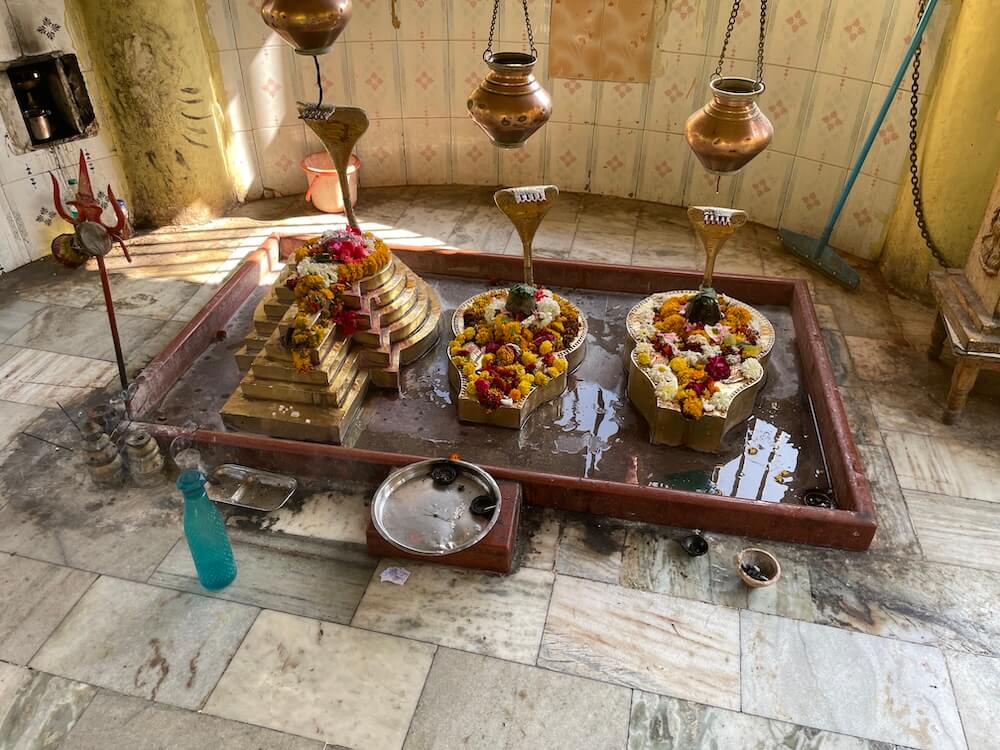
Shop Photo FramesIn Indian folk culture, the concepts of ‘Gramadaivata’ (village deity) and ‘Kshetrapala’ (guardian deity of the region) hold extraordinary significance. Nestled in the lap of picturesque mountain ranges and the remote terrain of Mohadi Ghat, the ancient Mahadeva and Mhasoba temples are the living embodiment of this tradition. The coexistence at a single location of Lord Shankara, belonging to the disciplined Vedic tradition, and ‘Mhasoba’, the popular deity and protector of the hardworking pastoral community, is the primary feature of this sacred site. Another unique distinction of the Mahadeva temple here is the presence of three lingas in the sanctum sanctorum. These three lingas are considered symbols of the holy trinity of Brahma, Vishnu, and Mahesh. In this spiritually potent shrine, which is a focal point of devotees’ faith, thousands of worshippers gather for darshan, especially on every Monday of the holy month of Shravana.
Although Mahadeva and Mhasoba appear to be two distinct deities, there is a profound non-dualistic (advaita) relationship between them. From a religious perspective, Mhasoba is considered to be a form or an emanation of Lord Mahadeva himself. In the Shaivite tradition, Shiva is addressed as Pashupati, and in rural Maharashtra, especially In the farming and Dhangar communities, Mhasoba is worshipped as a deity who protects cattle and agriculture. In other words, the protective role that Lord Shiva embodies is the very same role that Mhasoba fulfills at the rural level. In many places, Mhasoba is considered a fierce manifestation of Lord Shiva’s Bhairava or Rudra form. Just as Shiva is fond of cremation grounds and asceticism, Mhasoba’s shrine is also located outside the village, in the fields, or in the wilderness. This similarity clearly reveals the divine connection between them.
Considering mythological references, the origin of the name Mhasoba is linked to the word ‘Mahisha’ (water buffalo). According to some folklores, after the Goddess slew Mahishasura, his repentant soul received the boon to stay on as a protector, and he became an attendant (gana) of Lord Shiva. Due to the influence of the Nath Panth, Mhasoba is regarded in many places as a loyal servant or Kshetrapala (guardian deity) of Shiva. The tradition of seeking permission from or bowing to the Kshetrapala (Mhasoba) before entering the temple of Mahadeva or crossing the village boundaries bears witness to this relationship. From the devotees’ perspective, Mahadev is the bestower of liberation (Moksha), while Mhasoba is the deity who protects them from the troubles of daily life.
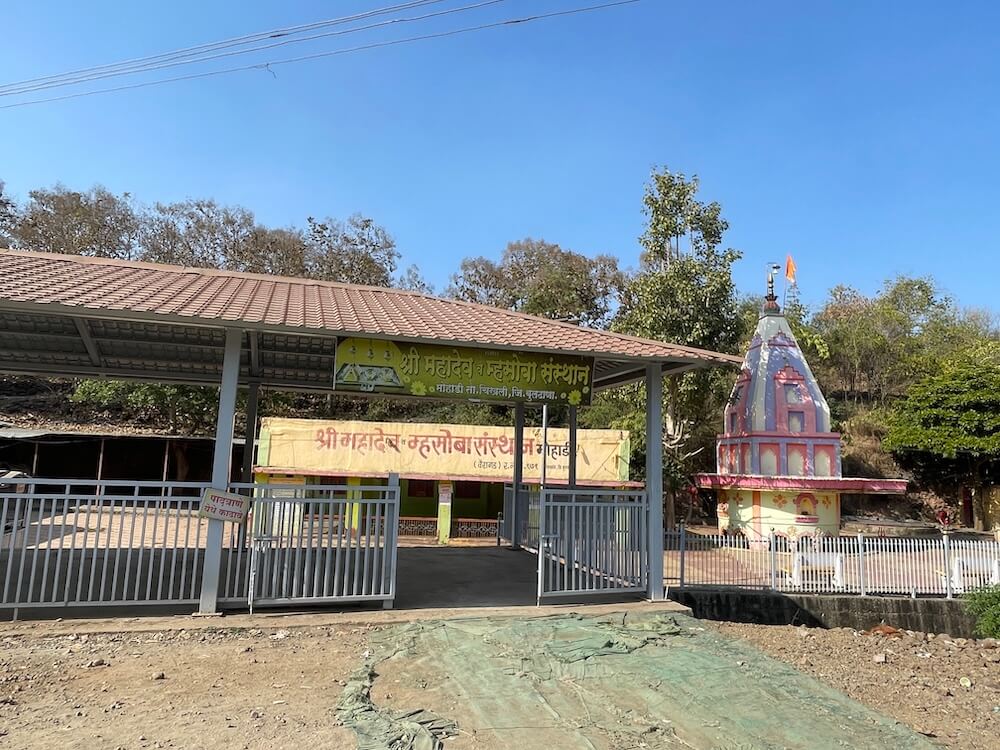
Mohadi is a village situated on the important Chikhli-Khamgaon state highway. The mountain pass through which this road passes is known as the Mohadi Ghat. The temples of Mahadev and Mhasoba are located on a sharp and winding section of this ghat. In ancient and medieval times, when roads and vehicular transport were not available, crossing a ghat was considered challenging and somewhat dangerous. At such times, it was customary among merchants and travelers to worship the deity located at the beginning or in the middle of the ghat before proceeding further. This temple of Mohadi is situated at such a strategic location. During the monsoon season, the beauty of this region is indescribable. The natural waterfalls and streams flowing near the temple are the major attractions here. Therefore, along with devotees, a large number of tourists also frequent this place.
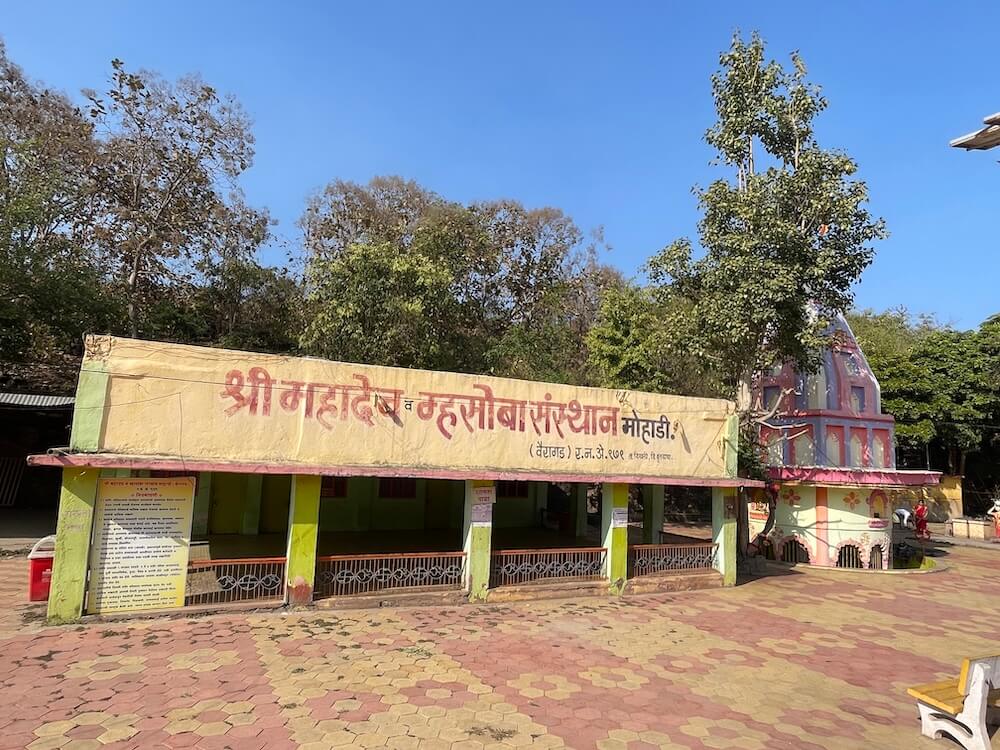
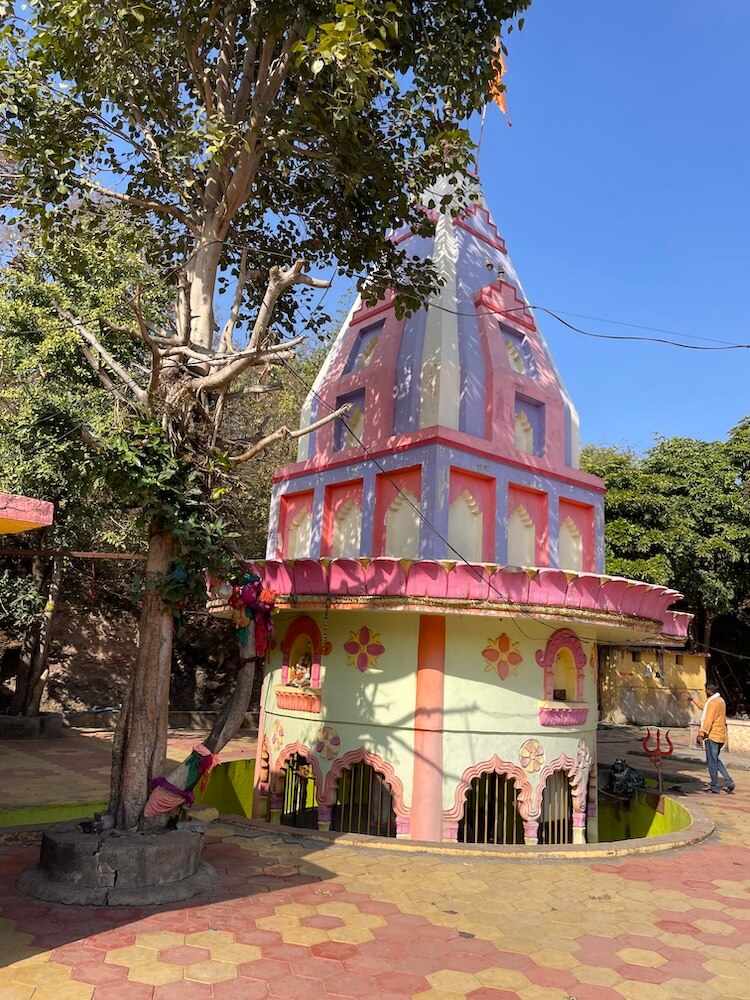
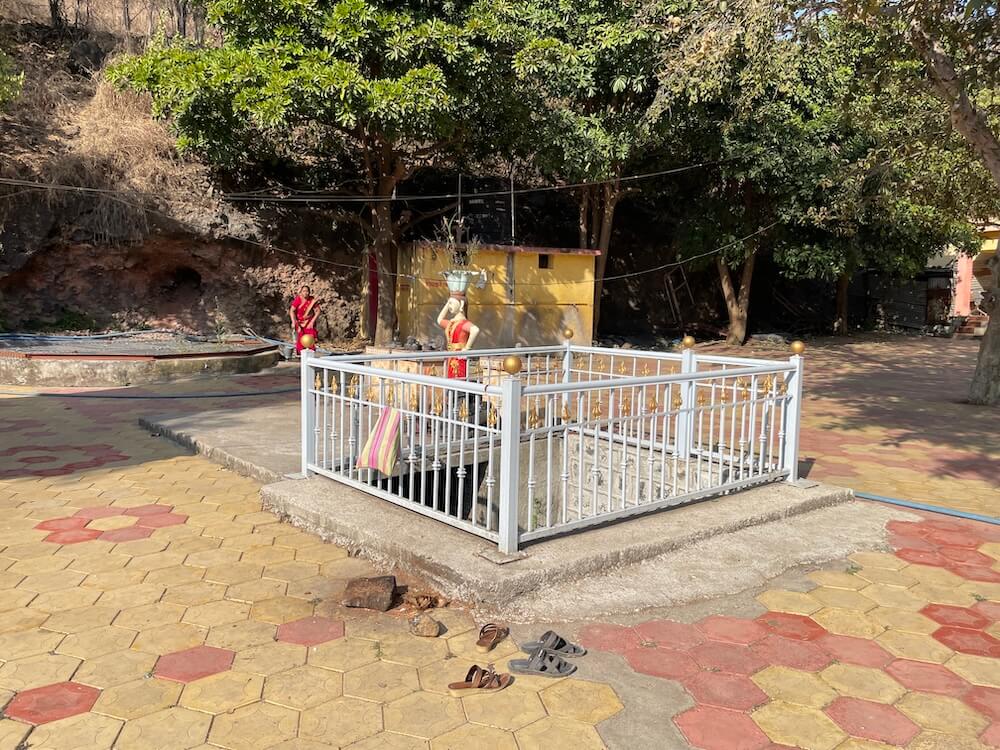
Descending a few steps from the main road, one enters the courtyard of the Mahadev Temple. Benches are provided for devotees to sit in this courtyard, which is paved with interlocking blocks. A newly constructed assembly hall (sabhamandap) stands adjacent to the main shrine. Since the original temple is situated at a slightly lower level than the courtyard, one descends eight steps to enter the sanctum sanctorum (garbhagriha) of the temple. Near the entrance of the sanctum stands an idol of Nandi along with a trident (trishul). An idol of Lord Ganesha is carved on the lintel of the doorway. Inside this circular sanctum, three Shivlingas are installed on a thunderbolt pedestal (vajrapitha). Among these, one is larger while the other two are of equal size. All three Shivlingas are covered with brass plating, sheltered by the hoods of serpents, and abhisheka vessels are suspended from the ceiling directly above them. These three Shivlingas are worshipped here as symbols of the holy trinity—Brahma, Vishnu, and Mahesh. The sanctum has two doors and an outer circumambulation path (pradakshina marg). The second entrance leads into the assembly hall of the temple. The temple courtyard also features a sacred pond (kund) and a well. Additionally, the courtyard contains three sacred memorial platforms (samadhi chauthara) surmounted by Shivlingas. Furthermore, several ancient idols, Shivlingas, and Nandi sculptures are preserved within the courtyard.
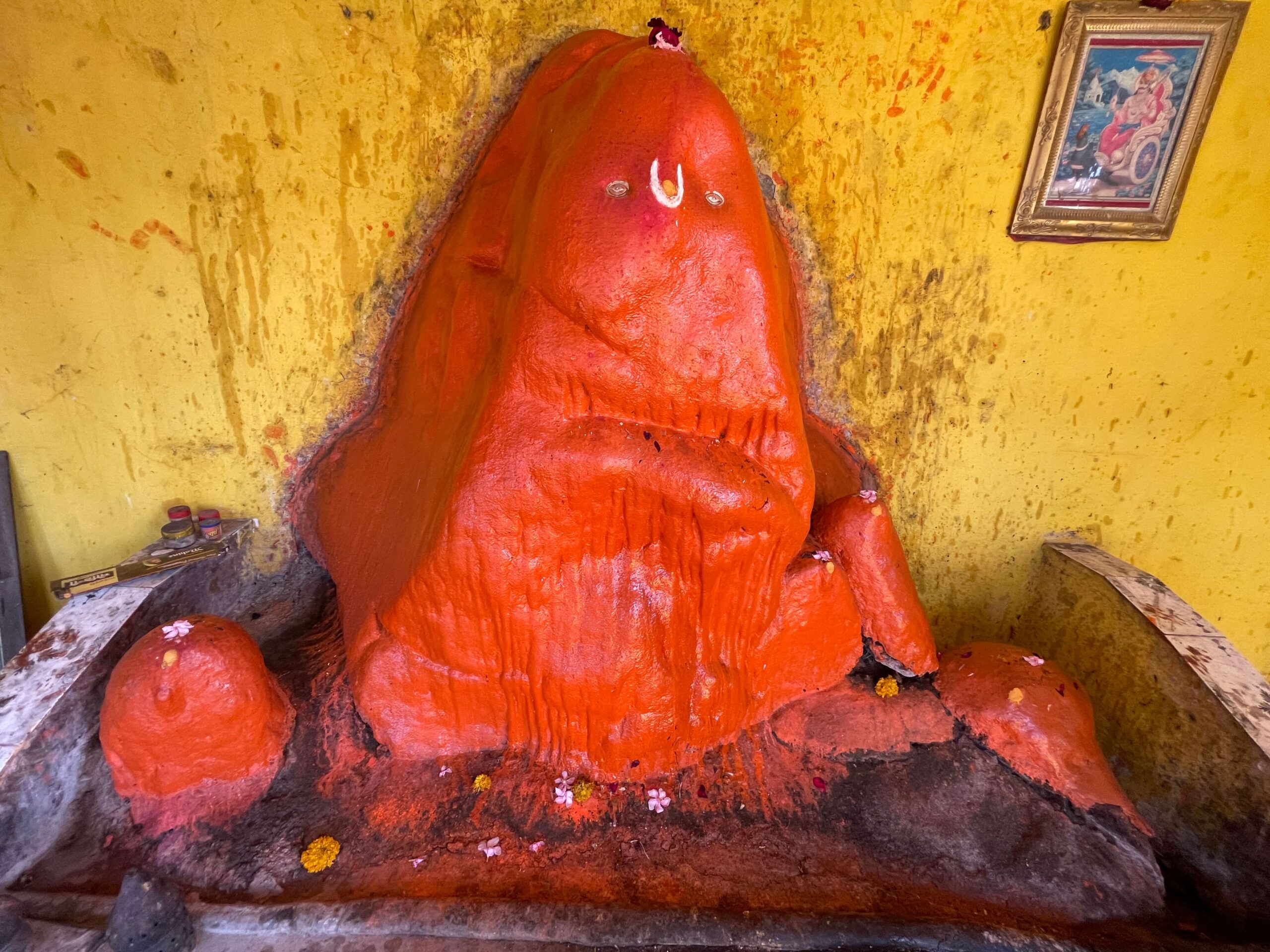
About fifty meters away from this temple is the temple of Mhasoba. Situated on a high plinth, this temple has eight steps to ascend. The temple is structured with a small sabhamandapa and a garbhagriha. In the center of the temple’s garbhagriha, on a vajrapitha, is the vermilion-anointed slab of Mhasoba.
During festivals, various cultural and religious programs are held in the spacious courtyard located within the temple premises. Daily *aarti* is performed in this temple every morning and evening. Maha Shivaratri is the principal festival here. On the occasion of this festival and during the holy month of Shravana, an *Akhand Harinam Saptah* is organized here. During this *Saptah*, discourses are delivered by renowned *kirtankars*. On the concluding day of the *Saptah*, *Mahaprasad* is distributed to the devotees. During the festival season, the entire area takes on the vibrant atmosphere of a fair. Shops selling worship items, *prasad*, and various goods are set up around the temple premises. People who have settled out of town for employment and business make it a point to visit the village for this festival. Devotees can have the *darshan* of Lord Mahadev and Mhasoba in this temple every day from morning 5 to night 9.
This sacred temple stands as a testament to deep spiritual devotion, ancient architectural grandeur, and rich local cultural traditions.
The sanctum sanctorum houses the divine idol consecrated according to ancient Vedic traditions, surrounded by serene courtyards and traditional temple architecture.
Navratri, Maha Shivratri, Annual Temple Jatra & Deepotsav
Compare and book flights, secure top-rated local hotels near the temple, hire reliable guides, and rent cars instantly.
Extend your pilgrimage by visiting other highly sacred temples located nearby.


Add ₹999 more to unlock FREE SHIPPING!
Your sacred cart is currently empty.
Shop Photo FramesFill in your delivery details below to place your order.
Add comment