
Add ₹999 more to unlock FREE SHIPPING!
Your sacred cart is currently empty.
Shop Photo FramesIn Mehkar Taluka of Buldhana District, there are seven temples dedicated to the Saptarishis (Seven Sages). This is considered a unique feature of Buldhana District. All these temples are ancient and are nestled in hilly regions. Near all these temples, there are perennial springs of living water. These include the Vashishtha Rishi Temple at Wadali, Bakdalabhya Rishi Temple at Delap, Gautam Rishi Temple at Gomedhar, Valmiki Rishi Temple at Varvand, Parashar Rishi Temple at Pathardi, Durvas Rishi Temple at Durgbori, and Vishwamitra Rishi Temple at Vishwi. Among these, the Bakdalabhya Rishi Temple is situated on the border of the villages of Delap and Uti. The Shiva Lingam established here by Rishi Bakdalabhya is quadrangular in shape. Devotees believe that wishes expressed while sitting near the Audumbar tree at the ‘Olanda’ spot adjacent to this temple are fulfilled.
Rishi Bakdalabhya is an extremely important and influential name in the Indian Rishi tradition. His mention is found in various periods, from the Vedic age to the Mahabharata. ‘Dalbhya’ is considered his Gotra (lineage) and ‘Baka’ is his name. Hence, he is addressed as ‘Baka Dalbhya’ or ‘Bakdalabhya’. Rishi Bakdalabhya is mentioned in the Chandogya Upanishad (Chapter १, Section १२). According to this, once while Rishi Bakdalabhya was studying the Vedas in a secluded place, a deity appeared before him in the form of a dog. Subsequently, many other dogs arrived there and prayed for food. Then the main dog (the deity) imparted knowledge to them on how to chant ‘Omkar’ and sing the Samaveda. In Maharshi Vyasa’s ‘Mahabharata’, Rishi Bakdalabhya is mentioned in many places. Especially in the ‘Vanaparva’, when the Pandavas were in exile, Rishi Bakdalabhya met Yudhishthira. At this time, he gave Yudhishthira invaluable advice. He said, ‘Only when Brahmins and Kshatriyas work together does the kingdom and Dharma prosper.’ Similarly, in the ‘Shalyaparva’, an incident is mentioned. Dhritarashtra once insulted Rishi Bakdalabhya. Enraged, the Rishi began a Yajna that would have led to the destruction of the Kuru dynasty. As soon as he learned of this, Dhritarashtra begged his forgiveness and pacified him. This demonstrates the power of Rishi Bakdalabhya and how effective his wrath could be.
In the Uttar Khanda of the ‘Padma Purana’ and in the ‘Skanda Purana’, there is an account of the meeting between Shri Rama and Rishi Bakdalabhya. After Ravana abducted Sita, Shri Rama resolved to go to Lanka. He reached the seashore with his younger brother Lakshmana and a vast army of monkeys. However, the question arose as to how they would cross this ocean, which was home to millions of aquatic creatures. Thereupon, Lakshmana said, ‘Nearby is the ashram of Rishi Bakdalabhya, where Lord Brahma Himself appeared. He will tell us the solution.’ Accordingly, the two went to Rishi Bakdalabhya’s ashram. The Rishi advised them to observe the ‘Vijaya Ekadashi’ Vrat. Rishi Bakdalabhya told them, ‘By observing this Vrat, you will be able to cross this vast ocean with your army. You will also be victorious in the war against Ravana.’ After observing the Vrat as instructed, Shri Rama went to Lanka and defeated Ravana. This Vrat and its glory are famous in the Puranas by the name of Rishi Bakdalabhya.
It was this Rishi Bakdalabhya who, in ancient times, performed penance in the Dandakaranya forest in the Meghankar (now Mehkar) region, situated in the Ajanta mountain range. At that time, he consecrated a Shiva Lingam here. Over time, a temple was built at this spot. After renovations a few years ago, the temple acquired its present form.
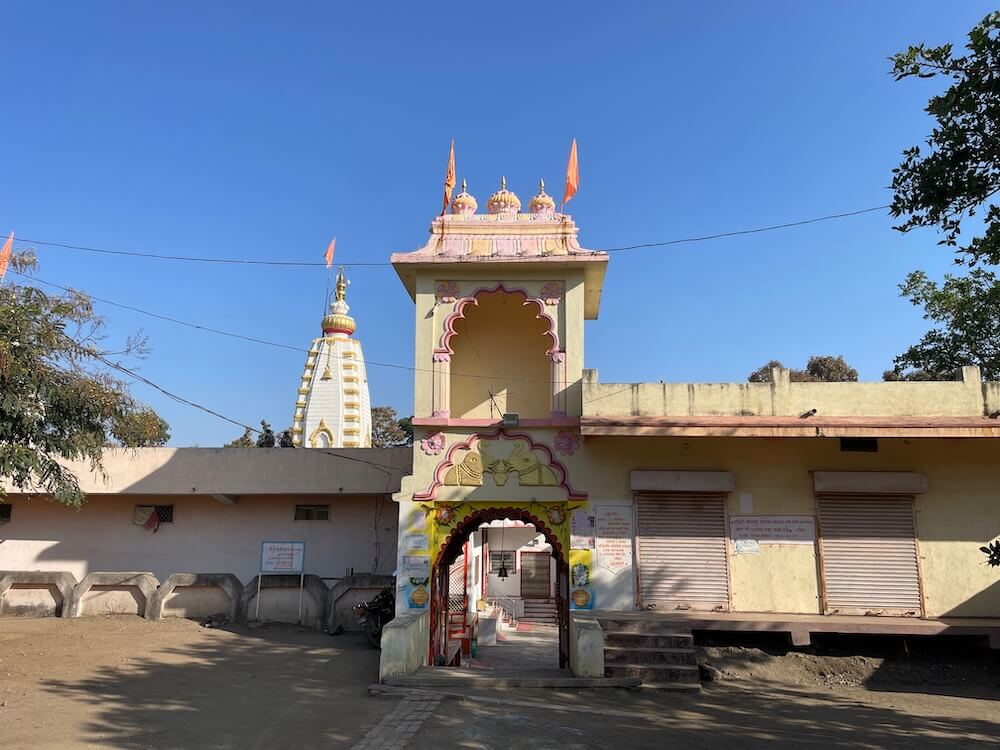
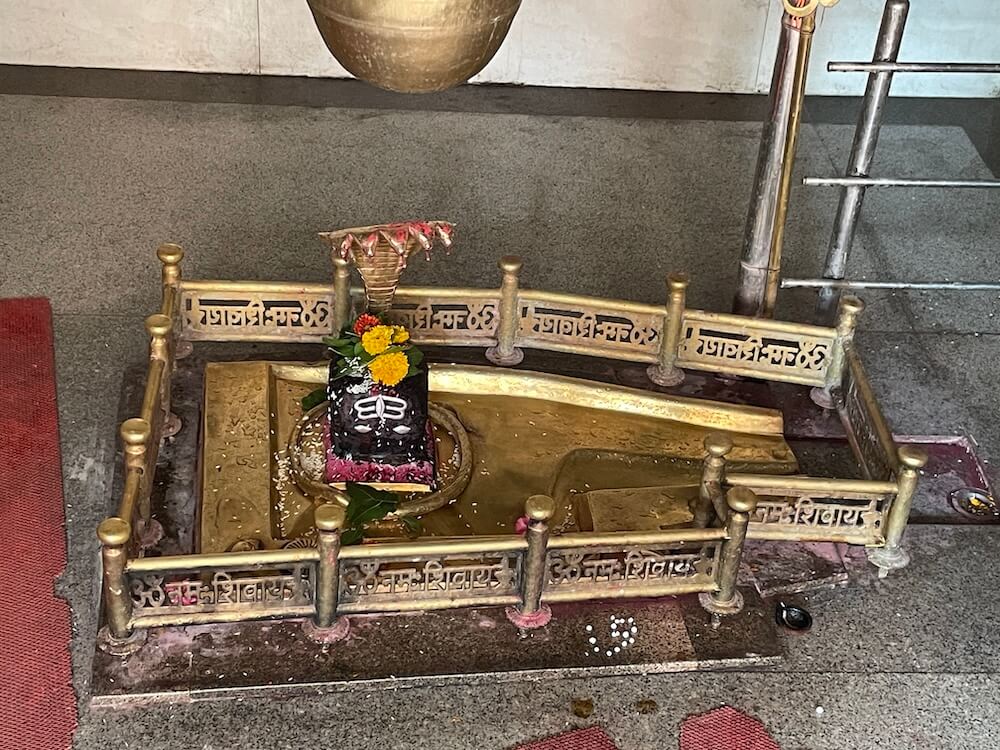
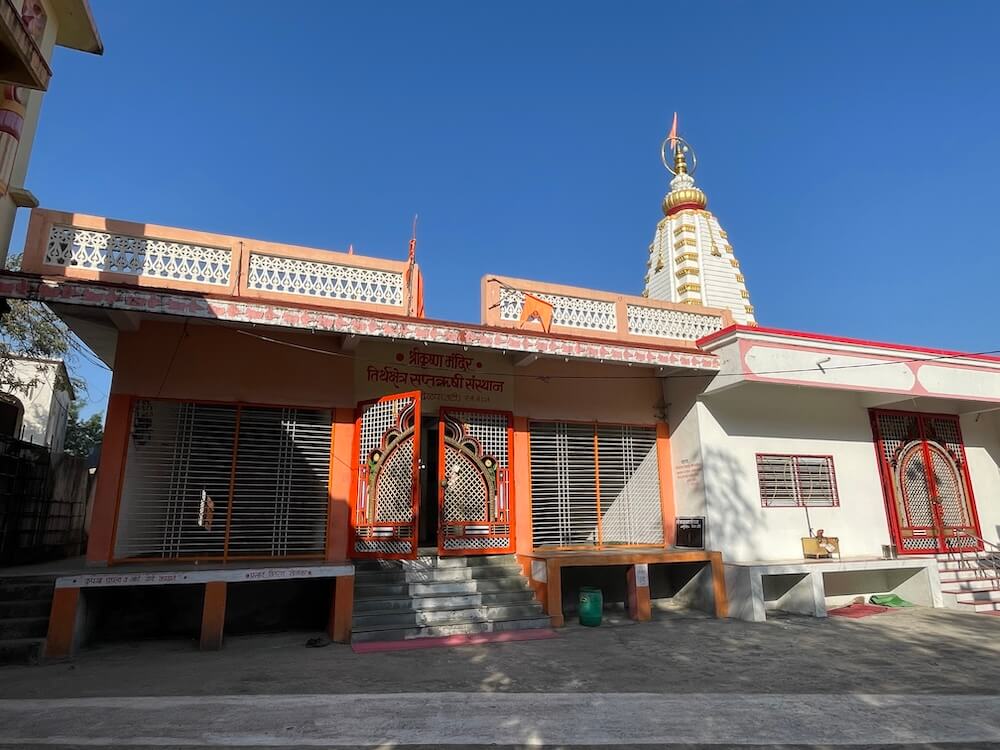
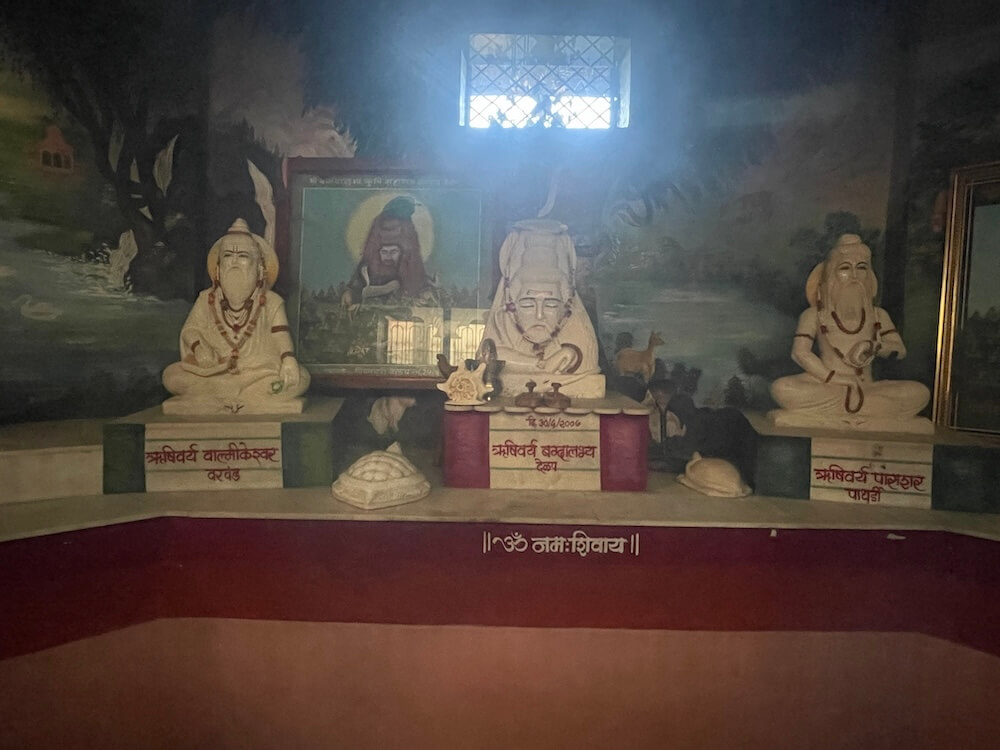
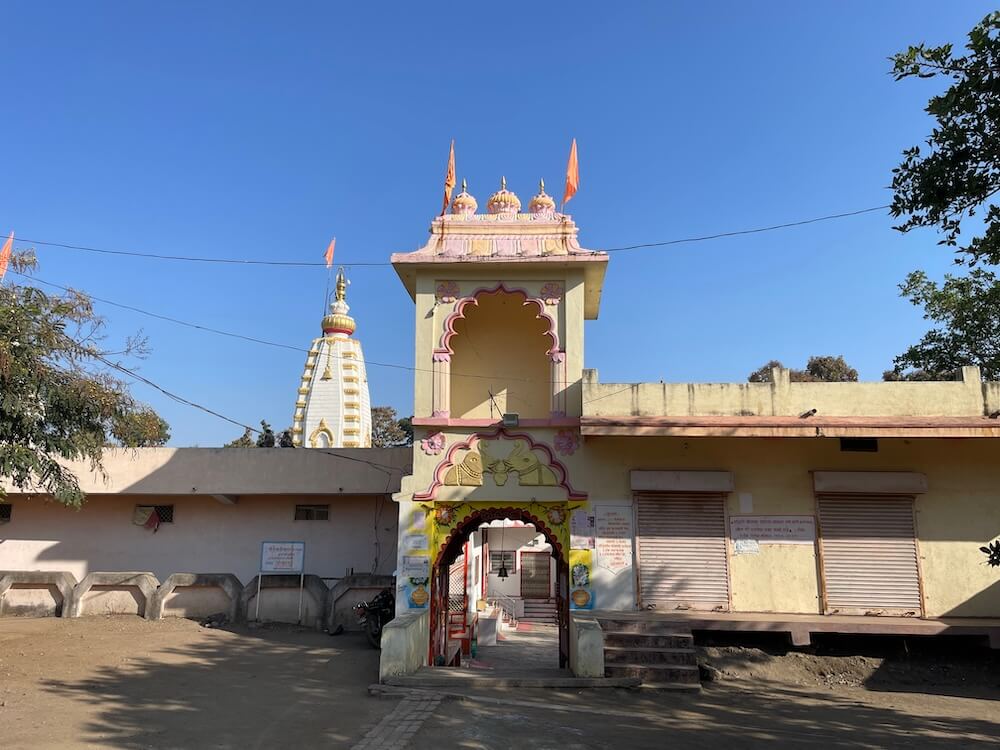
The temple is located some distance from the main archway. After entering through a Ngarakhana-like entrance, one steps into the temple courtyard. There are two temples here. The first temple houses the deities of Shri Krishna and the Saptarishis, and the adjacent second temple contains the Shiva Lingam established by Rishi Bakdalabhya. The main temple here has a structure comprising a Sabhamandap (assembly hall) and a Garbhagriha (sanctum sanctorum), with the abode of the Saptarishis below the Garbhagriha. One enters the Sabhamandap of this temple, which is situated on a high plinth, by ascending six steps. In the front part of the Sabhamandap is the Garbhagriha. This Garbhagriha contains a marble idol of Shri Krishna playing the flute. Behind the idol is a sculpture of Gomata (Mother Cow). From the rear side of this Garbhagriha, there is a staircase leading to the basement. Descending ten to twelve steps from here, one enters the Garbhagriha in the basement. On a large Vajra Pitha (diamond pedestal) in the Garbhagriha are marble idols of the Saptarishis. Adjacent to the temple is a temple dedicated to Mahadev. In front of this temple, in the courtyard, is a Nandi Mandap. The temple’s design also features a Sabhamandap and a Garbhagriha, excluding a Pradakshina path (circumambulatory path). At the entrance of the Garbhagriha is a sculpture of Ganesha. Inside the Garbhagriha, there is a quadrangular Shiva Lingam in a large Shalunka (base). The Shalunka is covered with a brass sheet.
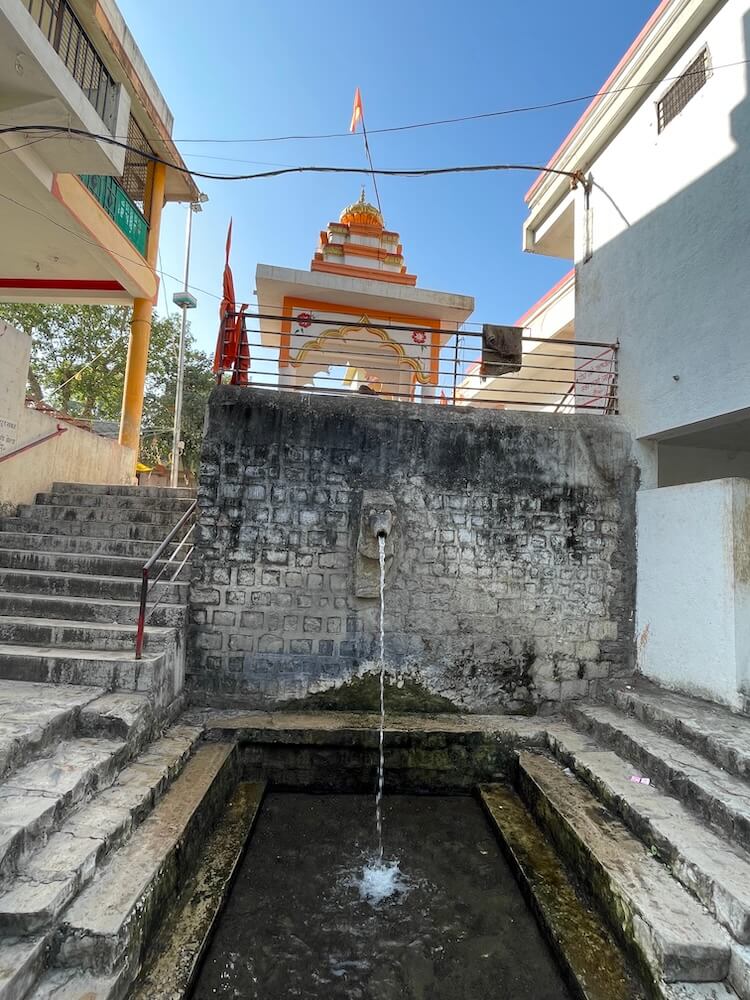
There are many Banyan trees in the temple complex. There is a legend that Rishi Bakdalabhya performed penance here with Banyan leaves on his head. From behind the Nandi Mandap in the courtyard, one can descend steps to reach the Gomukh (cow’s mouth). From this Gomukh, a continuous stream of water flows throughout all twelve months. The water emerging from this Gomukh collects in the pond below. During the Saptarishi Temple Parikrama (circumambulation) in the month of Shravan, hundreds of devotees bathe in this holy water and have Darshan of the Shiva Lingam. The water from this pond collects through an underground passage into another pond a few steps away. A few steps from here is a place called ‘Olanda’. Here, on a platform, one can see Nandi and a Shiva Lingam. Devotees sit for some time near the Audumbar tree here and express their heartfelt wishes.
Hundreds of devotees come to this temple for Darshan. Devotees offer ‘Rodgya’ (a type of bread) as Naivedya (offering) to Mahadev here. Mahashivratri is the main festival here. The festival of Ram Navami is also celebrated with great enthusiasm here. During the Parikrama on the third Monday of the month of Shravan, thousands of devotees have Darshan of the Shiva Lingam here amidst chants of ‘Har Har Mahadev’. A short distance from this temple, at Uti, there is a nature tourism center. Nearby is a suspension bridge, also known as ‘Rishi Jhula’.
This sacred temple stands as a testament to deep spiritual devotion, ancient architectural grandeur, and rich local cultural traditions.
The sanctum sanctorum houses the divine idol consecrated according to ancient Vedic traditions, surrounded by serene courtyards and traditional temple architecture.
Navratri, Maha Shivratri, Annual Temple Jatra & Deepotsav
Compare and book flights, secure top-rated local hotels near the temple, hire reliable guides, and rent cars instantly.
Extend your pilgrimage by visiting other highly sacred temples located nearby.


Add ₹999 more to unlock FREE SHIPPING!
Your sacred cart is currently empty.
Shop Photo FramesFill in your delivery details below to place your order.
Add comment