
Add ₹999 more to unlock FREE SHIPPING!
Your sacred cart is currently empty.
Shop Photo FramesIn the thousands-of-years-old tradition of Shaiva worship, the practice of worshipping the Shivling emerged over time. Through millennia of evolution, it underwent changes. The form, size, and imagery of the Shivling continued to transform. During the Gupta period, Ekamukhi (single-faced), Trimukhi (three-faced), Chaturmukhi (four-faced), and Sahasramukhi (thousand-faced) Shivlings were created. In the Shiva image of the Ekamukhi Shivling, matted locks (Jata) tied on the head and falling onto the shoulders began to be depicted. Consequently, this Shivling came to be known as Jatashankar. A famous Gupta-period Ekamukhi Shivling is located at Khoh in Madhya Pradesh. A similar Shivling exists in the temple at Dongarkada village in Kalamnuri taluka.
There is no definitive information available regarding how ancient this temple is. However, scholars estimate that the Shivpindi dates back to the Gupta period, approximately fifteen hundred years ago. Many legends are prevalent in the Puranas regarding the origin of the Ekamukhi Shivling. According to one legend, a dispute once arose between Lord Brahma and Lord Vishnu over who was superior. The other gods created a pillar of fire and declared that whoever could find its beginning or end would be considered supreme. Lord Brahma went upwards in the form of a swan, while Lord Vishnu went downwards in the form of a boar. Neither could find the beginning or end of the pillar of fire. Then, Lord Mahadeva appeared in the form of Lingodbhava and mediated between Brahma and Vishnu.
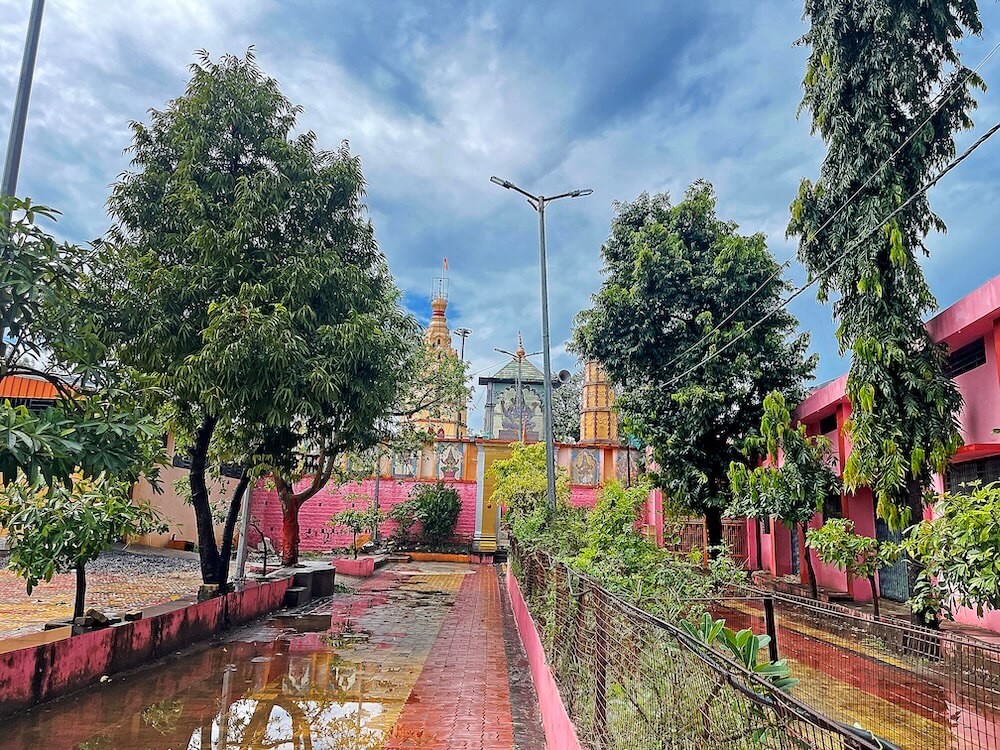
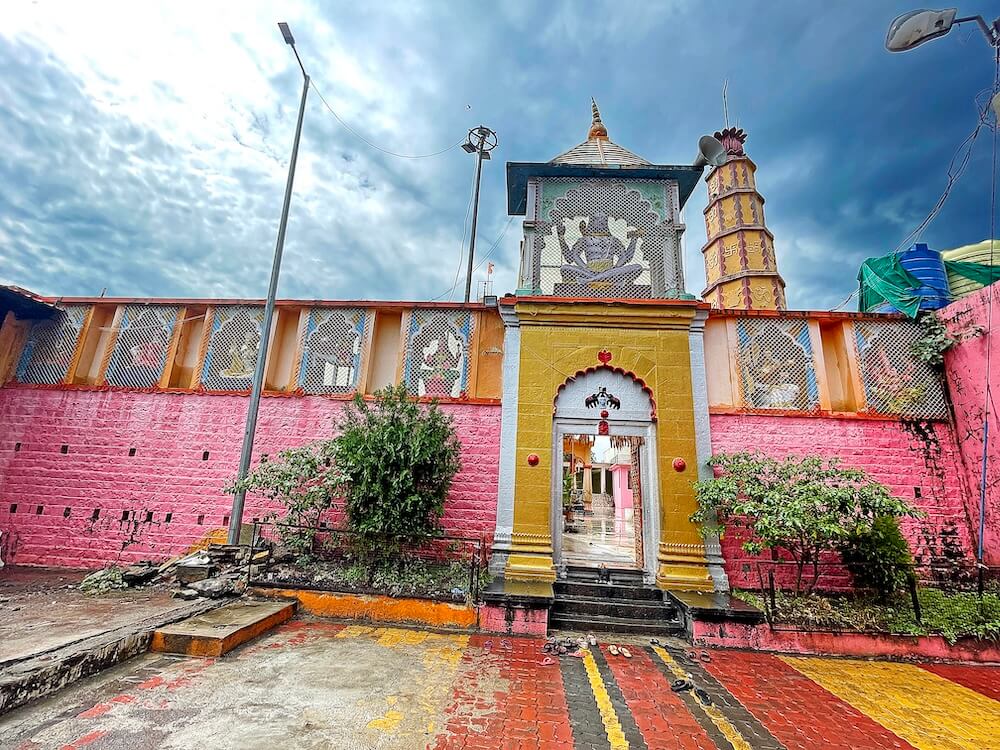
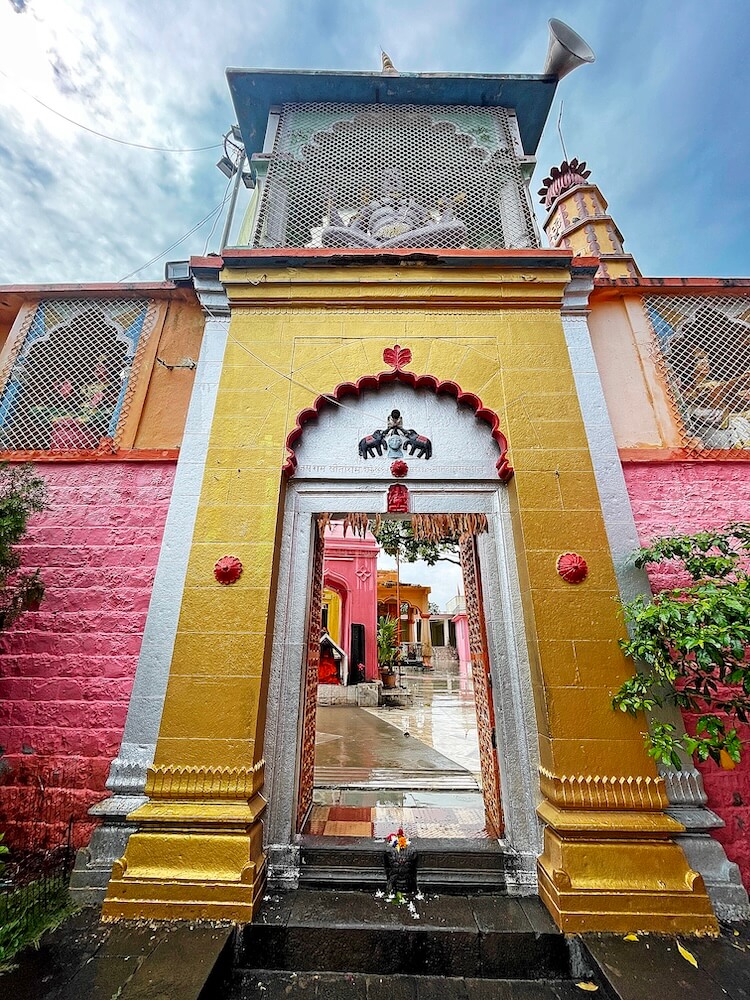
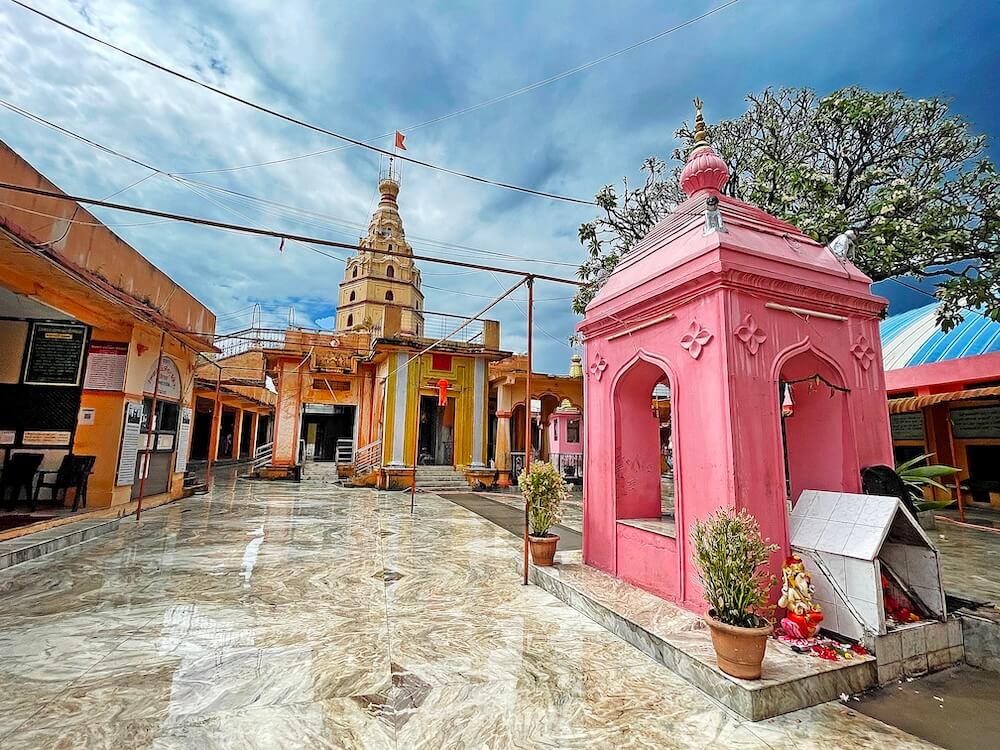
This temple is situated at Dongarkada on the national highway connecting the two major districts of Hingoli and Nanded. Despite being adjacent to the highway, the main temple complex is set slightly inwards, nestled near the hills, providing a sense of natural tranquility. Near the temple, there is a spacious parking area on the left, and a grand community hall building on the right. There are shops selling worship materials there. The temple has a sturdy fortification wall. On the upper side of the fortification are niches containing idols of Ganpati, Saraswati, Lakshmi, Khandoba, and other deities. The entrance to the fortification is two-storied. The entrance has three steps and an adjacent Chandrashila (moonstone). The entrance features ornate door frames, with Ganpati on the lintel. In the archway above the entrance, there is a Shiva sculpture in the center, flanked by elephant sculptures on both sides. On the ceiling of the entrance, there is a Meghadambari (canopy) with four pillars, a spire, and a finial, housing an idol of the meditative Mahadeva.
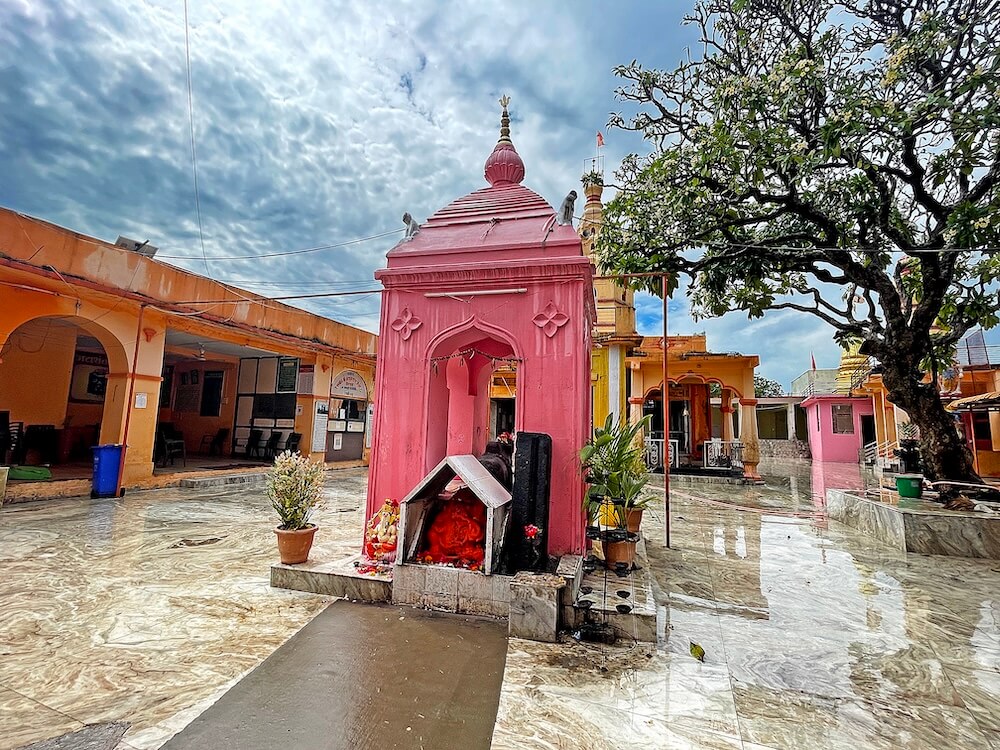
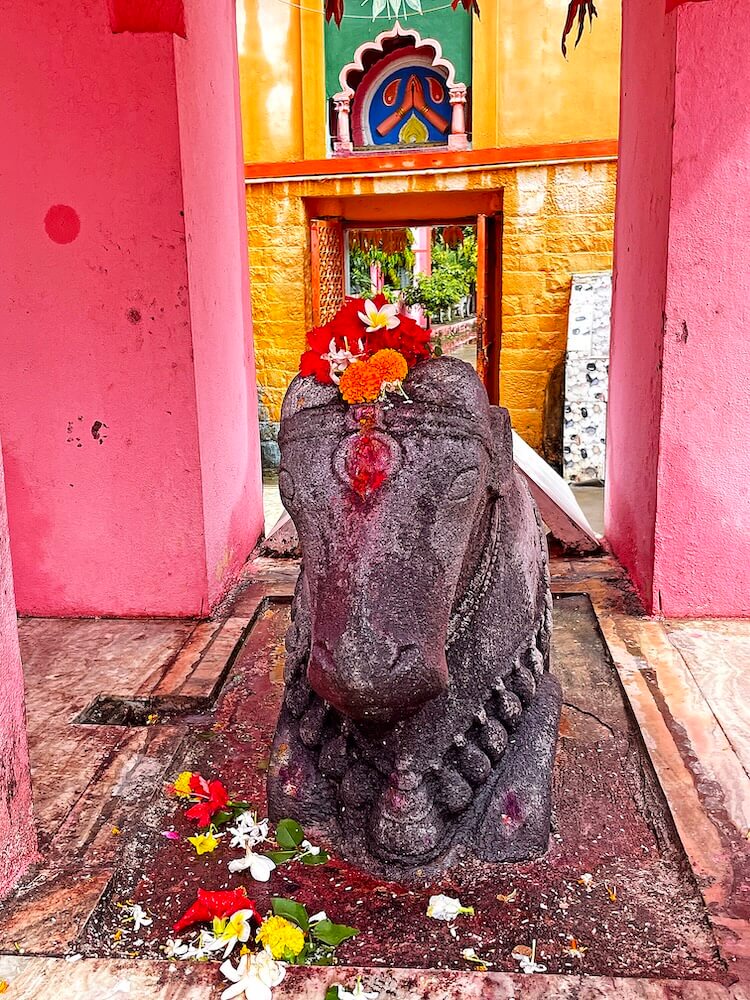
The spacious courtyard of the temple is paved with marble tiles. In the courtyard, there is a hexagonal lamp tower (Deepmal). Also in the courtyard are the devotee residence (Bhakta Niwas), the temple office, the Annachhatra (free food distribution center), and staff quarters. There is a replica of the Earth with a tall pillar on it. On the pillar is an idol of the four-faced Lord Brahma. In front of the main temple is the Nandi Mandap. The Nandi Mandap houses a black stone idol of Nandi. The mandap has four pillars, and the square spire above it is topped with a finial. Adjacent to the Nandi Mandap at the back is a vermilion-smeared idol of Ganpati.
The temple structure consists of a Sabha Mandap (assembly hall) and a Garbhagriha (sanctum sanctorum). In front of the Sabha Mandap is a second Nandi Mandap containing a Nandi sculpture. The Sabha Mandap is semi-open. At the entrance of the Antarala (vestibule), there are elephant sculptures at the base of the door frames, with floral carvings above. In the Antarala, there is a black stone idol of Goddess Parvati. Near the feet of the Parvati idol is the Chintamani stone. Devotees place their hands on this stone to seek divine guidance (Kaul). There are two doors on the left and right sides to exit the Antarala. Further ahead is the Garbhagriha. The design of the Garbhagriha entrance is similar to that of the Antarala. Inside the Garbhagriha, there is an Ekamukhi Shivpindi on a Vajrapitha. The Shivpindi, which is two-and-a-half feet high and one-and-a-half feet in diameter, is flanked by two ornate pillars. Above these pillars is a Nandi arch. In the center of the arch is a Kirtimukh. The ceiling of the Garbhagriha has a seven-layered spire. Each layer has niches for deities. The fifth, sixth, and seventh layers feature Urushringi-style miniature spires. At the top of the spire is an Amalaka, topped with a finial and a flag. Beside this temple is a Vitthal-Rukmini temple. In its sanctum, there are idols of Vitthal-Rukhumai on a Vajrapitha. Additionally, there are temples of Dnyaneshwar Maharaj and Shri Dattatreya in the courtyard.
Mahashivratri is the main annual festival here. On this occasion, a three-day fair is held in the area. On the day after Mahashivratri, the Shivpindi is anointed with a hundred thousand Bel leaves. The fair, with its decorated stalls, gives the area the appearance of a marketplace. Sports such as wrestling matches and bullock cart races are organized. Religious programs like Bhajans, Kirtans, discourses, and Mahaprasad are held at the temple during the fair. Thousands of devotees come here for Darshan and to fulfill their vows. On Kartik Purnima, the deity is adorned with a ‘Dalshringar’. It is said that for the next seven days, Lord Shankar goes into ‘meditation’. During these seven days, worship in the sanctum is somewhat limited, or silence is observed. After seven days, the deity is awakened through ritualistic worship. At this time, a festival of lights (Deepotsav) is celebrated by lighting lamps on the Deepmal. This tradition is rarely seen in other temples in the state. On Falgun Shuddha Pratipada, the deity’s chariot festival is celebrated, followed by the Palkhi procession on Dwitiya. On all Mondays of Shravan, thousands of devotees come to offer Bel leaves. Festivals such as Chaitra Padwa, Ram Navami, Hanuman Jayanti, Ashadhi, and Kartiki Ekadashi are celebrated in the temple. During all festivals, religious programs and Mahaprasad are organized.
This sacred temple stands as a testament to deep spiritual devotion, ancient architectural grandeur, and rich local cultural traditions.
The sanctum sanctorum houses the divine idol consecrated according to ancient Vedic traditions, surrounded by serene courtyards and traditional temple architecture.
Navratri, Maha Shivratri, Annual Temple Jatra & Deepotsav
Compare and book flights, secure top-rated local hotels near the temple, hire reliable guides, and rent cars instantly.
Extend your pilgrimage by visiting other highly sacred temples located nearby.


Add ₹999 more to unlock FREE SHIPPING!
Your sacred cart is currently empty.
Shop Photo FramesFill in your delivery details below to place your order.
Add comment