
Add ₹999 more to unlock FREE SHIPPING!
Your sacred cart is currently empty.
Shop Photo FramesNanded district is blessed with a rich historical heritage spanning approximately 2500 years. From the reign of the Nanda dynasty in the fifth century BCE to the rule of the Yadava dynasty in the thirteenth century CE, this region has been a seat of power. The district boasts a diversity of religious sites. Famous temples in the district include the Gurudwara in Nanded city, the Hottal temple in Degloor, the Khandoba temple in Malegaon, and the Renuka Mata temple in Mahurgad. Among these, the ancient Vimaleshwar temple in Maralak is a place of faith for thousands of devotees. It is the firm belief of devotees that the Vimaleshwar Mahadev here is a ‘Jagrut’ (awakened) deity.
It is said that this ancient temple, built in the Hemadpanti stone architecture style, dates back to the thirteenth century. The temple is mentioned in ancient scriptures like the Ramayana and Mahabharata. According to legend, when Lord Shri Rama set out to visit the twelve Jyotirlingas after seeking his Guru’s blessings, he offered prayers at this Shivalinga before proceeding. The fact that Lord Shri Rama himself offered prayers here establishes the antiquity of this Shiva temple and grants it special significance. There is a belief that vows are fulfilled by releasing a turtle into the ‘Kund’ (sacred pond) located in the temple courtyard.
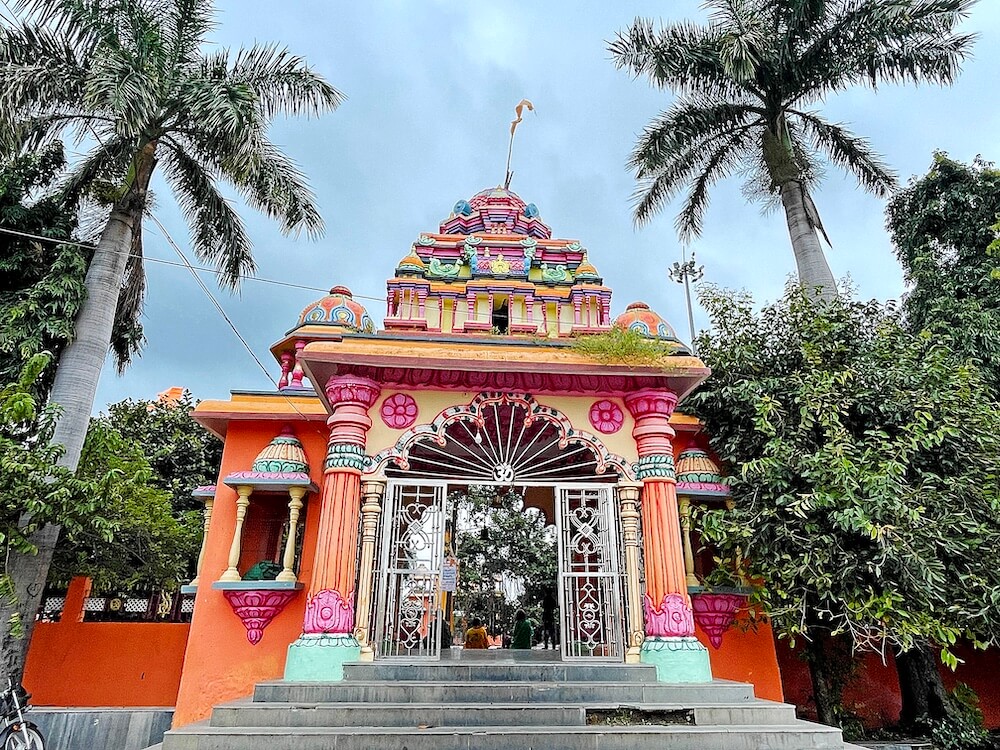
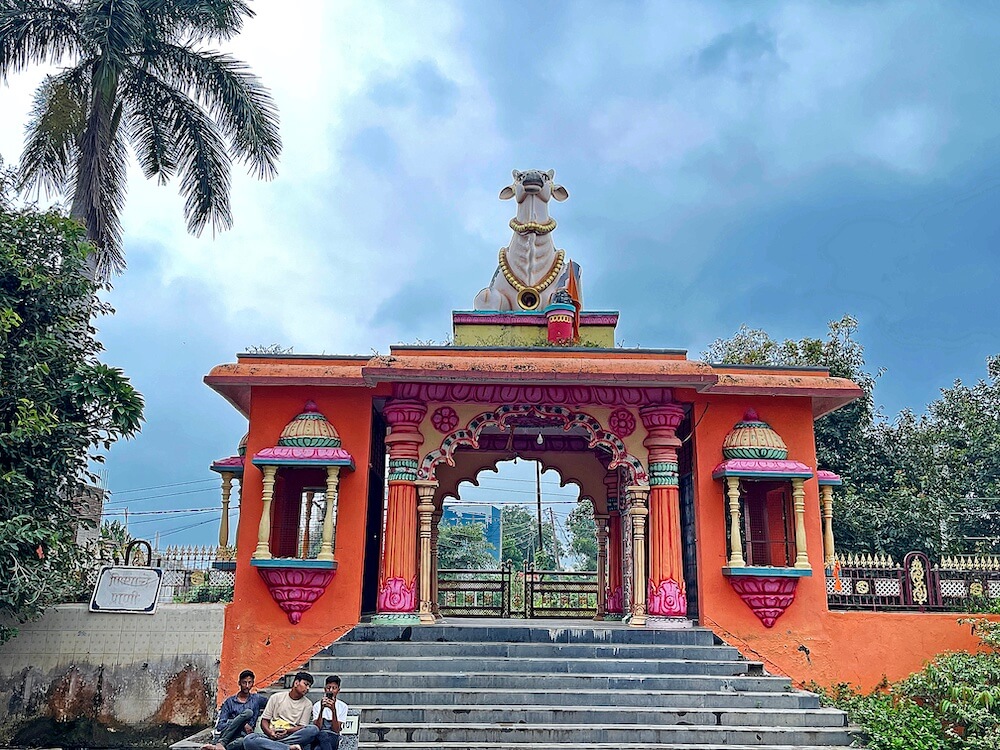
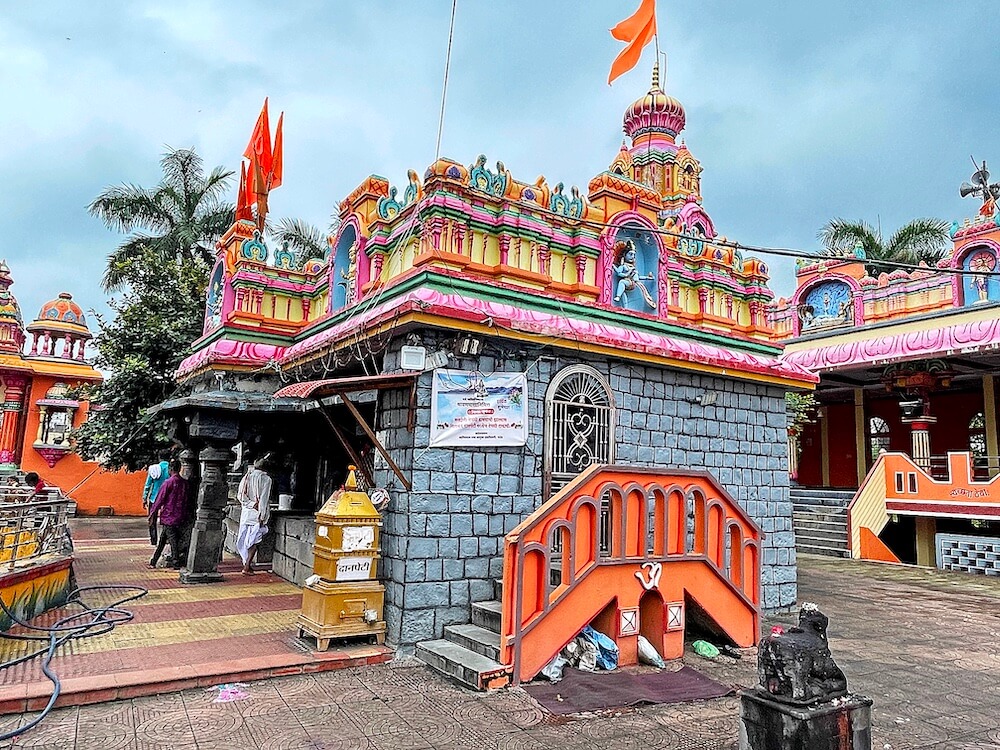
There is a spacious parking area in front of the temple, which is situated along the road. The temple is enclosed by a sturdy fortification wall. The fortification has a total of three large entrance gates: one at the front and two on the left and right sides. These gates resemble the main gates of a fort. There are ten steps each on the front and back of these entrances, which are elevated above the road and the courtyard. Each entrance has two circular, ornate pillars on both the road side and the temple side. These pillars support beams and a roof. On the roof of the entrance facing the temple, there is a colossal Nandi sculpture facing the temple. Inside these entrances are guard rooms and circular carvings on the ceiling. The roof features a three-tiered ‘Gopura’ style spire. The first tier of the spire contains ‘Kuta’ (miniature temple sculptures) and ‘Shala’ (horizontal temple sculptures), while the second tier features ‘Urushringi’ spires. The third tier has a dome, topped with an ‘Amalaka’ and a ‘Kalash’. These entrances lead into the temple courtyard, where some ancient ‘Meghadambaris’ (canopies) and scattered ancient Shiva Lingas can be seen.
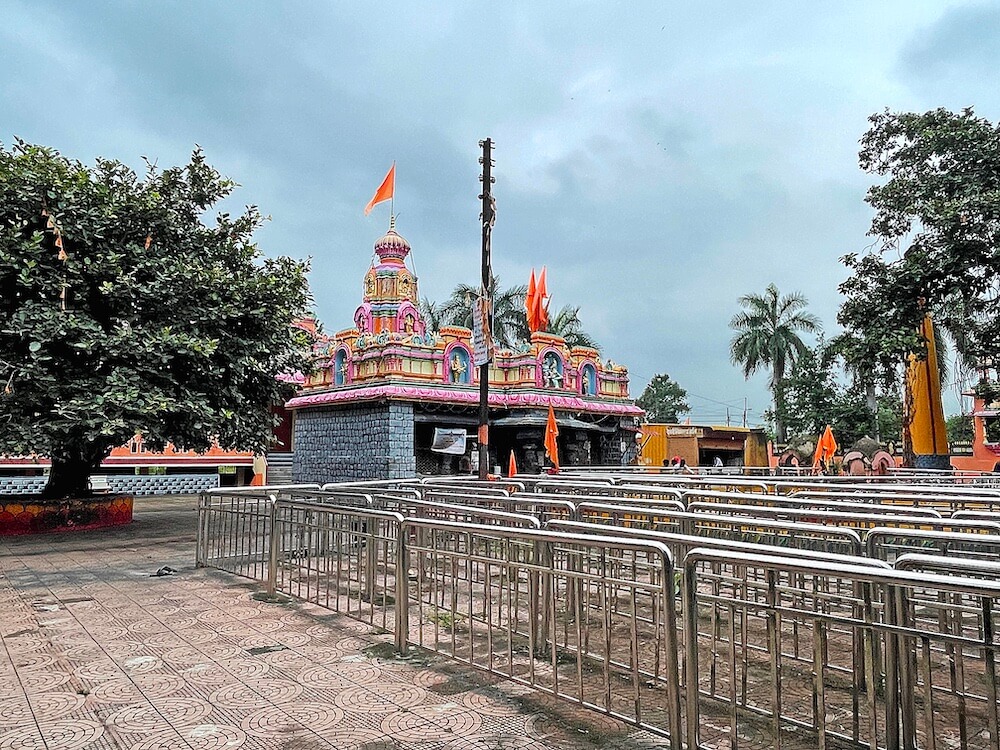
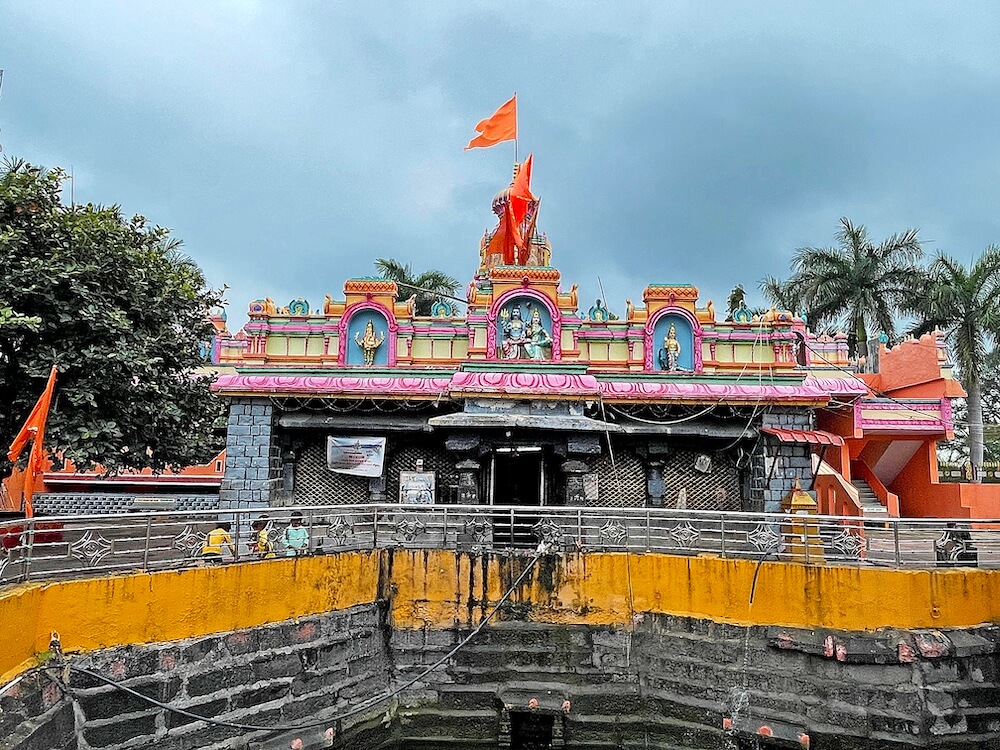
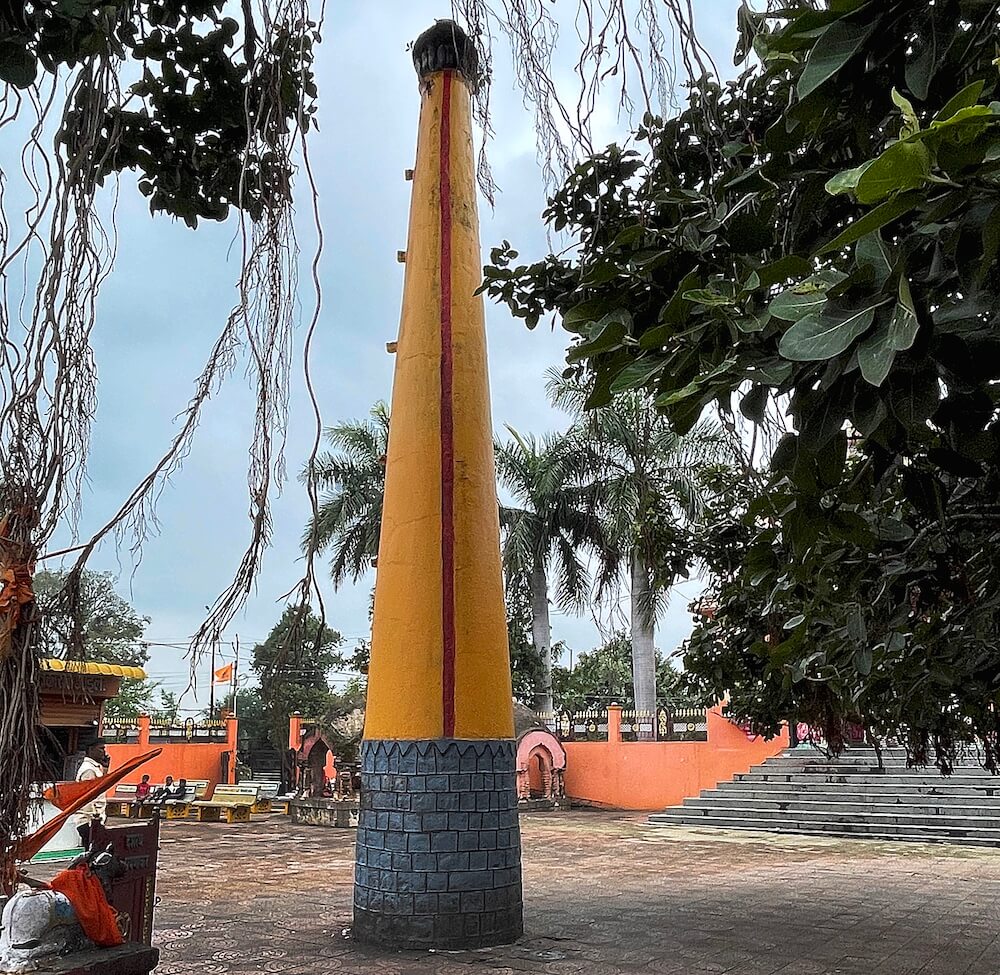
In the spacious courtyard, queue management is handled using stainless steel barricades. Platforms have been built around the ancient large trees in the courtyard. Near the temple stands a circular stone lamp pillar (Deepastambha) about 32 feet high. Every Monday, lamps are lit on this pillar. There is a ‘Kalash’-shaped pond in the temple courtyard. It is said that if the top tip of the lamp pillar here is moved, the water in the pond ripples and bubbles emerge. This pond is about 45 feet deep and tapers towards the bottom. The water in the pond contains various types of turtles. The pond is surrounded by safety railings and has steps for descending. There are small niches (Devakoshthakas) in the stone walls of the pond.
The temple, which consists of a ‘Mukhamandapa’ (front hall), ‘Sabhamandapa’ (assembly hall), and ‘Garbhagriha’ (sanctum sanctorum), has two ornate pillars at the front of the Mukhamandapa. The pillar bases are square, and the shafts are in various geometric shapes such as square, hexagonal, octagonal, and circular. The semi-open Sabhamandapa has four rows of three ornate pillars each. The Sabhamandapa has a railing on the outer side. In the center of the Sabhamandapa, there is a black stone idol of Nandi on a ‘Vajrapitha’. Further ahead is the narrow and enclosed ‘Antarala’. The walls of the Antarala have niches for lamps on the left and right sides. The ceiling features circular stone carvings and a chandelier.
Ahead is the entrance to the Garbhagriha. Although the carvings on the door frames have faded, the pillar sections remain ornate. There is an idol of Lord Ganesha on the ‘Lalatabimba’ (lintel) and carvings of a spire on the upper section. There is a ‘Chandrashila’ (moonstone) in front of the threshold. Inside the Garbhagriha, there is a Shiva Linga in the center of the floor. Above the Shiva Linga, a five-hooded brass serpent holds a canopy, and an ‘Abhishekpatra’ (consecration vessel) is suspended from the ceiling to drip water. The ceiling of the Garbhagriha features circular carvings.
The roof of the temple is surrounded by a six-foot-high parapet. The niches within it contain sculptures of deities such as Shiva-Parvati, Ganesha, Lakshmi, Nataraja, Hanuman, Virabhadra, and Renukacharya. The parapet is decorated with Kuta, Shala, pillars, spires, banners, and flags. The roof of the Garbhagriha features a four-tiered square spire. Each tier of the spire has niches on all four sides containing images of deities. These niches are topped with spires, Amalakas, and Kalashas. Each tier of the main spire has pillar carvings at the corners. The main spire is topped with an Amalaka featuring lotus petal carvings and a Kalash.
Behind the temple, attached to the fortification, is a hall for cultural programs and a two-story building for a ‘Dharmashala’ (pilgrim rest house). The annual festivals of Mahashivratri and the month of Shravan are celebrated with great enthusiasm in the temple. During these times, the deity’s palanquin is decorated, and a mask of Vimaleshwar Mahadev is placed inside. Amidst the sound of drums and the throwing of ‘Gulal’ (vermilion powder), a village procession is carried out in the presence of thousands of devotees. During annual festivals, various religious programs are organized in the temple from dawn. Thousands of devotees from the surrounding areas come to seek the deity’s blessings and fulfill their vows. The temple is crowded with devotees every Monday, as well as on full moon and new moon days.
This sacred temple stands as a testament to deep spiritual devotion, ancient architectural grandeur, and rich local cultural traditions.
The sanctum sanctorum houses the divine idol consecrated according to ancient Vedic traditions, surrounded by serene courtyards and traditional temple architecture.
Navratri, Maha Shivratri, Annual Temple Jatra & Deepotsav
Compare and book flights, secure top-rated local hotels near the temple, hire reliable guides, and rent cars instantly.
Extend your pilgrimage by visiting other highly sacred temples located nearby.


Add ₹999 more to unlock FREE SHIPPING!
Your sacred cart is currently empty.
Shop Photo FramesFill in your delivery details below to place your order.
Add comment