
Add ₹999 more to unlock FREE SHIPPING!
Your sacred cart is currently empty.
Shop Photo FramesThe Peshwa-era Nanasaheb Wada Temple is famous in the historically rich town of Patur. Here lies the Samadhi of the renowned eighteenth-century saint of Vidarbha, Nanasaheb. Due to this Wada, which is an excellent example of Maratha-era architecture, the village, once known as ‘Parashar Nagari’, is now famous as ‘Patur Nanasaheb’. Countless devotees from Vidarbha come here for Darshan. A Yatra is held here on the day of Magh Shuddha Dashami. On that day, the premises are filled with the crowd of devotees from the surrounding five villages.
Mukundraj, the son of Nanasaheb, a famous eighteenth-century saint of Vidarbha, wrote his biography. According to it, his original name was Narayan Kanoji Amle. Born into a Yajurvedi Brahmin family in Patur, Nanasaheb was very generous. In his youth, he always helped the poor and Brahmins. This led to arguments with his uncle, Babujibuwa. Consequently, he left home and went to the village of Marki in Amravati district. There, he accepted Markinathbuwa as his Guru. After some time, his father brought him back to Patur. He was married, but he returned to Markinathbuwa. Then, the Buwa ordered him to go to Patur.
After arriving in Patur, Nanasaheb renounced all worldly attachments and became absorbed in penance. He gave up wearing clothes. He freed himself from caste distinctions. It is said that he would accept food and water from individuals of any caste, except for Muslims and Antyajas. His relatives would lock him inside the house, but within a short time, he would be seen outside. No one could understand how he came out of the house by opening locked doors and windows. Due to this behavior, orthodox Brahmins excommunicated him and his family. However, he declared that as long as he was devoted to Shri Rama, he did not need to perform any penance. Gradually, people began to notice the signs of sainthood in him. It is said that he performed many miracles during this period. A Muslim Mansabdar once insisted that he eat meat. He refused. Even then, the man forcibly placed a plate of mutton before him. When the cloth covering it was removed, a bouquet of flowers appeared instead of meat. Various such miracle stories are told about him. It is also said that Nanasaheb mediated in the dispute between Udhoji and Mudhoji Bhonsle of Nagpur.
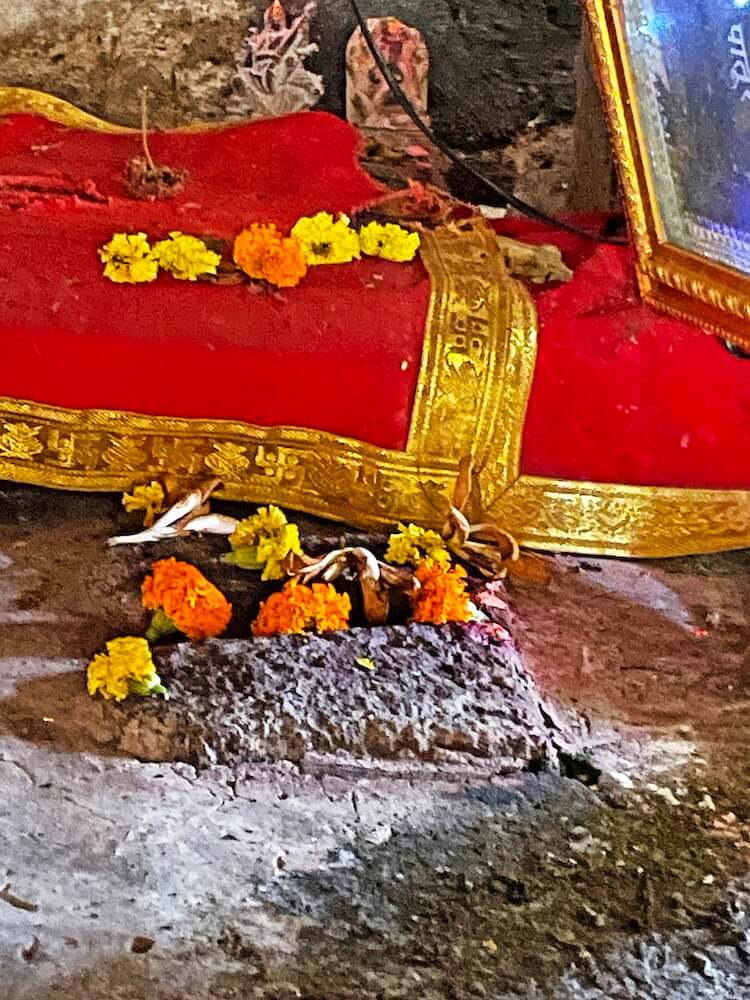
Nanasaheb is considered an incarnation of Shri Rama’s brother, Lakshmana. It is said that this grand structure was built in Patur in his memory after he attained Samadhi in 1740. The Samadhis of Nanasaheb and his wife are in the sanctum sanctorum of this temple. Over time, this Wada has suffered some decay. Nanasaheb’s descendants reside in Shegaon, Washim, Pusad, and Nagpur.
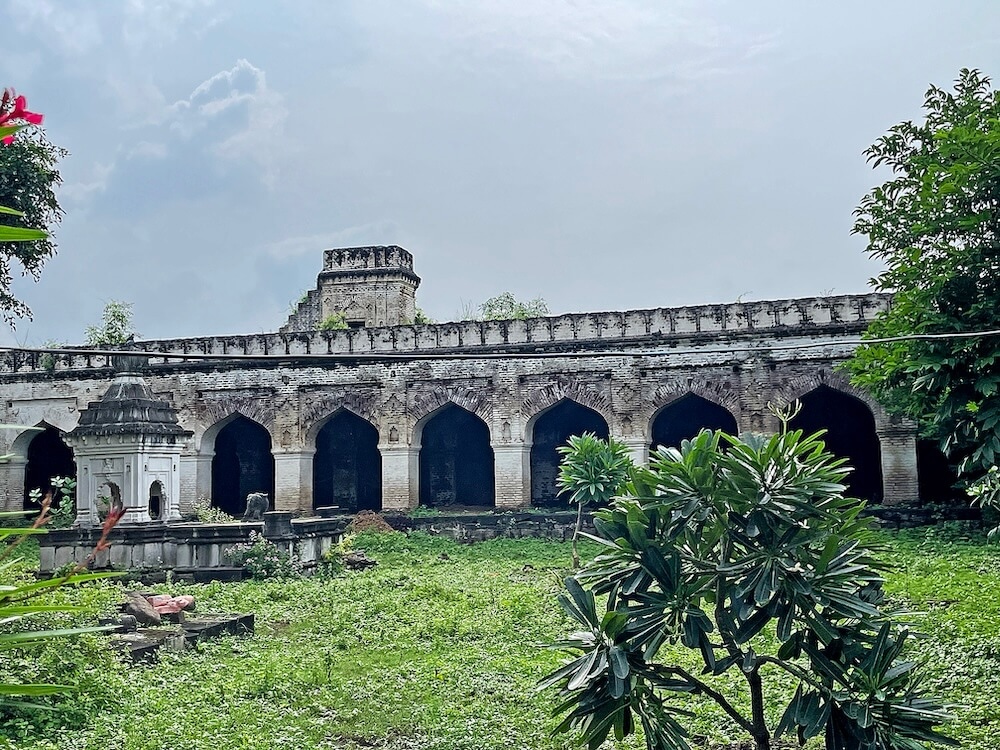
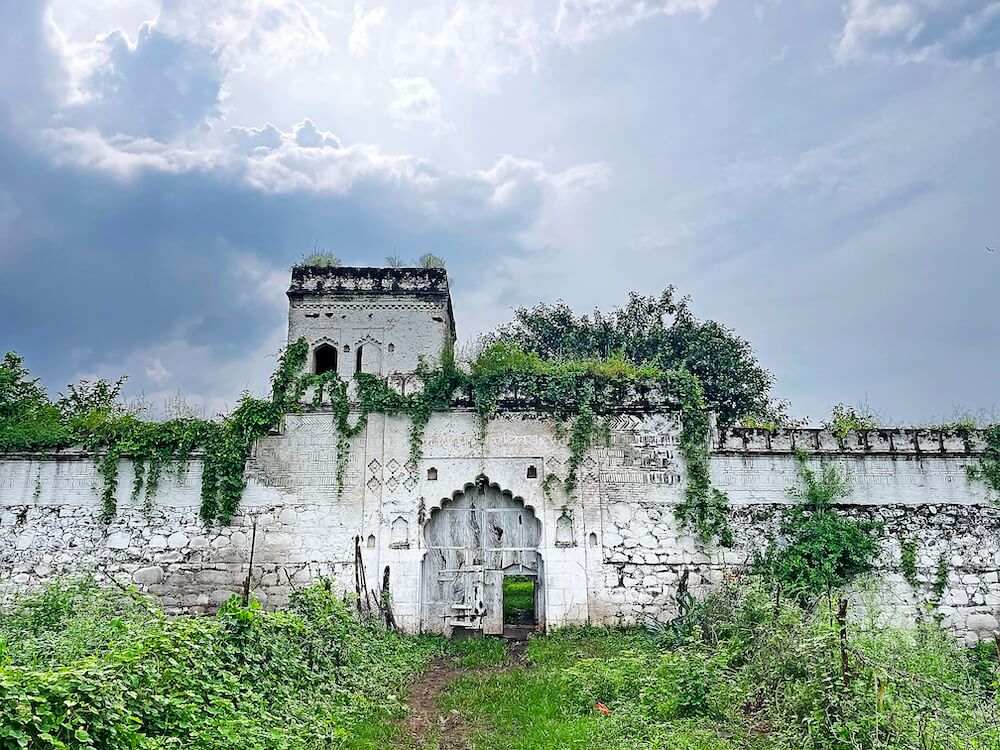
The Nanasaheb Wada is located on the hill, behind the Renuka Mata temple, right next to the bypass going from Balapur to Nanded. The main entrance of the Wada (Dindi Darwaza) faces east and has a Nagarkhana above it. Built using solid bricks, stone, and lime, this Wada has four bastions like a fort and a surrounding perimeter wall. Upon entering through the Dindi Darwaza, one sees guard rooms on both sides. The perimeter wall is constructed with arches. A narrow staircase leading from a room here allows access to the roof of the fort. The temple premises can be seen from this roof. There were formerly four paths to reach the perimeter wall. Now, two of them remain intact.
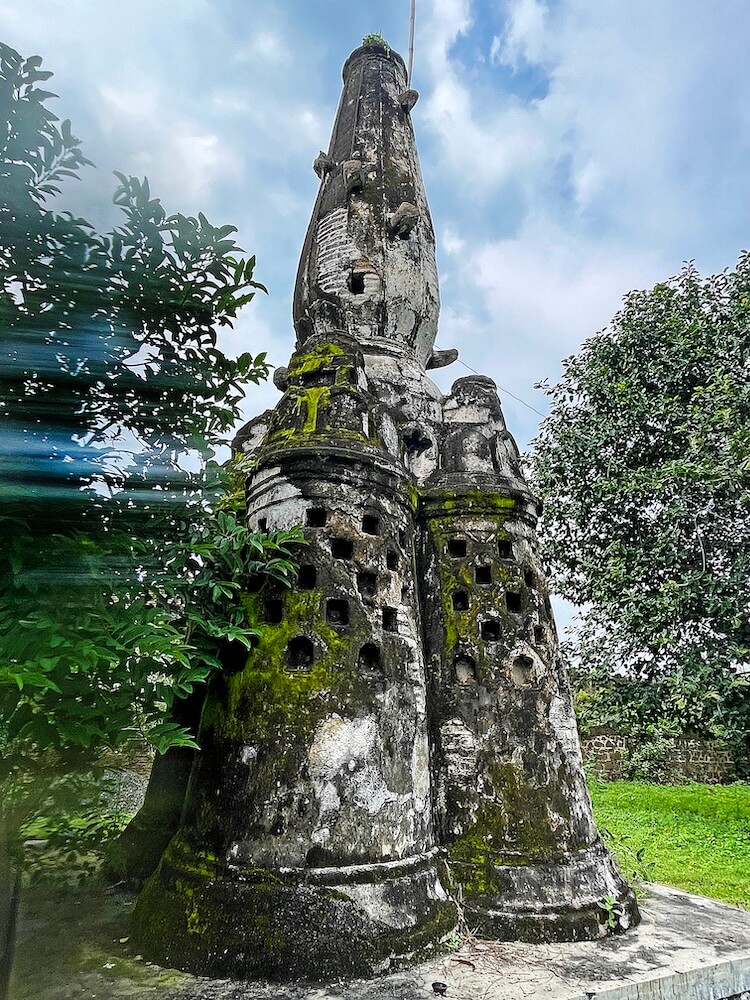
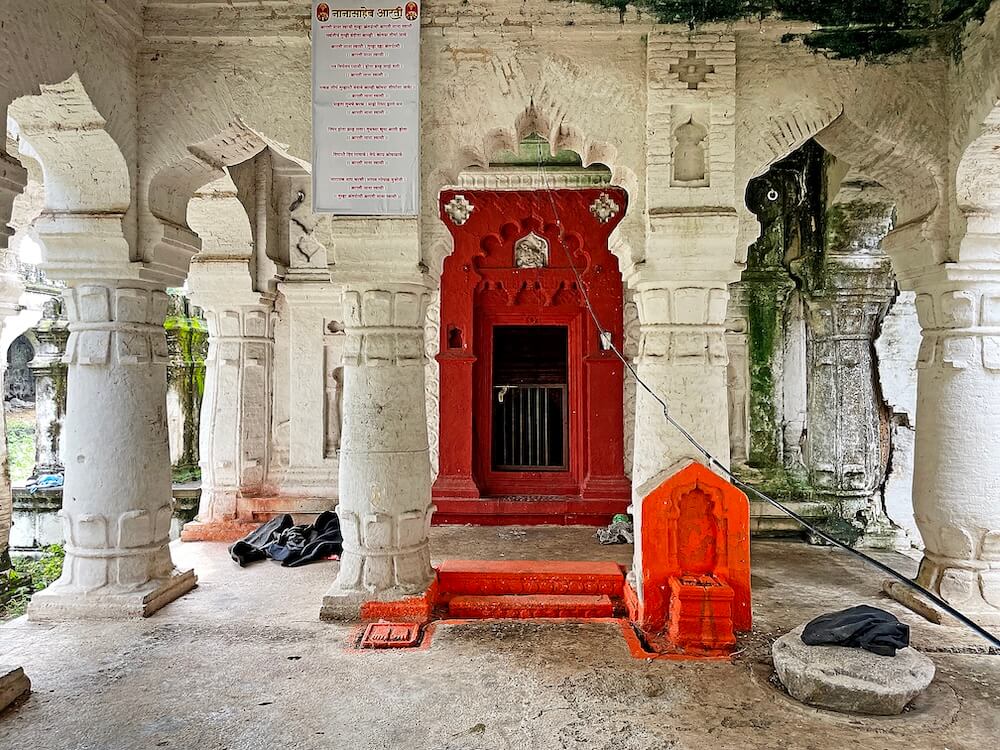
In the premises of the Wada, an ancient Shiva Linga and a Nandi statue are visible on the left side. In the courtyard, in front of the temple, there is a unique structure with four combined lamp pillars and one tall lamp pillar above them. Ancient statues are carved into the niches on the walls of the temple’s facade. It is said that some of the statues here were broken during foreign invasions of this structure. There are a total of seven doors to enter the assembly hall (Sabhamandap) of this temple. The Sabhamandap has sturdy pillars and an ancient statue of a tortoise. There are arched designs in this Sabhamandap.
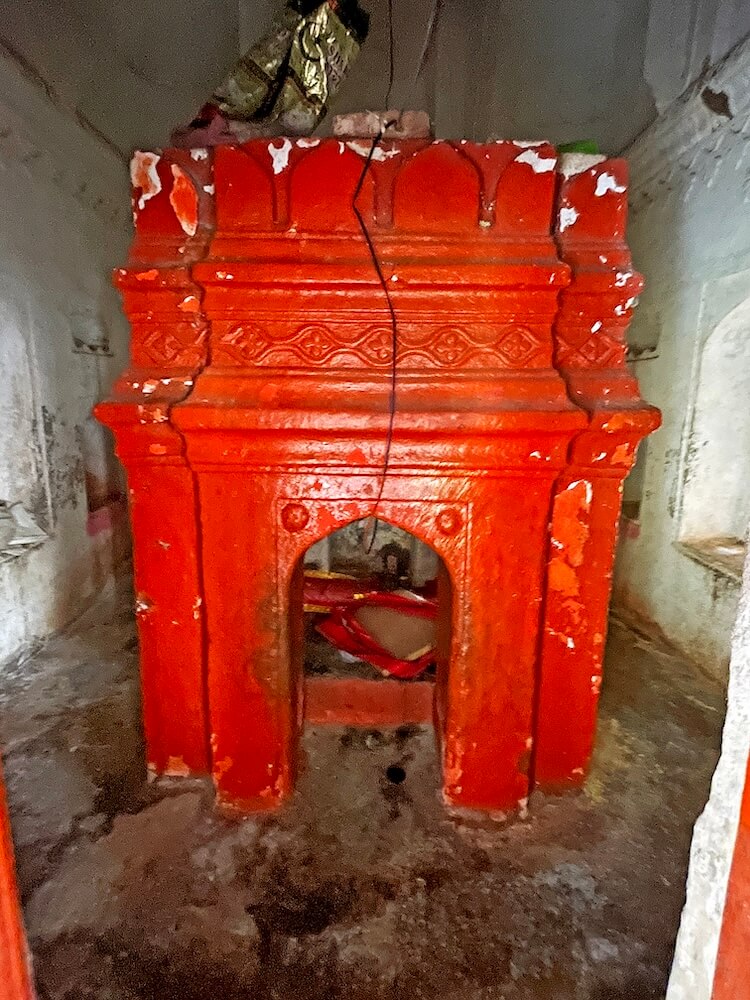
Near the entrance of the sanctum sanctorum, one can see the Padukas of Nanasaheb. Near the steps of the sanctum entrance, small pits are visible. It is said that before entering the sanctum, devotees used to plant silver coins in these pits. The Samadhis of Nanasaheb and his wife are in the sanctum. A window has been made on the side of the Shikhara to ensure ventilation and sufficient light in the sanctum. There is a basement in the temple structure. The narrow passage to enter this basement is currently filled in. A legend is told that there were gold coins in this cellar.
There is a dome-shaped Shikhara over the sanctum of the temple. There is a fresh-water well in the area of the Sabhamandap. It is said that the water in this narrow well never dries up. Currently, this well is covered. Including this well, there are a total of five wells in the temple premises. One of them is behind the temple. Adjacent to this temple is the Samadhi of Nanasaheb’s son and disciple, Mukundraj. Behind the temple are the Samadhis of Nanasaheb’s disciples, Sonaji and Honoji. One of these Samadhis has a beautiful sculpture of an elephant. There is also an ancient stone statue of Hanuman in one place in the temple. This Hanuman is also called ‘Teliya Hanuman’. There is also an old stone mill in the temple premises. Previously, during the Yatra, grain used to be ground in this mill. This mill is still in good condition today.
A large Yatra is held here on Magh Shuddha Dashami. Previously, this Yatra used to last for one and a quarter months. Thousands of devotees used to come here to fulfill their vows. They would offer Naivedya of Rodge and eggplant curry. The village was destroyed in a fire set by Pindari looters in 1808. After this incident, the duration of this Yatra gradually reduced to one day. Various religious programs are performed here on Magh Shuddha Dashami. Thousands of devotees from the surrounding five villages attend this Yatra. On Magh Shuddha Navami, Naivedya of Puran Poli is offered to Mukundraj Maharaj. On the day of the Yatra, Naivedya of Urad Dal and Bhakri is offered to Nanasaheb. A grand festival is held in front of the Hanuman statue here on Hanuman Jayanti. During this time, Mahaprasad is also distributed to the devotees. For some years now, Ganesh Utsav is also celebrated here with enthusiasm. Some films have been shot in the premises of this temple.
This sacred temple stands as a testament to deep spiritual devotion, ancient architectural grandeur, and rich local cultural traditions.
The sanctum sanctorum houses the divine idol consecrated according to ancient Vedic traditions, surrounded by serene courtyards and traditional temple architecture.
Navratri, Maha Shivratri, Annual Temple Jatra & Deepotsav
Compare and book flights, secure top-rated local hotels near the temple, hire reliable guides, and rent cars instantly.
Extend your pilgrimage by visiting other highly sacred temples located nearby.


Add ₹999 more to unlock FREE SHIPPING!
Your sacred cart is currently empty.
Shop Photo FramesFill in your delivery details below to place your order.
Add comment