
Add ₹999 more to unlock FREE SHIPPING!
Your sacred cart is currently empty.
Shop Photo FramesNear the ancient temple of Dwarkeshwar Mahadev in Adgaon lies the Samadhi temple of Saint Bhaskar Maharaj, the chief disciple of Gajanan Maharaj of Shegaon. Records indicate that Gajanan Maharaj himself bestowed Samadhi upon Bhaskar Maharaj with his own hands near the Sati Katta here. It is a famous legend that due to the command of Gajanan Maharaj, crows did not hover in this region, which is considered ‘Prati-Alandi’ (the second Alandi), for exactly 12 years. Because of the Samadhi of Saint Bhaskar Maharaj, this region is also known as ‘Bhaskar Nagari’. The Warkari Shikshan Sanstha located here, which has produced many Kirtankars, is well-renowned.
The history of Bhaskar Maharaj is that he was born in the house of a Sardar on the day of Gita Jayanti in the year 1800. His father’s name was Kartaji Patil Jayle and his mother’s name was Parvatibai. Kartaji Patil was a Sardar of Raghojiraje Bhonsle (Second) of Nagpur. Raghojiraje had granted him the Jagir of Akoli village, located on the Akot-Anjangaon road. The Patil Jayle family traditionally performed the Wari of Dehu-Alandi-Pandharpur with regularity. Three years after the birth of Bhaskar Maharaj, in 1803, the Second Anglo-Maratha War took place. Upon receiving news that the British General Lord Wellesley was marching towards Gavilgad, the Bhonsle-Shinde forces decided to intercept the British army at Adgaon. On 29 November 1803, a fierce battle took place between these two armies here. In this, Kartaji Patil attained martyrdom.
After the passing of Kartaji Patil, Parvatibai raised young Bhaskar. She taught him the art of weaponry. Later, he accepted discipleship under Gajanan Maharaj. A detailed account of this is given in the text ‘Shri Gajanan Vijay’, composed in 1939 by the saint-poet Dasganu, who is known as the ‘Mahipati of Modern Maharashtra’. It is said that once, in the scorching heat of Vaishakh, Gajanan Maharaj set out for Adgaon, avoiding the notice of the people of Shegaon. On the way, he was overcome by extreme thirst. Water was nowhere to be seen in the vicinity. Then he saw an elderly farmer watering his field in the outskirts of Akoli. It was Bhaskar Patil. Gajanan Maharaj asked him for water. Bhaskar Patil had brought water in a pitcher to the field. However, seeing the Maharaj in a state of nudity (Digambar), Bhaskar Patil refused to give him water and drove him away. While passing through that field, Gajanan Maharaj saw a well. As he walked towards it, Bhaskar Patil said to him, “Why do you go there in vain? That well is bone-dry.” However, Gajanan Maharaj reached the well that had been dry for twelve years. He prayed to the Divine there, and instantly, a spring of water burst forth from the well. In a few moments, the well was filled with water. Seeing this, Bhaskar Patil became convinced that Gajanan Maharaj was a great Yogi. He prostrated before the Maharaj and, accepting his discipleship, went to Shegaon.
Thereafter, Bhaskar Maharaj lived in Shegaon for 29 years and served Gajanan Maharaj. During that time, Gajanan Maharaj tested him many times. Having passed all those tests, Bhaskar Maharaj became the chief disciple of Gajanan Maharaj. Once, while attending a Dasnavami program at Balapur, Bhaskar Maharaj was bitten by a rabid dog. At that time, Gajanan Maharaj drew out the poison that had permeated his body. However, he told Bhaskar Maharaj, “You have only two months of life left.” After that, Gajanan Maharaj took him for a pilgrimage to Trimbakeshwar. In 1907, on the day of Hanuman Jayanti, Gajanan Maharaj, along with his disciples, arrived at the Dwarkeshwar Mahadev temple site, 10 kilometers from Akot. It was Thursday, 2 May, Chaitra Krishna Panchami. Gajanan Maharaj declared that it was the day of Bhaskar Maharaj’s departure. Gajanan Maharaj asked the hundreds of devotees present there to chant ‘Vitthal Vitthal Narayan’. Bhaskar Maharaj applied the Malabukka, sat in Padmasana, and became absorbed in meditation. At midday, uttering the word ‘Har-Har’, he left his mortal body at the age of 107. After this, Bhaskar Maharaj was given Samadhi near the Dwarkeshwar Pashupati temple. Gajanan Maharaj stayed here for 14 days after this ceremony. The eleventh chapter of the ‘Shri Gajanan Vijay’ text mentions that food was distributed in the area in memory of Bhaskar Maharaj during this ceremony. At the time of this food distribution, the crows that had arrived in large numbers began to trouble those present. Therefore, people ran to kill the crows. However, Gajanan Maharaj stopped them from doing so and, offering Prasad to the crows with his own hands, commanded them not to come to this area for twelve years. After that, the crows left the place. Since then, the legend is told that crows do not hover in this area.
After the Samadhi ceremony, Gajanan Maharaj performed the festival on the death anniversary of Bhaskar Maharaj here for three consecutive years, until 1910. Later, in 1955, Bhaskar Maharaj’s grandson, Saint Vasudev Maharaj, renovated the Samadhi site in the presence of countless Warkaris. A legend regarding this is also famous. While the writing of the ‘Gajanan Maharaj Charitra’ was underway at the Shegaon Sansthan at the behest of Ramchandra Patil, Gaurishankar Maharaj from Sindhi near Wardha arrived there. He told Vasudev Maharaj, who was sitting there, to go to Adgaon and renovate the Sanjeevan Samadhi of Bhaskar Maharaj. To this, he asked, “I am a student of the Jog Maharaj Sanstha, so I do not have the money required for the renovation. I have never asked anyone for anything until today. So how can I raise so much money?” Upon this, Gaurishankar Maharaj instructed him to carry out this renovation through voluntary donations from the people. Accordingly, Vasudev Maharaj collected funds through public donations and renovated the Samadhi site at Adgaon. During this ceremony, held in the presence of one thousand one hundred saints and ascetics and over forty thousand Warkaris, Mamasaheb Dandekar, a disciple of Sadguru Jog Maharaj, performed a Kirtan on the Abhang ‘Hechi Daan Dega Deva’ and declared Bhaskarnagari to be a ‘Prati-Alandi’ (a replica of Alandi) for the poor and faithful devotees. Since then, countless devotees who are unable to travel to Pandharpur, Alandi, or Shegaon come here to complete their Wari.
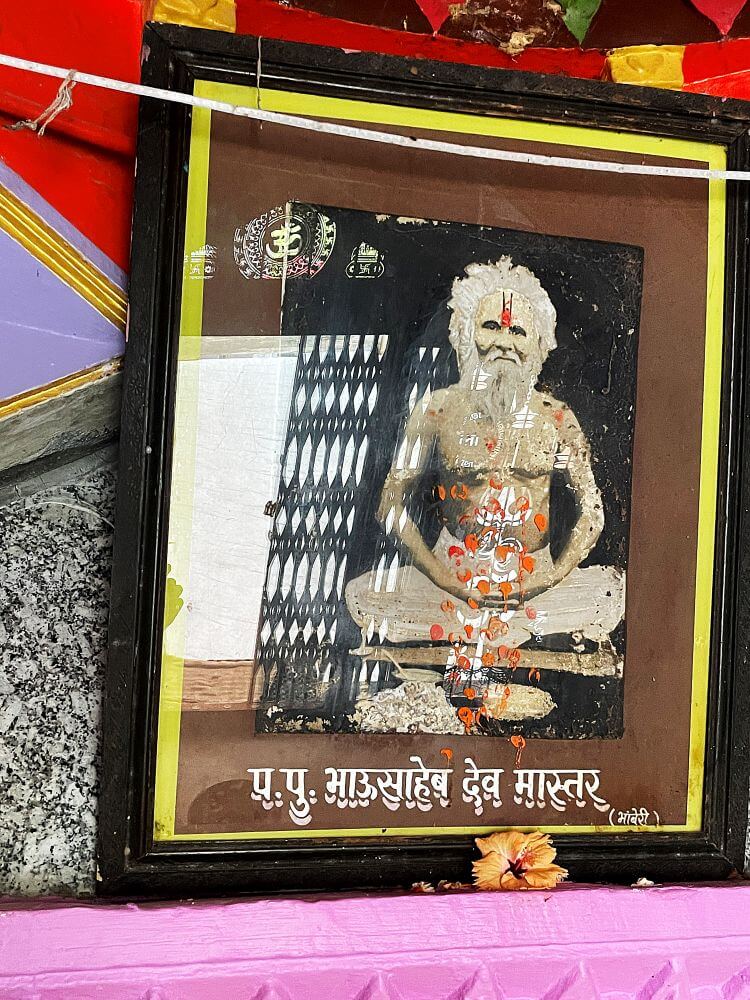
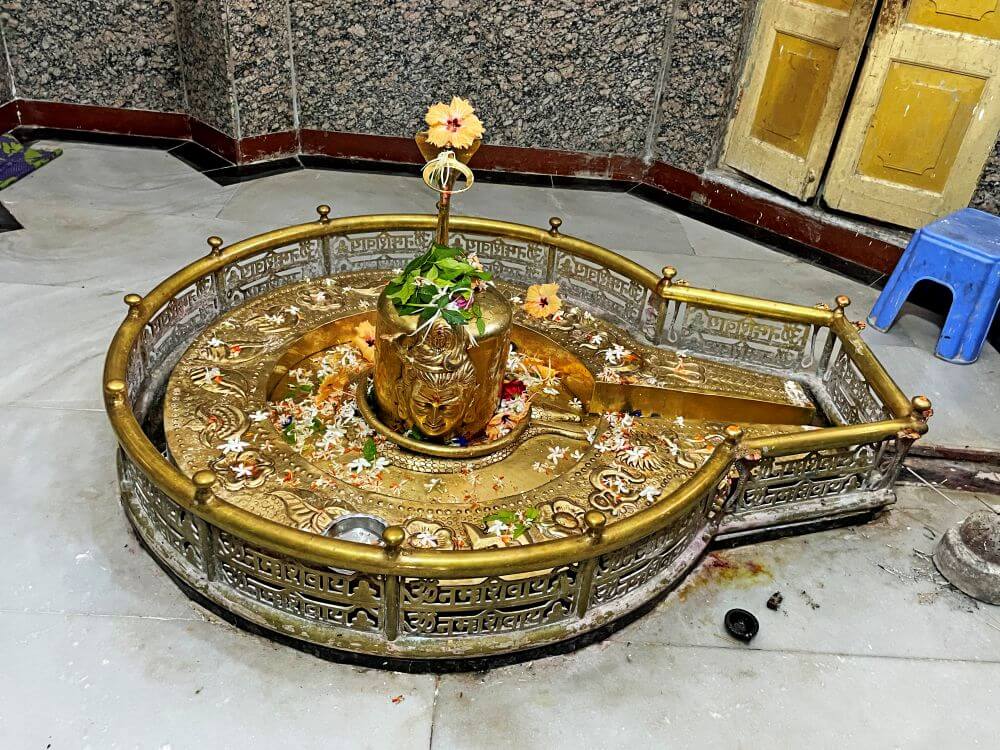
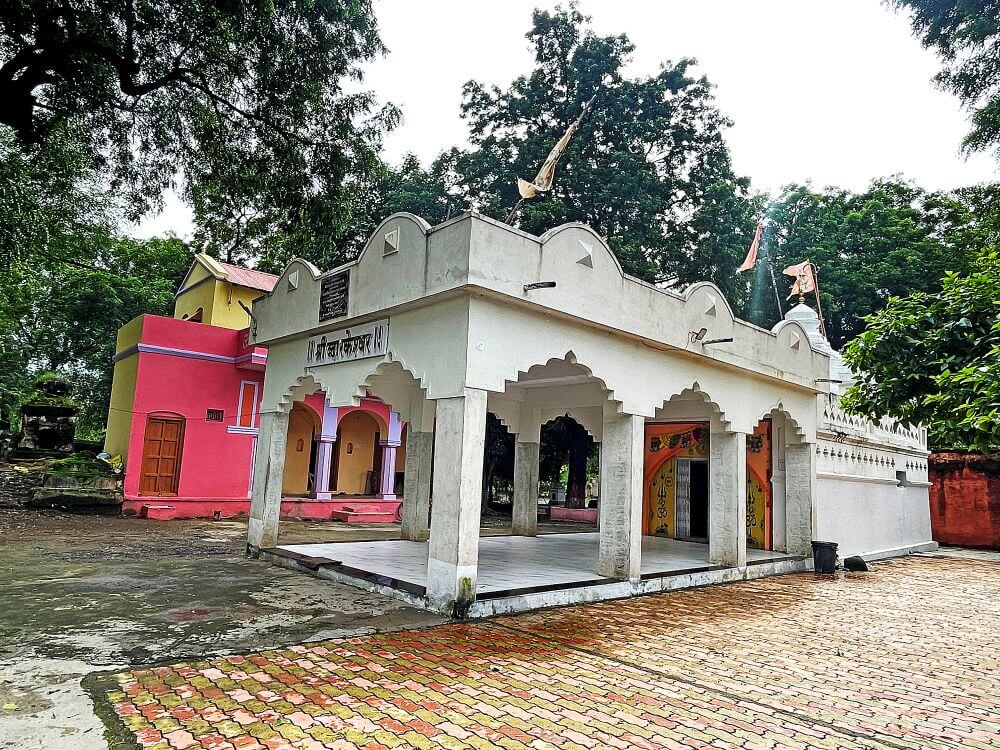
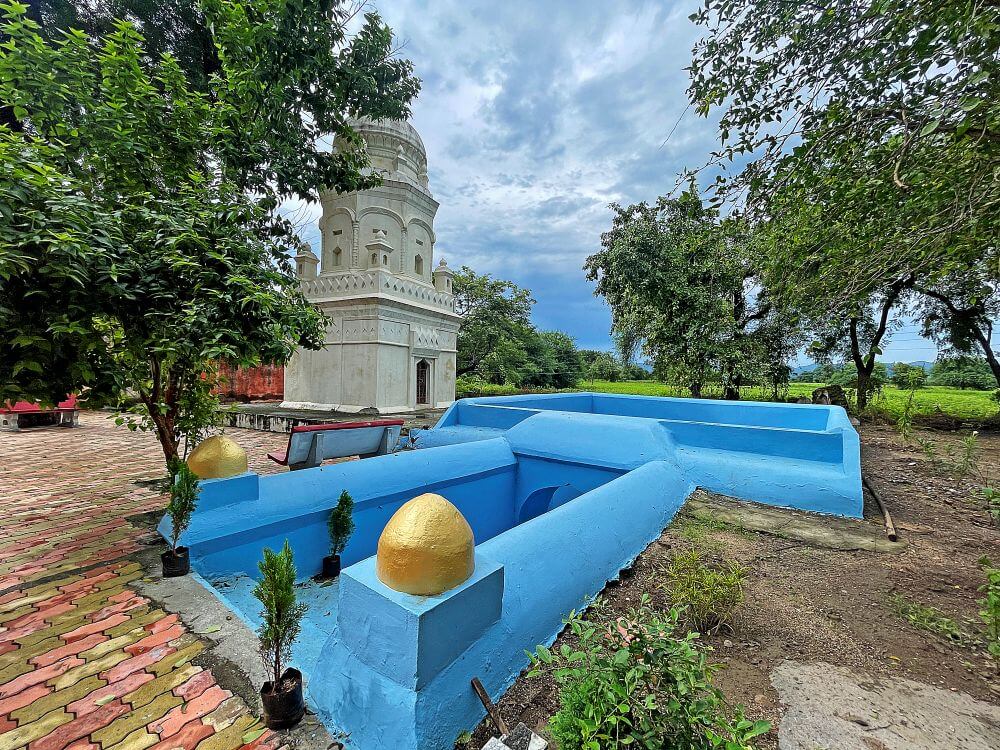
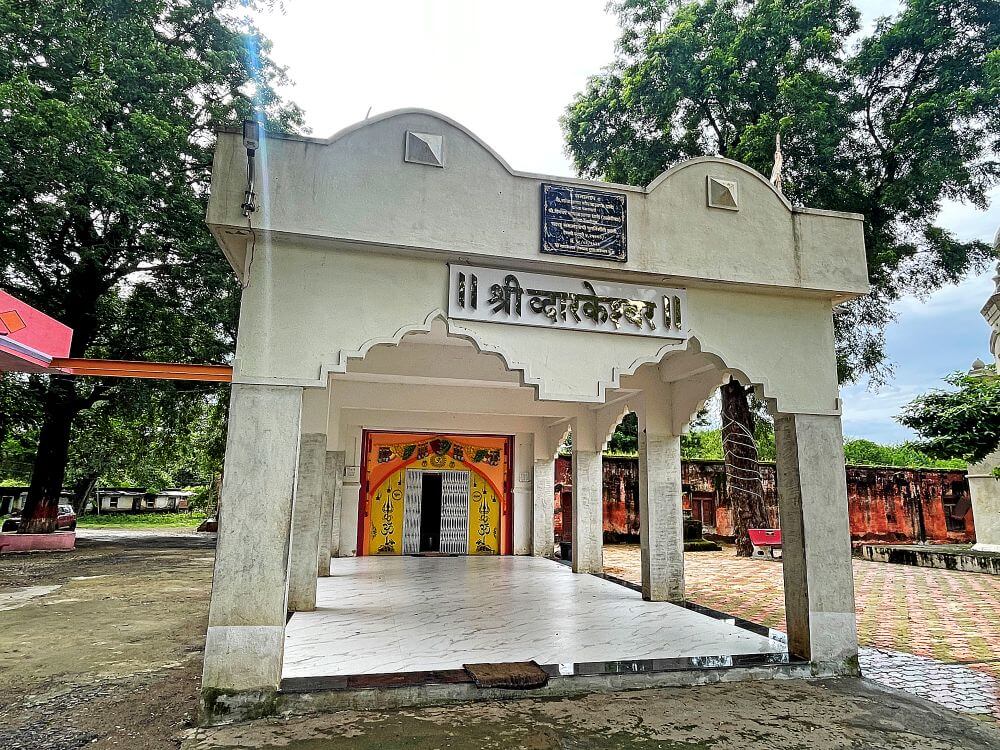
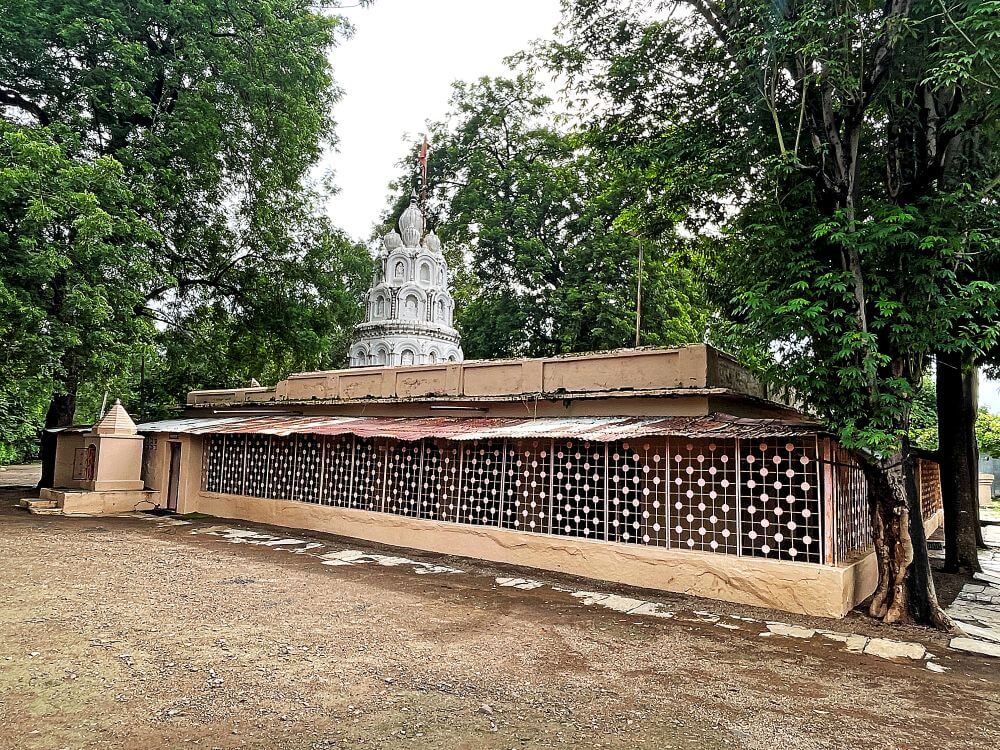
There are many ancient trees in the temple premises, including a Banyan tree. Regarding the Dwarkeshwar Temple located here, legend has it that while abducting Rukmini, Lord Krishna stopped at several places along the way. This temple stands at one of those sites. There is a Deepmala (lamp pillar) in front of this temple. The temple is structured with an open Sabha Mandap (assembly hall), Antaral (vestibule), and Garbhagriha (sanctum sanctorum). The temple attained its current form after a renovation carried out a few years ago. In the center of the Antaral, on a raised platform, there is a stone idol of Nandi. An image of Bhausaheb Maharaj, also known as Devmastar, is placed at the entrance of the Garbhagriha. Inside the sanctum, there is a Shivalinga of Dwarkeshwar Mahadev set in a large Shalunka. Auspicious symbols like ‘Om’ and ‘Swastika’ are engraved on the Panchadhatu (five-metal) Shalunka, and the face of Lord Shiva is carved onto the covering of the Shivalinga. Near this temple, there is another ancient Shiva temple with a tall spire. It houses an idol of Lord Krishna along with a Shivalinga. There used to be a stepwell in this area; it is now filled in, and only its upper walls can be seen.
Near the nearby Banyan tree is the Sati Ota (a platform dedicated to Sati), upon which stands a Vrindavan. A few steps away, in the temple of Mother Parvati, there is a beautiful idol of the Goddess. In front of this temple is the Sanjeevan Samadhi temple of Bhaskar Maharaj. This temple, with its simple construction, consists of a Sabha Mandap and a Garbhagriha. In the Sabha Mandap, there is an image and Paduka (footwear) of Gajanan Maharaj. There is also an image of Saint Dnyaneshwar in this hall. Continuous Veena playing takes place here. Above the entrance of the Garbhagriha is an image of Bhaskar Maharaj. Inside the sanctum, at the site of Bhaskar Maharaj’s Samadhi, there is a beautiful idol of him. The idol is adorned with a brass mask and a turban. On the Vajrapitha behind the idol are idols of Vitthal-Rukmini.
Vasudev Maharaj, who established the Shri Bhaskar Maharaj Sansthan at Shri Kshetra Bhaskarnagar, built a Warkari Shikshan Sanstha (Warkari educational institution) in this area with the aim of propagating and promoting the ideals of the Warkari tradition. This institution has produced many great Kirtankars. Vasudev Maharaj also established the rule of fortnightly Ekadashi for devotees and initiated a summer Bal Sanskar (children’s values) camp. He also started the Baras (Dwadashi) community feast here. In the later years of his life, in two thousand one, he merged this institution with the Shri Gajanan Maharaj Sansthan in Shegaon. Daily worship and rituals are performed in this temple. An Akhand Harinam Saptah is organized here on the occasion of Bhaskar Maharaj’s Punyatithi (death anniversary). Programs such as the recitation of the Granthraj Dnyaneshwari, Gatha Bhajan, Kakada, Haripath, Kirtan, and Pravachan are organized as part of this. During this festival, the Palkhi (palanquin) of the Lord is taken on a procession through the town in the disciplined and royal style of the Shegaon Sansthan. Dindis and Palkhis from outside towns participate in this.
This sacred temple stands as a testament to deep spiritual devotion, ancient architectural grandeur, and rich local cultural traditions.
The sanctum sanctorum houses the divine idol consecrated according to ancient Vedic traditions, surrounded by serene courtyards and traditional temple architecture.
Navratri, Maha Shivratri, Annual Temple Jatra & Deepotsav
Compare and book flights, secure top-rated local hotels near the temple, hire reliable guides, and rent cars instantly.
Add ₹999 more to unlock FREE SHIPPING!
Your sacred cart is currently empty.
Shop Photo FramesFill in your delivery details below to place your order.
Add comment