
Add ₹999 more to unlock FREE SHIPPING!
Your sacred cart is currently empty.
Shop Photo FramesGoddess Hingulambika, a form of Goddess Parvati, is renowned as Hingulja and Hingla Devi. When Sati could not bear the insult to Lord Mahadeva, she offered herself into the sacrificial fire (Yajna) of Daksha. Following this, Lord Mahadeva carried Sati’s mortal remains on his shoulders and performed the Tandava. Lord Vishnu’s Sudarshan Chakra severed Sati’s body into 51 pieces, which fell at various locations on Earth, giving rise to the Shakti Peethas. The primary Shakti Peetha, where the Goddess’s forehead adorned with vermilion fell, is located on the banks of the Hingulja River in the Balochistan province of Pakistan. There are many sub-peethas of this Goddess across India, one of which is the famous temple in Ganeshpeth, Solapur.
Hingulja or Hingulambika is the Kuladevata (family deity) of the Bhavsar community. It is said that this temple was built by the Bhavsar community three hundred years ago. Previously, a brass idol of the Goddess was worshipped in the temple. In 1889, an idol carved from black stone was brought from Pandharpur and consecrated in the temple. As this ancient idol had worn down over time, new idols were consecrated on June 12, 2023, and the old idol has been placed in the Government Sculpture Museum in Dhule.
The legend of the Goddess states that when Parashurama was ridding the Earth of Kshatriyas 21 times, he learned that two Kshatriya kings named Bhav and Sar were hiding with their families in the Hingulja Devi temple in the Balochistan province of Pakistan. Parashurama entered the temple and attempted to slay the kings. At that moment, Goddess Hingulja appeared and asked Parashurama not to do so. However, Parashurama told the Goddess that he had taken a vow to rid the Earth of Kshatriyas and would not spare any. The Goddess then told Parashurama that since Bhav and Sar had laid down their weapons, they were no longer Kshatriyas and thus their lives should not be taken. Accepting the Goddess’s logic, Parashurama spared the lives of King Bhav and King Sar along with their families. Since then, the Bhavsar community has revered Hingulja Devi, who protected their ancestors, as their Kuladevata.
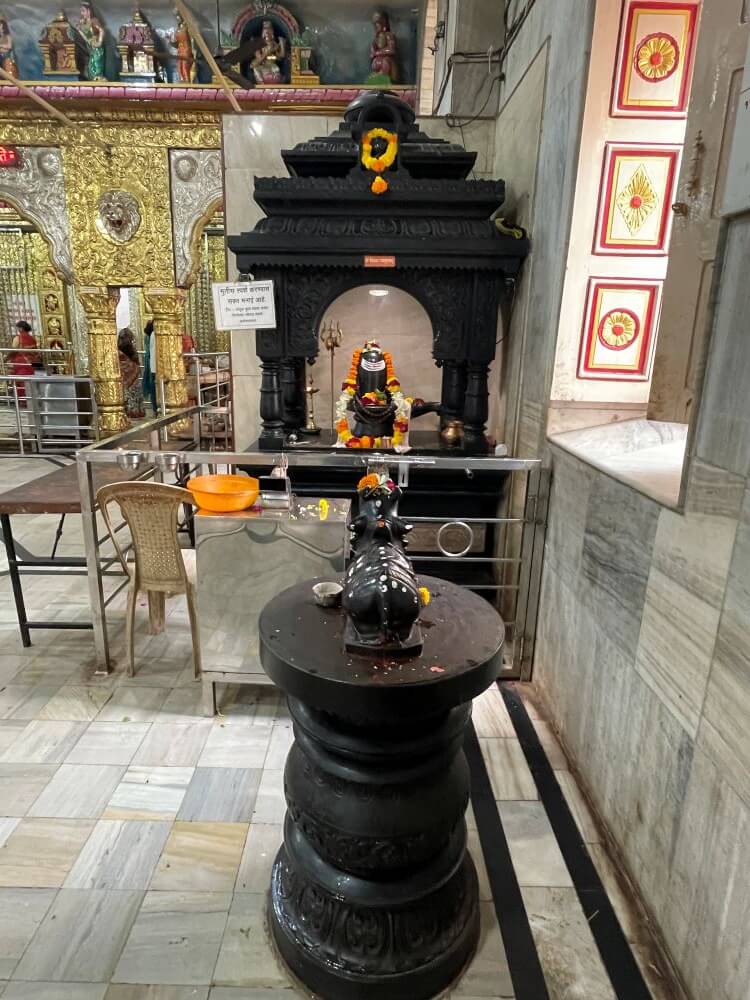
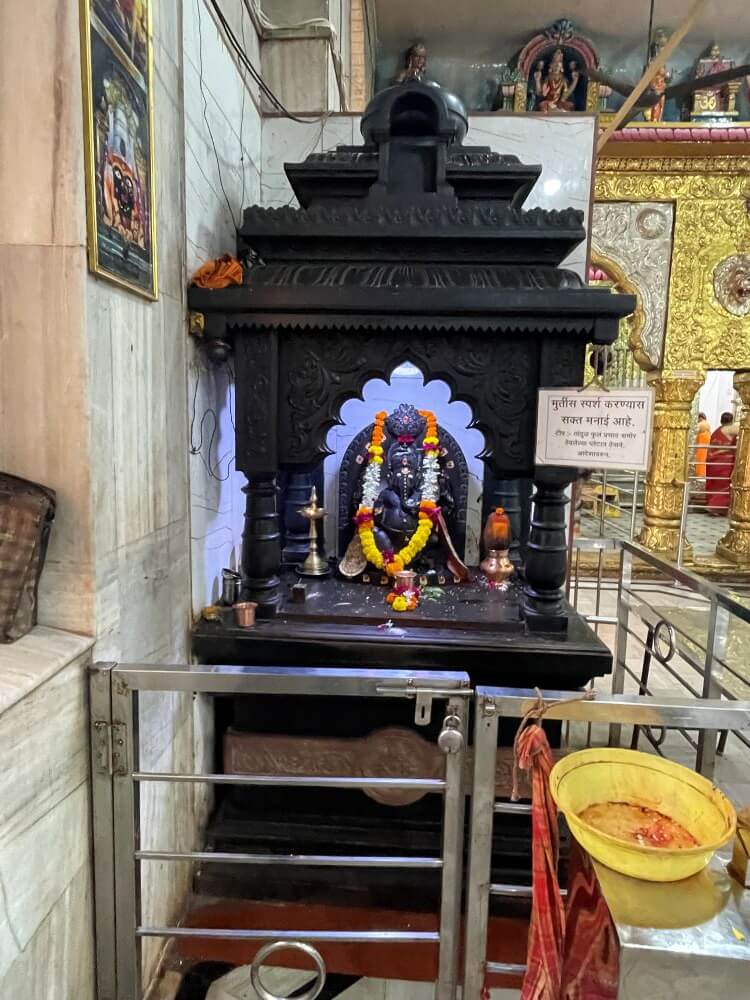
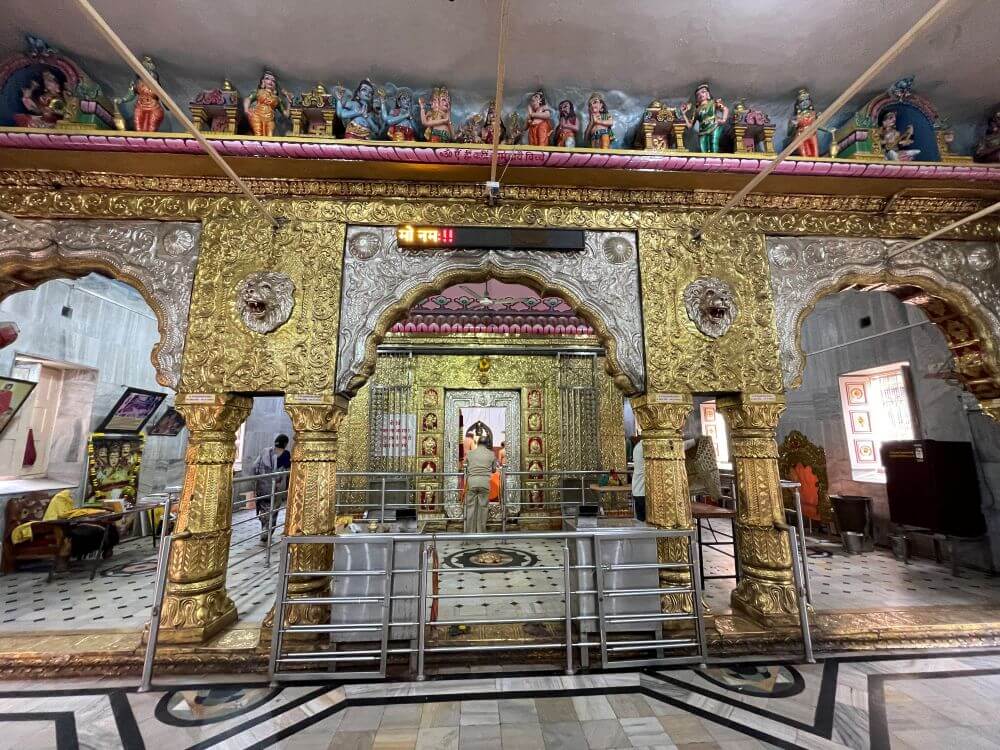
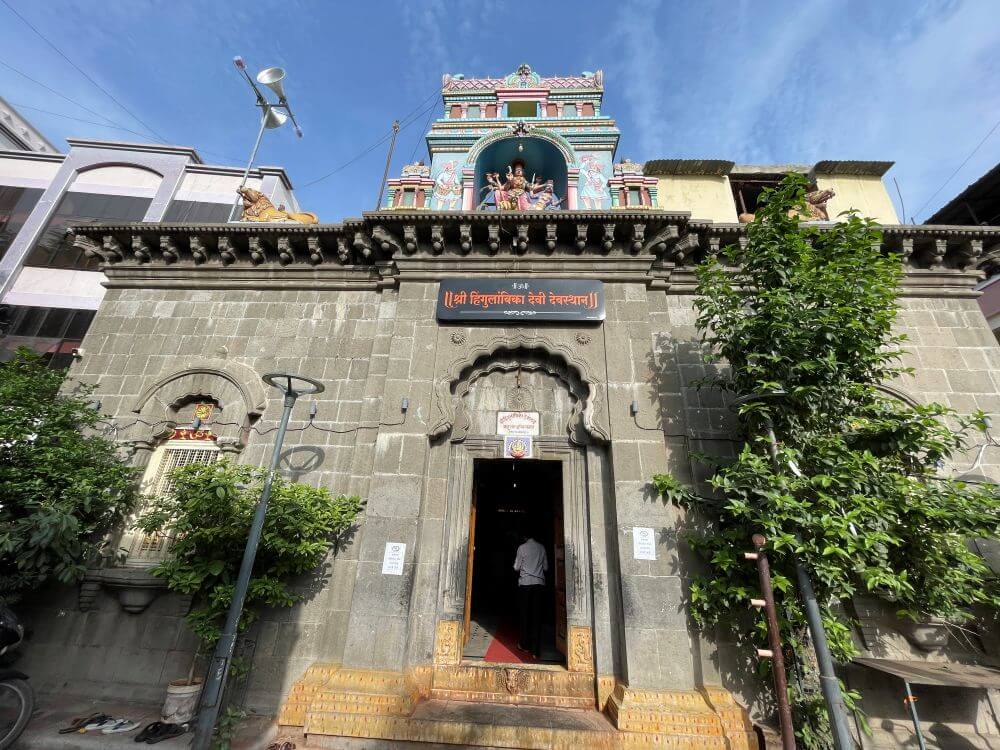
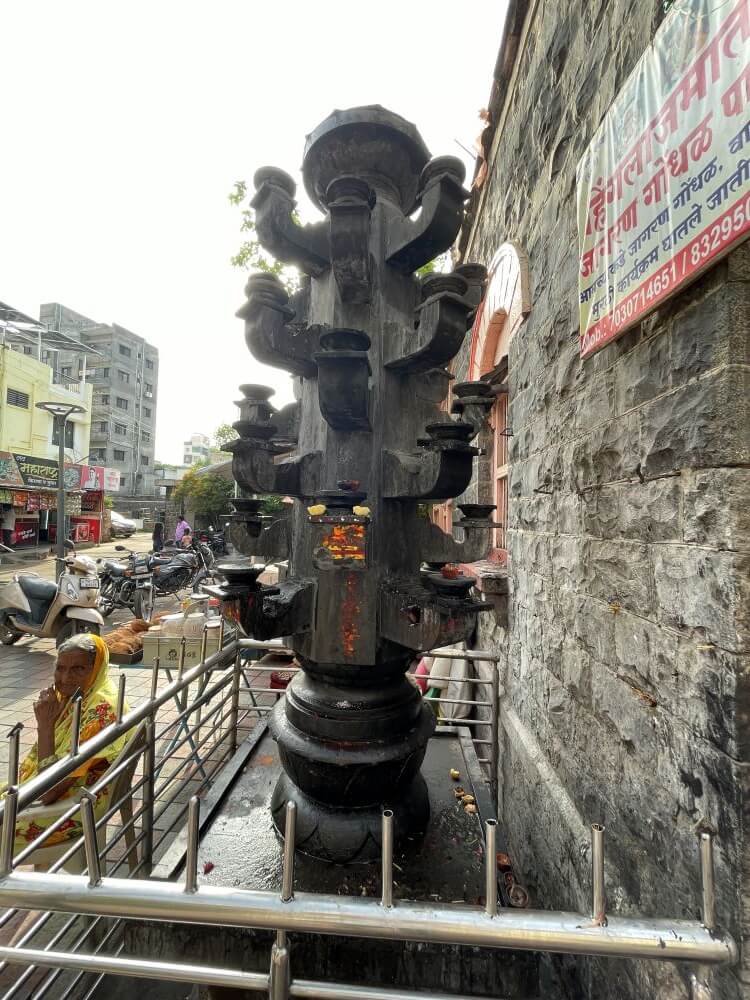
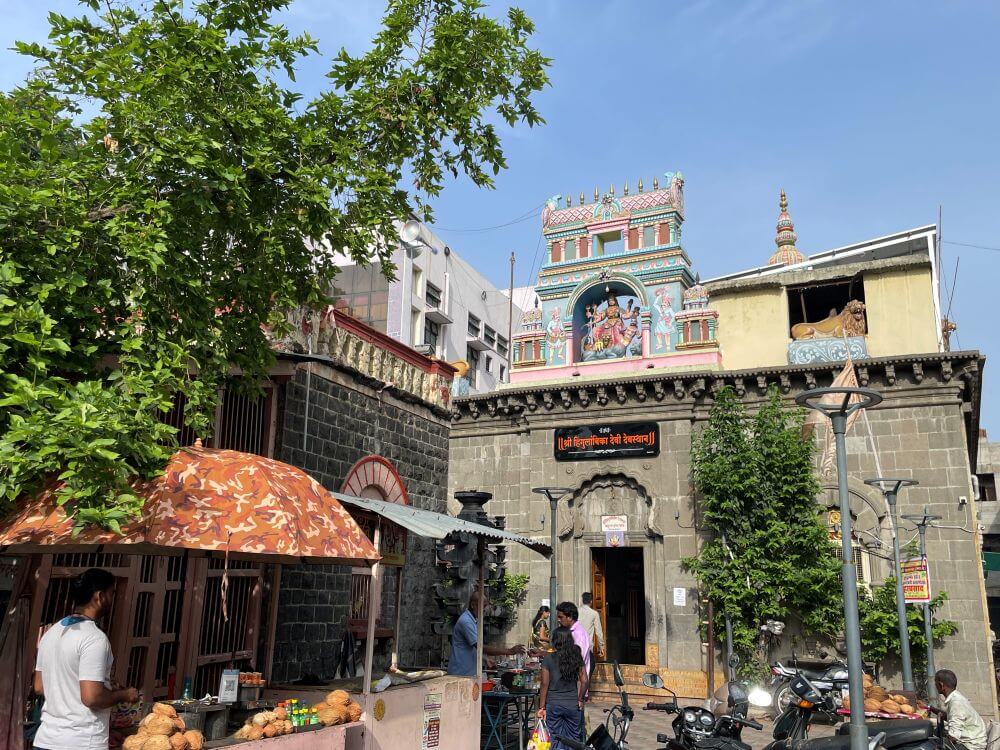
The temple is located along the road in the bustling Ganeshpeth area of the city. There is a tiled courtyard in front of the temple, which features a raised platform (chauthara) with a lamp tower (deepmala). The structure of the temple consists of a Sabhamandapa (assembly hall), Antarala (vestibule), and Garbhagriha (sanctum sanctorum). The door frame of the Sabhamandapa entrance features sculptures of gatekeepers (dwarapalas) at the base and vertical floral carvings above. There is an idol of Lord Ganesha on the lintel, an arched gateway (torana) above the entrance, and a chandrashila and kirtimukha at the threshold. The enclosed Sabhamandapa has two rows of ventilators at the top and bottom for light and air. There are two additional doors on the right and left walls. The Sabhamandapa provides seating for devotees. In front of the main entrance, there is a lion sculpture on the platform and a Yajna-kunda in the center of the floor. Inside the Sabhamandapa, there are two canopies (meghadambari) on either side of the Antarala; the one on the left houses Lord Ganesha, and the one on the right houses a Shiva Linga. The entrance to the Antarala has six circular pillars in a row, all connected by arched designs. The pillars and arches at the entrance of the Antarala are covered in metal and adorned with various carvings and lion sculptures. The walls of the Antarala feature sculptures of various deities. The Garbhagriha is located in the center of the Antarala. The front walls of the Garbhagriha are covered in gold-colored metal with intricate carvings. The door frame of the Garbhagriha features carvings of the Ashta-Durga and an idol of Lord Ganesha on the lintel. Above the entrance, in a peacock-shaped arch, is an idol of Goddess Gajalakshmi. The entrance has ornate silver doors with a silver threshold below.
Inside the Garbhagriha, the eight-armed (Ashtabhuja) black stone idol of Goddess Hingulambika is placed on an ornate throne (makhara) atop a vajrapitha. The Goddess holds a shield, sword, mace, trident, spear, damaru, and other weapons, with a severed head in her left hand. The Goddess stands upon the body of a demon. The idol is adorned with a silver crown, various ornaments, and garments. The golden halo (prabhavali) behind the idol features a kirtimukha in the center and floral arch carvings on both sides. Two metal idols of the Goddess are placed in front of the vajrapitha in the Garbhagriha. There are windows in the Garbhagriha for light and ventilation. A circumambulation path (pradakshina marga) runs around the exterior of the Garbhagriha. On the ceiling of the Sabhamandapa, in a niche above the entrance, is an idol of Mahishasuramardini. Above the niche is a horizontal-style spire (shikhara) flanked by two smaller spires. The roof of the Garbhagriha features a dome-shaped spire, topped with a stupika and a kalasha.
The anniversary of the Hingulambika Devi temple is celebrated with great enthusiasm in the first week of April. During this time, the Goddess is taken out in a chariot for a procession through the village. Hundreds of devotees from the surrounding areas participate in this procession. During Chaitra Navaratri and Sharadiya Navaratri, thousands of devotees visit to seek the Goddess’s blessings and fulfill their vows. On these occasions, devotees offer sarees, blouses, ornaments, and the traditional ‘Oti’ (a ritual offering of coconut and cloth) to the Goddess. A Navachandi Yajna is organized in the temple on the Krishna Ashtami of every month. The temple sees a special influx of devotees on Tuesdays, Fridays, full moon days (Paurnima), and new moon days (Amavasya).
This sacred temple stands as a testament to deep spiritual devotion, ancient architectural grandeur, and rich local cultural traditions.
The sanctum sanctorum houses the divine idol consecrated according to ancient Vedic traditions, surrounded by serene courtyards and traditional temple architecture.
Navratri, Maha Shivratri, Annual Temple Jatra & Deepotsav
Compare and book flights, secure top-rated local hotels near the temple, hire reliable guides, and rent cars instantly.
Extend your pilgrimage by visiting other highly sacred temples located nearby.


Add ₹999 more to unlock FREE SHIPPING!
Your sacred cart is currently empty.
Shop Photo FramesFill in your delivery details below to place your order.
Add comment