
Add ₹999 more to unlock FREE SHIPPING!
Your sacred cart is currently empty.
Shop Photo FramesUnity in diversity is one of the defining features of Hinduism. Within this vast faith exist numerous deities, traditions and sects. Some sects are devoted to the worship of many gods and goddesses, while others follow a monotheistic path. Among Hindus, both the worship of the divine in a manifest form (sagun upasana) and the devotion to the formless supreme (nirgun bhakti) are prevalent. In fact, there are at least forty-five sects in Hinduism devoted to the worship of the formless Absolute. Sant Singaji, fondly known as the ‘Kabir of Nimar’, was one of the most revered saints of the Nirgun tradition. His samadhi temple is located on an island in the backwaters of the Indira Sagar Dam near Khandwa.
The districts of Khandwa, Burhanpur, Dhar, Khargone and Barwani were once collectively known as ‘Anup Janapad’ in ancient times and the region is still referred to as the Nimar belt. The Samadhi Temple of Sant Singaji is the sacred seat of faith for thousands in this area. Sant Singaji was born in 1519 CE, on the auspicious day of Vaishakh Shuddha Navami, in Khajuri village of Rajpur tehsil in Barwani district of Madhya Pradesh. His father was Bhamaji Gavli and his mother was Gaurabai. He had a brother named Limbaji and a sister named Krishnabai. His wife’s name was Yashodabai and together they had four sons – Kalubaba, Bholubaba, Sadubaba and Deepubaba.
According to Prof. Shrikant Prasoon in his book ‘Indian Saints and Sages’, Sant Singaji initially worked as a commander under a local landlord. He displayed great valor in several battles. Later, he served as a messenger for King Lakhmesingh of Bhamgarh. During one of his journeys carrying royal messages, he happened to hear a bhajan of the Nirgun tradition sung by Sant Manrangji. Deeply moved, Singaji sought him out and, in 1558, received initiation from him. Although unschooled, Singaji was a gifted poet. He composed nearly 800 verses, which his followers preserved. These compositions are known as Anhadi Nad and to this day they are sung in the folk style of the Nimar region. Sant Singaji dedicated his life to uplifting the downtrodden and spreading the path of devotion. His teaching emphasized that while humans wander in search of God outside, they fail to look within; for, God dwells inside oneself. This message drew striking parallels to the teachings of Sant Kabir and hence Singaji came to be known as the Kabir of Nimar. It is said that on one occasion, he refrained from waking his Guru during the midnight celebration of Krishna Janmashtami. Displeased, the Guru expressed anger and Singaji, overwhelmed, decided to give up his life. On Shravan Shuddha Navami in 1560 CE, he voluntarily entered into jivant samadhi (live entombment) in the waters of the Narmada.
In the Nimar region, Sant Singaji is worshipped even as a guardian deity of cattle and numerous stories of his miracles circulate among the people. Folklore regards him as an incarnation of Rishi Shrungi. His samadhi is located near Pipliya village in Punasa tehsil of Khandwa district, a village now also known as Singaji. In 1992, when the Indira Sagar Dam was built in this area, nearly a hundred villages were displaced. The rising waters threatened to submerge Singaji’s original samadhi. Considering the immense devotion of the people, the then Congress government, in 2004, constructed a large island in the backwaters. The samadhi temple was shifted 40 meters higher and a grand new temple was built there. A bridge two kilometers long was constructed across the waters of the Narmada to provide access to the shrine.
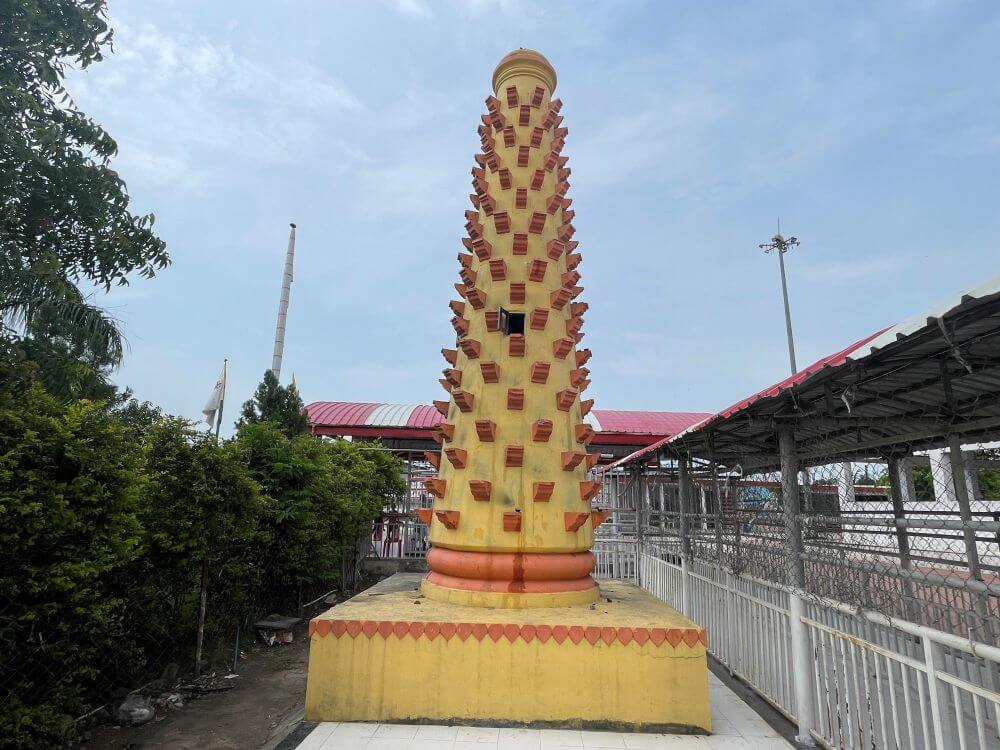
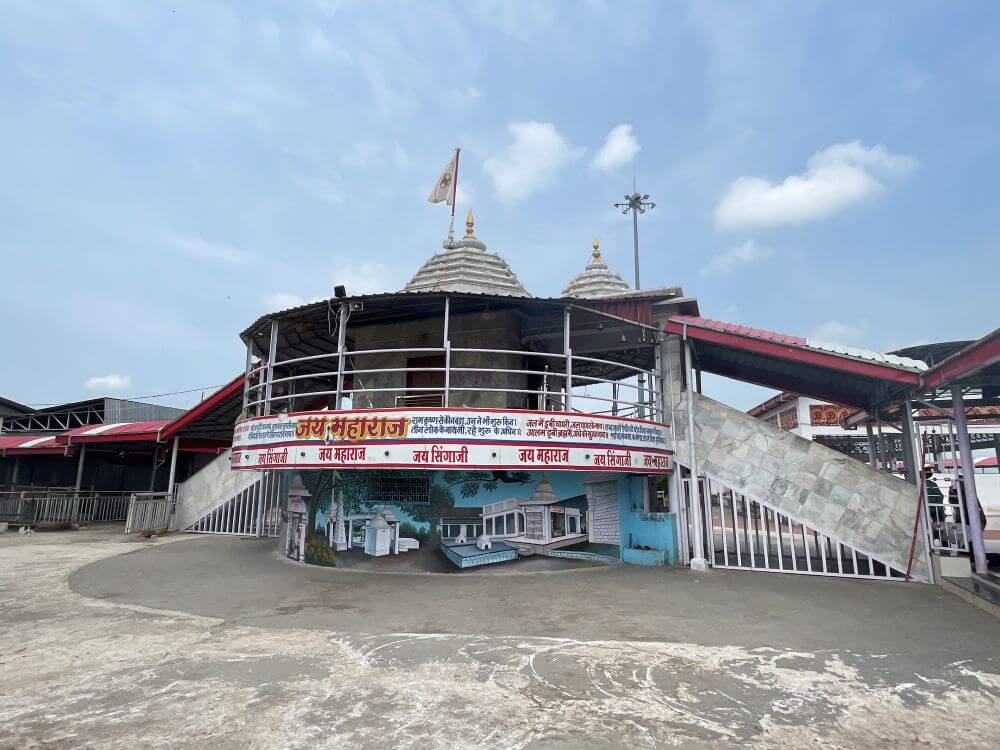
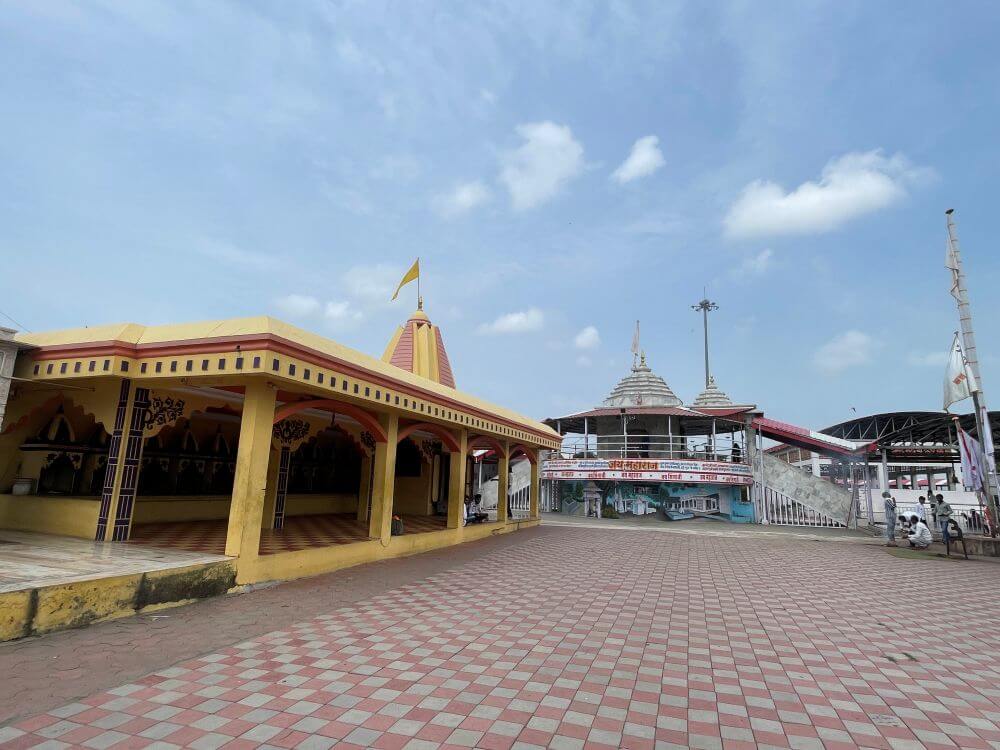
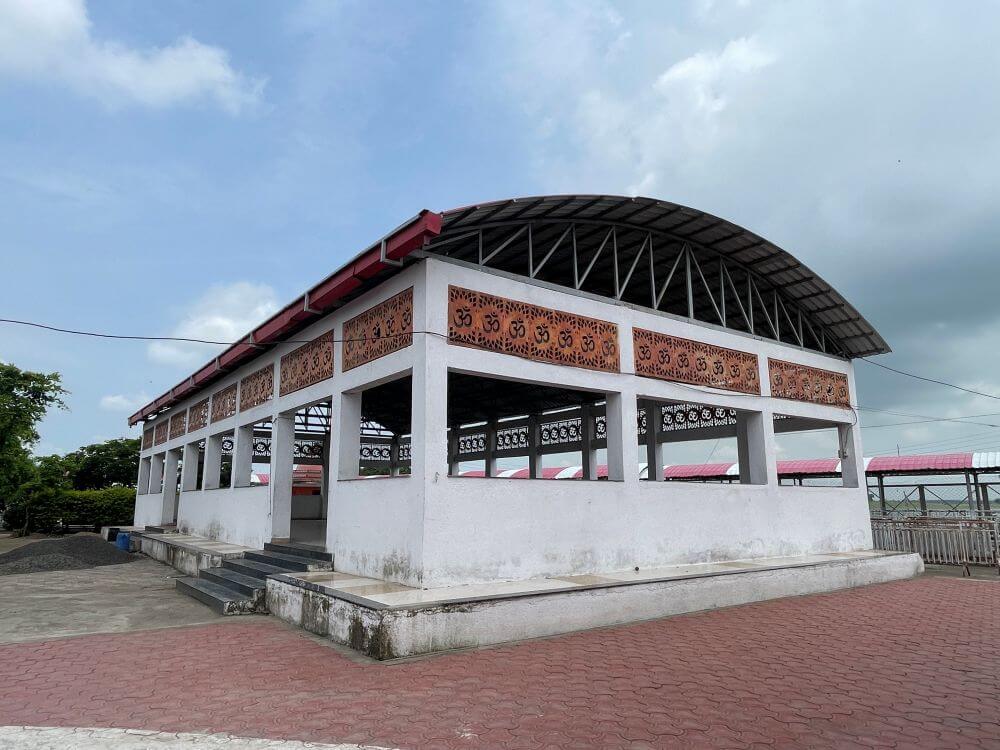
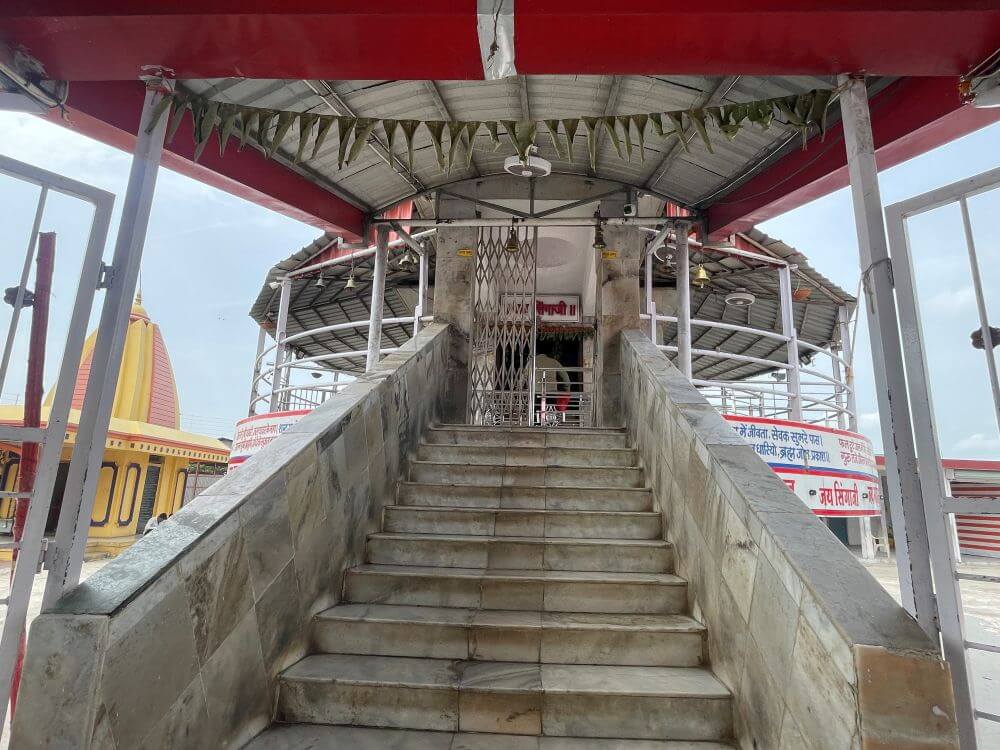
Upon crossing the bridge, one arrives at a vast parking area. Shops selling offerings and prasad line the temple’s entrance. The iron gateway of the sprawling complex opens into the grounds, where on the right stands the building housing the Mahant’s seat. Benches are placed there for resting devotees. A short distance ahead stands the circular, two-storied Samadhi Temple of Sant Singaji. The outer walls bear inscriptions of his verses. On the upper floor lies the sacred samadhi, reached by stairways of thirteen steps each on the left and right sides of the temple. A grand lamp tower rises in front of the left stairway. Above the small assembly hall sits a circular spire shaped like spiraling steps. The sanctum itself is built of marble, encircled by a circumambulatory path. In its center rests a marble platform holding the silver padukas of Sant Singaji, beside which an eternal flame burns. On one wall is displayed a photograph of the old temple. The original samadhi shrine still exists about eighty feet below the new temple, protected within a well-like structure with iron ladders leading down. Normally submerged in water, it becomes accessible only during May and June, when the dam’s water recedes, allowing devotees to descend for cleaning and worship. A passage from the current sanctum connects directly to this older shrine.
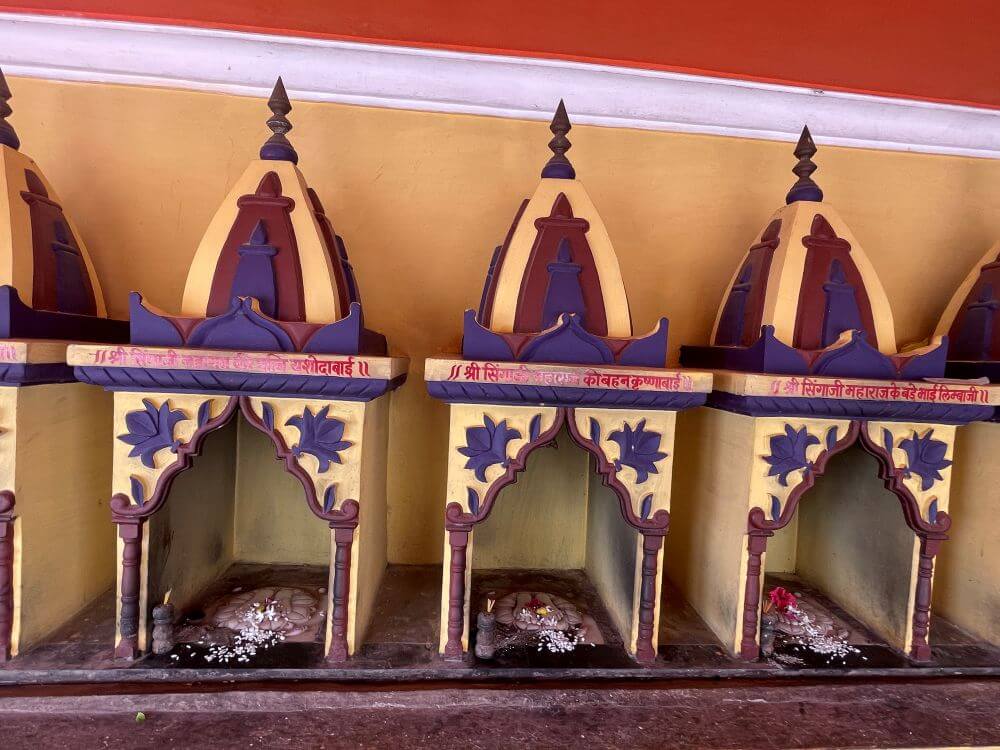
Behind the main temple lies the samadhi shrine of Sant Singaji’s grandson, Daludasji Maharaj. Its spire is shaped like a closed flower bud and within its sanctum, his padukas rest upon a marble platform. In the surrounding niches are the padukas of Sant Singaji’s wife, sister, brother, disciples and the temple’s first Mahant. At the rear, a ghat has been constructed along the Narmada’s waters, where devotees go to take holy bath.
The temple is always thronged with devotees. Every year, on Sharad Purnima, a great fair is held, attracting nearly two to three lakh pilgrims. Devotees from across Malwa region arrive singing bhajans. Equally grand is the celebration of Sant Singaji’s birth anniversary on Vaishakh Shuddha Navami, when lakhs of devotees gather to honor him. Pure ghee is offered to the saint and the temple uses this ghee in preparing the mahaprasad distributed to devotees.
This sacred temple stands as a testament to deep spiritual devotion, ancient architectural grandeur, and rich local cultural traditions.
The sanctum sanctorum houses the divine idol consecrated according to ancient Vedic traditions, surrounded by serene courtyards and traditional temple architecture.
Navratri, Maha Shivratri, Annual Temple Jatra & Deepotsav
Compare and book flights, secure top-rated local hotels near the temple, hire reliable guides, and rent cars instantly.
Extend your pilgrimage by visiting other highly sacred temples located nearby.


Add ₹999 more to unlock FREE SHIPPING!
Your sacred cart is currently empty.
Shop Photo FramesFill in your delivery details below to place your order.
Add comment