
Add ₹999 more to unlock FREE SHIPPING!
Your sacred cart is currently empty.
Shop Photo FramesThe Dhangar community holds a distinct identity in Maharashtra. It is recorded in numerous verses and pages of history that this warrior Kshatriya community was once a ruling class. Birdev, the presiding deity of this community and a revered figure for people of all eighteen castes, is also known by the names Biruba, Viroba, Birappa or Virupa, and Viranna. There are seven major shrines of Birdev in the state. Among them, the awakened Birudev temple at Umarga is ancient and famous. The Birudev Yatra, held here amidst the free showering of turmeric powder and the resonant sounds of Dhangari drums and cymbals, is a grand festival.
The birth story and the greatness of Birudev are described in the text ‘Shri Vitthal Birdev Mahatmya’. Birudev devotees Dattatray Borgawe and Vitthal Omapujari composed this book based on the narratives sung through Dhangari verses known as ‘Sumbaran Mandila’. The legend states that when Shiva was insulted during the Daksha Yajna, Dakshayani, that is, Parvati, immolated herself. Enraged by this, Shiva struck his matted hair, from which Virabhadra was born. Virabhadra severed Daksha’s head. At that time, Daksha’s wife pleaded with Virabhadra for mercy. She begged him to bring her husband back to life. While contemplating how to revive him, Virabhadra saw a Dhangar grazing sheep nearby. He decided to attach the head of a sheep to Daksha’s torso. At that moment, the Dhangar prayed to Virabhadra to incarnate in their humble clan and destroy those who blaspheme Shiva and the wicked. Virabhadra then told him that in the Kali Yuga, he would be born into the Dhangar clan.
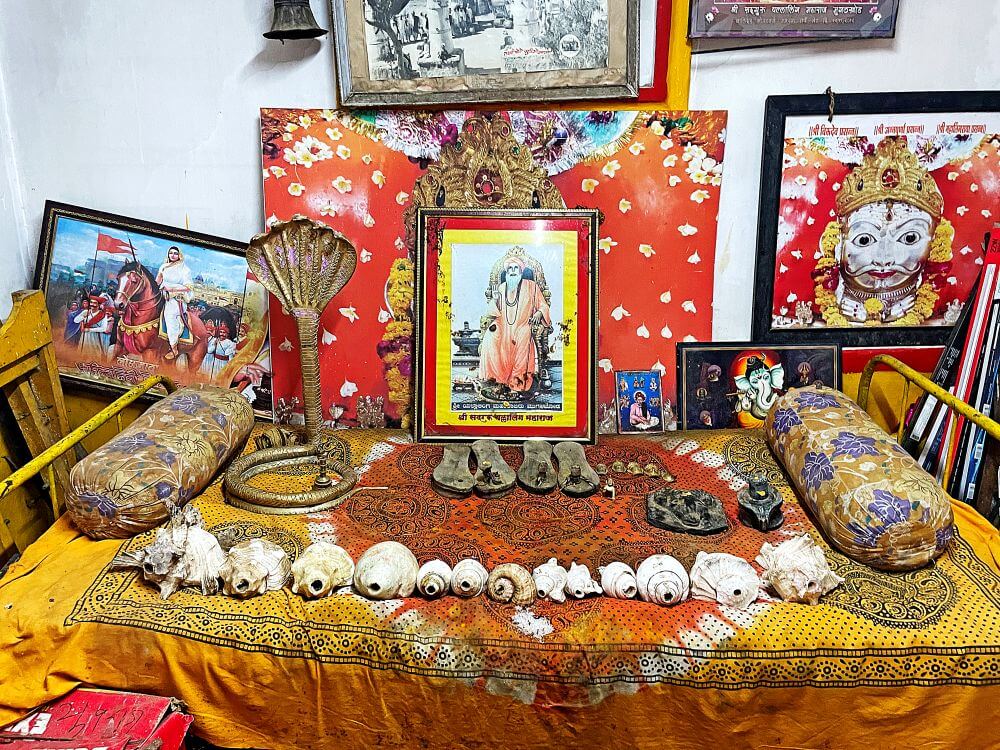
Later, Virabhadra, that is, Birudev, was born to Gangasurvanti (Ganga-Saraswati), the daughter of King Dhruvait of Naradpur. However, the son could not stay with his mother. Due to a curse from a river, he had to be placed in a cradle in the forest. The legend of this curse states that when the father of Ganga Suravanti discovered that his daughter had become pregnant before marriage, he mixed poison into her food. Birudev, while still in the womb, protected his mother from the poison. However, when Suravanti’s maid threw the remaining food into the river, the aquatic life died. The river cursed her, saying, “Because you killed my children, your son will remain separated from you as soon as he is born.” Consequently, Birudev was raised in the forest. After growing up, he destroyed many demons and later lived a life of renunciation, working for the upliftment of society. This boy was Birudev, and the disciple who remained by his side like a shadow was Mahalingraya, also known as Mahalingeshwar.
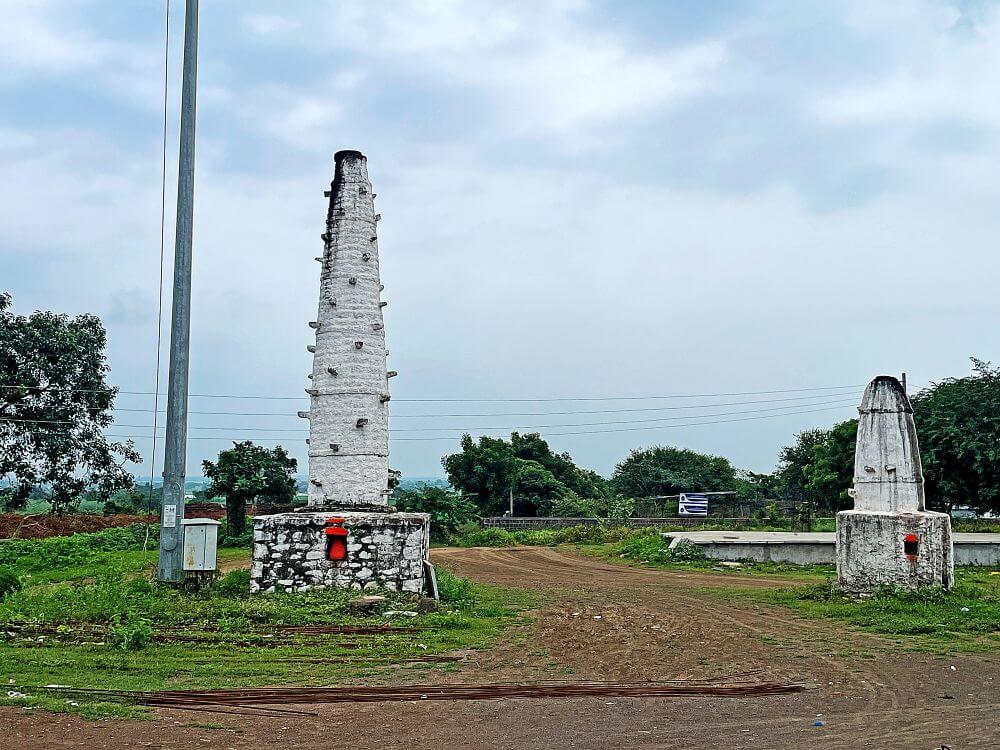
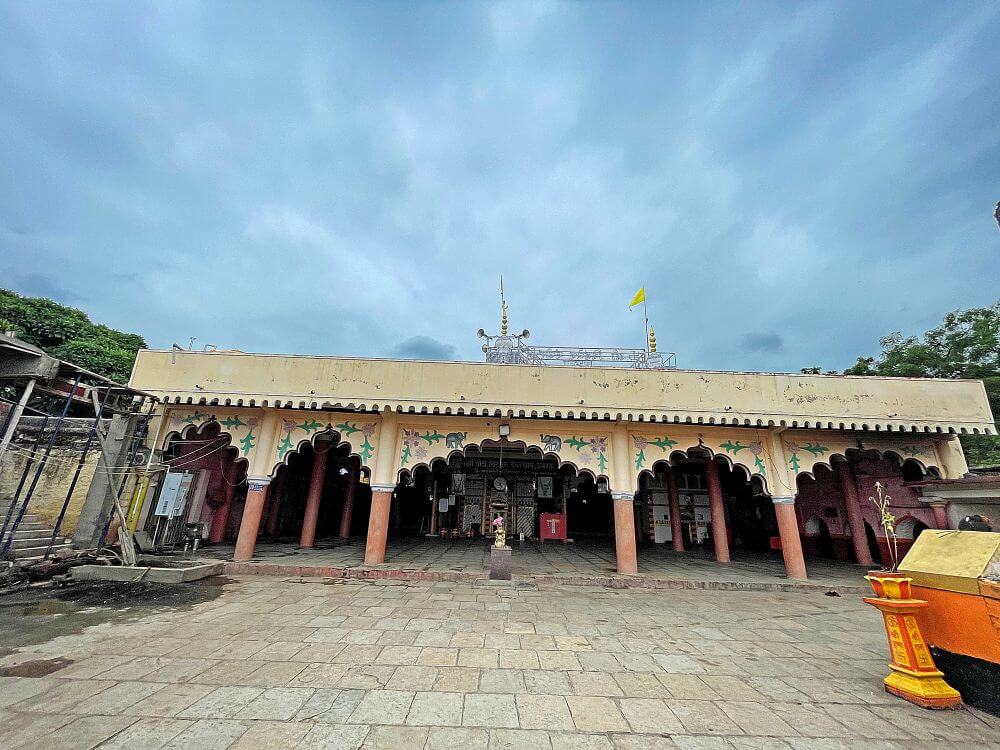
There is a spacious parking area in front of the Birudev temple located on the outskirts of Umarga city. Outside the entrance gate within the temple fortifications, there are lamp pillars (Deepmalas) on two platforms. A sturdy circular platform has been built around a large, ancient tree near the parking area. During the time of the Yatra, a ‘Bhaknuk’ (prophecy) is performed here. Thousands of devotees gather to listen to this prophecy, which is delivered during the pilgrimage. It is said that this temple is approximately eight hundred to one thousand years old. The temple attained its current form following a renovation carried out some years ago. One enters the temple courtyard through an entrance gate set within the fortification walls. On both sides of this pillared entrance are sculptures of gatekeepers, with guard rooms located on the inner side. Inside the courtyard, spacious verandas and several chambers are built along the surrounding fortification walls. In front of the temple, on both sides of the courtyard, stand two platforms, each featuring a circular lamp pillar. Adjacent to the platform of the lamp pillar on the left, there are two niches each in the front and back, containing vermilion-anointed stone idols of local deities. The wall of the platform of the lamp pillar on the right is adorned with sculptures of gods and goddesses and circular motifs, with a sculpture of a ram placed upon the platform. The courtyard also houses an Annachhatra, where Mahaprasad is distributed to devotees during festivals.
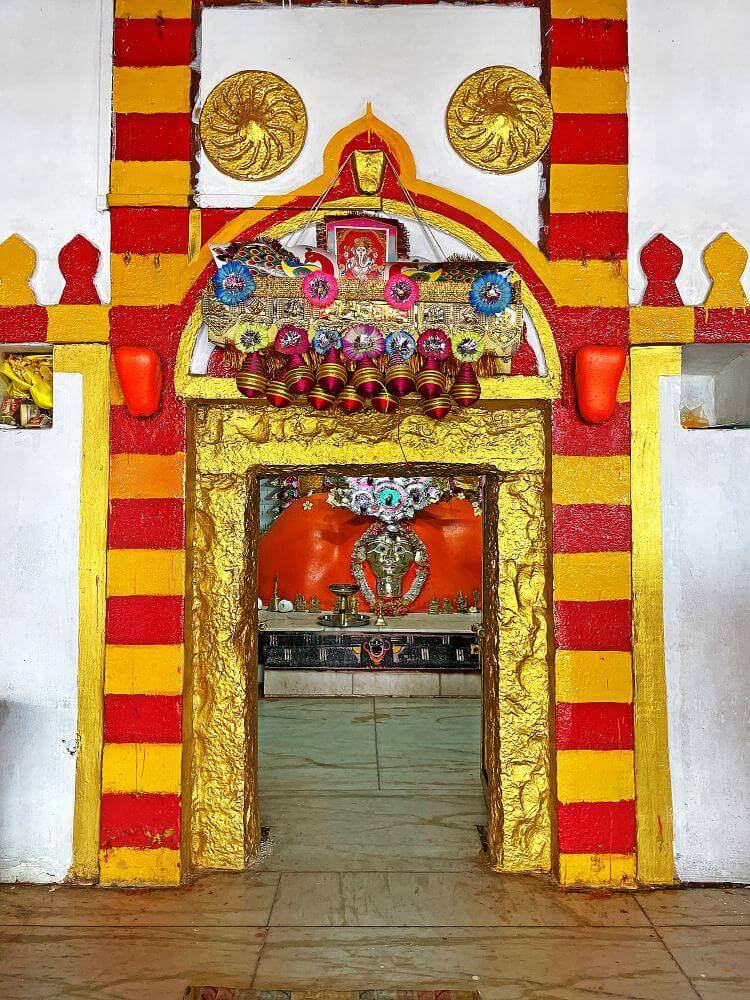
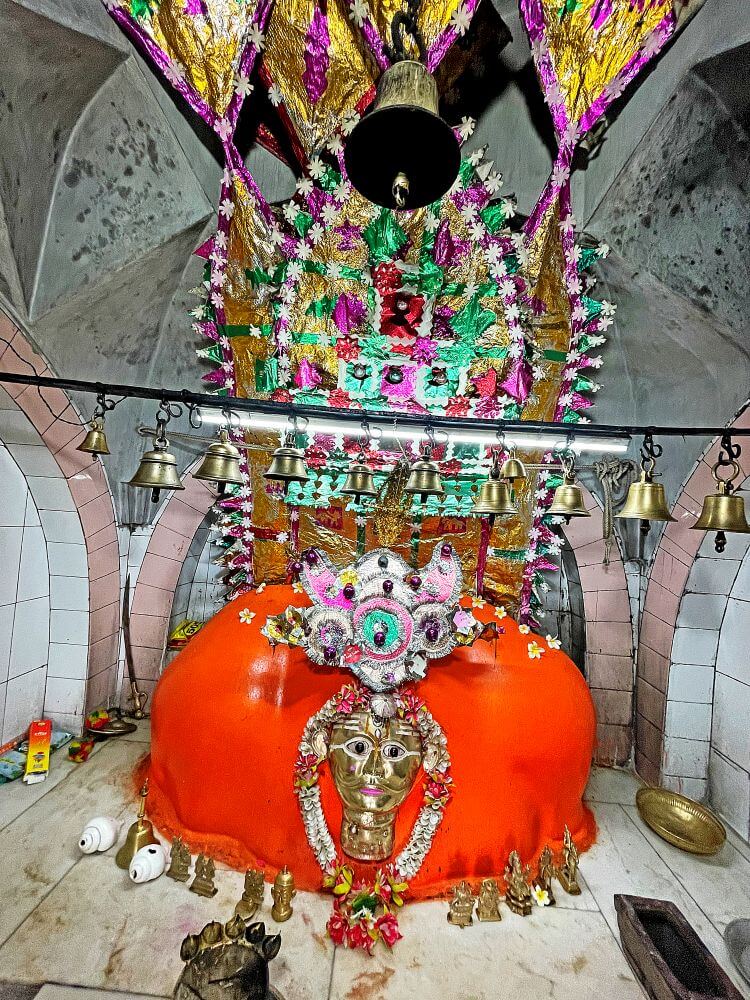
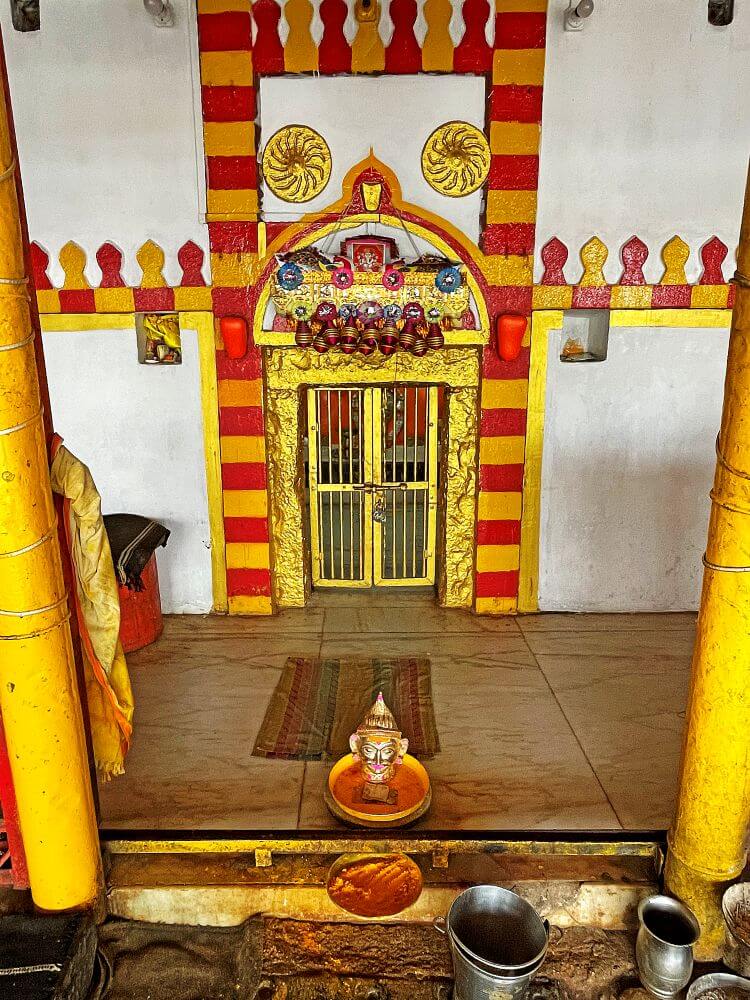
The temple structure consists of a spacious Sabha Mandap and two sanctum sanctorum. In the center of the fully open Sabha Mandap, a black stone idol of Nandi rests upon a platform. Facing Nandi is the sanctum of Birudev. The doorframe of the sanctum is carved with floral and leaf patterns, with an image of Lord Ganapati on the lintel. On both sides of the lintel are horse-headed sculptures, above which are circular motifs. On the front wall of the sanctum, on both sides of the entrance, are lamp niches. Inside the sanctum lies the Swayambhu (self-manifested) stone of the deity, anointed with vermilion and adorned with a silver mask and a ceremonial crown.
To the right of the Birudev sanctum is the sanctum of Mahalingray, which follows a similar design. Inside, the Swayambhu stone of Mahalingray is also anointed with vermilion and adorned with a silver mask. There are circumambulatory paths around both sanctums. The roof of the Sabha Mandap is protected by a parapet wall on all sides, with ornate square half-pillars at the four corners, topped by Amalakas and Kalashas. Above both sanctums, there are dome-shaped Shikhara spires. The lower sections of these spires feature lotus-petal carvings, with a ring of serpent hoods in the center. On the front side of the Birudev Shikhara, there is a Shiva Linga with a serpent hood above it.On all four sides, there are sculptures of Kirtimukhas with peacock motifs above their heads. At the pinnacle of the Shikhara, there is an Amalaka, topped with a Kalasha and a flag. The annual pilgrimage festival begins here on the day of Ashwin Amavasya. Thousands of devotees from states such as Maharashtra, Karnataka, and Andhra Pradesh attend this five-day festival. Amidst the resounding beats of Dhol and Tasha, and the showering of Bhandara (turmeric powder), palanquins from various villages arrive at the temple. The chief priest of the deity performs the ritual of striking his body with a whip. In a state of divine trance, the priest delivers a prophecy known as Bhaknuk. This prophecy predicts the weather, crop conditions, market trends, and the political situation for the coming year. Visiting devotees fulfill their vows. The village dignitaries offer the ceremonial Bashings to the deity. The fifteen-day cattle market held here is particularly famous. Transactions worth crores of rupees take place through the buying and selling of cattle.
This sacred temple stands as a testament to deep spiritual devotion, ancient architectural grandeur, and rich local cultural traditions.
The sanctum sanctorum houses the divine idol consecrated according to ancient Vedic traditions, surrounded by serene courtyards and traditional temple architecture.
Navratri, Maha Shivratri, Annual Temple Jatra & Deepotsav
Compare and book flights, secure top-rated local hotels near the temple, hire reliable guides, and rent cars instantly.
Extend your pilgrimage by visiting other highly sacred temples located nearby.


Add ₹999 more to unlock FREE SHIPPING!
Your sacred cart is currently empty.
Shop Photo FramesFill in your delivery details below to place your order.
Add comment