
Add ₹999 more to unlock FREE SHIPPING!
Your sacred cart is currently empty.
Shop Photo FramesIn Hindu tradition, matted hair (Jata) is considered a symbol of renunciation (Vairagya). This is why many sadhus, sannyasis, and sadhvis are seen with matted hair. Lord Mahadeva is regarded as the master of renunciation. He is perpetually immersed in meditation and penance, which is why He bears matted hair on His head. Mahadeva caught the force of the River Ganga as she descended from heaven within His matted locks. The name that describes this form of Mahadeva is Jatashankar. Many temples dedicated to the Jatashankar form of Mahadeva are famous across the country. One such ancient and renowned temple is located in the village of Mulaj in the Dharashiv district.
This temple, built of stone in the Hemadpanti architectural style, is said to be approximately seven to eight hundred years old. According to temple legend, when Lord Shriram was searching for Sita after she was abducted by Ravana and taken to Lanka via the sky, He visited this Jatashankar Mahadeva temple before proceeding to Amritkumbh in Karnataka.
There is a welcome arch on the road leading from the village to the temple. The arch consists of square pillars on both sides connected by a semi-circular arch. Both pillars feature sculptures of elephants (Gajaraj). On the right pillar, next to the elephant sculpture, is Lord Maruti holding a mace, and on the left pillar is a Garuda sculpture. In the center of the semi-circular arch above, there is a relief sculpture of Mahadeva. Various deities are painted on both these pillars. There are Nandi idols on two platforms near the base of the pillars.
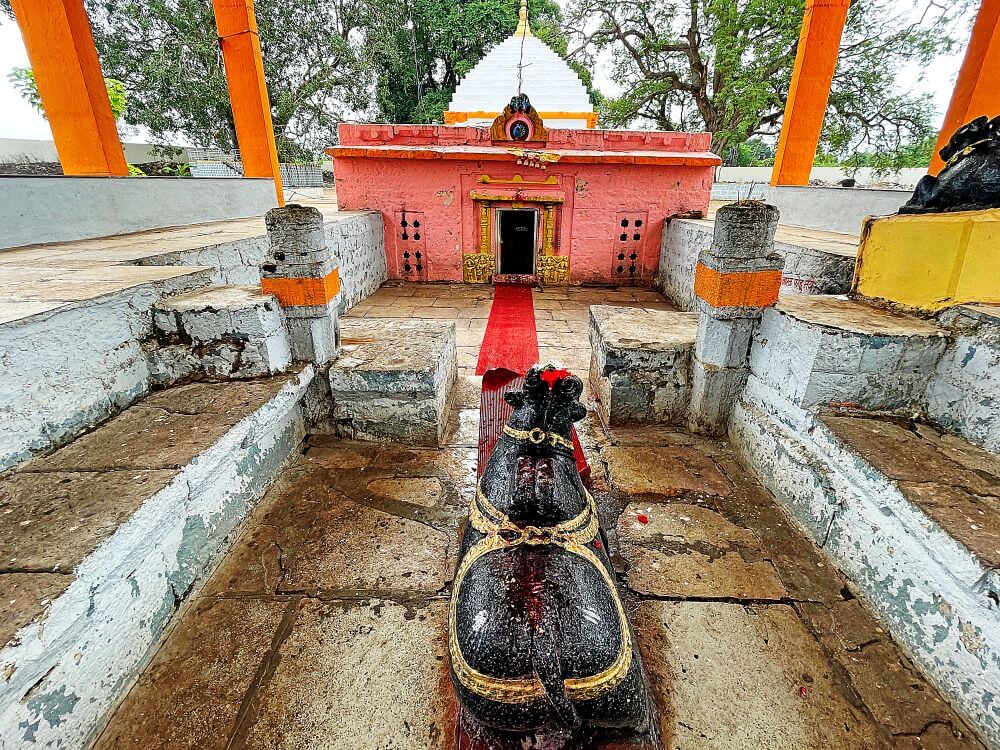
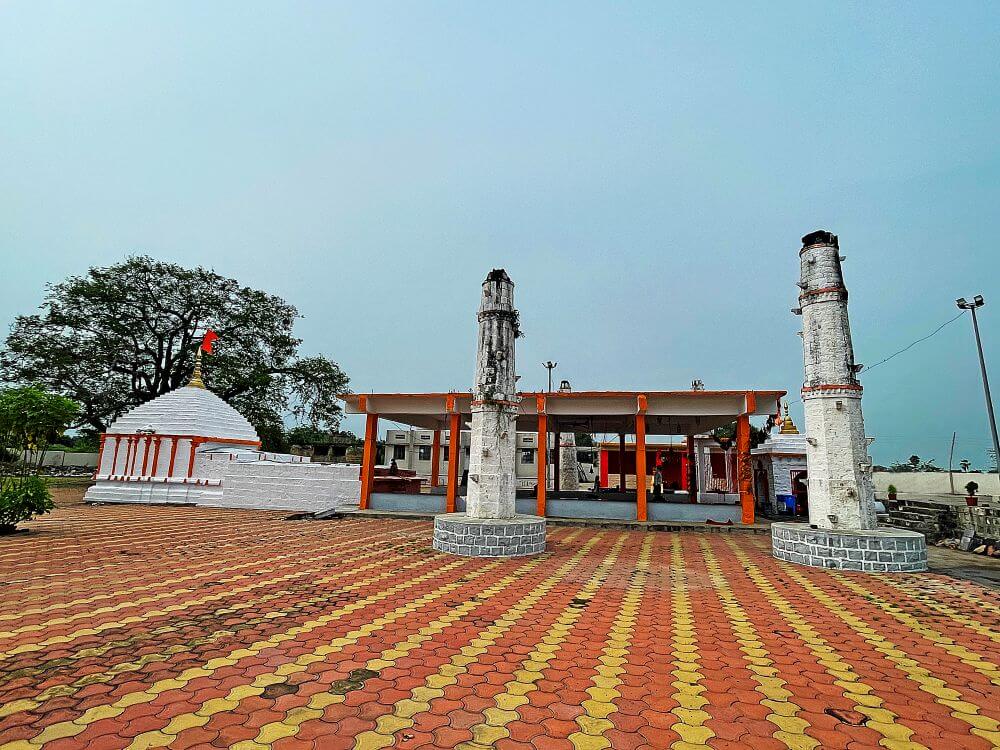
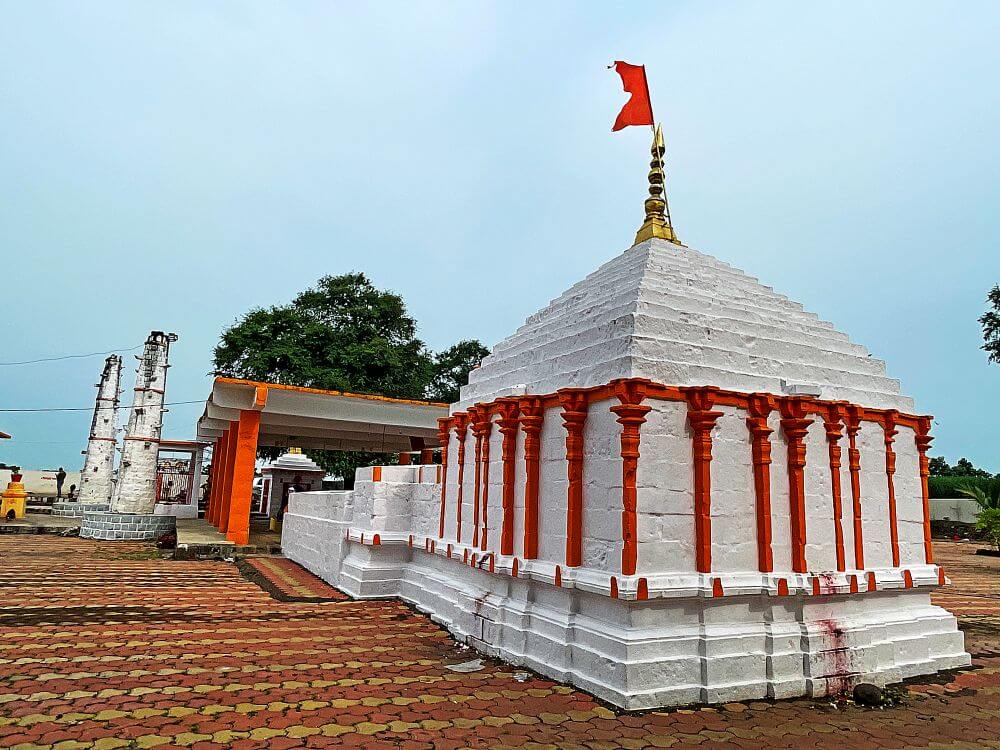
Entering through the gate in the wall surrounding the temple, one steps into a spacious courtyard paved with paver blocks. On both sides of the entrance, there are two small temples facing each other, each housing a Shiva Linga. Behind the temple on the right, there are several memorial stones (Virgal) and Sati stones. There are two lamp towers (Deepmala) on each side of the main temple. The original structure of the temple consists of a Sabha Mandap (assembly hall) and a Garbhagriha (sanctum sanctorum). It appears that a new mandap was constructed in front of this original temple some years ago. The front half of this mandap is about two feet lower. One descends three steps to reach the sunken area near the temple entrance. Here, there are four ornate half-pillars at the four corners. On both sides of this mandap, there are stone benches for devotees to sit. In the center, on a platform, sits an idol of Nandi. It is said that this was formerly an independent Nandi Mandap.
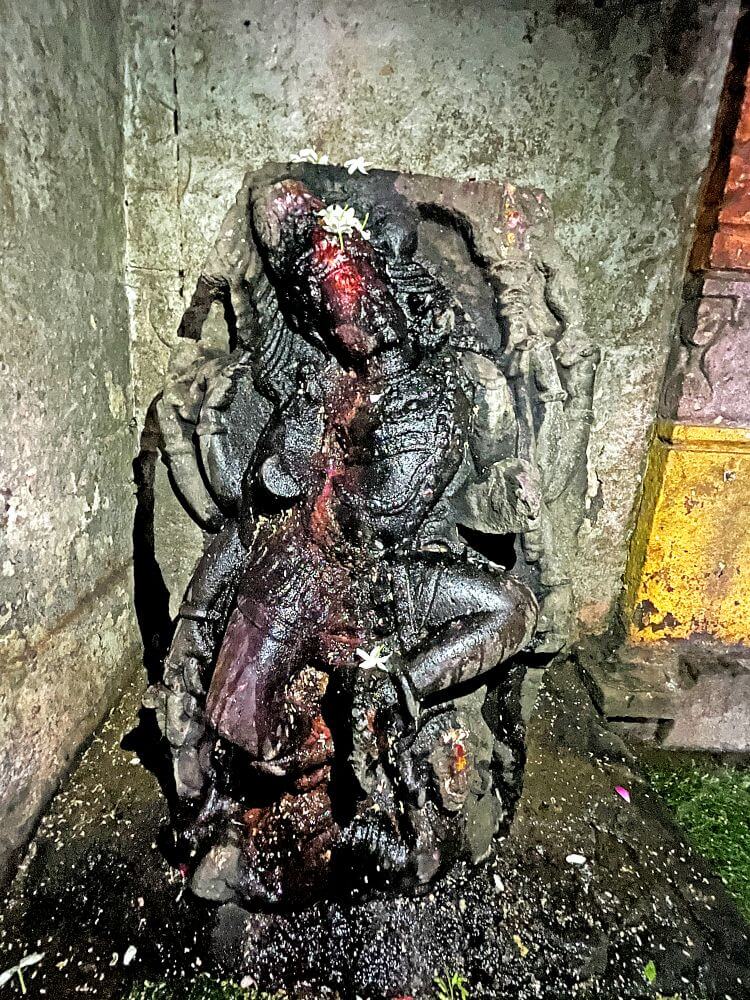
The main entrance of the temple features door jambs adorned with leaf, flower, and pillar motifs, with guardian (Dwarpal) sculptures at the base. The guardians hold various weapons including a trident (Trishul), a small drum (Damaru), and a serpent noose (Nagapasha). On the lintel (Lalatbimba), there is an idol of Lord Ganesha, and above it is a decorative arch (Torana). Above the entrance, on the balcony, there is a decorative headpiece (Bashing) featuring a peacock in the center, swans on both sides, and a Kirtimukh at the top. Descending one step from here, one enters the Sabha Mandap. The enclosed Sabha Mandap has windows for ventilation. Inside, there are four rows of four ornate pillars each. The outermost pillars are embedded in the walls. The pillar bases are square, and the shafts feature various geometric shapes such as squares, hexagons, octagons, and circles. The square panels on the pillar shafts are carved with various designs. Iron railings have been installed in the Sabha Mandap to manage the queue for darshan. Near the front wall of the Antarala (vestibule) in the Sabha Mandap, there is an eight-armed idol of Parvati in her Mahishasuramardini form. She is shown pinning down a demon beneath her feet. Parvati holds various weapons in all her hands.
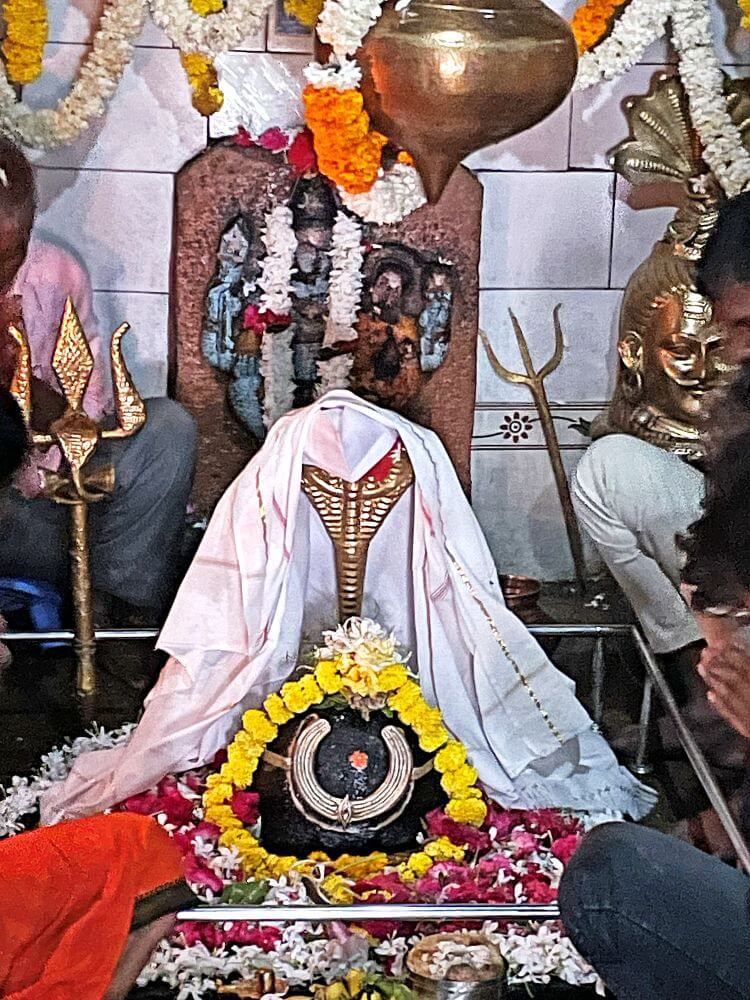
The Garbhagriha is slightly lower than the Sabha Mandap. The entrance to the Garbhagriha has five door jambs. At the base of these jambs are sculptures of male and female guardians. There is an idol of Lord Ganesha on the lintel and various patterns on the architrave. The arch features a shikhara-style carving. Inside the Garbhagriha, a self-manifested (Swayambhu) Shiva Linga is located in the center of the floor. A five-hooded brass cobra holds a canopy over the Shiva Linga, and an abhishek vessel dripping water is suspended from the ceiling. Behind the Shiva Linga, against the wall, is a stone arch featuring a relief sculpture of Mahadeva and Parvati in their Gauri-Har form. On a platform to the side, there is a brass mask of Mahadeva. The roof of the Garbhagriha features a square, pyramid-like stepped shikhara topped with a finial (Kalash).
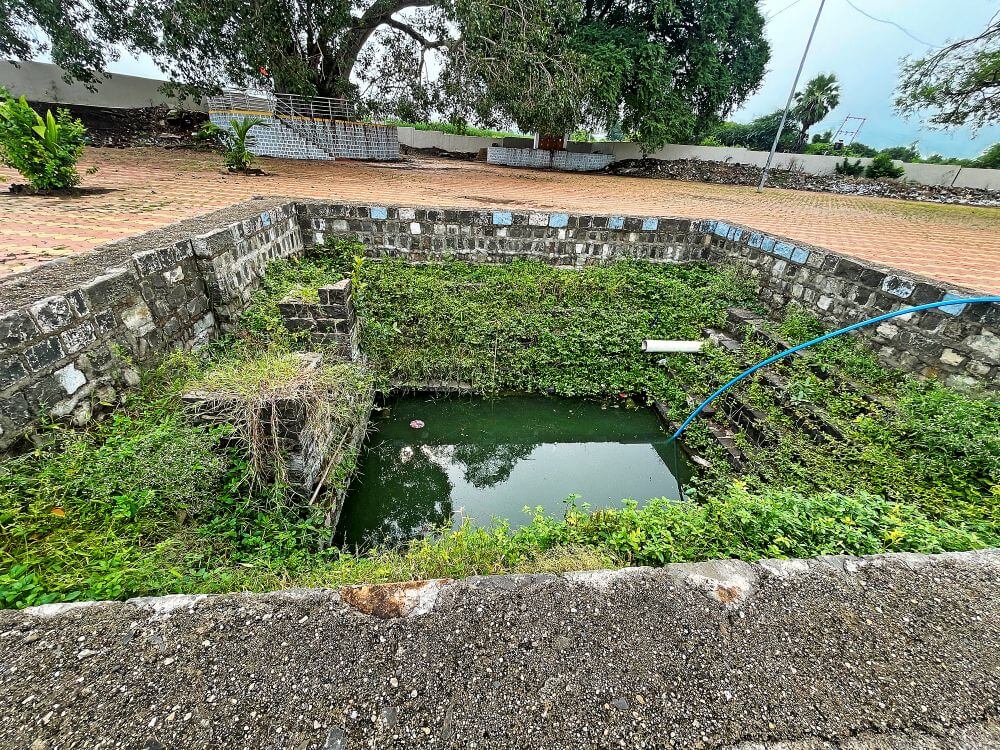
In the courtyard, next to the temple, is a freshwater stepped well (Pushkarani). There is an ancient Peepal tree near the boundary wall in the courtyard. After their vows are fulfilled, devotees hang symbolic cradles from the branches of this tree. There is a stone platform around the Peepal tree with walls on both sides and a roof. Under the roof, leaning against the trunk of the tree, is a vermilion-smeared idol of Lord Narasimhadeva. There are several buildings in the courtyard used for various purposes such as a pilgrim residence (Bhaktaniwas), kitchen, community dining hall (Annachhatra), and storage rooms.
The annual fair begins on Chaitra Padwa with the installation of the ceremonial poles (Kathi). This fair is celebrated for fifteen days. On the day of Padwa, a Gudi is hoisted. On Chaitra Shuddha Ashtami, the wedding ceremony of the Lord with Parvati is celebrated. The village elders perform the Kanyadan (giving away the bride) of the Goddess. The wedding is conducted amidst Vedic chants, shehnai music, and the beating of drums. Sweet feasts are organized for the wedding guests. Thousands of devotees from the surrounding areas gather at the temple to throw rice (Akshata) and dance in the wedding procession.
Special fairs are organized at the temple on Mahashivratri and the third Monday of the month of Shravan. Festivals like Dussehra, Diwali, and Navratri are also celebrated at the temple. During all these festivals, various religious programs and a grand feast (Mahaprasad) are organized. There is a large crowd of devotees for darshan on Mondays, Amavasya (new moon), and Purnima (full moon).
This sacred temple stands as a testament to deep spiritual devotion, ancient architectural grandeur, and rich local cultural traditions.
The sanctum sanctorum houses the divine idol consecrated according to ancient Vedic traditions, surrounded by serene courtyards and traditional temple architecture.
Navratri, Maha Shivratri, Annual Temple Jatra & Deepotsav
Compare and book flights, secure top-rated local hotels near the temple, hire reliable guides, and rent cars instantly.
Extend your pilgrimage by visiting other highly sacred temples located nearby.


Add ₹999 more to unlock FREE SHIPPING!
Your sacred cart is currently empty.
Shop Photo FramesFill in your delivery details below to place your order.
Add comment