
Add ₹999 more to unlock FREE SHIPPING!
Your sacred cart is currently empty.
Shop Photo FramesGenerally, a holy shrine or temple is first established, and then spiritual practices, devotion, worship, or sadhana are performed there. However, there are certain sacred places where sages and saints undertake austerities, meditation, and spiritual practices for hundreds of years, thereby acquiring divine energy, wisdom, and power. When the experience or manifestation of this divine power begins to be felt, the attention of common people turns towards these hallowed grounds of penance, and these lands of austerity transform into revered shrines. One such ancient and renowned holy shrine is nestled amidst the hills near Kolsur village in Umarga taluka. Devotees firmly believe that even today, spiritual experiences are profoundly felt at this sacred place, famously known as Achalbet.
While this cave temple is originally about 800 years old, numerous temples have been constructed on this hill in recent times. It is recounted that the revered saint Ujjwalanand Maharaj, in his sacred texts, documented this cave and its spiritual practice site as dating back eight hundred years. Since then, many renunciates (Bairagis), Hatha Yogis, and ascetics have performed profound spiritual practices within this cave. Sadguru Kashinath Maharaj arrived here approximately a hundred years ago, and the history from that period onwards is well-documented.
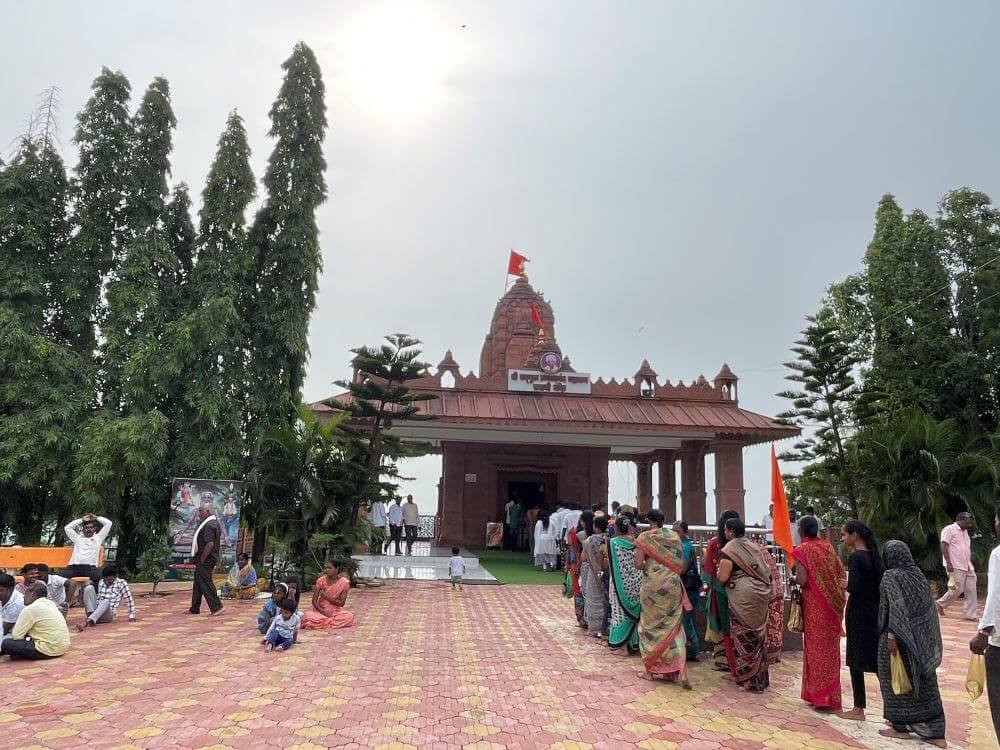
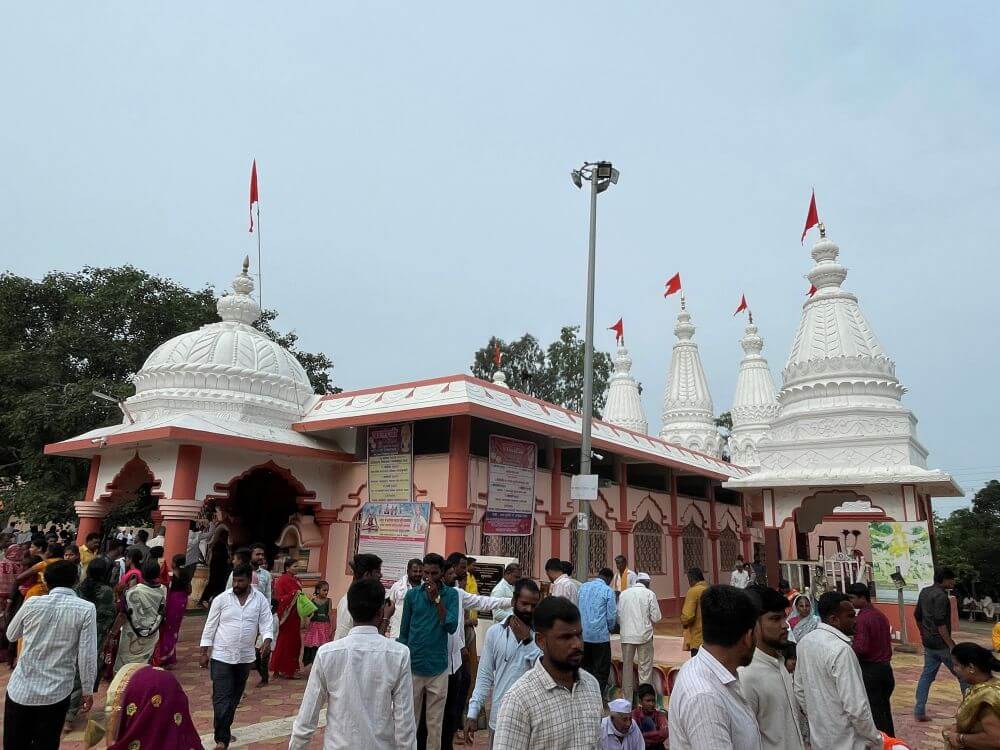
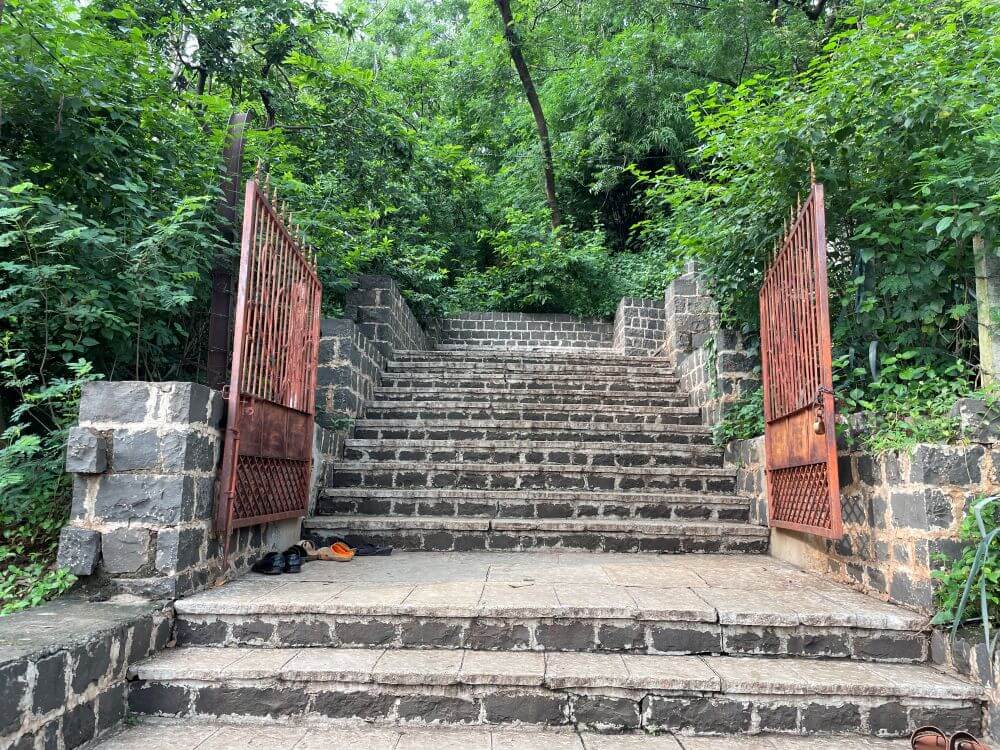
This holy shrine is situated on a hilltop, some distance from the village. A well-paved road leads directly to the spacious parking area in front of the temple. Additionally, there is a stone staircase path ascending from the base of the hill. Entry into the temple courtyard is through the main entrance, which is part of the robust fortification walls encircling the temple. The temple courtyard is expansive and paved with paver blocks. Seating arrangements for devotees are provided at various spots within the courtyard. The principal temple here is dedicated to Vitthal-Rakhumai and comprises five sanctum sanctorums (Garbhagrihas). The temple’s architectural layout includes a Mukhamandap (front pavilion), a Sabhamandap (assembly hall), an Antaral (antechamber), and the Garbhagriha.
Within the Mukhamandap, four circular, intricately carved pillars are interconnected by cusped arches. On either side of the Sabhamandap’s entrance, within the Mukhamandap, stand two platforms adorned with sun motifs, surmounted by ornate canopies (Meghadambaris). Kalashas (finials) crown the amalakas (ribbed stone discs) atop the crescent-shaped shikharas of these canopies. In the left canopy, an idol of Ganesha rests upon a lotus pedestal, while the right canopy houses sacred stone sandals (Padukas). The wooden doorframes of the Sabhamandap’s entrance are embellished with foliage and floral creeper motifs, and an idol of Ganesha graces the central lintel (Lalatabimba). On the frieze (Lalatapatti), idols of Shri Rama and Sita are depicted on the left, and Hanuman on the right, with miniature shikhara sculptures carved within the torana (archway) above the Lalatabimba. The architrave (Mandaraka) features foliage and floral designs.
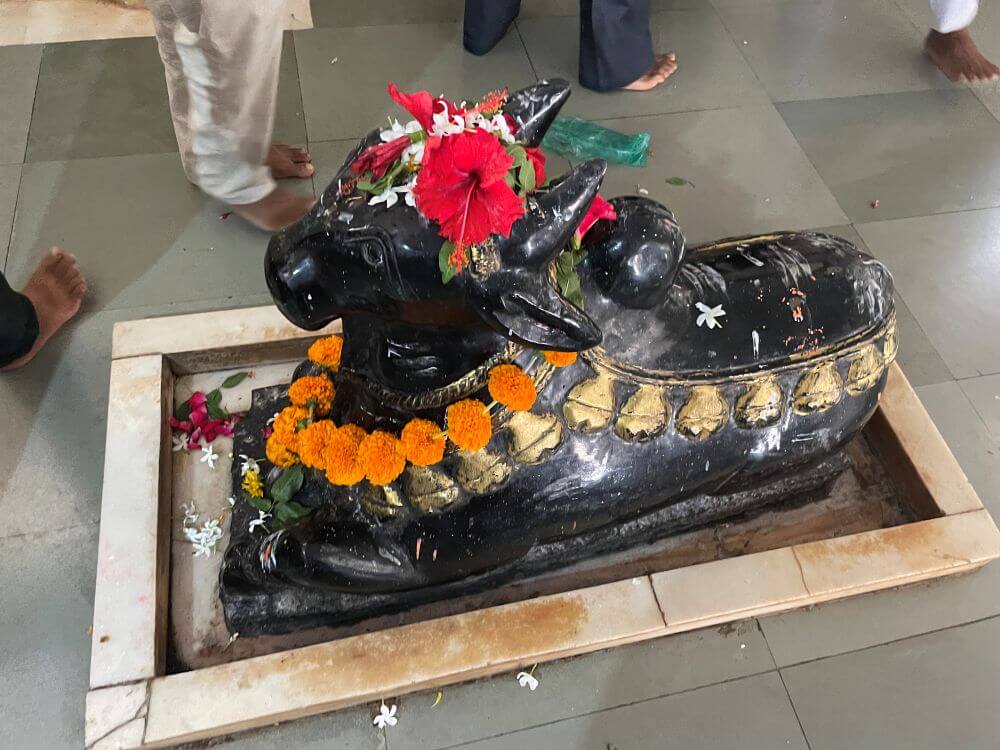
The enclosed Sabhamandap is illuminated and ventilated by twelve windows (Vatayanas). Within the Sabhamandap, there are six pillars embedded in both the left and right walls. In front of the Antaral’s entrance, a tortoise sculpture is placed. The side of the Antaral facing the entrance is semi-open, flanked by railings on both sides of the doorway. The pillars within these railings and above the entrance are joined by cusped arches. Inside the Antaral, sacred Padukas are enshrined in the center, and a black stone idol of Nandi is positioned on the right side. The walls of the Antaral are adorned with paintings of various deities. Doors on the left and right sides of the Antaral lead to the circumambulation path (Pradakshina Marga).
Beyond the Antaral, there are a total of five sanctum sanctorums (Garbhagrihas): three situated at the front, and one each on the left and right sides. The wooden doorframes, lintels (Lalatabimba), and architraves (Mandaraka) of all these Garbhagrihas are adorned with intricate leaf and flower motifs. In the central, main Garbhagriha, the divine idols of Vitthal-Rakhumai are enshrined upon a Vajra-pedestal. Flanking the idols are two ornate pillars, each crowned with a shikhara. On the Vajra-pedestal, idols of Saint Dnyaneshwar are placed on the left, and Saint Tukaram on the right. In the Garbhagriha to the left of this main sanctum, an idol of Dattatreya rests upon a Vajra-pedestal, with an idol of Swami Samarth positioned below it. The Garbhagriha to the left of Dattatreya’s shrine houses idols of Shri Rama, Lakshman, and Sita upon a Vajra-pedestal. Near the feet of Shri Rama, there is an idol of Das Maruti, depicted in a humble, seated posture with folded hands.
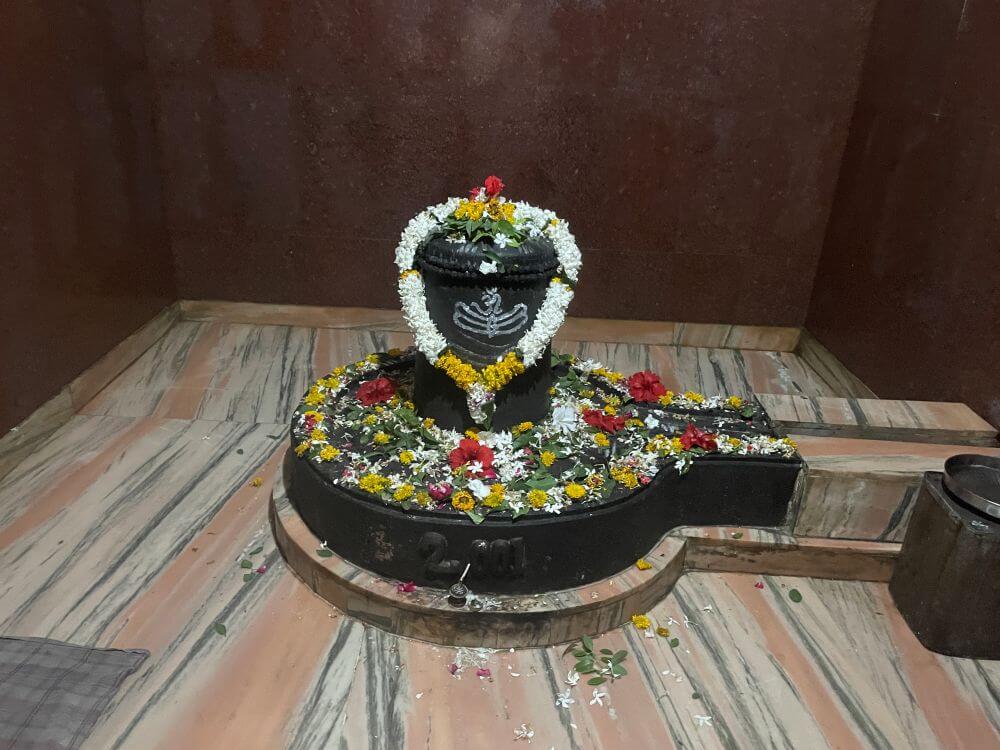
In the Garbhagriha to the right of the Vitthal-Rakhumai shrine, a Shivlinga is centrally placed on the ground. In the Garbhagriha further to the right of this shrine, an idol of Maruti, in a posture of humble service (Das Swaroop), is seated with folded hands upon a Vajra-pedestal. On the exterior of the temple, a circumambulation path (Pradakshina Marga) with safety railings encircles the Antaral and Garbhagrihas. The temple roof features a total of six shikharas (spires) and kalashas (finials). The roof of the Mukhamandap is topped by a dome-shaped shikhara, adorned with two amalakas stacked one above the other. A kalasha and a flag (Dhvajapataka) crown the uppermost amalaka. The roofs of the Vitthal-Rakhumai, Shri Datta, and Mahadev Garbhagrihas are graced by circular, tall, and tapering shikharas. At the apex of each of these three shikharas, two amalakas are stacked, each surmounted by a kalasha.
To the right of this temple stands a semi-open Gomata (Mother Cow) Temple. Inside this temple, an idol of a cow is enshrined upon a Vajra-pedestal. In front of the Gomata Temple, within the courtyard, there is a circular railing designed as a replica of a lotus flower. Through this railing, one can behold the Shivlinga situated in the cave below the hill. Also within the courtyard is the Samadhi Temple of Ujjwalanand Maharaj. Inside its Garbhagriha, the sacred Samadhi of Ujjwalanand Maharaj is enshrined, with his seated idol placed above it. The idol’s left hand rests on the thigh, and the right hand is in a blessing posture (Ashirvad Mudra). The roof of this temple features railings on all four sides, topped with ornate canopies (Meghadambaris). The roof of the Sabhamandap has an octagonal shikhara in the center, crowned with a kalasha. The roof of the Garbhagriha is adorned with a square shikhara. In front of this temple stands the cremation platform (Dahansthan Chauthara) of Ujjwalanand Maharaj.
To the left of the courtyard, a staircase path descends. This path leads to an approximately 800-year-old ancient cave nestled within the mountain range. It is believed that Ujjwalanand Maharaj performed his profound penance and spiritual practices (Tapasadhana) in this very cave. Further inside this cave, after traversing a narrow passage of about forty feet, a Shivlinga is discovered. This Shivlinga is visible from the railing in the temple courtyard above. It is widely held that enlightened sages (Siddha Purushas) continue to reside in this sacred spot even today. The cave contains numerous chambers and sacred fire pits (Dhuni). At the base of the hill, there is the Samadhi of Gunda Baba, who dedicated his life to serving the holy men of this region.
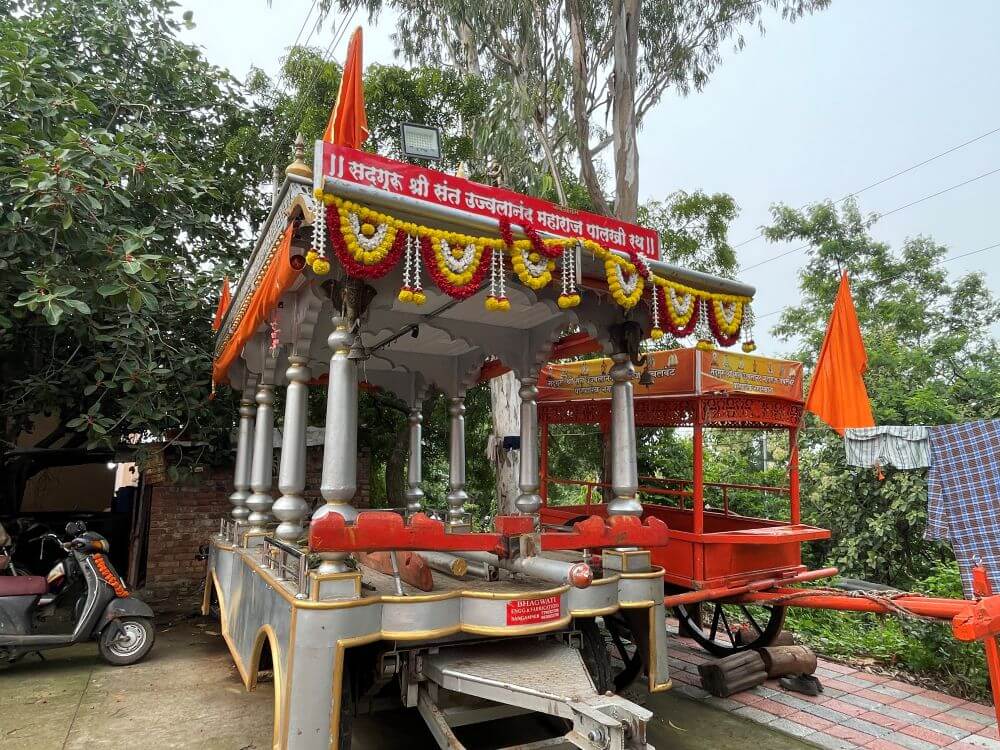
Annual festivals such as Guru Purnima and Datta Jayanti are devoutly celebrated at the temple. On these auspicious occasions, a Harinaam Saptah (week-long devotional chanting of God’s names) is organized. During both festivals, thousands of devotees from states like Maharashtra, Andhra Pradesh, and Karnataka arrive to seek the sacred darshan (holy sight) of the Sadguru. The palanquin procession (Palakhi) originating from this holy shrine visits Alandi and Pandharpur, returning to the temple on Guru Purnima. At this time, the Dindi Ringan ceremony is joyously celebrated at the base of the temple. Palanquins and horses are gracefully danced within the Ringan. Thousands of women devotees participate in the Ringan, reverently carrying sacred Tulsi Vrindavans on their heads. The entire hill area reverberates with the resounding sounds of cymbals (Taal) and mridanga drums. Every Thursday morning, thousands of devotees gather for the Aarti ceremony. All devotees present on these occasions are lovingly offered Mahaprasad (sacred food offering).
This sacred temple stands as a testament to deep spiritual devotion, ancient architectural grandeur, and rich local cultural traditions.
The sanctum sanctorum houses the divine idol consecrated according to ancient Vedic traditions, surrounded by serene courtyards and traditional temple architecture.
Navratri, Maha Shivratri, Annual Temple Jatra & Deepotsav
Compare and book flights, secure top-rated local hotels near the temple, hire reliable guides, and rent cars instantly.
Extend your pilgrimage by visiting other highly sacred temples located nearby.


Add ₹999 more to unlock FREE SHIPPING!
Your sacred cart is currently empty.
Shop Photo FramesFill in your delivery details below to place your order.
Add comment