
Add ₹999 more to unlock FREE SHIPPING!
Your sacred cart is currently empty.
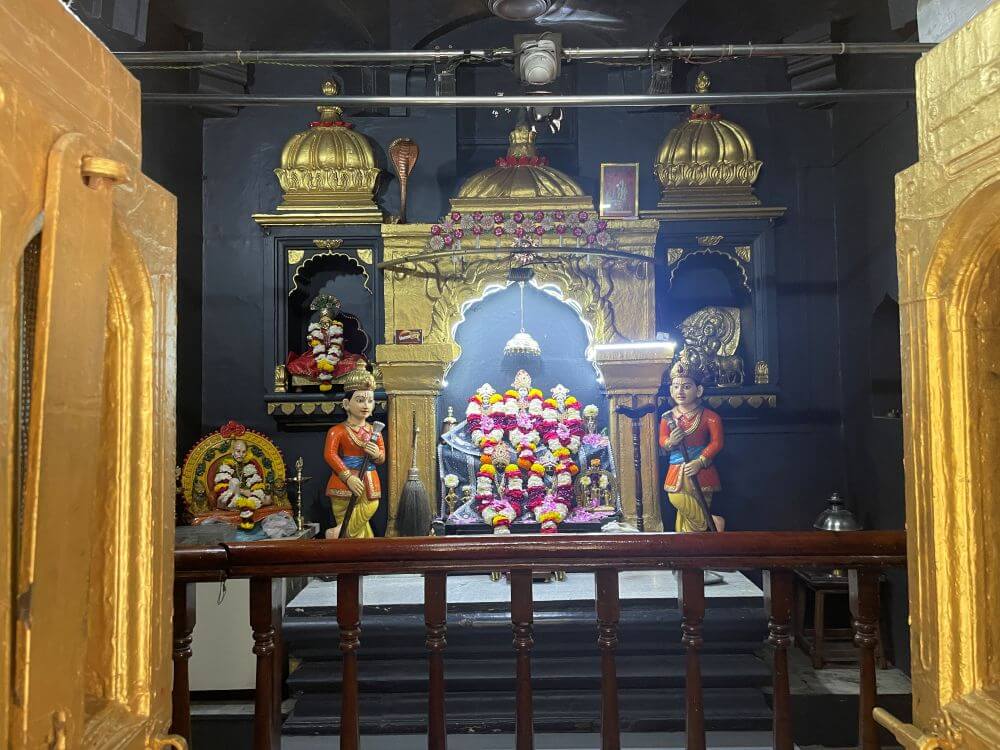
Shop Photo FramesShri Ram is the presiding deity of Jalgaon city. There are two Ram temples in the city. In one of these temples, there are idols of Shri Ram, Lakshman, and Sita that are one to one and a quarter feet tall. Because of this, this temple is famous as the Chimukle (Little) Ram Mandir. Every day, kohl (kajal) is applied to the idol of Shri Ram here. This tradition has been followed for over one hundred years. Apart from this, there is an ancient Ram temple in the Nalabhag area here. Devotees believe that the idol of Shri Ram in this temple is from Ayodhya. These temples have a great history in the religious and cultural movements of Jalgaon.
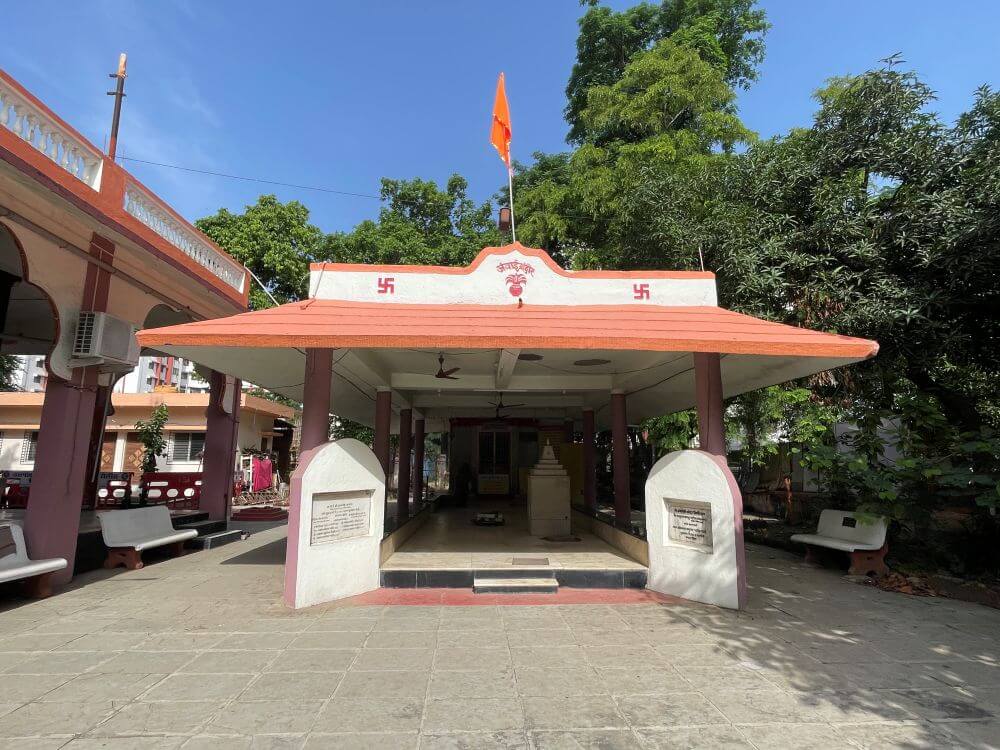
The construction of the Chimukle Ram Mandir at Pratapnagar in the central part of Jalgaon city began on the auspicious occasion of Shri Krishna Jayanti in Shaka 1837 (year 1915) and was completed on Chaitra Shuddha Pournima, Shaka 1839 (year 1917), which is Hanuman Jayanti. At the time of the temple’s establishment, an inscription was prepared here. The text inscribed on this stone reads, “A monument to the union of the government’s impartiality towards all religions and the religious devotion of the people of East Khandesh.” This large inscription is visible as soon as one enters the temple. Through this, the goals and objectives of the temple’s establishment are understood.
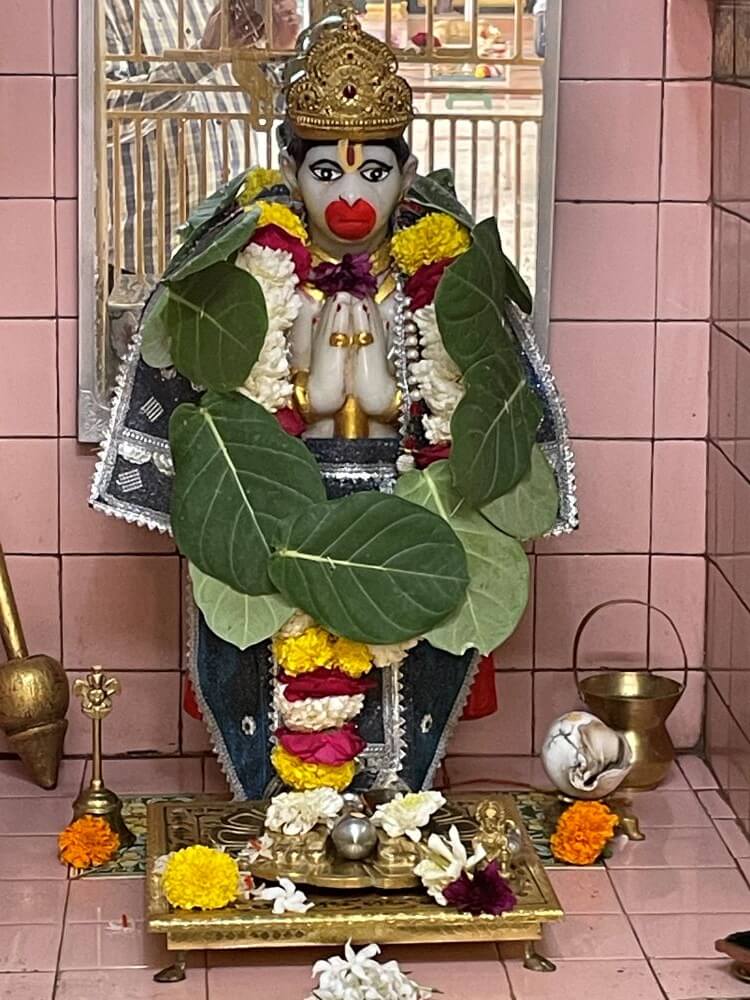
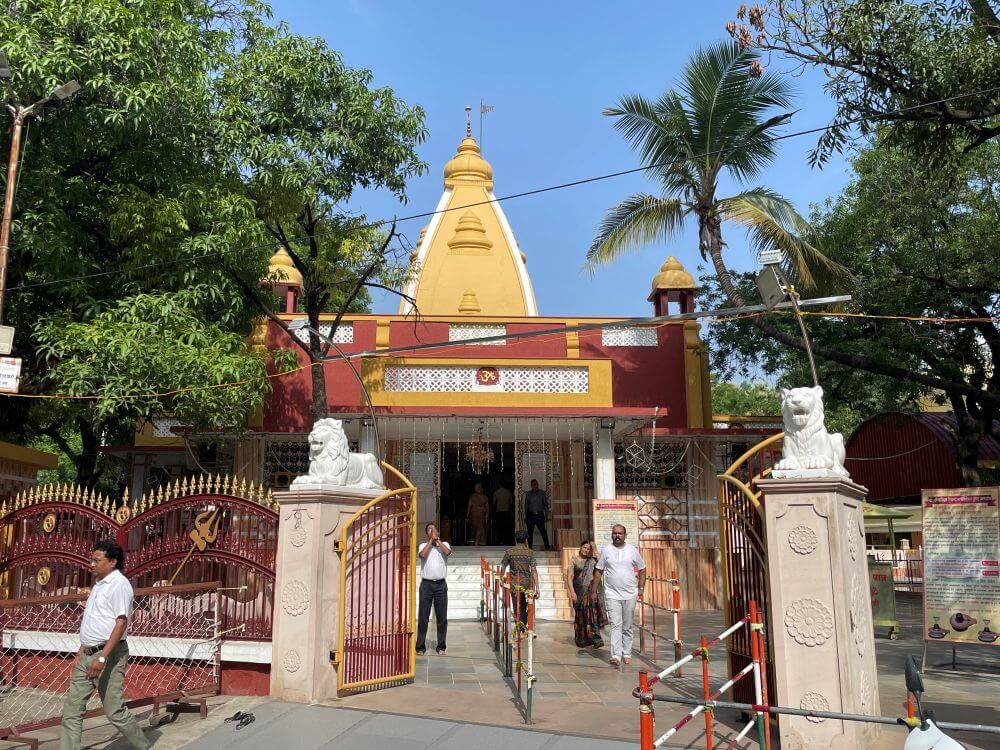
Although the idols of the deities in this temple are small in size, the temple itself is spacious. One enters the temple courtyard through the entrance in the surrounding wall. Above this entrance are the idols of Shri Ram, Lakshman, Sita, and Hanuman. This temple, situated on a high plinth, has a structure consisting of an open assembly hall (sabhamandap), an antarala (vestibule), and a sanctum sanctorum (garbhagriha). Adjacent to the assembly hall on the east side is the Das Maruti temple. The idol of Maruti in this temple, in a posture of salutation, is made of white marble. In the center of the assembly hall, there is a large brass sculpture of a cow and calf. In front of the Maruti temple is the antarala and garbhagriha of the main temple. One enters the elevated antarala by climbing three steps. There are eight ornate pillars in this antarala. There are lamp niches on both sides of the entrance to the sanctum sanctorum. In the sanctum, the white marble idols of Shri Ram, Lakshman, and Sita are placed on a throne (makhar) upon a vajrapitha. These idols have crowns and a canopy above them. On both sides of the throne are gatekeepers (dwarpal) and there are niches in the back wall. These also contain idols of various deities.
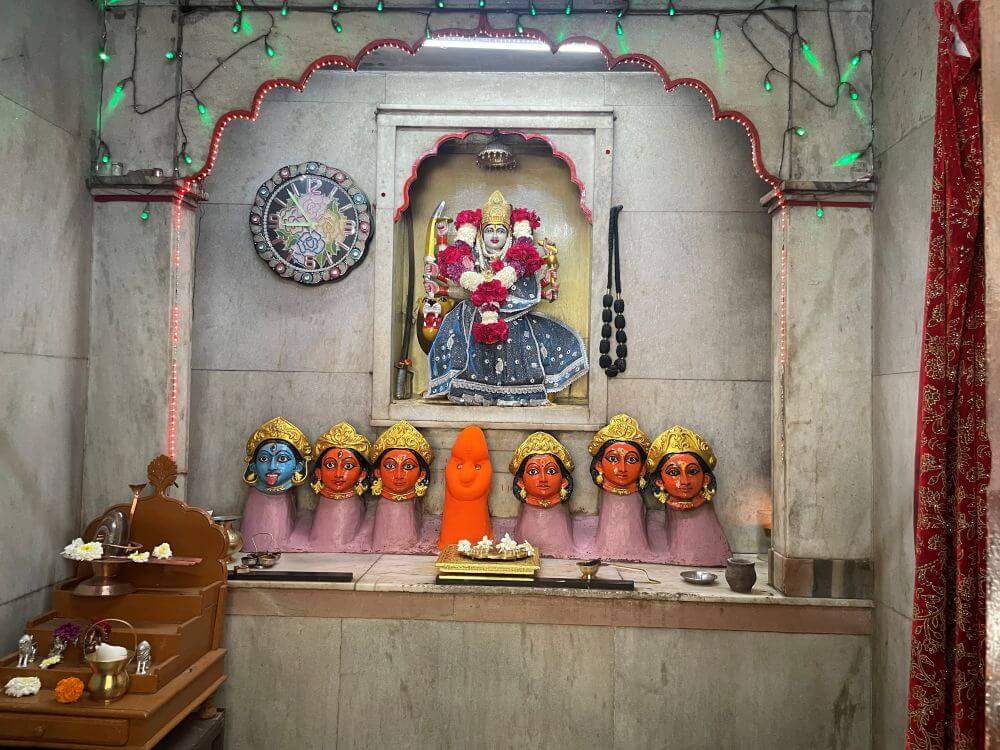
Adjacent to this temple is the Ambai Devi temple. In this, there is an idol of Ambai Devi riding a tiger, and below it are seven stones. Masks of goddesses are placed on these stones. Apart from this, there are temples of Panchmukhi Mahadev, Siddhi Vinayak, and Shri Dattatreya here.
On the day of Shri Ram Janmotsav, the Mangal Aarti takes place here at 5:30 in the morning. Thousands of devotees participate in it. At this time, the idol of Shri Ram is anointed (abhishek). Bhajans and kirtans are performed. After the Ram Janma ceremony, flowers are showered on the idols and fireworks are displayed. On the day of Ram Navami, large floral rangolis are drawn at various places on the streets. The chariot of Shri Ram, taken out to the sound of drums and cymbals, is paraded through the entire town over this carpet of flowers. On this day of Chaitra Shuddha Navami, there is an enthusiastic atmosphere in the city due to the processions. There are also live tableaus in this procession.
Apart from this temple, the ancient Ram temple located in the Nalabhag area here is also famous. The legend regarding the Utsav Murti (processional idol) of this temple is that in the past, many sages, ascetics, and mahants from Shri Kshetra Ayodhya in North India and its surrounding areas used to go to Nashik and Panchavati for pilgrimage. At that time, Mahant Shri Ramanand Swami of the Ramanuja sect from Ayodhya stayed at the Shri Ram temple in Jalgaon for about a month. While leaving for the Nashik region, he gave the Utsav Murti he used for daily worship to this temple. Since then, this idol has been in this temple. Therefore, devotees believe that Shri Ram of Ayodhya resides in Jalgaon. This Utsav Murti also goes to the Shri Ram Rathotsav and the Sant Muktabai Ram Palkhi ceremony in Pandharpur. It is also seated in the Dussehra Simollanghan Palkhi. During this time, devotees can have the privilege of touching this Utsav Murti.
The Rathotsav of this temple is famous. Since the year 1872, a chariot procession has been taken out here on Kartik Shuddha Pratipada. The unique 25-foot-tall chariot used for this procession is made using 250 maunds of teak and tivsa wood. Devotees can have darshan in this temple daily from six in the morning to eight at night.
This sacred temple stands as a testament to deep spiritual devotion, ancient architectural grandeur, and rich local cultural traditions.
The sanctum sanctorum houses the divine idol consecrated according to ancient Vedic traditions, surrounded by serene courtyards and traditional temple architecture.
Navratri, Maha Shivratri, Annual Temple Jatra & Deepotsav
Compare and book flights, secure top-rated local hotels near the temple, hire reliable guides, and rent cars instantly.
Extend your pilgrimage by visiting other highly sacred temples located nearby.


Add ₹999 more to unlock FREE SHIPPING!
Your sacred cart is currently empty.
Shop Photo FramesFill in your delivery details below to place your order.
Add comment