
Add ₹999 more to unlock FREE SHIPPING!
Your sacred cart is currently empty.
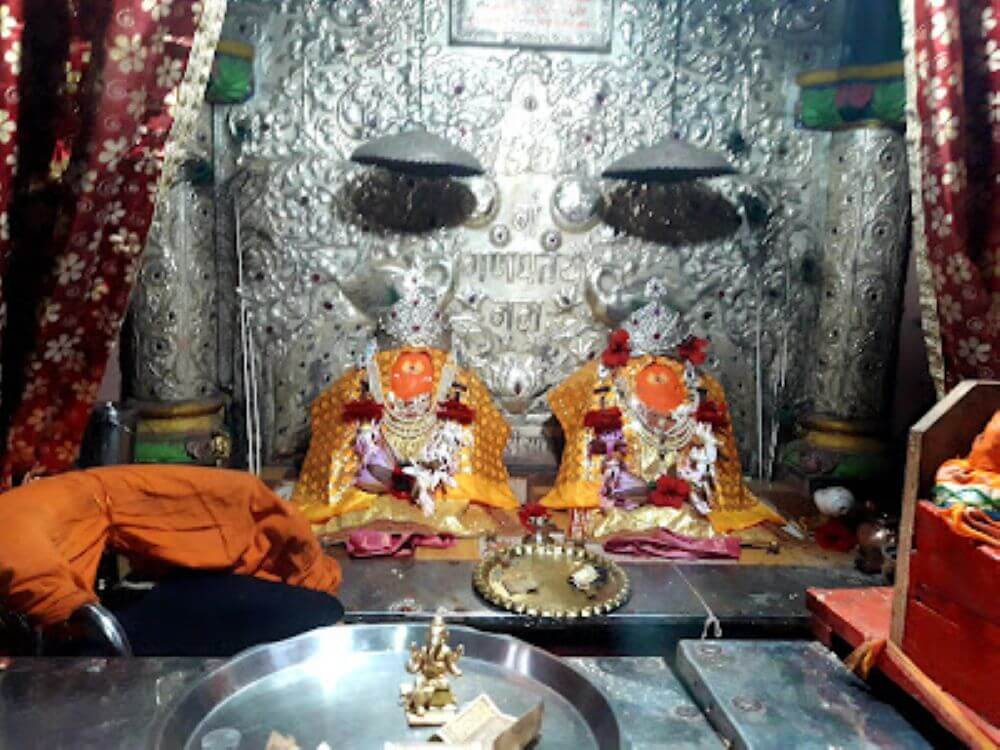
Shop Photo FramesIt is believed that there are two and a half Shaktipeeths of Lord Ganesha in Maharashtra. Among these, Morgaon in Pune district and Rajur in Jalna district are considered two independent Shaktipeeths, while the Padmalaya temple in Erandol is considered the half-peeth. Padmalaya means a lake of lotuses. This sacred site of Lord Ganesha, located next to it, is famous as Padmalaya Ganpati. The uniqueness of this site is that the sanctum sanctorum houses two Ganesha idols, one with a trunk turned to the right and the other with a trunk turned to the left. According to mythological accounts, Kartavirya, also known as Sahastrarjuna (the son of Kritavirya), and Shesha both installed these idols at the same location.
According to the Ganesha Purana, King Kritavirya performed the Sankashti Chaturthi Vrata to be blessed with progeny. As a result, the couple was blessed with a son, but he was born without limbs. The King named this child Arjuna. When Arjuna turned twelve, Lord Dattatreya visited the royal court and expressed a desire to see the prince. Upon seeing Arjuna, he said, “While keeping vigil during Sankashti Chaturthi, you yawned and did not perform Achaman. Because of this, this defect remained in your son.” To remedy this, Dattatreya gave Arjuna the Ganesha Mantra. At Arjuna’s request, King Kritavirya built a hermitage for him in the forest. There, Arjuna performed severe penance and pleased Lord Ganesha. Consequently, he was blessed with the strength of a thousand arms and gained both his legs, becoming Sahastrarjuna.
At the very spot where Ganesha gave him darshan, Sahastrarjuna installed an idol of Ganesha made of coral (Praval). This Ganesha is also known as Praval Ganesha. According to mythological references, it was this same Sahastrarjuna who killed Jamadagni, the father of Parashurama, and his mother, Renuka. The legend regarding the Ganesha installed by Shesha is that once, all the gods had gathered on Mount Kailash to seek the blessings of Lord Mahadeva. Seeing this, Shesha became proud, thinking, “All the gods are bowing to Mahadeva, but I am seated around his neck; therefore, I am the greatest.” Mahadeva understood Shesha’s thoughts and threw him from Kailash to the ground in a single stroke. This caused him severe injury, and blood began to flow from his hoods. Distressed by the pain, Shesha was given the Ganesha Mantra by Narada to find relief. Pleased with his penance, Ganesha appeared before him in his cosmic form and freed him from his suffering. By the grace of Ganesha, Shesha became dear to Lord Vishnu and Lord Mahadeva. Overjoyed, Shesha installed the Dharanidhar Ganesha at the very place where Ganesha had granted him darshan. Ganesha granted darshan to both Sahastrarjuna and Shesha at the Padmalaya site, which is why both installed Ganesha idols side by side. It is said that Ganesha appeared to them from the Padmalaya lake; hence, the lotus flowers in this lake hold special significance.
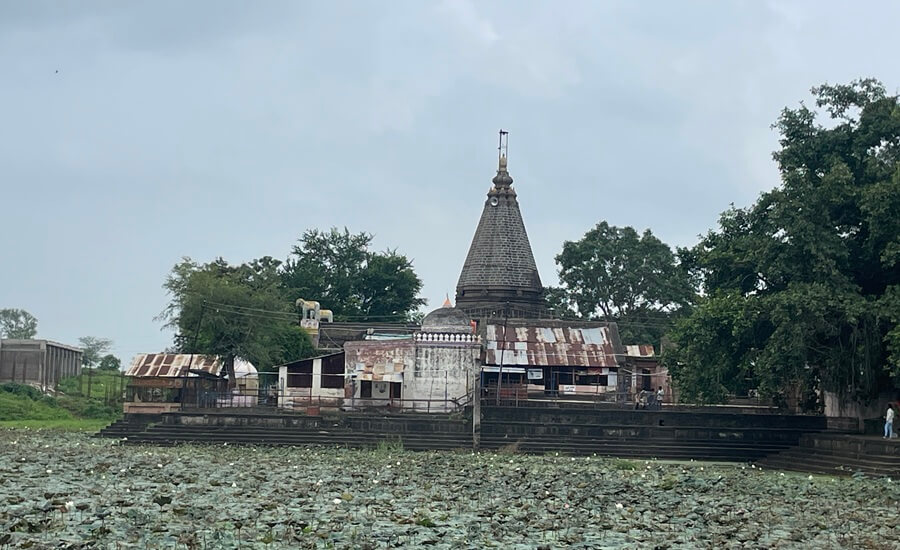
Because of the lotus pond in front of the temple, this area is known as Padmalaya. Govindshastri Barve from Wai in Satara district settled in the village of Talai in Jalgaon district, where he built a monastery. Once, when he visited the Padmalaya site with some devotees, he felt a deep connection to the area and performed penance there for 12 years. After receiving a divine vision, he received a sign to renovate the Padmalaya temple. Accordingly, in 1904, Govindshastri renovated the temple without altering its original structure. The construction of this temple lasted for about nine years.
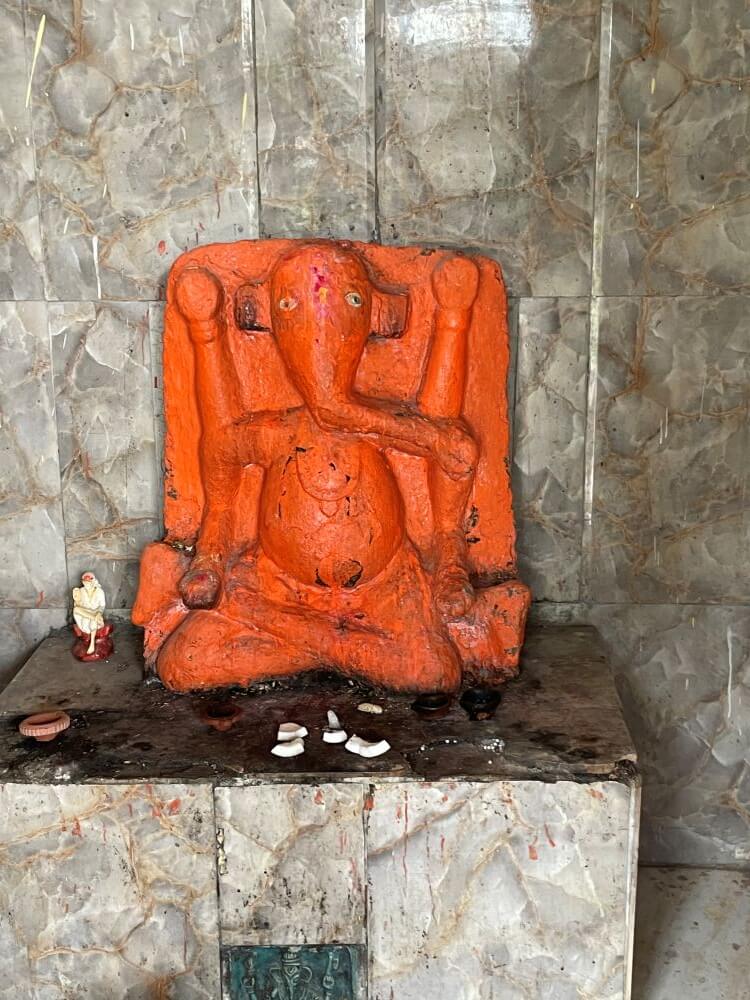
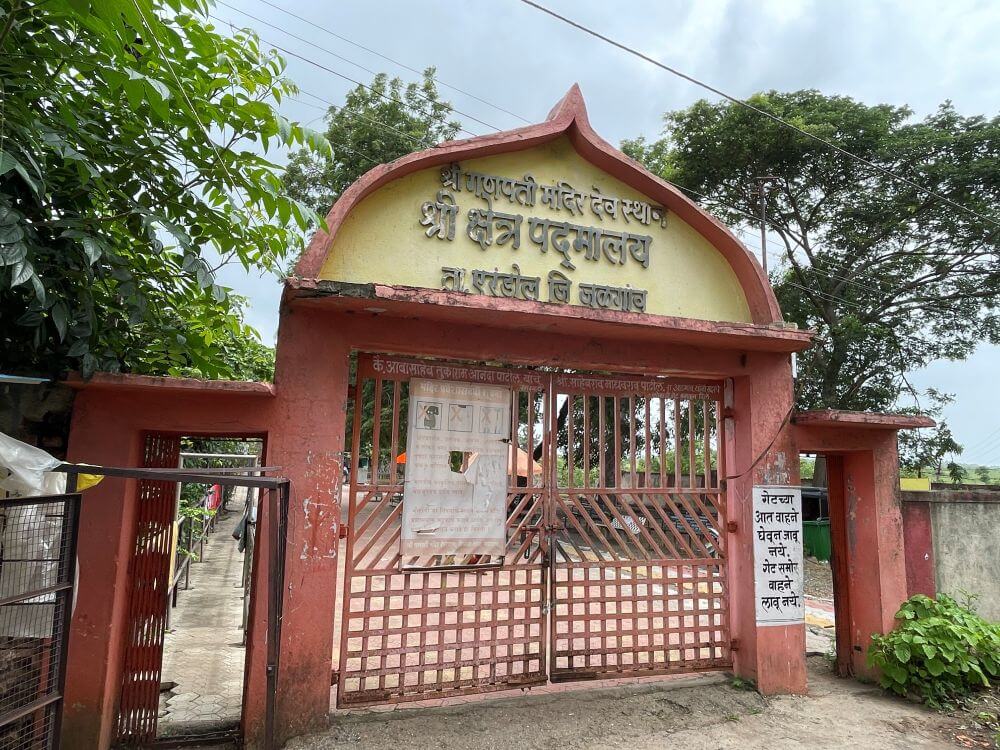
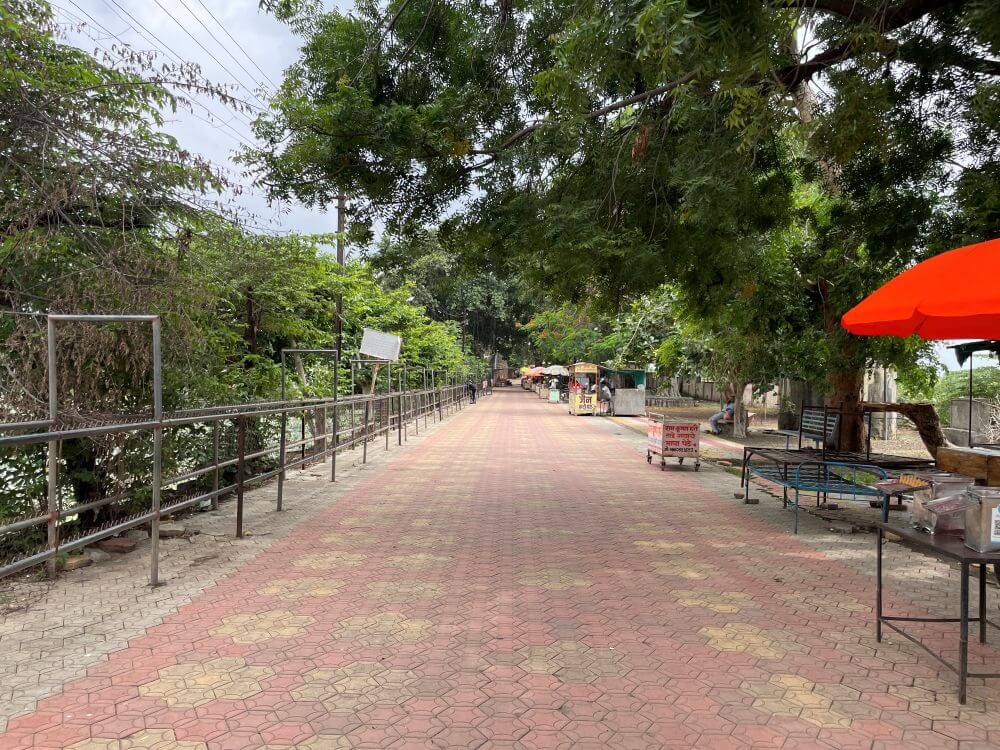
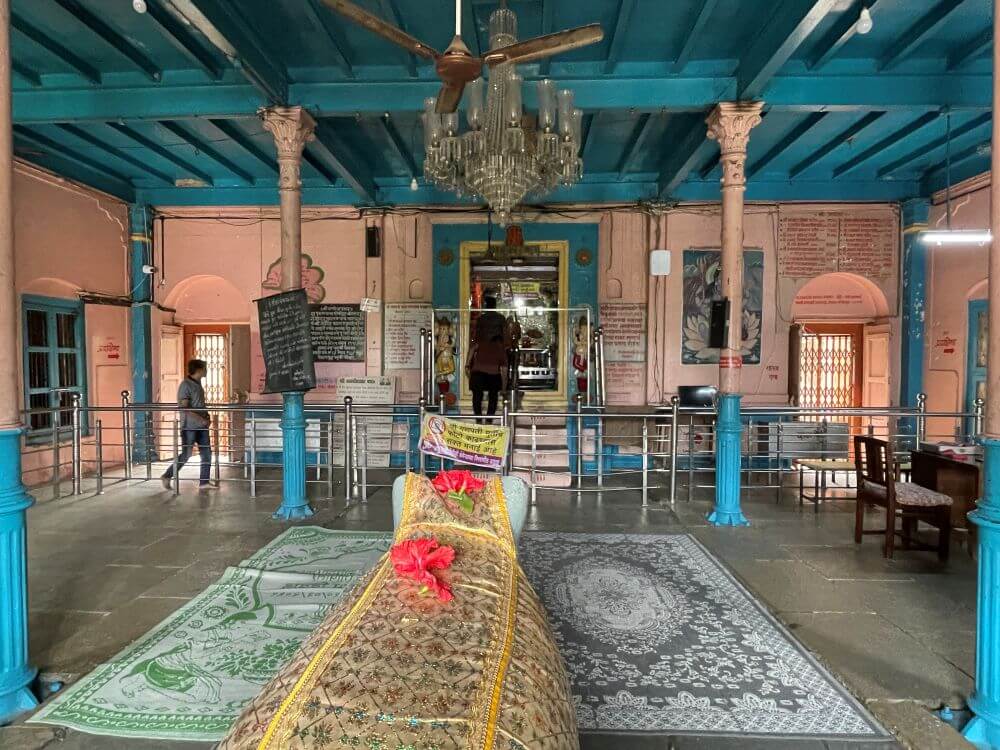
The Padmalaya temple is located a short distance from the parking area. On this path, there are many shops selling worship materials and prasad, as well as restaurants. From here, one enters the temple courtyard through an archway. To the left, there is a large lake where lotus flowers bloom throughout all twelve months. The Ganesha temple is situated on one side of this Padmalaya lake. The temple consists of a assembly hall (Sabhamandap) and a sanctum sanctorum (Garbhagriha). Located on a slightly elevated platform, one climbs a few steps to enter the enclosed assembly hall. Near the entrance of the assembly hall, there is a large statue of the Mushaka, the vehicle of Lord Ganesha. For the convenience of devotees, a queue system has been arranged in the assembly hall. There are Ganesha idols on both sides of the entrance to the sanctum sanctorum and an idol of Ganesha in vermilion color on the lintel of this entrance.
In the sanctum sanctorum, there are two idols of Ganesha in the form of Tandala on a single Vajrapitha. Among them, the idol with the trunk turned to the right is known as Sahastrarjuna, while the other with the trunk turned to the left is known as Sheshanath. They are adorned with a silver canopy and silver crowns on their heads. The inner part of the spire (Kalash) above this sanctum is 90 feet high. In front of this Padmalaya temple is the site of Govind Maharaj’s Padukas (footprints). Near these Padukas, a large old bell is hung, which features images of Ganesha. The bell weighs 410 kilograms. It is said that at the behest of Govind Maharaj, Balkrishna Vaman Kulkarni-Nerikar had this bell made in Kashi at a cost of 1100 rupees. The sound of this bell could be heard up to three miles away. However, to prevent damage to the bell over time, a wooden clapper was installed in place of the heavy metal one a few years ago.
Additionally, there are temples of Bal-Ganesha and Mahadeva in the temple premises. The Ganesha Janmotsav festival is celebrated here on Magh Shuddha Chaturthi. A festival is also held on Bhadrapad Shuddha Chaturthi. A fair is held here on Kartik Shuddha Purnima. Devotees believe that on this day, Kartikaswami comes to visit his younger brother, Ganesha. Thousands of devotees visit for darshan on Angarki Chaturthi. On this day, special GSRTC buses are run from Erandol to the temple.
This sacred temple stands as a testament to deep spiritual devotion, ancient architectural grandeur, and rich local cultural traditions.
The sanctum sanctorum houses the divine idol consecrated according to ancient Vedic traditions, surrounded by serene courtyards and traditional temple architecture.
Navratri, Maha Shivratri, Annual Temple Jatra & Deepotsav
Compare and book flights, secure top-rated local hotels near the temple, hire reliable guides, and rent cars instantly.
Extend your pilgrimage by visiting other highly sacred temples located nearby.


Add ₹999 more to unlock FREE SHIPPING!
Your sacred cart is currently empty.
Shop Photo FramesFill in your delivery details below to place your order.
Add comment